

Many people wonder whether Tsukiji or Toyosu is better to visit when sightseeing in Tokyo.
I had the same question myself, so this time I walked from Toyosu Market to Tsukiji Outer Market in a single day to compare them.
At Toyosu, I watched the early‑morning tuna auction and explored areas like Uogashi Yokocho and Senkyaku Banrai, enjoying both a seafood bowl and some casual street‑food snacks along the way.
In contrast, Tsukiji offered a completely different atmosphere—narrow, lively alleys, friendly interactions with shop owners, and classic Tsukiji‑style seafood such as fresh oysters and small plates of sashimi. I also stopped by historic spots like Namiyoke Shrine and Tsukiji Hongan‑ji Temple.
The atmosphere, ease of strolling, and style of street‑food experiences differ greatly between Toyosu and Tsukiji.
In this article, I compare Toyosu Market and Tsukiji Outer Market in the order I actually walked them. I hope it helps anyone wondering “Which one should I visit?” or “Which market is better for street food?”
Overview of Toyosu Market — Tokyo’s “New Market” After the Relocation
Toyosu Market opened in 2018 when the former Tsukiji Market was relocated. The phrase “a new market” describes it perfectly—its buildings are modern, highly organized, and maintained with strict hygiene standards.
The market is divided into three main buildings: the Wholesale Fish Market Building, the Intermediate Wholesale Market Building, and the Fruit and Vegetable Market Building. These areas are connected by dedicated visitor walkways, making it easy to navigate even for first‑time visitors. Unlike the more chaotic atmosphere of the old Tsukiji Market, Toyosu is spacious, temperature‑controlled, and orderly throughout.
One of the highlights is the tuna auction held early in the morning inside the Wholesale Fish Market Building. It offers a rare chance to observe professional buyers and sellers at work. Visitors can watch the auction and the flow of the market from elevated walkways—an experience unique to Toyosu.
Adjacent to the market is Senkyaku Banrai, an area with restaurants, footbaths, and casual street‑food stalls. Within walking distance, you’ll also find teamLab Planets TOKYO DMM, a popular immersive art museum. Many visitors combine these attractions with their market visit, allowing them to enjoy both the professional world of a working market and the fun of sightseeing.
For more about teamLab itself, I’ve written a separate article that goes into greater detail, so feel free to take a look as well.

Toyosu Market has a completely different atmosphere from Tsukiji.
Within its clean, structured spaces, you can feel a quiet energy and a sense of activity coexisting in a unique balance.
Overview of Tsukiji Outer Market — A “Market Town” That Still Lives On
Tsukiji Outer Market continues to operate even after the relocation of the former Tsukiji Market. It remains a lively “market town,” where long‑established specialty shops and eateries stand side by side, preserving the warmth and energy that defined the old Tsukiji.
The narrow alleys are packed with shops selling fresh seafood, dried goods, kitchen knives, tamagoyaki, and other food‑related items. Simply walking through the area lets you experience a unique mix of aromas, voices, and the bustling atmosphere of a working market. In contrast to the orderly environment of Toyosu, Tsukiji still carries a culture where the distance between people feels close and personal.
Another charm of Tsukiji Outer Market is its vibrant street‑food scene. Tamagoyaki, fresh oysters, slices of tuna sashimi, seafood bowls—many foods can be enjoyed right on the spot, drawing crowds of visitors from early in the morning. Conversations with shop owners and the scents drifting through the alleys are all part of what makes “walking through the market town” such an enjoyable experience.
Within walking distance are historic spots such as Namiyoke Shrine and Tsukiji Hongan‑ji Temple, allowing visitors to enjoy not only the market but also the atmosphere of the surrounding neighborhood. This area, where food and culture blend naturally, offers a depth of charm that is distinct from Toyosu.
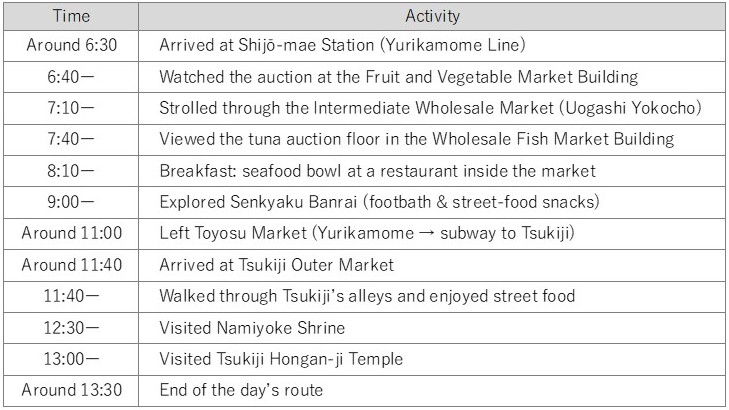
The Day’s Route: From Toyosu Market to Tsukiji Outer Market
The day I visited both Toyosu Market and Tsukiji Outer Market turned out to be especially memorable, with the quiet of the early morning gradually giving way to the lively energy of the markets.
If you plan to walk through both markets, you can move quickly and finish in about half a day, or take a little more time and enjoy a relaxed pace without feeling rushed. In this section, I’ve organized the route I actually walked, following the flow of time to make it easy to visualize. I hope it helps you get a clearer picture of what your own visit might look like.
Toyosu Area
The Toyosu area stretches along Tokyo Bay and is known for its clean, modern cityscape and calm atmosphere. On this day, I spent the morning walking through two of its liveliest spots: Toyosu Market and the newly developed Senkyaku Banrai.
Toyosu Market
Toyosu Market, which opened in 2018 after relocating from Tsukiji, is a modern facility with spacious buildings and visitor‑friendly walkways. On this day, I walked from Shijō‑mae Station through the market, taking in the unique atmosphere of the early morning hours.
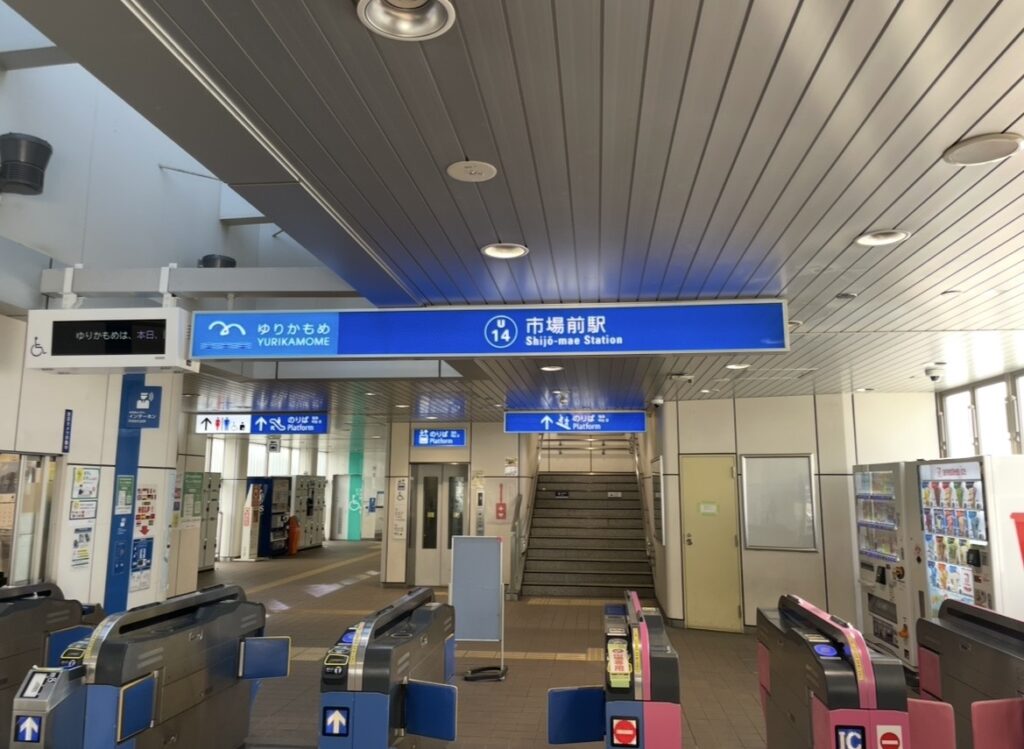
Arriving at Shijō‑mae Station
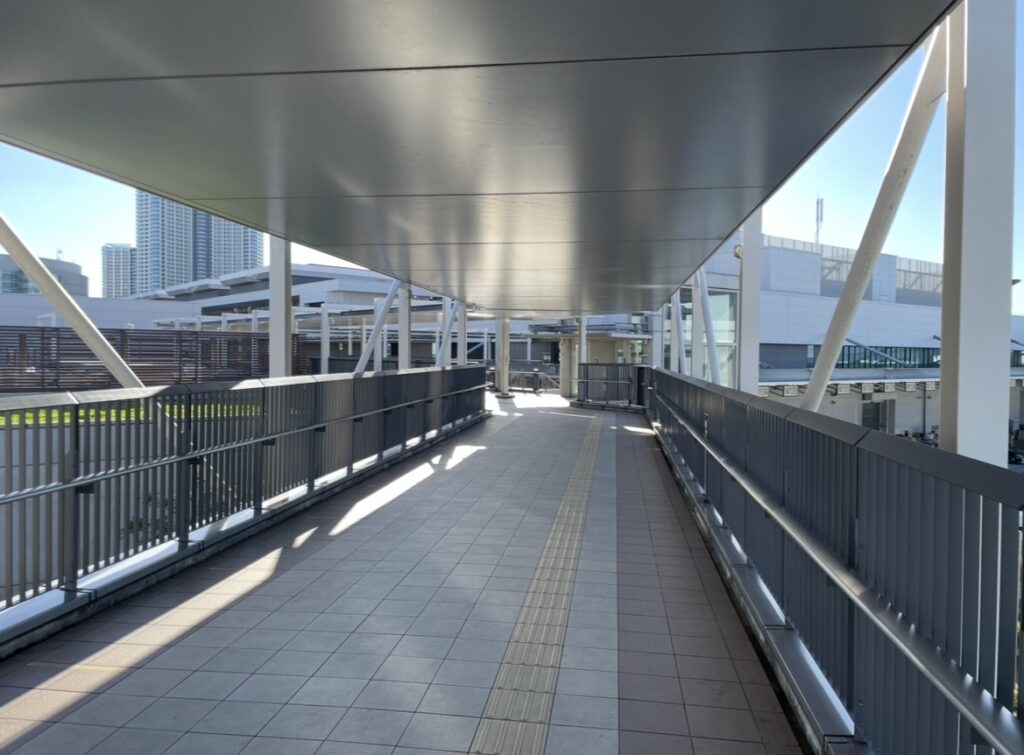
When I arrived at Shijō‑mae Station on the Yurikamome Line, I could already sense people heading toward the market, even in the early morning hours. After passing through the ticket gates, the flow naturally led me onto the pedestrian deck that guides visitors directly toward the market.
The walkway is covered and stretches straight between the buildings. As I continued along the path toward the market, the atmosphere gradually shifted, building anticipation for the morning auctions that were about to begin.
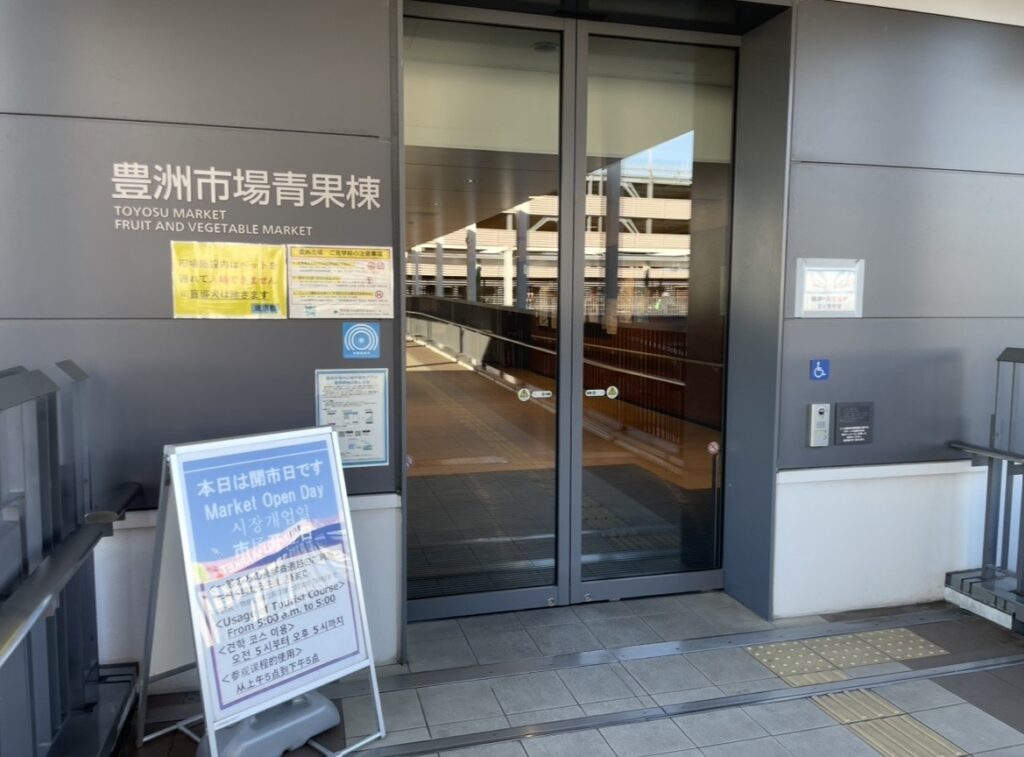
My day started with a visit to the Fruit and Vegetable Market Building, where I watched the early‑morning auction.
Watching the Auction (Fruit and Vegetable Market Building)
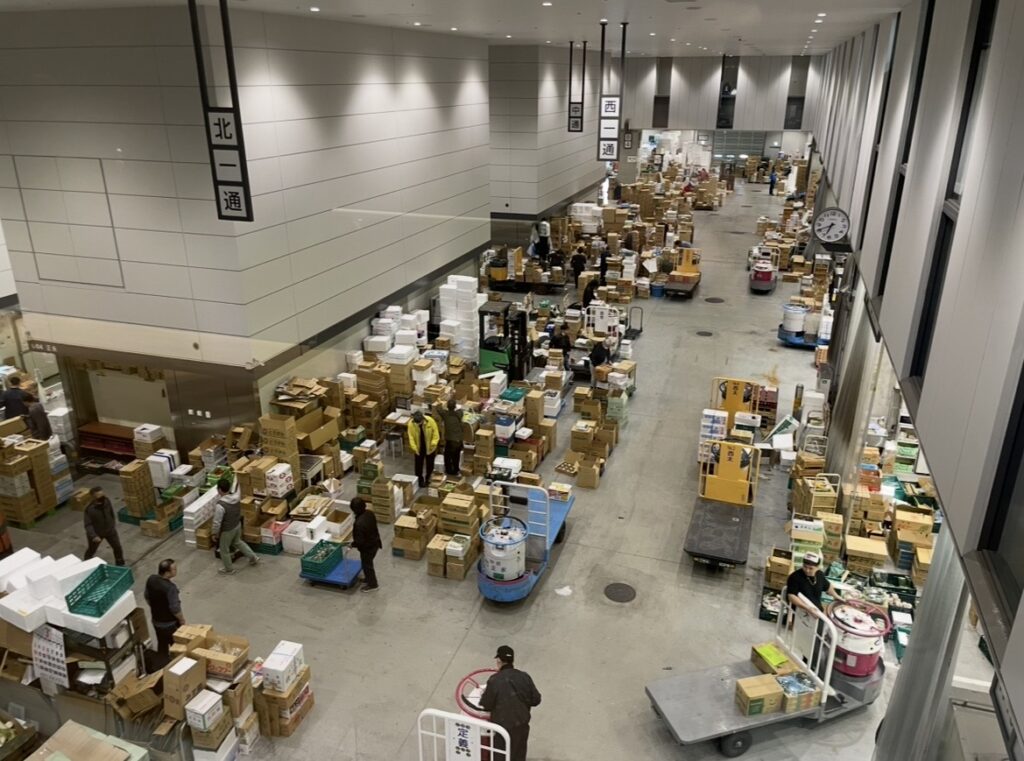
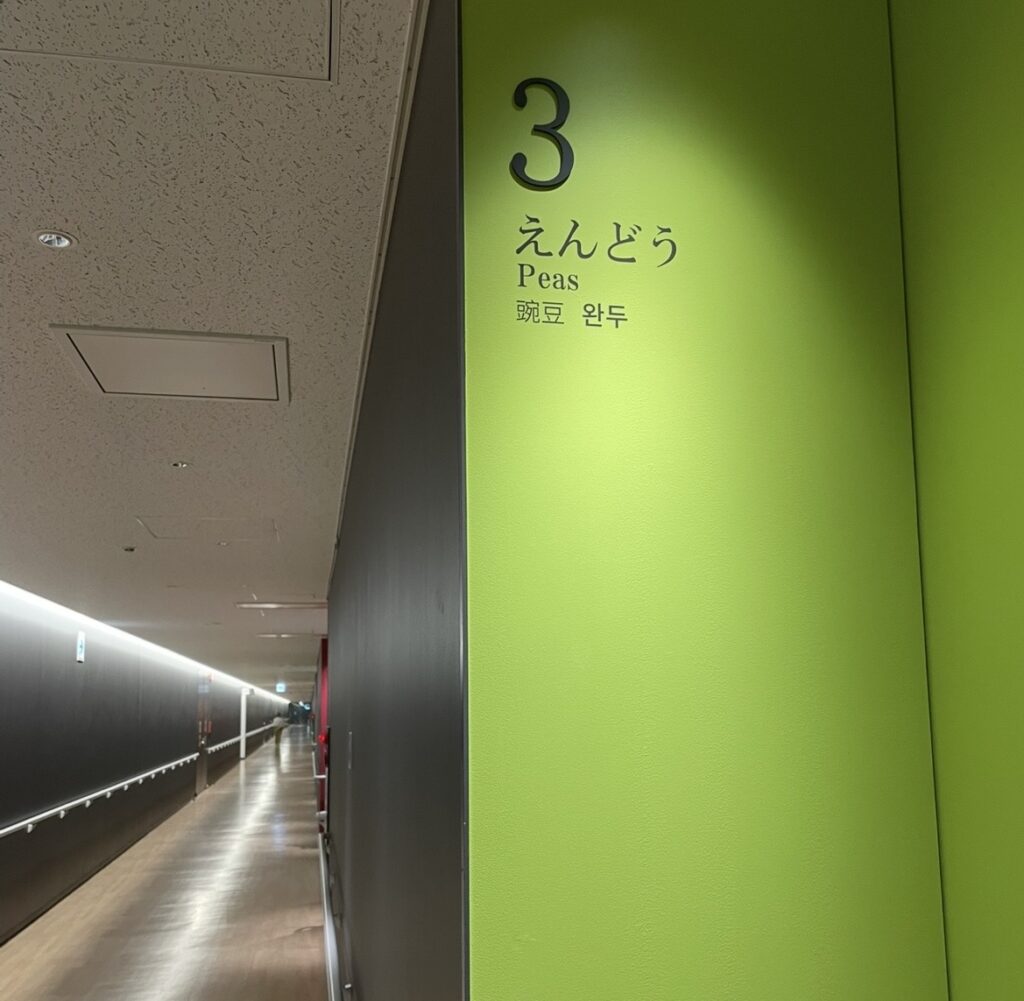
As I entered the Fruit and Vegetable Market Building, I could look down from the walkway and see the sorting and handling of produce taking place before and after the auction. The walls along the corridor displayed the names of items—such as “green peas”—making it easy to see what kinds of produce were being handled. Watching boxes being carried one after another and staff working efficiently gave me a real sense that the market’s morning operations were fully underway.
At the end of the corridor, the observation deck overlooks the auction floor through large glass windows. Stepping inside, I heard the auctioneer’s voice echoing through the speakers, with numbers being called out and hand signals overlapping in a distinctive rhythm that gradually warmed the quiet morning air. Inside the hall, the flow of produce being auctioned continued without pause, and I could feel the market’s day beginning right before my eyes.
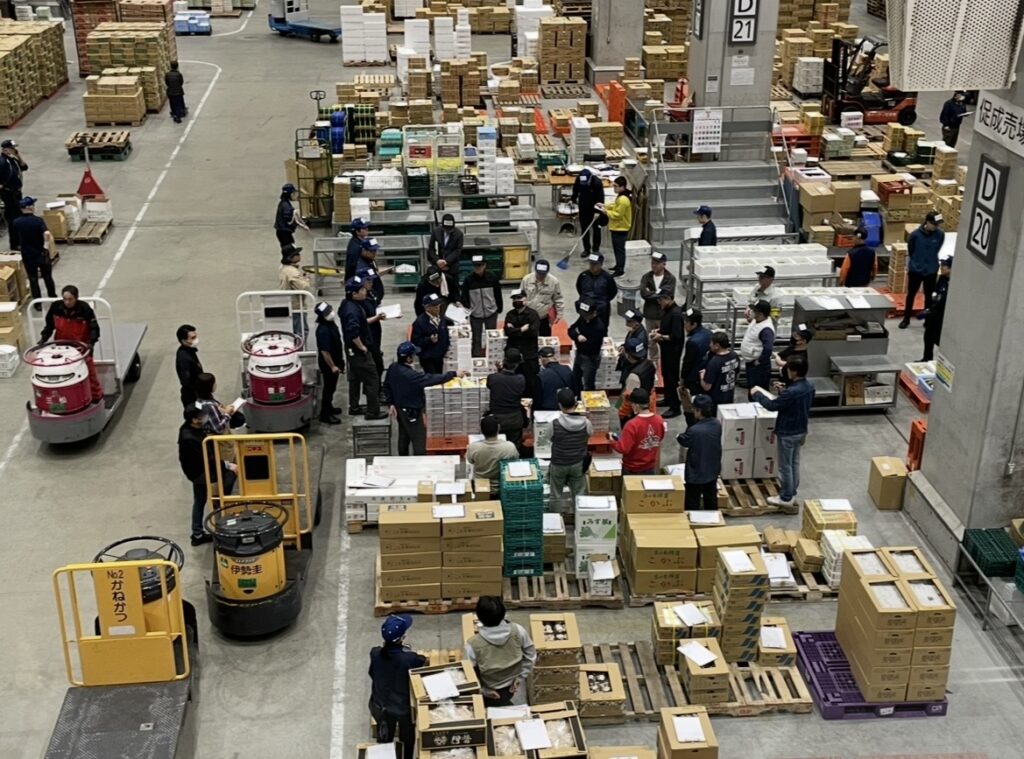
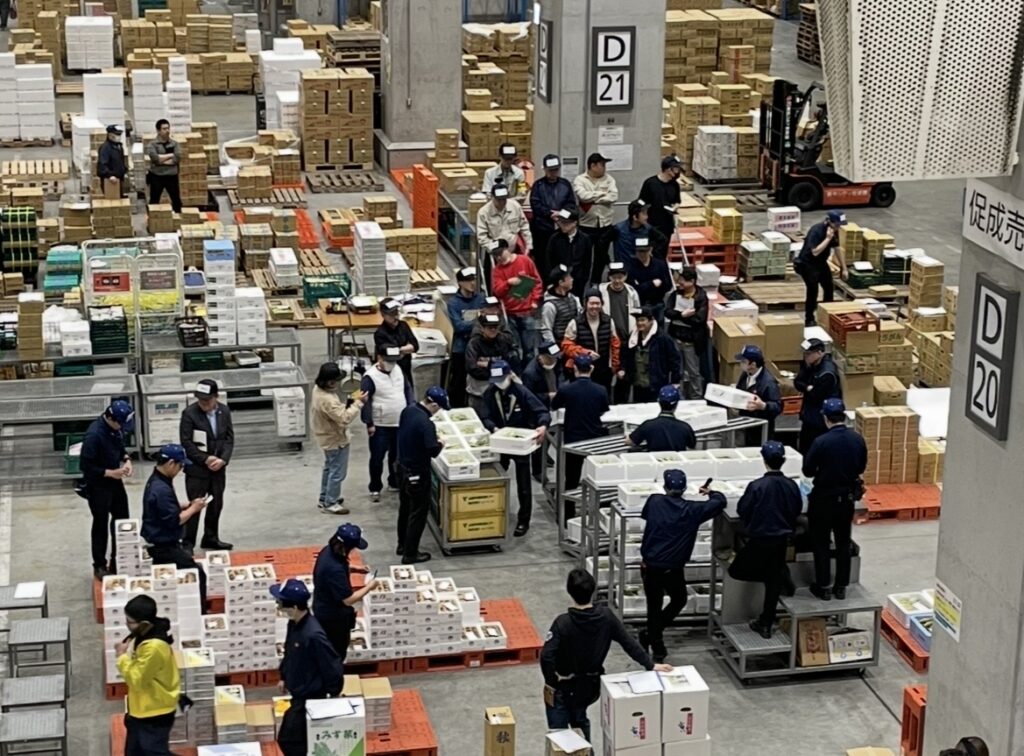
Staff members are stationed on the deck to explain how the auction works and how the produce is handled, making it easy for first‑time visitors to understand what they’re seeing. The observation area had a comfortable number of people—not too crowded—allowing me to watch the auction at my own pace.
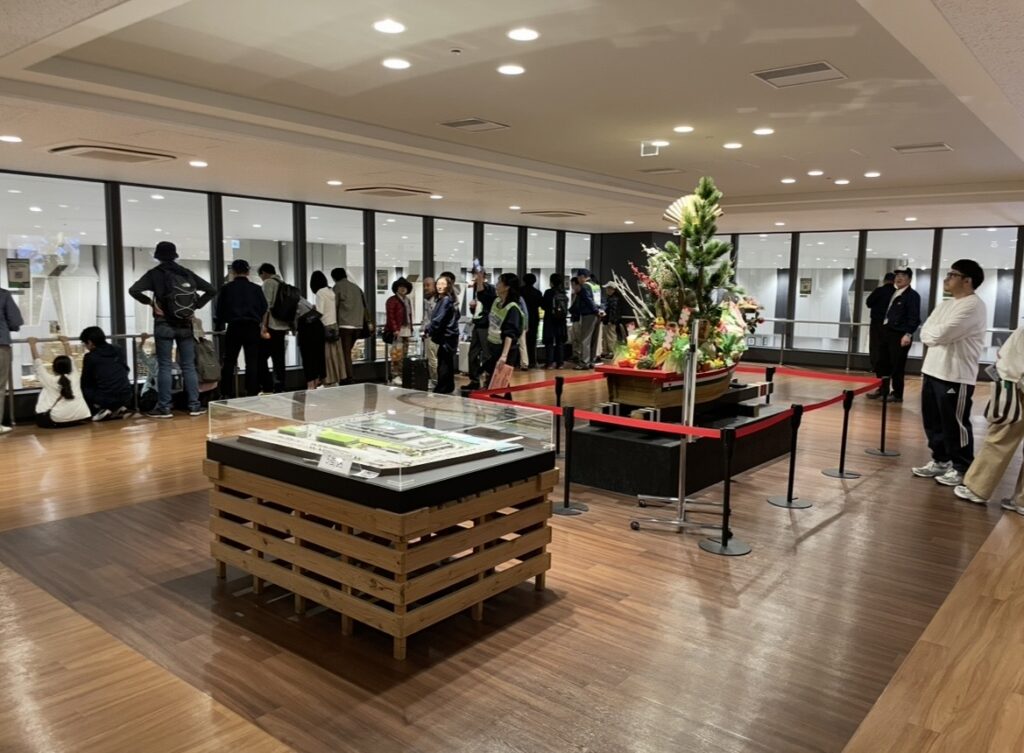
Uogashi Yokocho (Intermediate Wholesale Market Building)
When you enter the Intermediate Wholesale Market Building, the upper‑floor walkway offers a view of the work area below. Although the visible section is limited, seeing the rows of boxes and the staff moving efficiently gives you a small glimpse of the morning energy of the market.
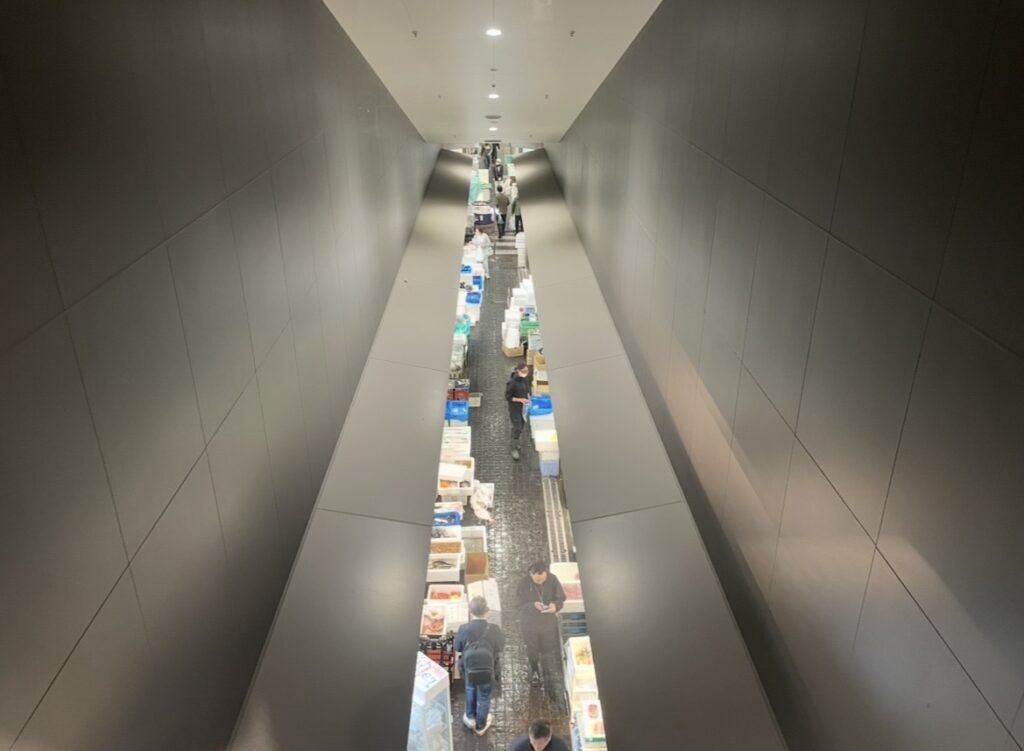
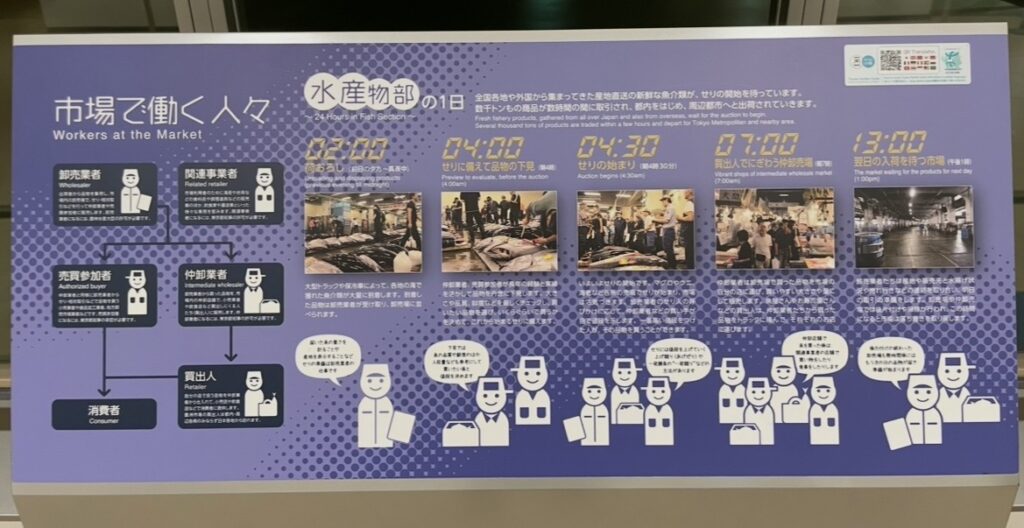
Along the corridor, numerous informational panels explain different types of fish, fishing grounds, and distribution processes, allowing visitors to naturally deepen their understanding of seafood. Simply walking through the building makes it easy to appreciate the background of how fish reach the market, something we don’t usually think about.
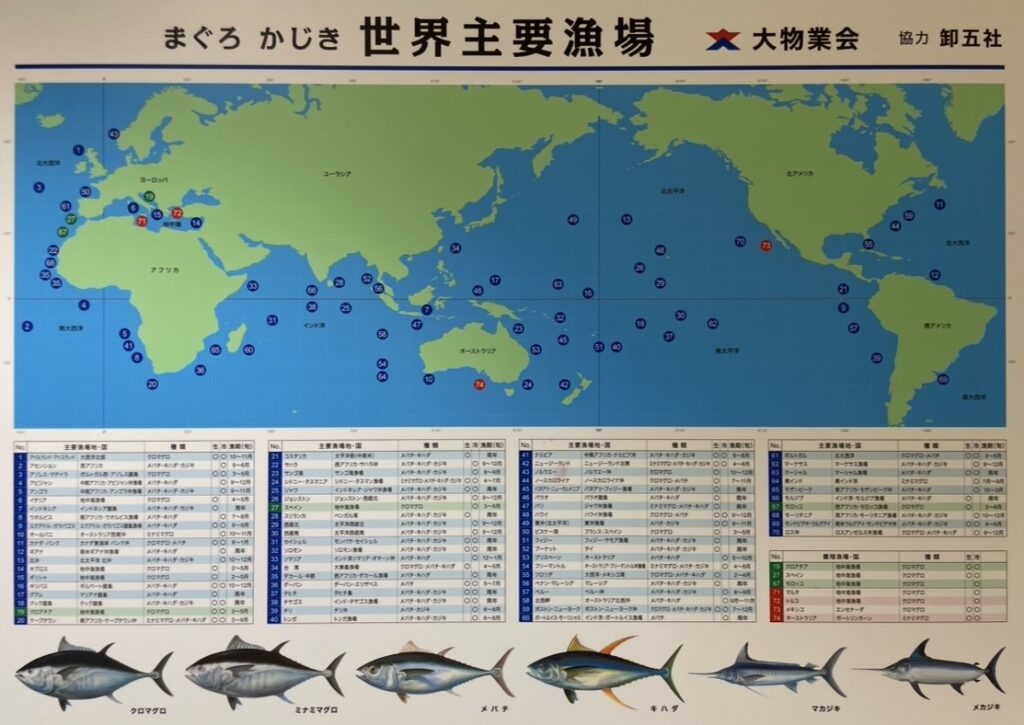
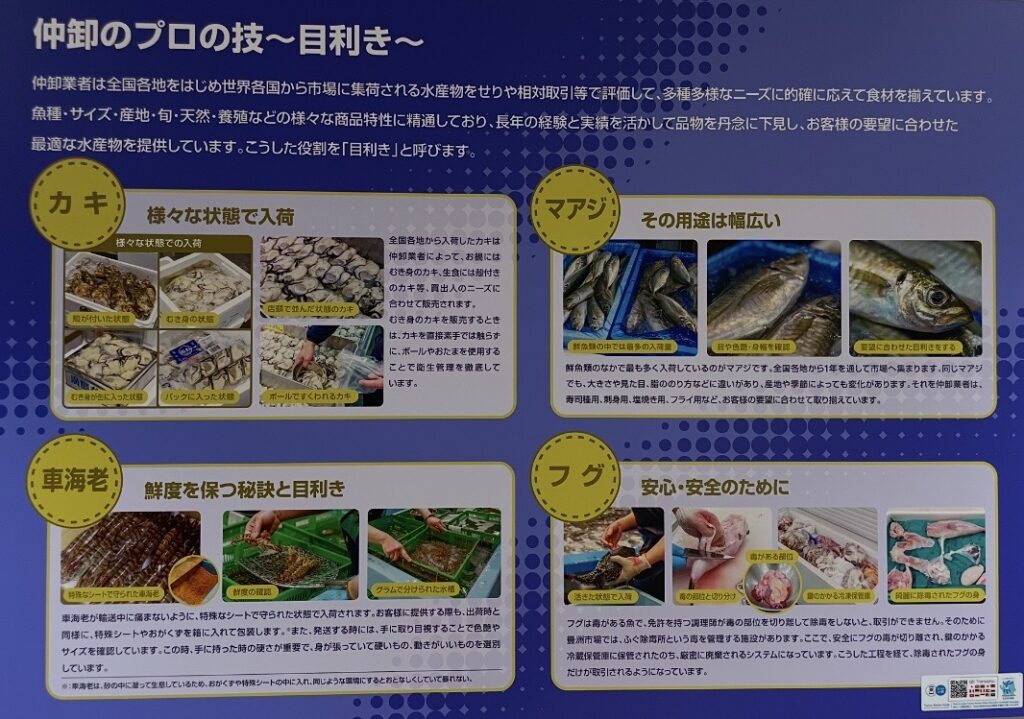
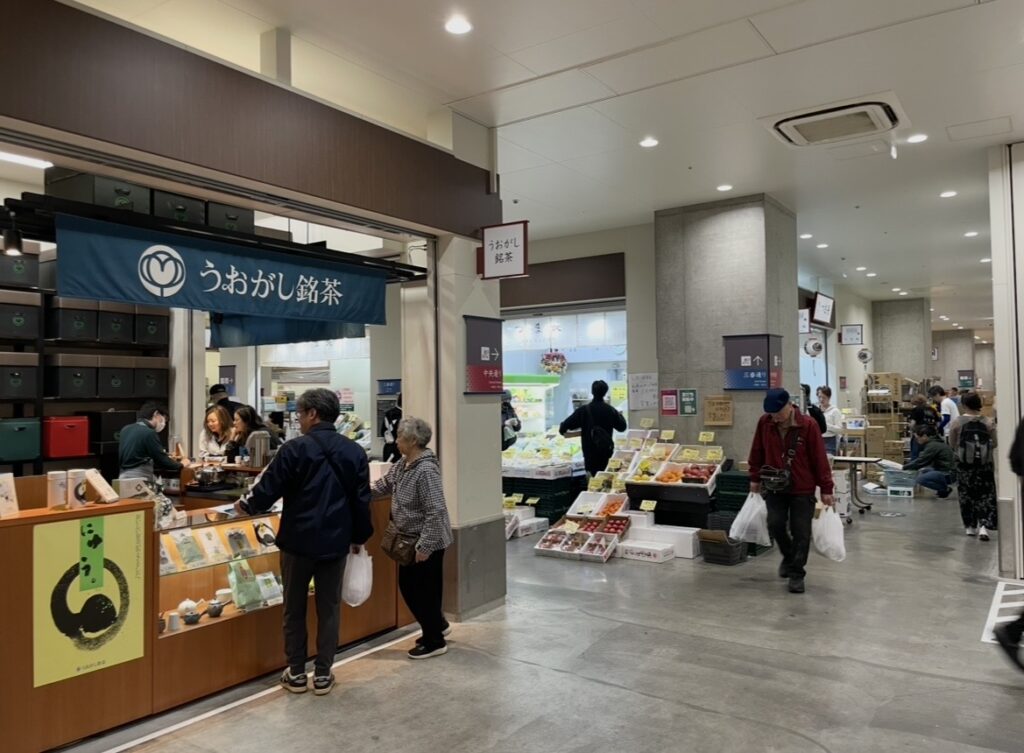
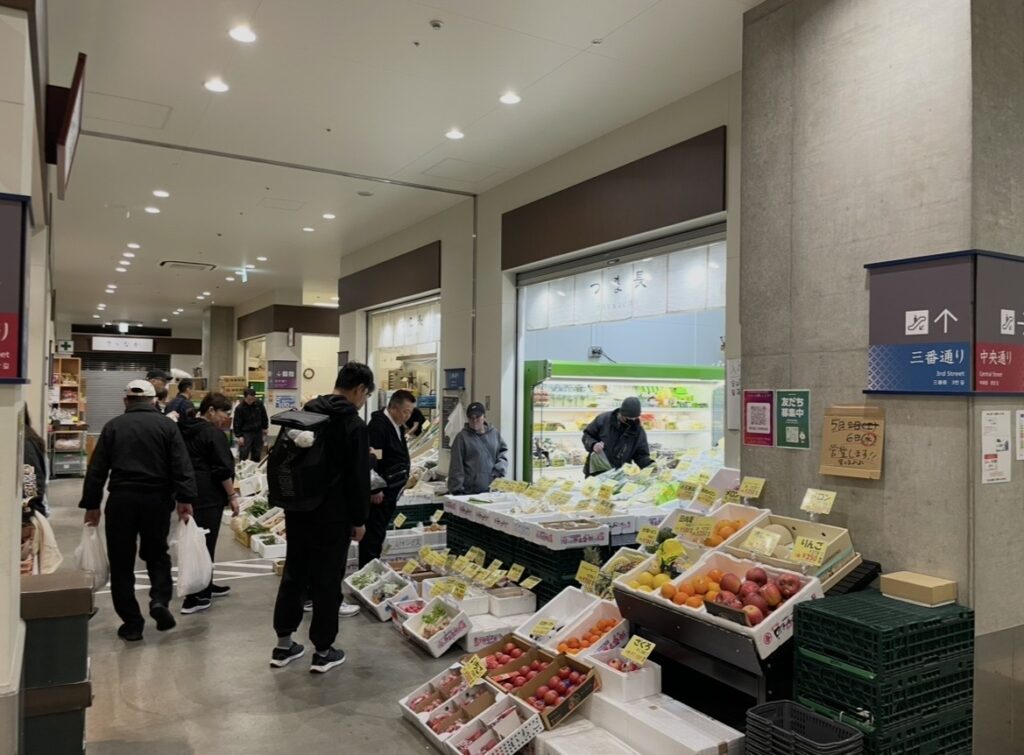
The main attraction of this building is, of course, strolling through Uogashi Yokocho. Shops selling seafood, kitchen tools, and long‑established tea stores line the walkway, creating an area where you can enjoy the unique selection and atmosphere of a working market. Rather than focusing solely on observing the work areas, I felt that the real charm of this building lies in exploring the shops and experiencing the culture of the market.
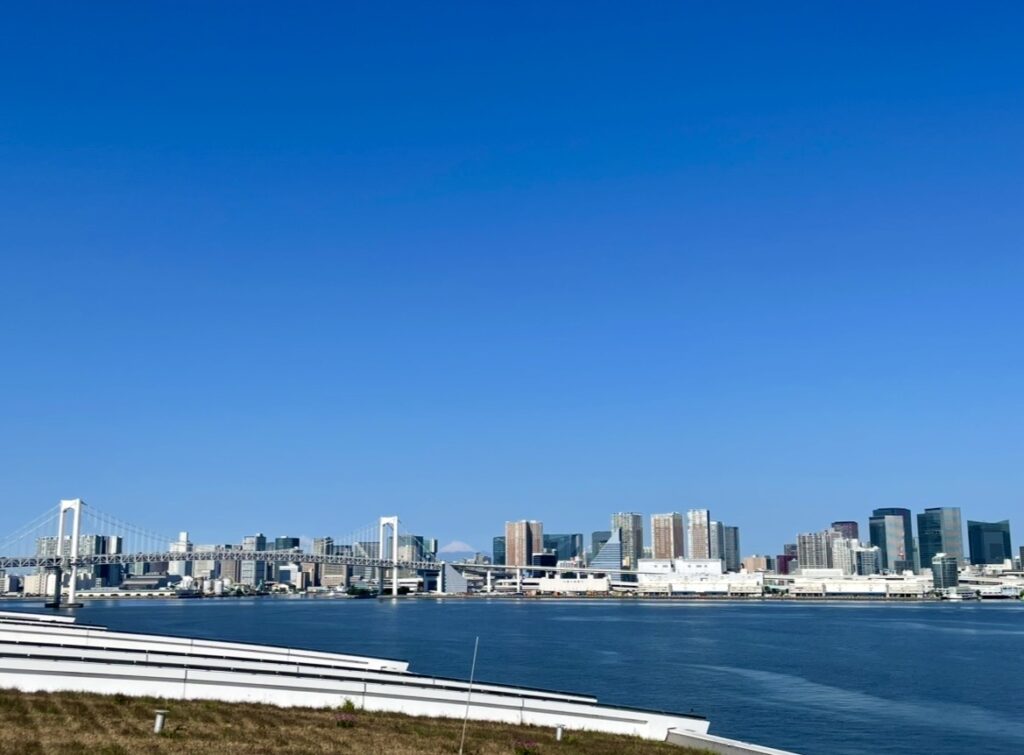
On the fourth floor, there is a viewing spot where you can see Rainbow Bridge, and on clear days, even Mount Fuji in the distance. It felt like a hidden gem—a quiet place to take in the view of Tokyo Bay, slightly removed from the bustle of the market.
Tuna Auction Floor (Wholesale Fish Market Building)
In the Wholesale Fish Market Building, visitors can view the floor where the tuna auction takes place. Although the auction had already finished by the time I arrived, I was still able to understand the flow of the auction through the exhibits while looking out over the floor. Seeing the neatly arranged boxes and equipment in the wide space conveyed the sense of the large‑scale transactions that take place here every morning.
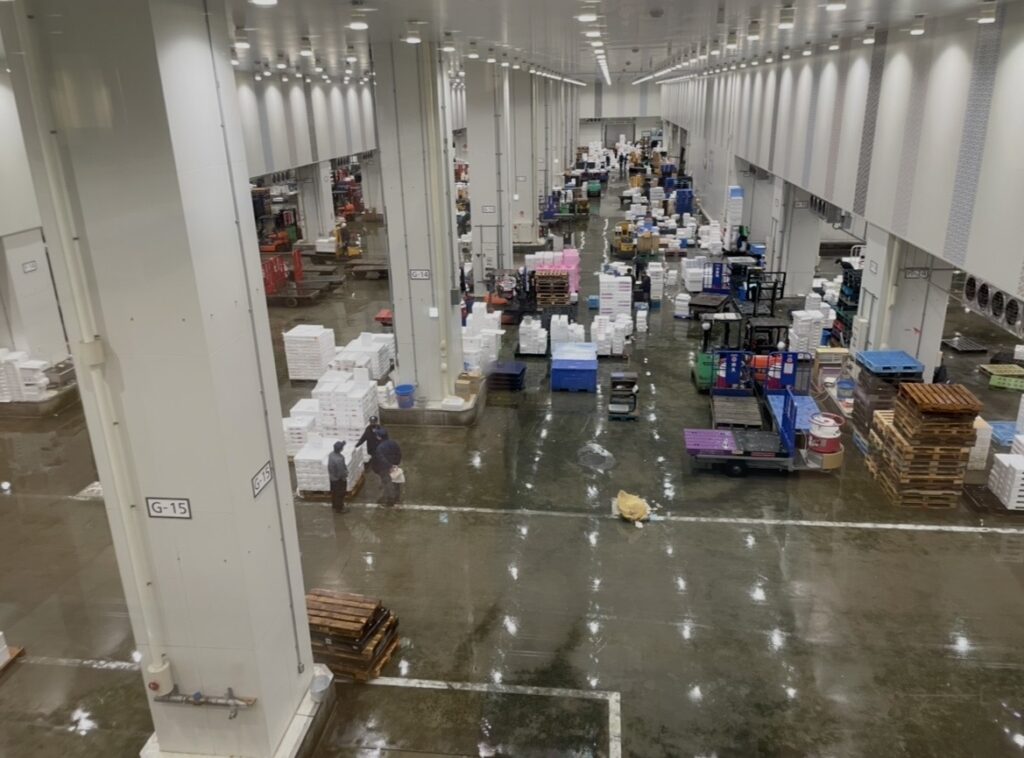
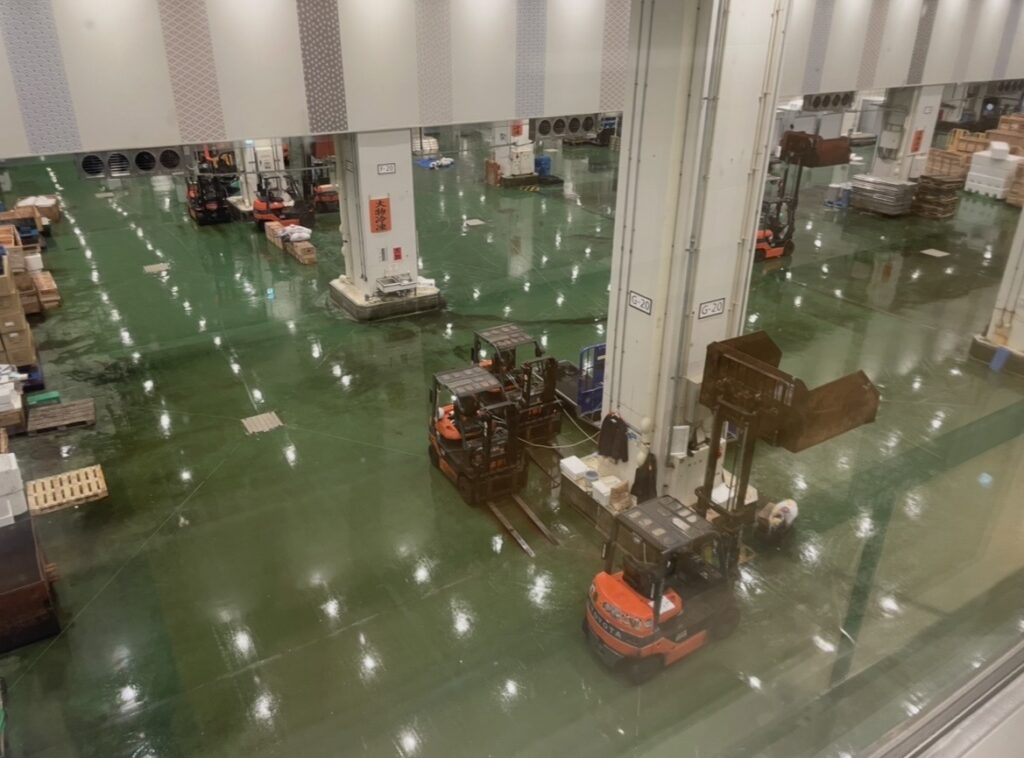
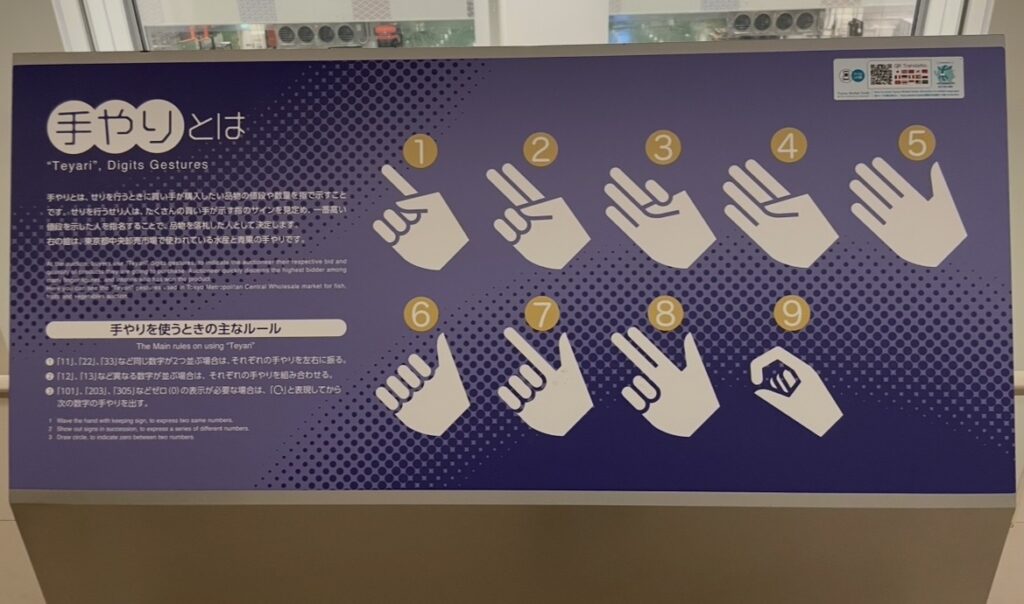
Along the corridor, informational panels and videos explain how the tuna auction works, including the meaning of the unique hand signals known as “teyari” and the overall auction process. As I read through the panels, I could clearly imagine how buyers communicate prices with their fingers and how the auction progresses step by step.
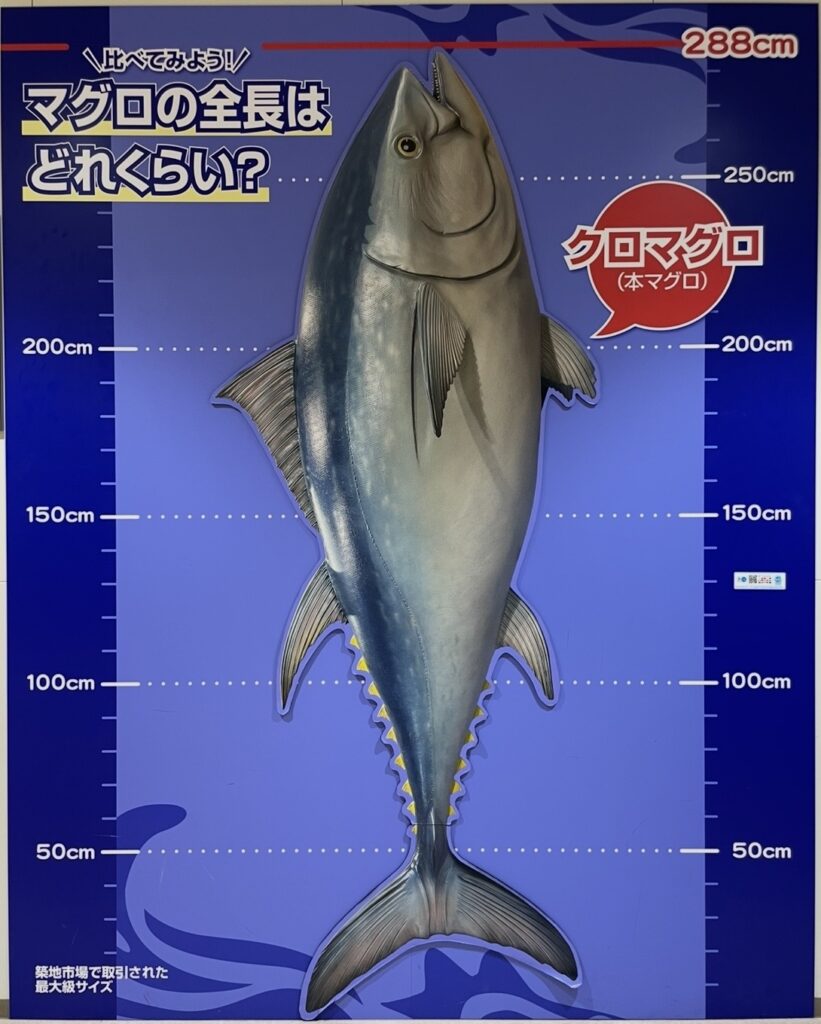
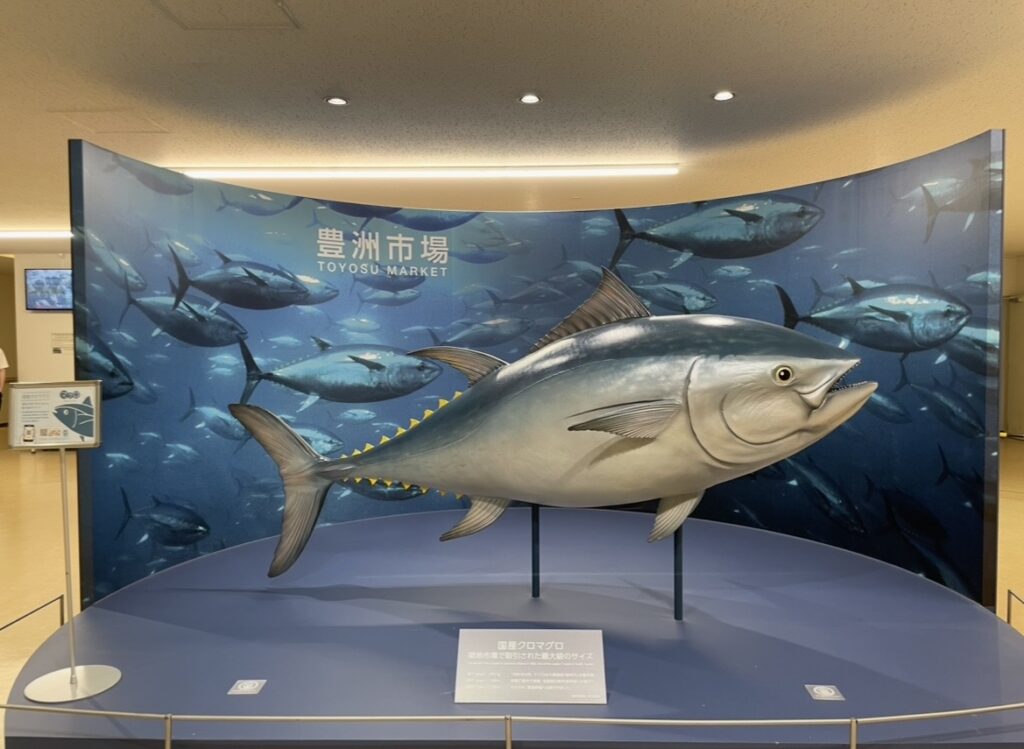
In the exhibition area, there is also a full‑scale model of one of the largest tuna ever traded during the Tsukiji Market era, and its sheer size is striking. The presence it has in person is far greater than in photos, making it an impressive display that conveys the true scale of the tuna handled at the market.
Even outside the actual auction hours, the combination of the floor’s atmosphere and the exhibits makes this an area where you can gain a solid understanding of how tuna auctions are conducted.
Seafood Bowl for Breakfast
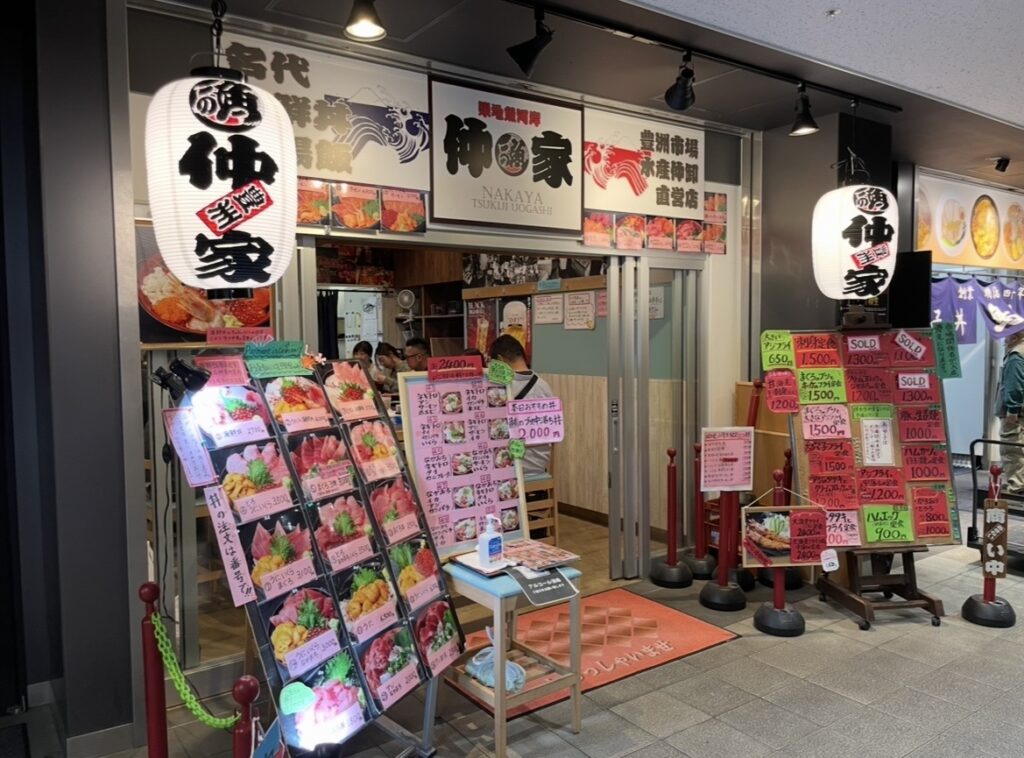
After visiting the tuna auction floor, I decided to have a seafood bowl for breakfast. In one corner of the Intermediate Wholesale Market Building, several restaurants serve seafood bowls and sushi, each displaying photo menus outside, making it easy to get a sense of the atmosphere before stepping in.
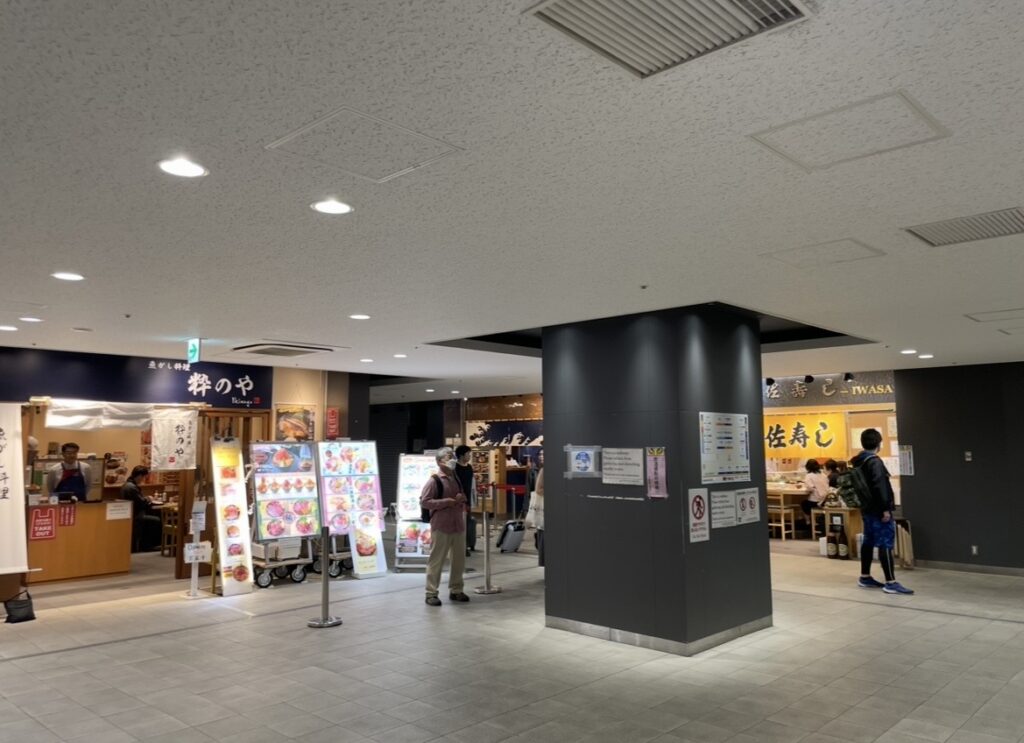
That morning, I was drawn in by the photos of the seafood bowls displayed at the entrance and chose to dine at Nakaya. The interior had a calm atmosphere, allowing me to enjoy my meal at a relaxed pace while still feeling the lively morning energy of the market.
The seafood bowl I ordered was beautifully arranged with tuna, sea urchin, salmon roe, and other toppings. Each ingredient had a rich, distinct flavor, yet the bowl felt surprisingly light and easy to enjoy even in the early morning. It came with miso soup and small side dishes, offering just the right level of satisfaction for breakfast.
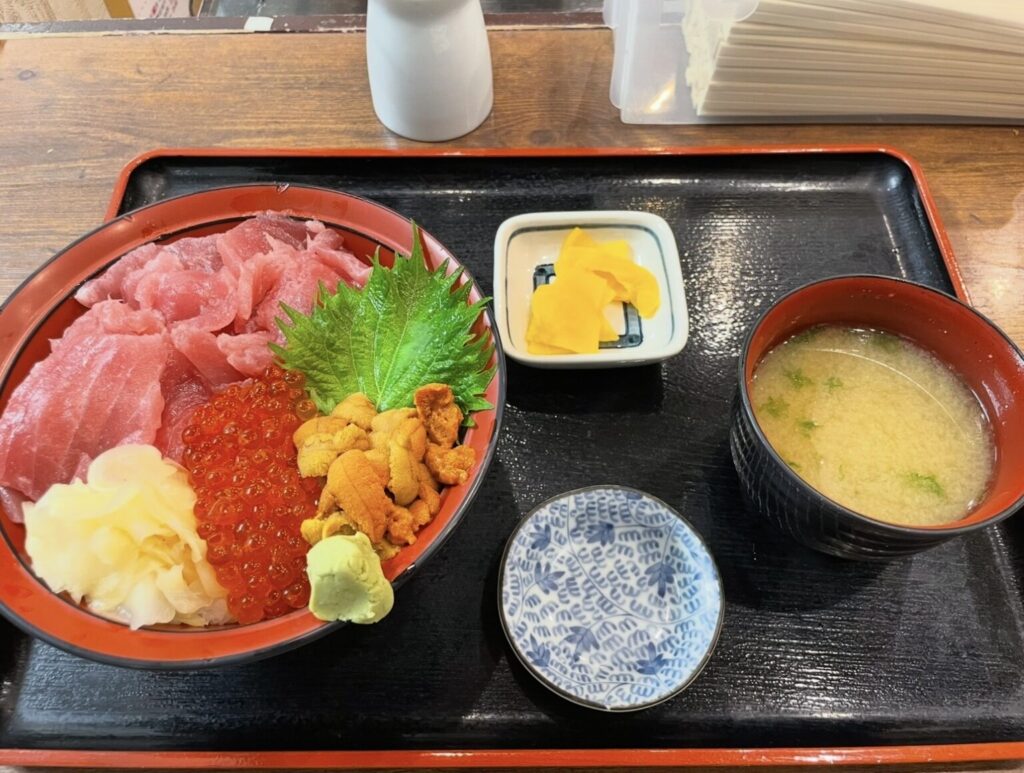
A seafood bowl enjoyed after walking through the market feels truly special, and it became one of those moments that made me appreciate being in Toyosu.
Senkyaku Banrai
After exploring Toyosu Market, I headed to Senkyaku Banrai, which opened in February 2024. This new complex sits right next to Toyosu Market and brings together street‑food stalls, shops, footbaths, and viewing areas—creating a space where visitors can enjoy a relaxed stroll.
Senkyaku Banrai was designed to let the general public experience the lively atmosphere of the market in an accessible way. In addition to restaurants and shopping areas, it also features a hot‑spring facility, footbaths, and spots where you can enjoy views of Toyosu. After observing the professional world of the market, it was refreshing to spend some time in a place where the atmosphere naturally shifts into something more leisurely.
From here, I’ll introduce the places I visited within Senkyaku Banrai in the order I explored them.
Taking a Break at the Footbath
On the 8th floor of Senkyaku Banrai, there is a footbath area that anyone can use freely. The wooden deck and greenery‑lined terrace create a quiet space slightly removed from the bustle of the facility. The footbath itself is free, and if you don’t have a towel, you can rent one for 200 yen.
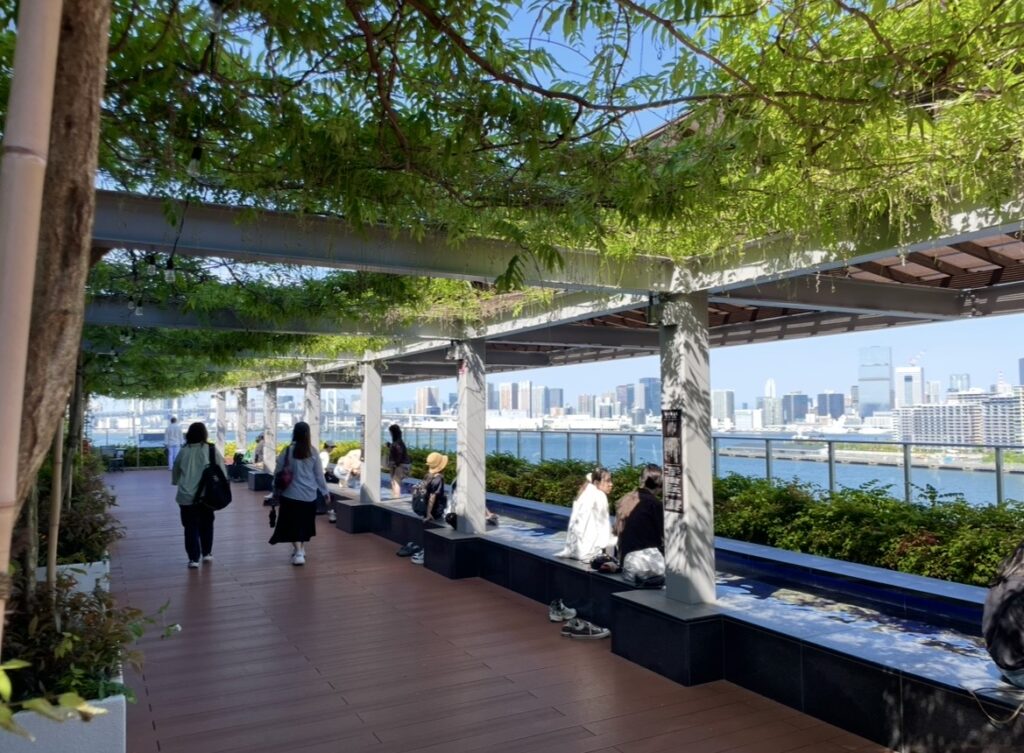
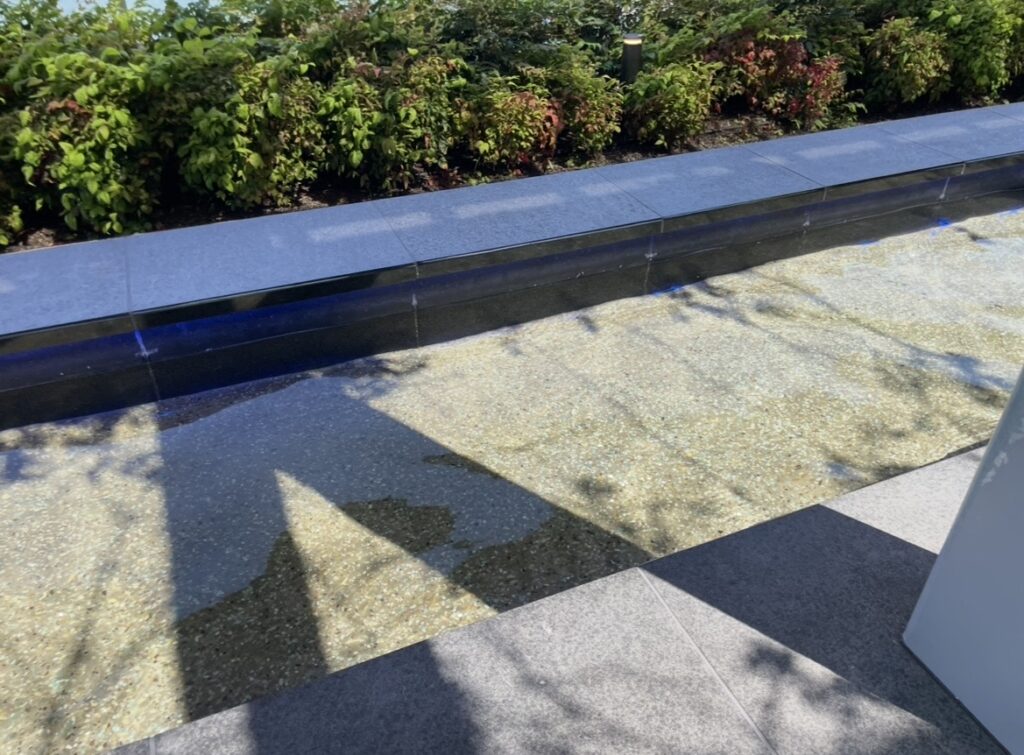
While soaking your feet, you’re greeted with an open view where Tokyo Bay and the surrounding high‑rise buildings overlap beautifully. The shimmer of the water and the wide expanse of sky feel soothing, and you can sense the warmth slowly returning to your feet after walking around the market.
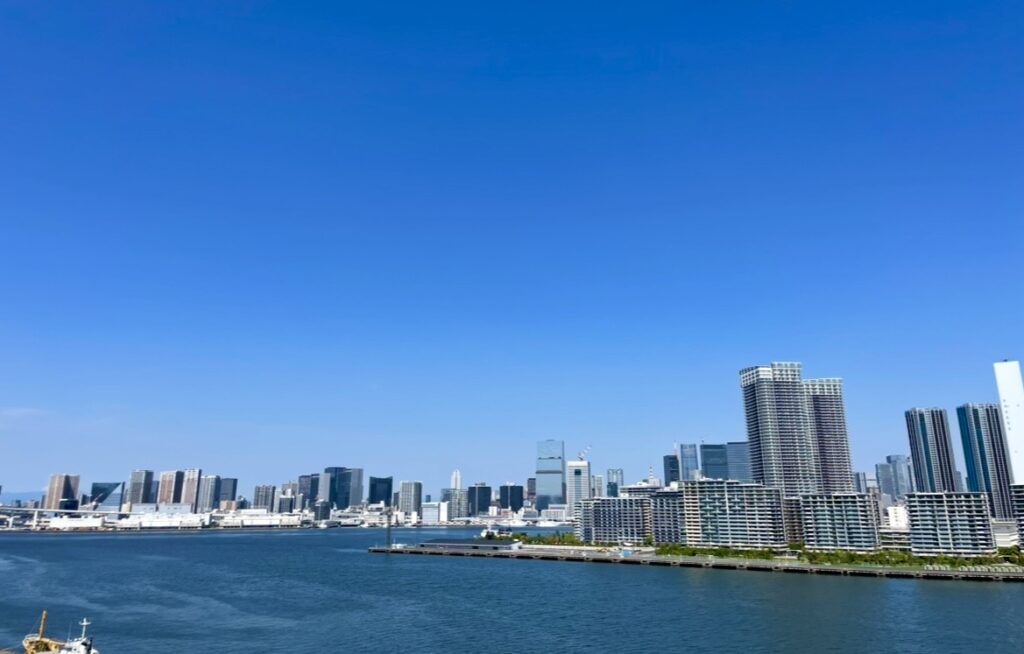
It’s the perfect spot to take a short break after exploring the market, and a place where you can unexpectedly enjoy a calm, distinctly Toyosu‑style view at your own pace.
Toyosu’s Signature Street‑Food Snacks
Senkyaku Banrai is home to many food stalls and restaurants, but among them, I chose three street‑food items that left a particularly strong impression. Each one is easy to enjoy casually, yet has its own character, offering a taste of the unique food culture of Toyosu.
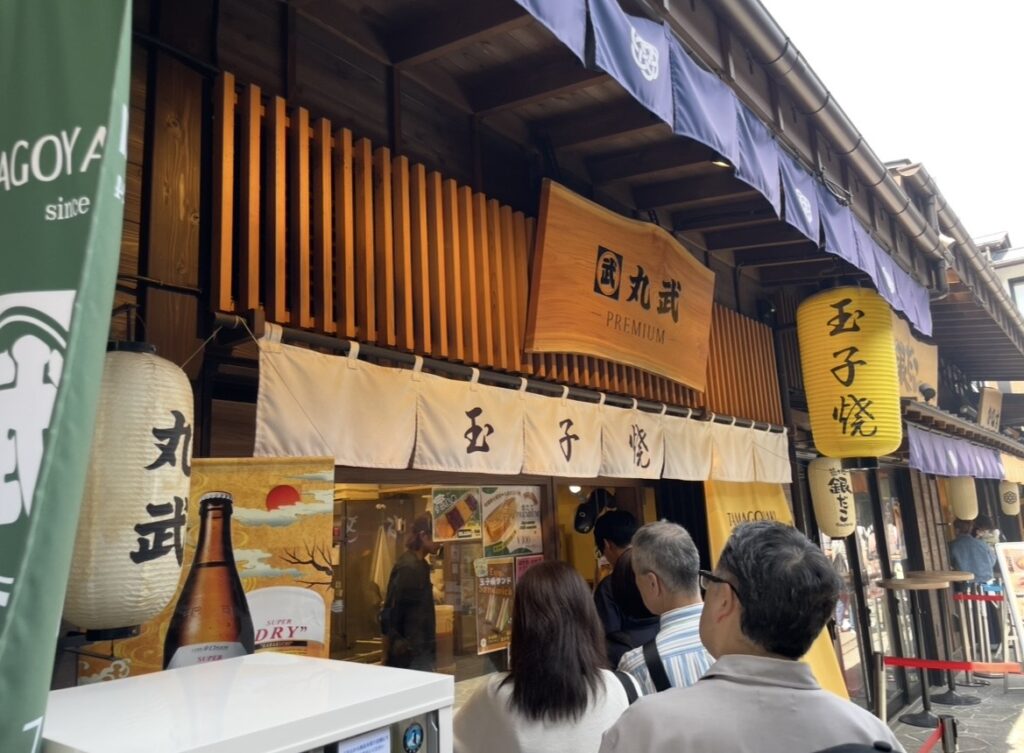
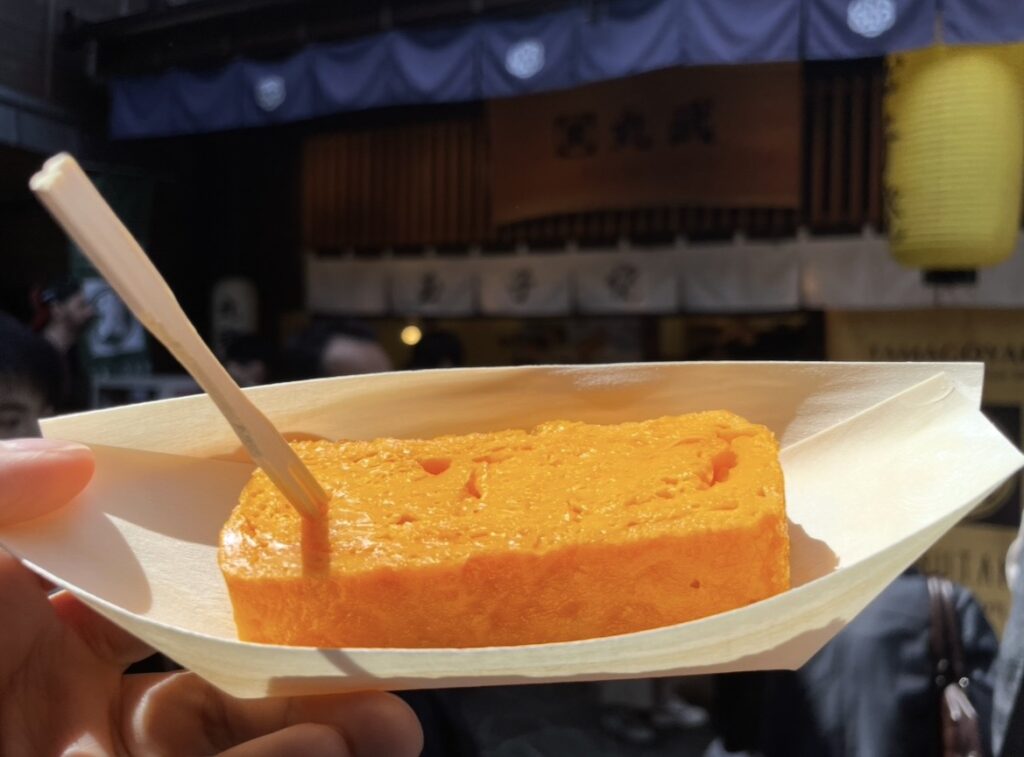
Marutake PREMIUM Freshly Made Tamagoyaki
At Marutake, where a line had already formed, I tried their freshly made tamagoyaki. With the first bite, the rich dashi flavor, the fluffy texture, and the gentle hint of sweetness spread through my mouth, creating a warm and comforting taste. The heat of the freshly cooked egg made it even more enjoyable—one of those treats that makes you want to go back for another piece.
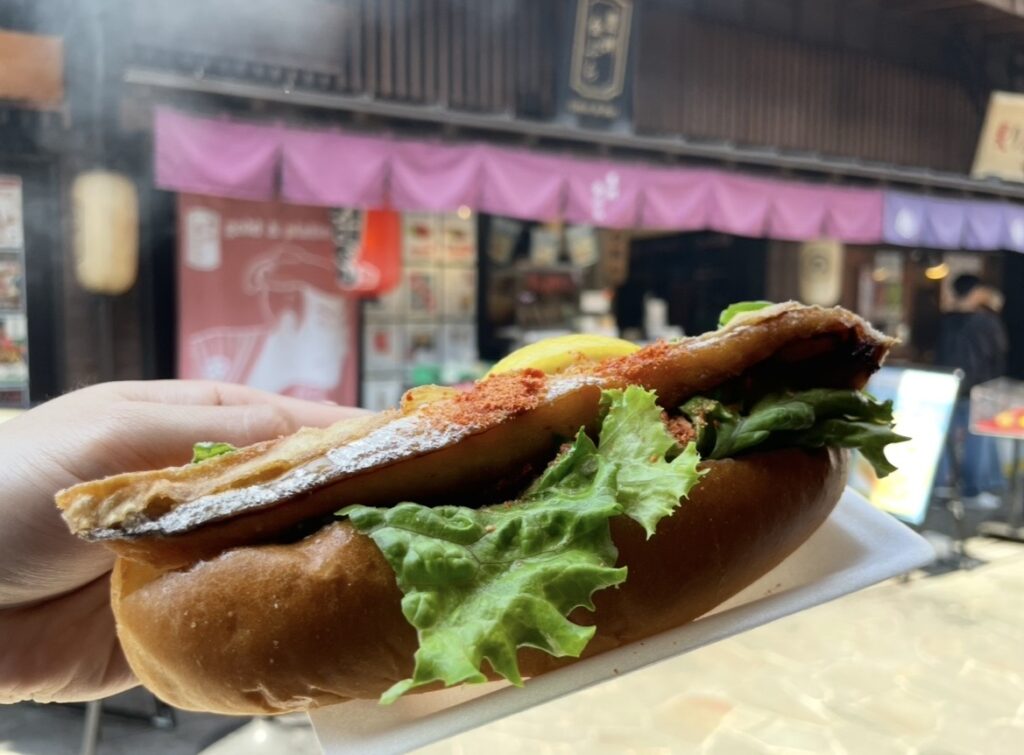
Kinpura’s Saba Sandwich
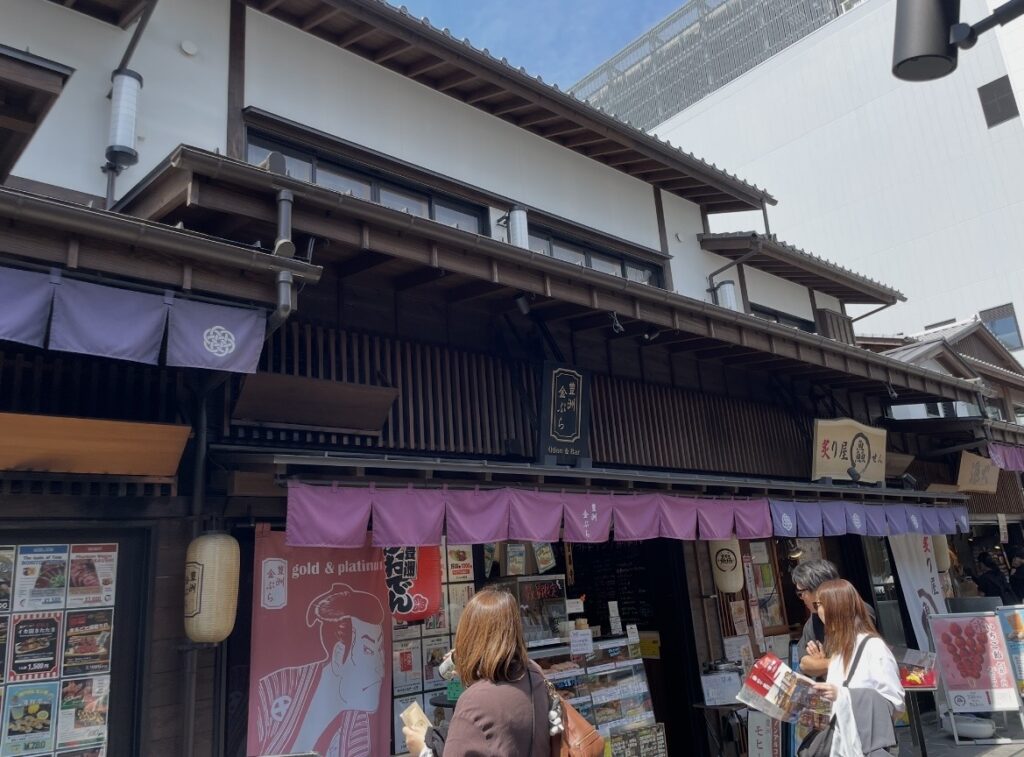
Next was the saba sandwich from Kinpura. The mackerel was grilled to a crisp, golden finish, with just the right amount of salt and a firm, satisfying texture. Paired with fresh lettuce, the sandwich felt light rather than heavy, yet still had enough volume to be filling on its own. There’s also something uniquely appealing about enjoying mackerel in sandwich form, and the flavor carried a gentle hint of the sea that felt distinctly Toyosu.
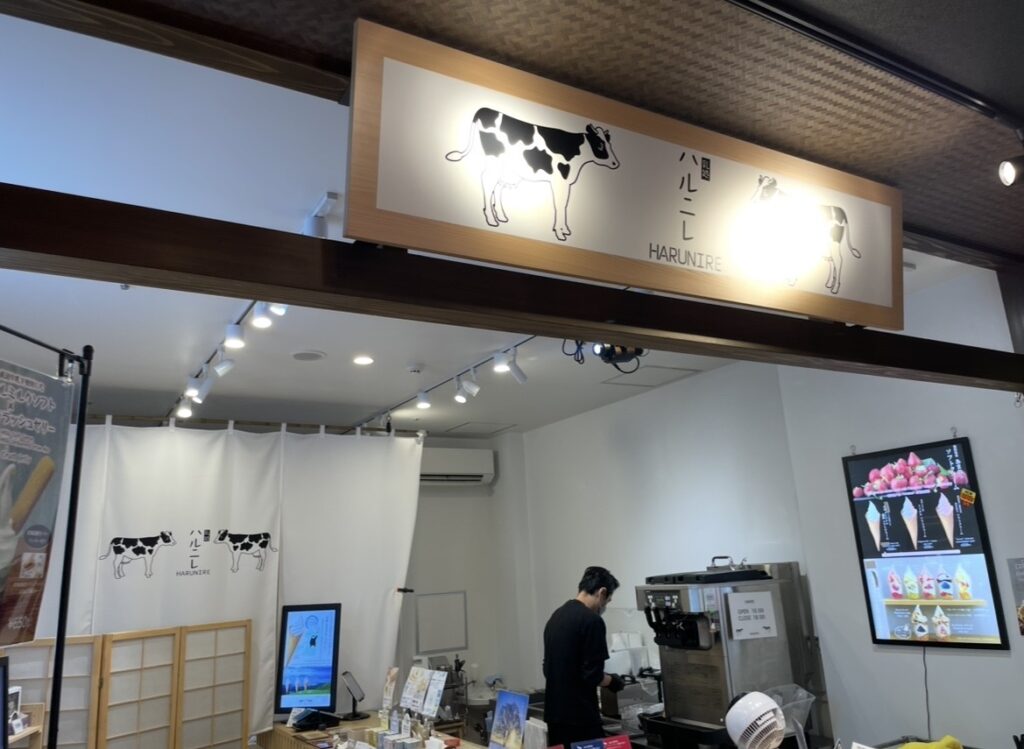
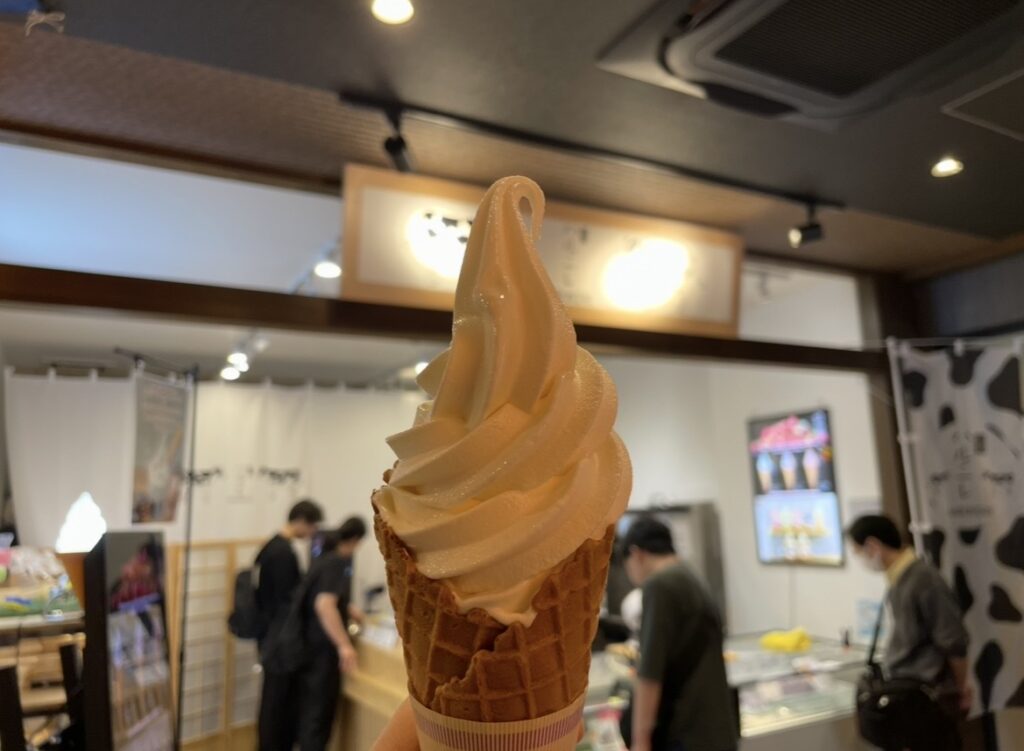
Harunire’s Rich Soft‑Serve Ice Cream
The last item was the soft‑serve ice cream from Harunire. The milk flavor was incredibly rich, and the deep, creamy taste spread the moment it touched my tongue. You can choose between a cup or a cone, but I personally recommend the cone, which adds a pleasant toasted aroma. With its gentle sweetness, it was the perfect treat to wrap up my street‑food stroll.
Tsukiji Area
After exploring Toyosu Market, I made my way to Tsukiji. Around the former market site, the Tsukiji Outer Market still remains, with countless shops lining the streets and a lively atmosphere that you can feel just by walking through. Unlike the well‑organized facilities of Toyosu, Tsukiji has a slower, nostalgic charm, filled with the traditional spirit of an old market town.
Tsukiji Outer Market
The Tsukiji Outer Market is a lively shopping district that remains in the Tsukiji area, where the market once stood, with rows of long‑established specialty shops lining the streets. As I walked through the area that day, I could feel the unique blend of energy and aromas that defines an old‑style market, creating an atmosphere that comes alive simply by being there.
Lively Market Alleys
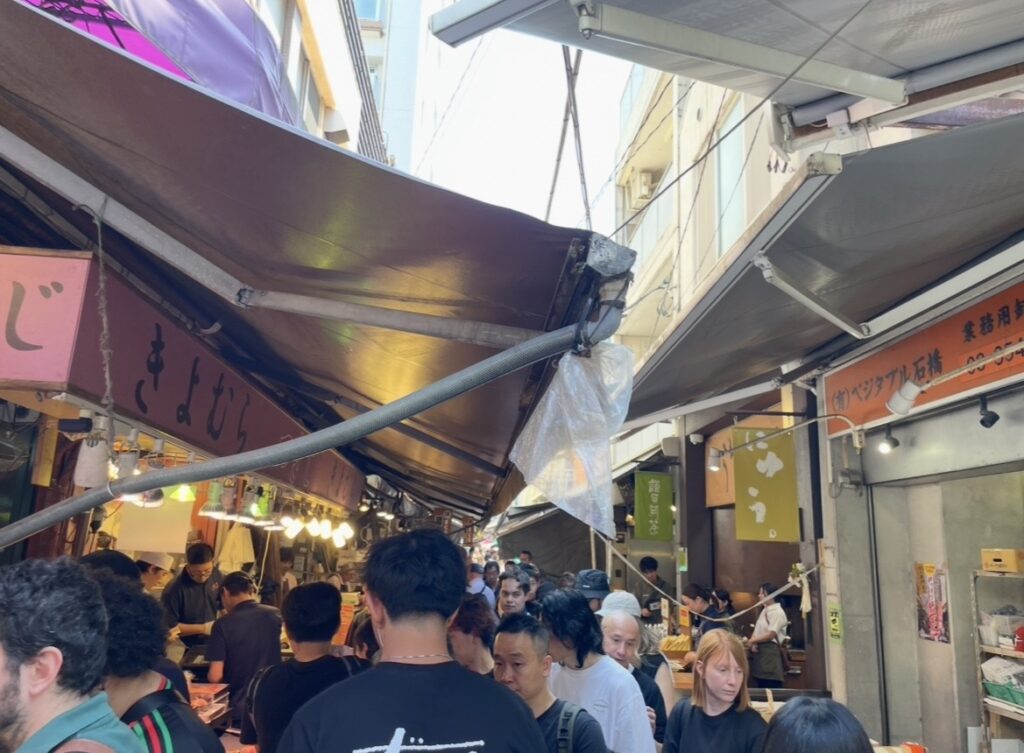
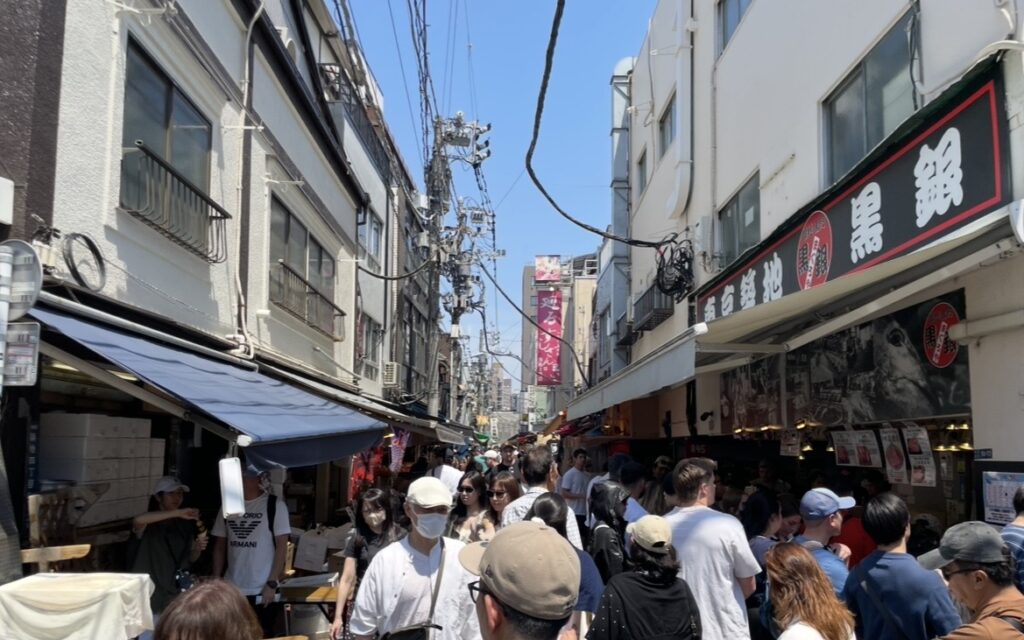
As soon as I began walking through the Tsukiji Outer Market, the atmosphere shifted immediately. Narrow alleys were tightly lined with specialty shops, and the mix of aromas drifting from storefronts and the sound of people’s voices created a pleasantly bustling, distinctly Asian local vibe that filled the streets.
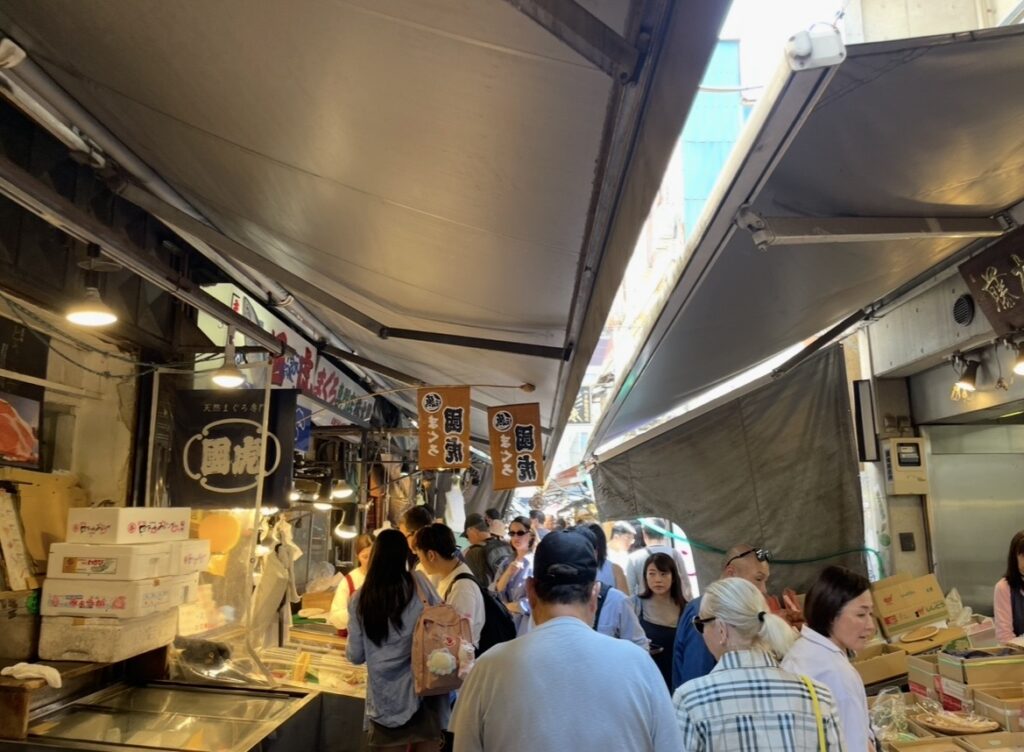
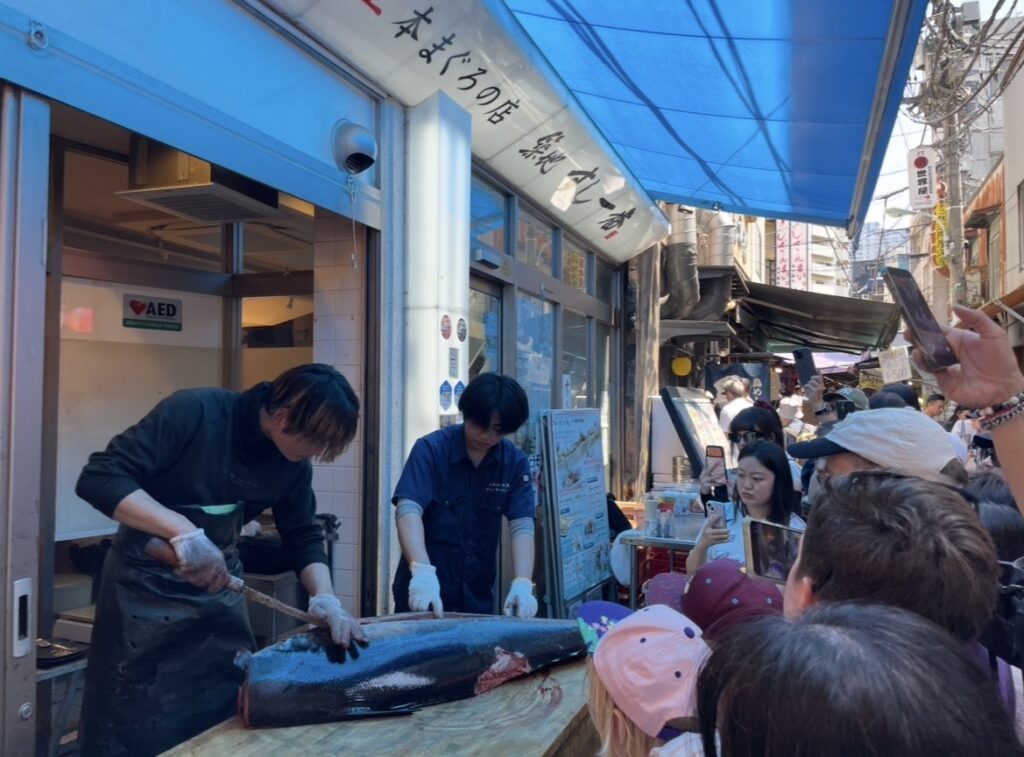
As I continued walking, I happened to pass a tuna shop just as a tuna‑cutting demonstration was beginning, and many people stopped to watch. Being able to see the craftsman’s knife skills from such a close distance is an experience unique to Tsukiji. Unlike the polished, visitor‑friendly atmosphere of Toyosu, here I could feel the raw, living energy of a true market town.
As I continued down the street, shops selling seafood, dried goods, tamagoyaki, prepared foods, and more appeared one after another, and simply walking through the area wrapped me in the energy and heat of the market. This sense of lively variety is exactly what makes Tsukiji so appealing, and the alleys were filled with a kind of vibrancy that offers something new to discover every time you visit.
Tsukiji’s Signature Street‑Food Bites
The Tsukiji Outer Market is lined with countless shops, but among them, I chose three flavors that left a particularly strong impression. Each one offered a taste of the distinct character of Tsukiji, making for an enjoyable street‑food experience.
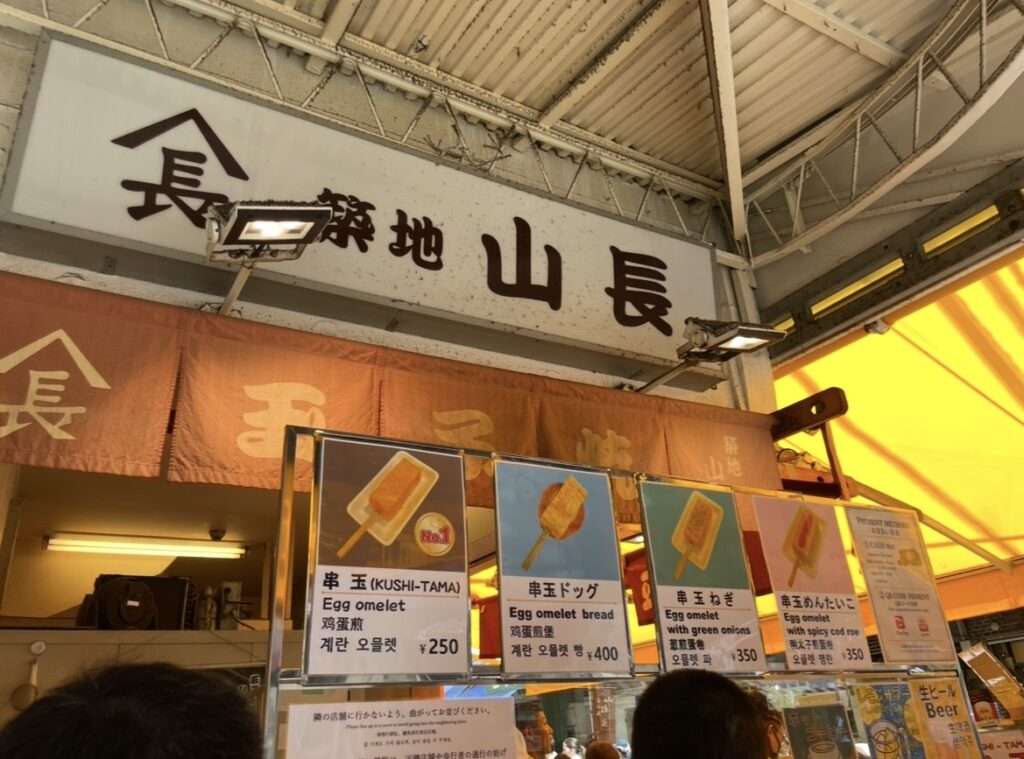
Yamacho’s Tamagoyaki Skewer
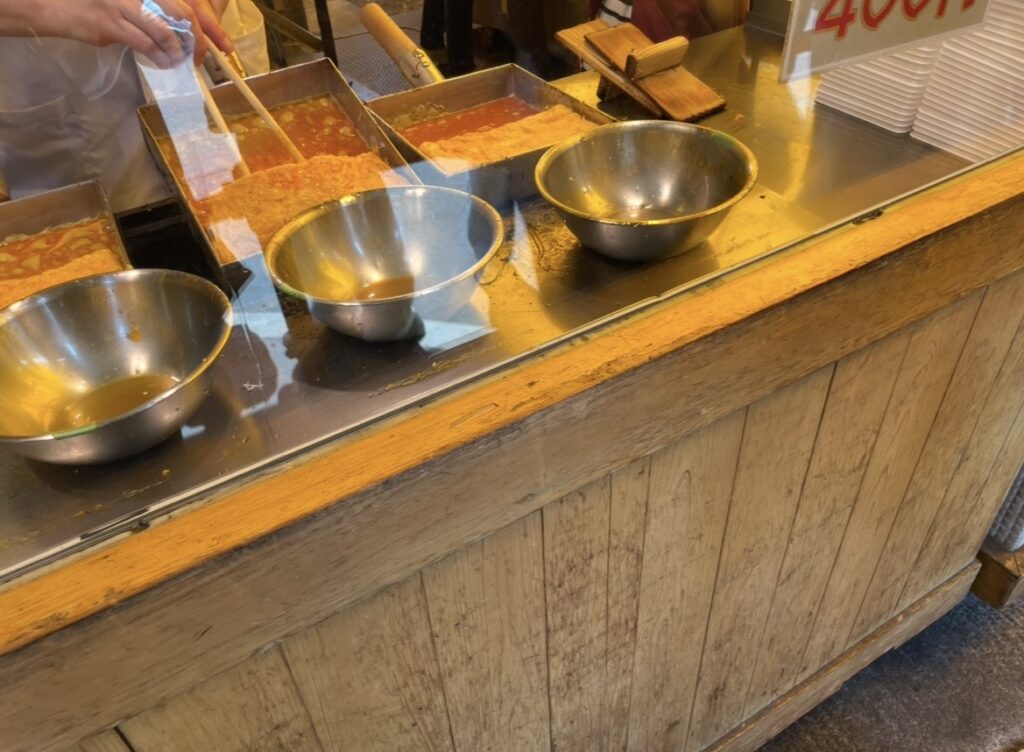
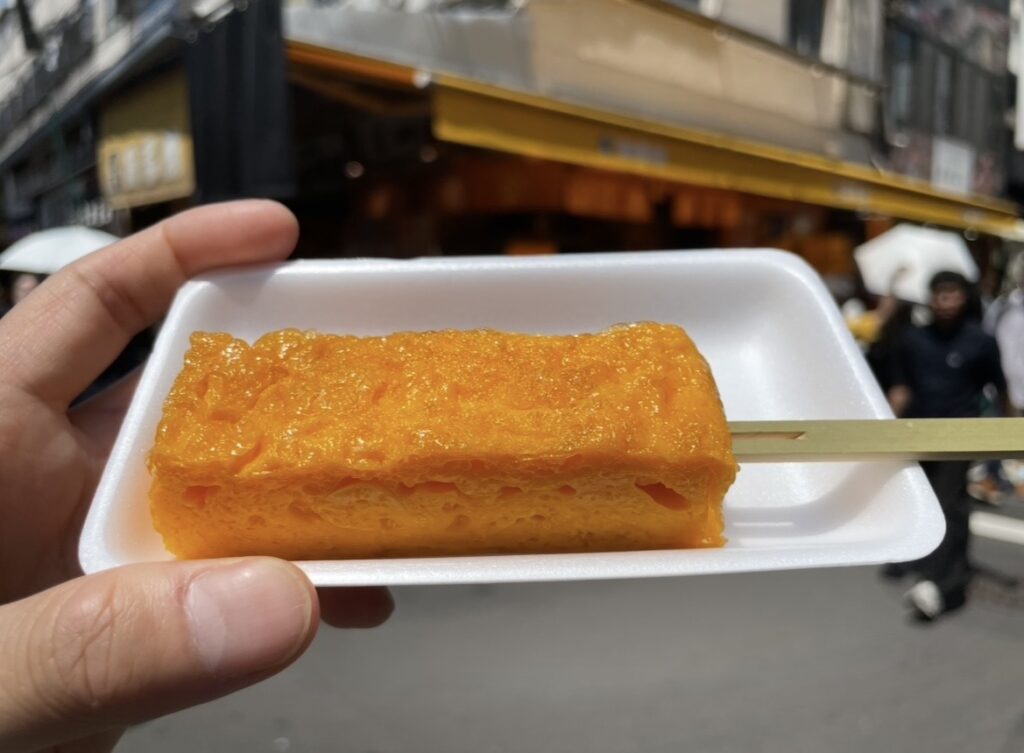
At Yamacho, a popular shop where the line never seems to end, you can watch the tamagoyaki being cooked right in front of you, creating a vivid sense of immediacy. Drawn in by the aroma of the eggs rising and puffing up on the griddle, I tried their freshly made tamagoyaki skewer.
Because it’s served on a skewer, it’s easy to enjoy while walking, and the flavor is slightly less sweet than Toyosu’s version, with a refined taste that highlights the dashi. The soft, airy texture and gentle warmth made it clear why this shop attracts such long lines.
Naritō Suisan’s Extra‑Large Fresh Oyster
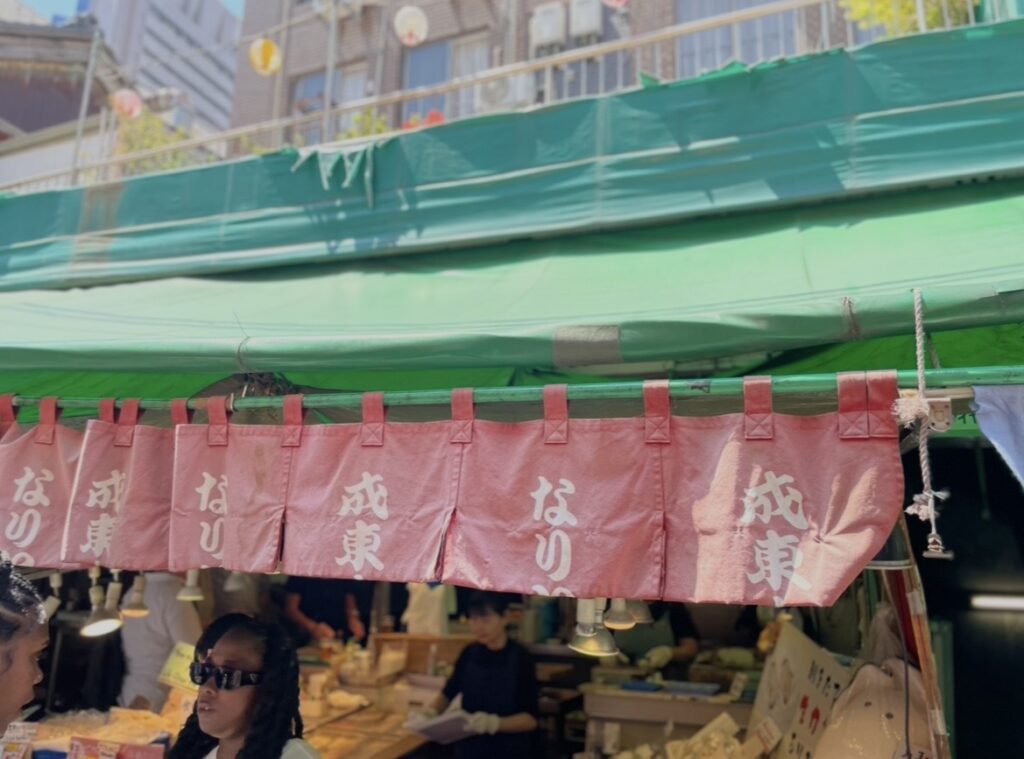
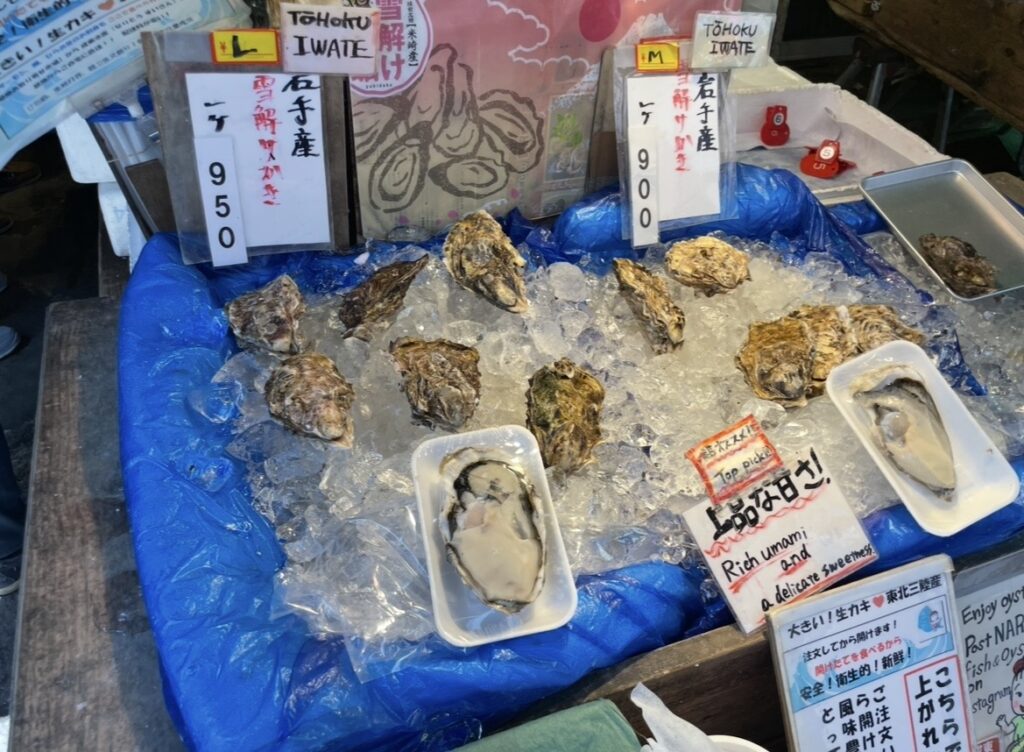
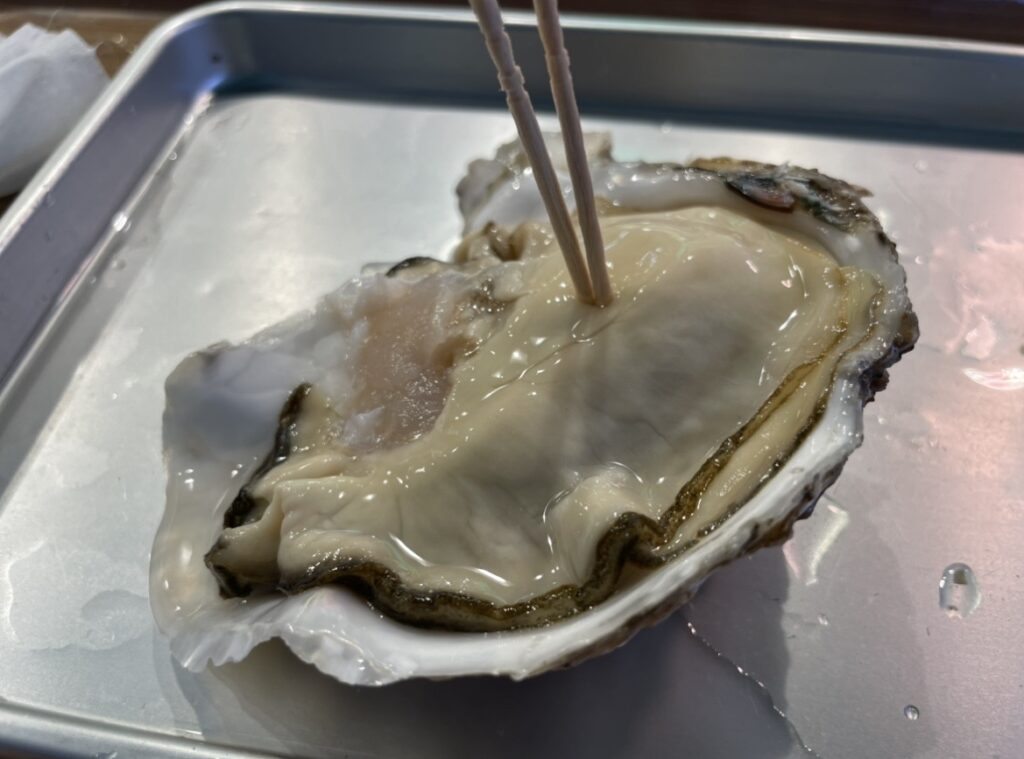
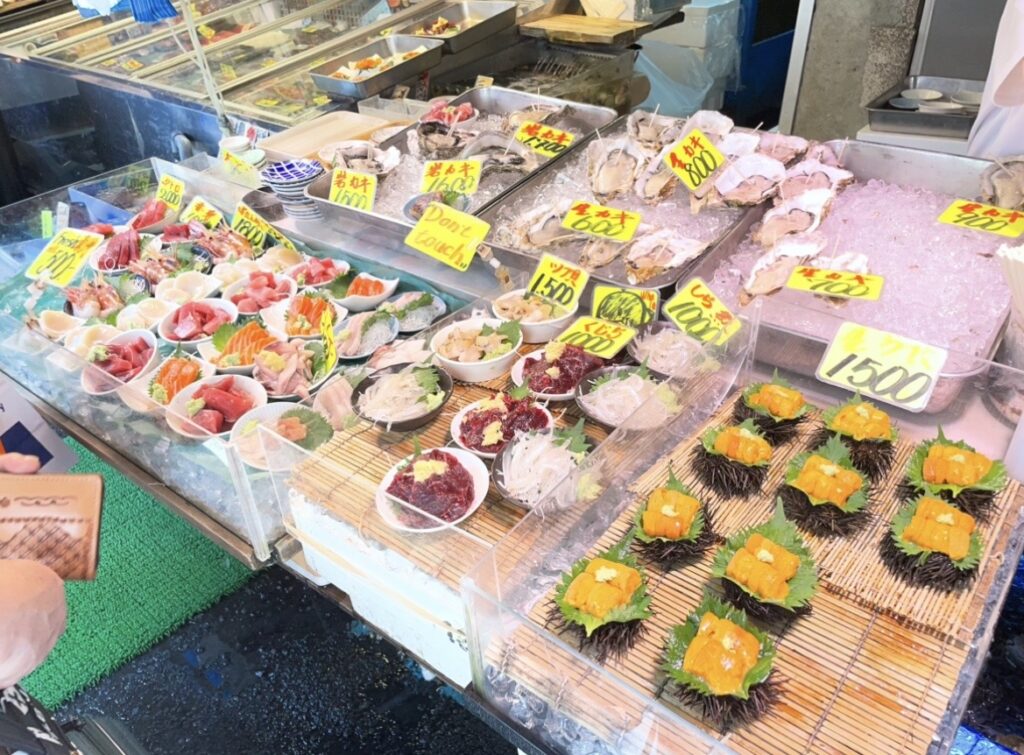
At Naritō Suisan, the oysters displayed on ice were all impressively large, so I chose the biggest one I could find without hesitation. While seafood is a well‑known highlight of Tsukiji’s street‑food scene, oysters are especially popular, and this one had a satisfying weight when I held it—far too big to finish in a single bite.
The moment I tasted it, the rich umami and fresh ocean aroma spread across my palate, offering a deep, full‑bodied flavor. It was a bold and generous treat that perfectly captured the distinctly dynamic spirit of Tsukiji.
Saitō Suisan’s Whale Sashimi
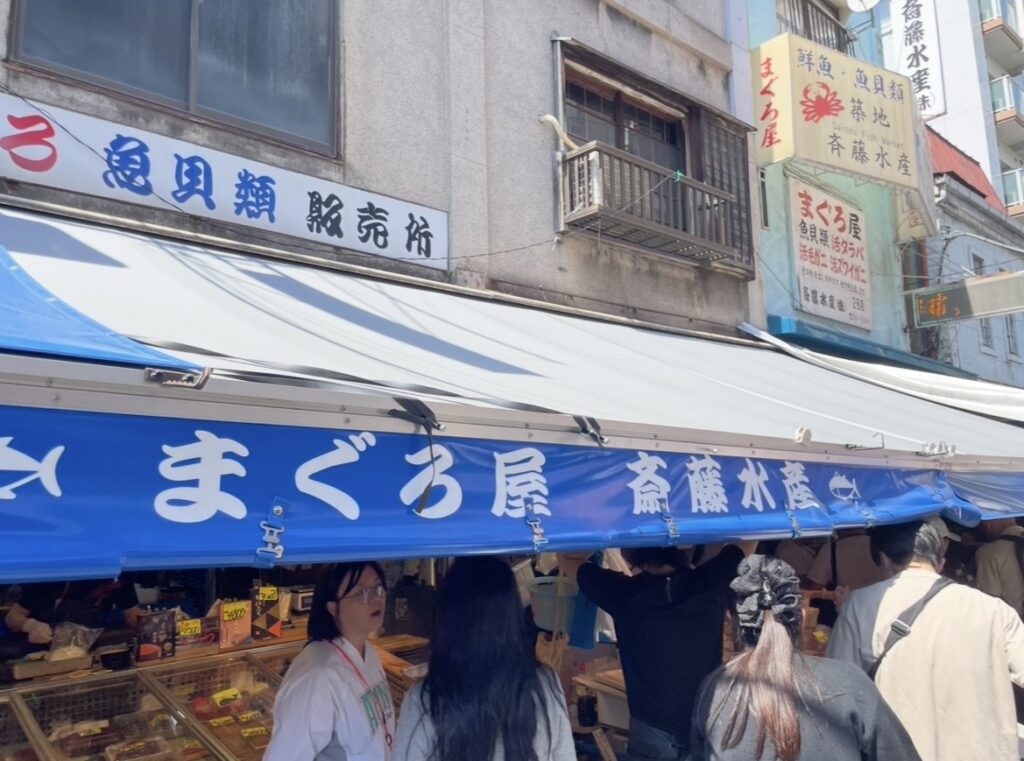
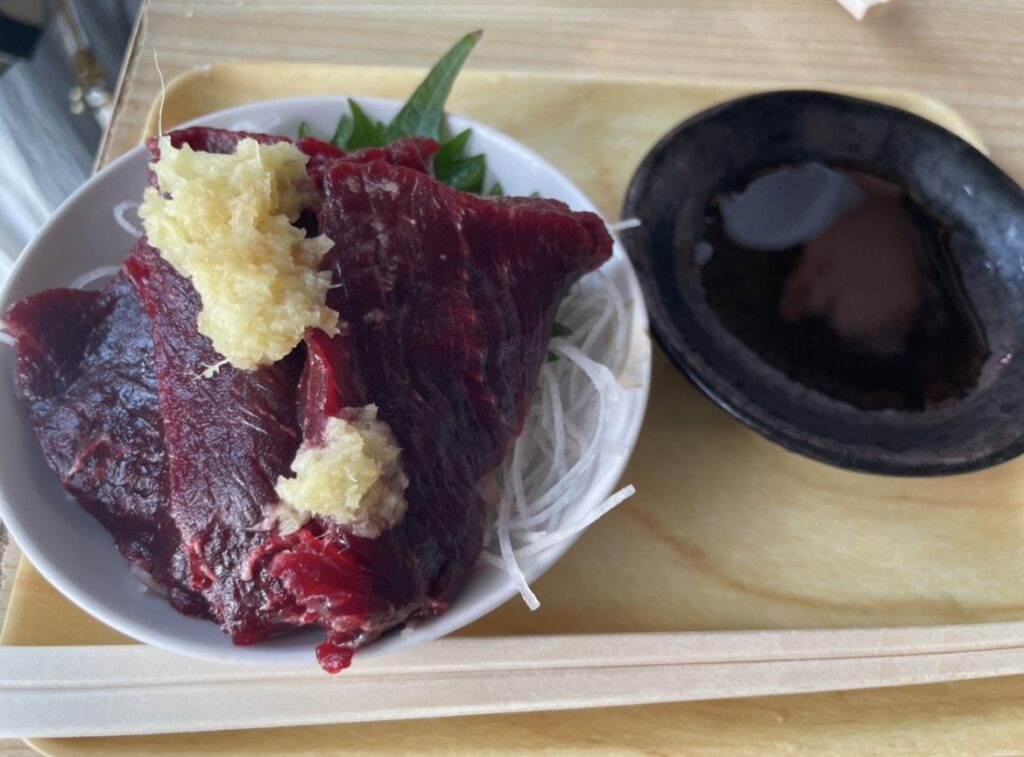
At Saitō Suisan, I tried whale sashimi—a specialty you don’t often come across, and one that naturally makes you stop when you see it displayed at the storefront. Despite being an uncommon ingredient, the taste was surprisingly approachable. The texture was moist and tender, almost like a thicker cut of horse sashimi, with a deep, satisfying richness. It paired beautifully with soy sauce and ginger, and had almost no strong or gamey notes.
Finding a slightly unusual ingredient like this in the middle of Tsukiji’s bustling, eclectic alleys felt like one of the unique pleasures that only this neighborhood can offer.
Namiyoke Shrine
While walking through the Tsukiji Outer Market, I came across a spot where the lively atmosphere suddenly softened into a moment of calm. Standing quietly just beside the market, Namiyoke Shrine is believed to “ward off misfortune and calm the waves,” and has long watched over both the neighborhood and the market itself.
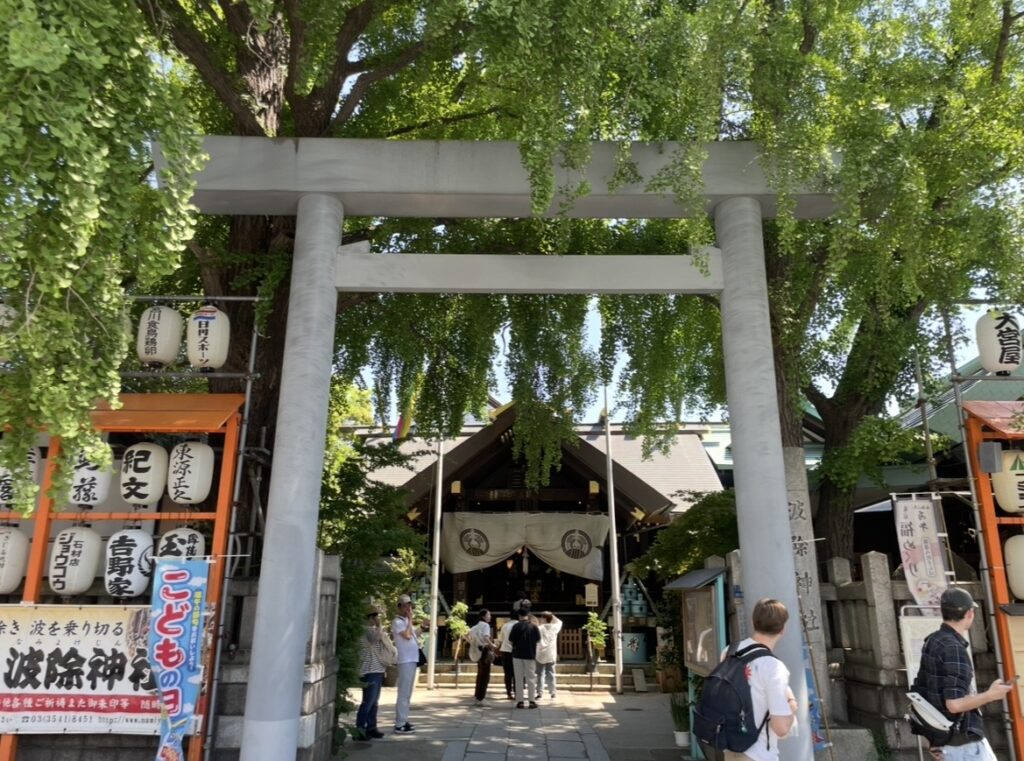
As I stepped into the shrine grounds, a dignified main hall welcomed me. The atmosphere felt calm and soothing, as if I had momentarily stepped away from the bustle of the market, making it a quiet place to pause and gently reset my mind during the journey.
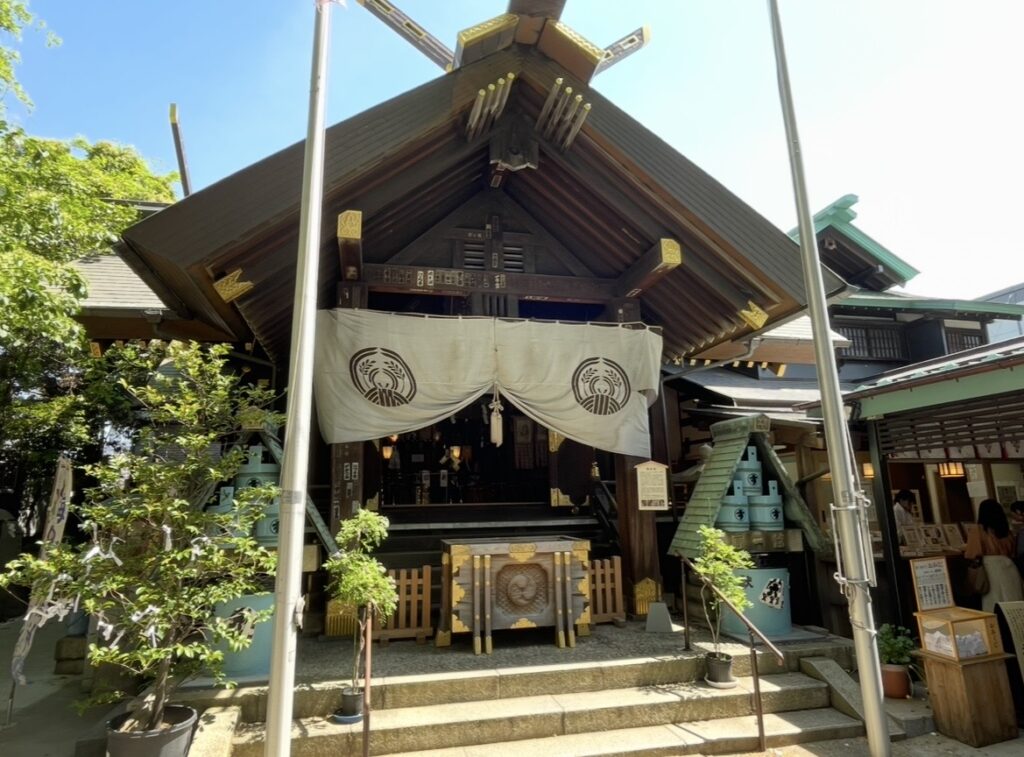
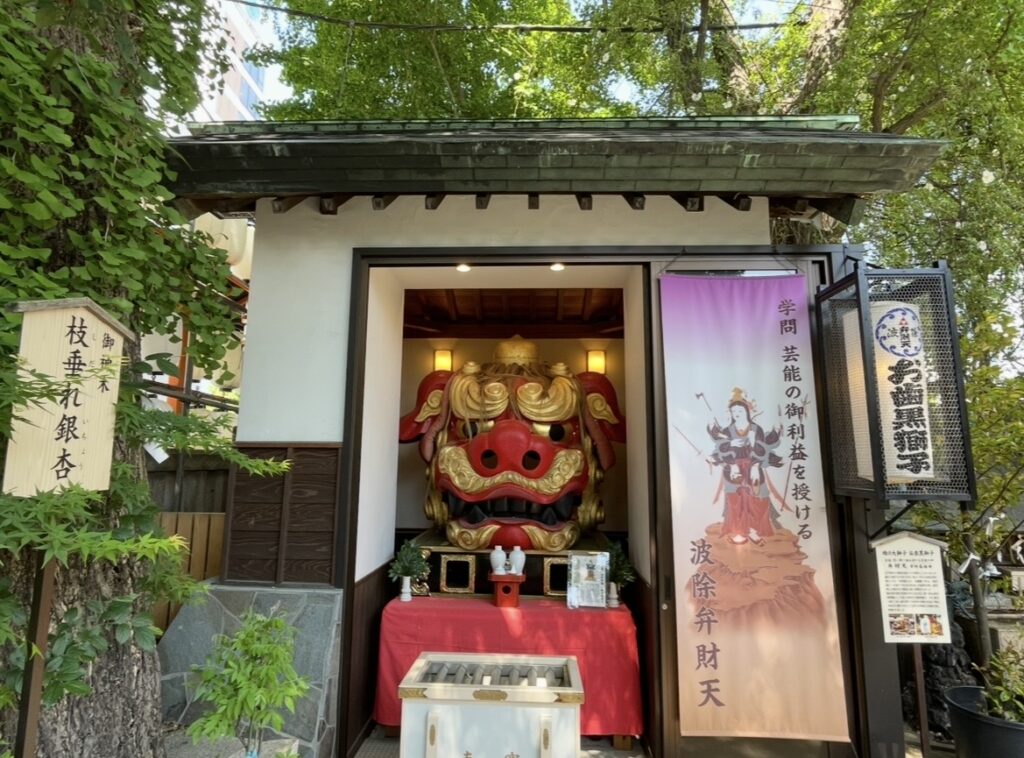
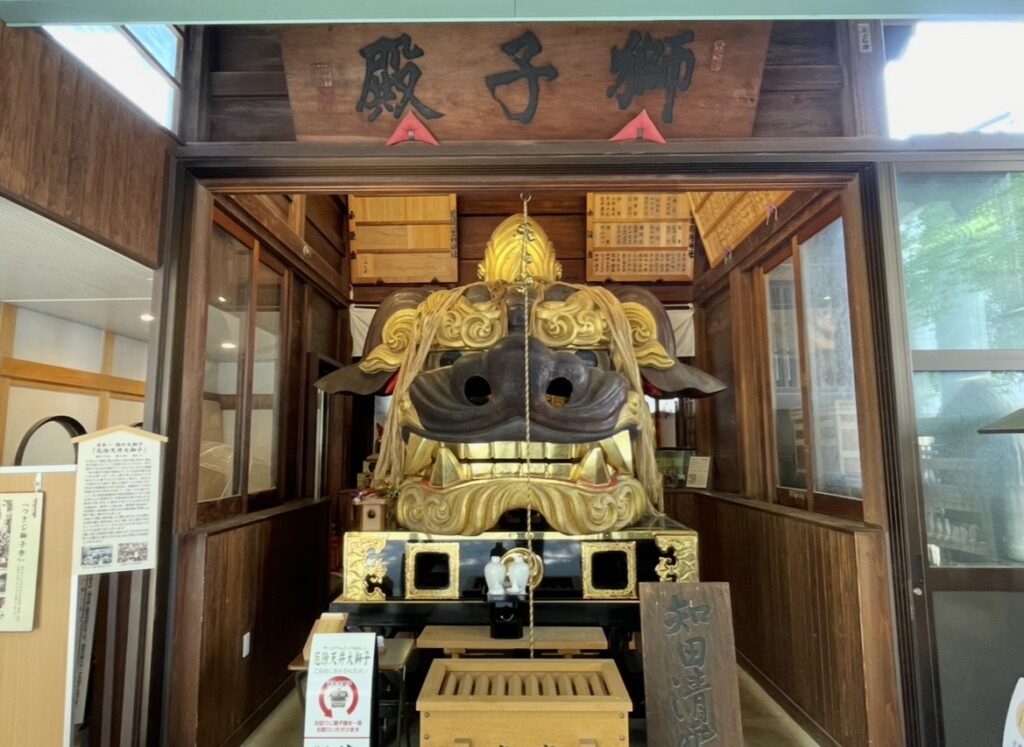
The most striking feature of Namiyoke Shrine is the pair of enormous lion heads displayed within the grounds. One is red and gold, the other black and gold, each enshrined with a powerful presence yet carrying an expression that feels surprisingly warm. As symbols of safety and prosperity for the market, they have long been cherished by the people of Tsukiji.
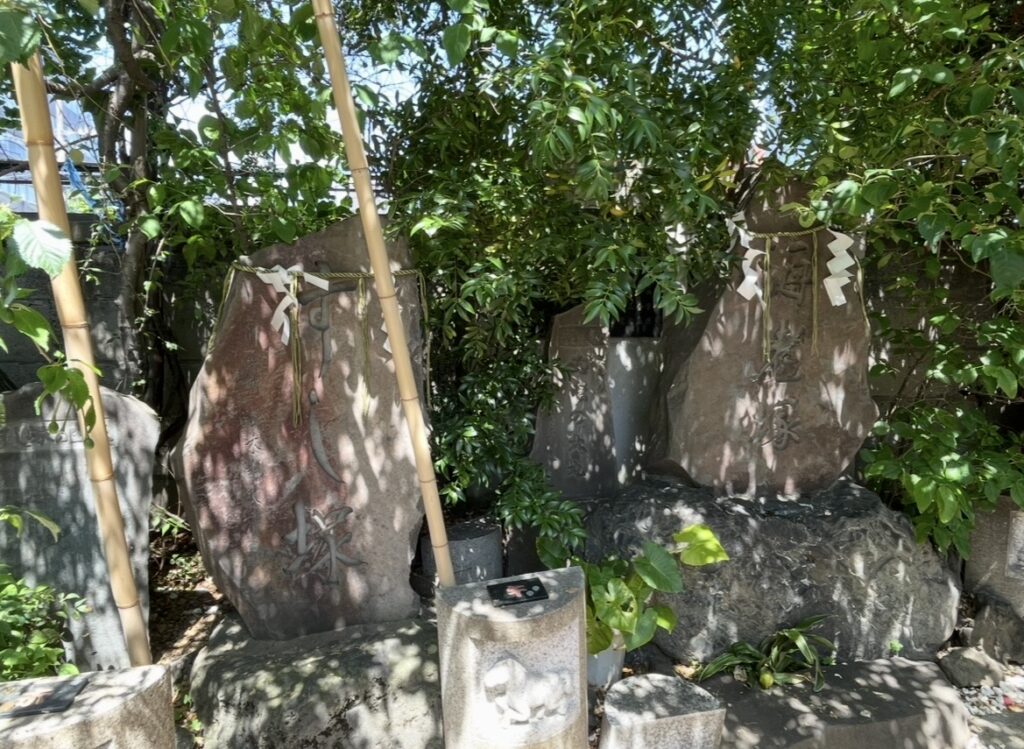
In one corner of the shrine grounds stood a stone monument adorned with a sacred rope, quietly resting in the dappled sunlight. The contrast between the market’s lively bustle and the shrine’s gentle calm made this spot a place where you could truly feel the unique rhythm of Tsukiji.
Tsukiji Hongan‑ji Temple
Walking through the streets of the former Tsukiji Market and toward Harumi‑dōri, a striking building suddenly comes into view. Its massive stone exterior and large dome give it a distinctive presence that stands out even among the surrounding cityscape.
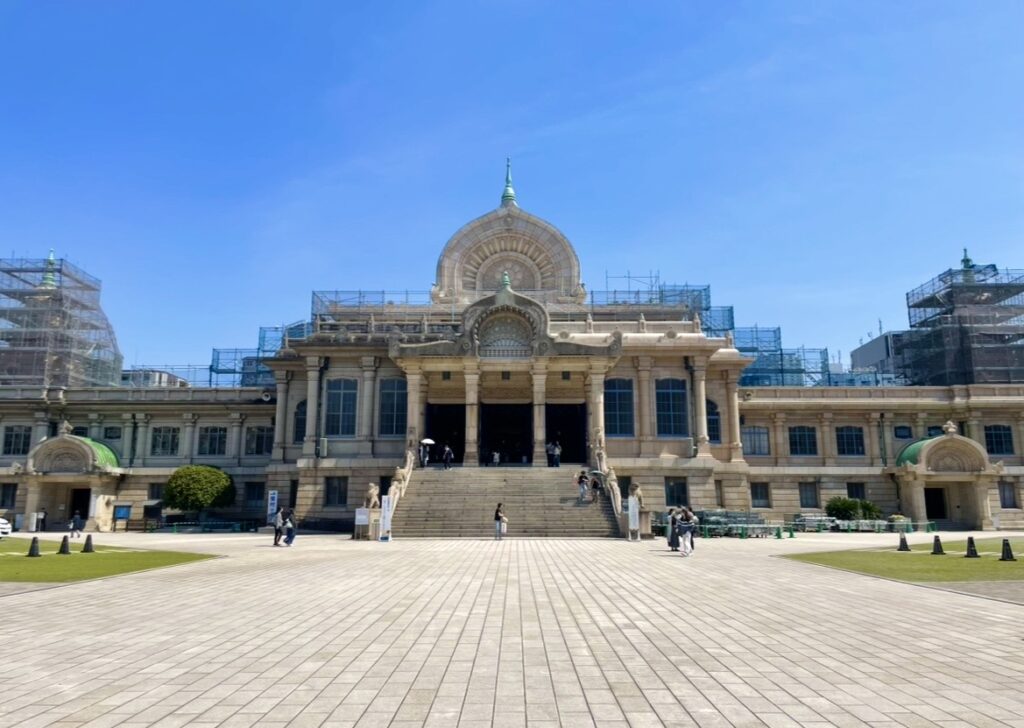
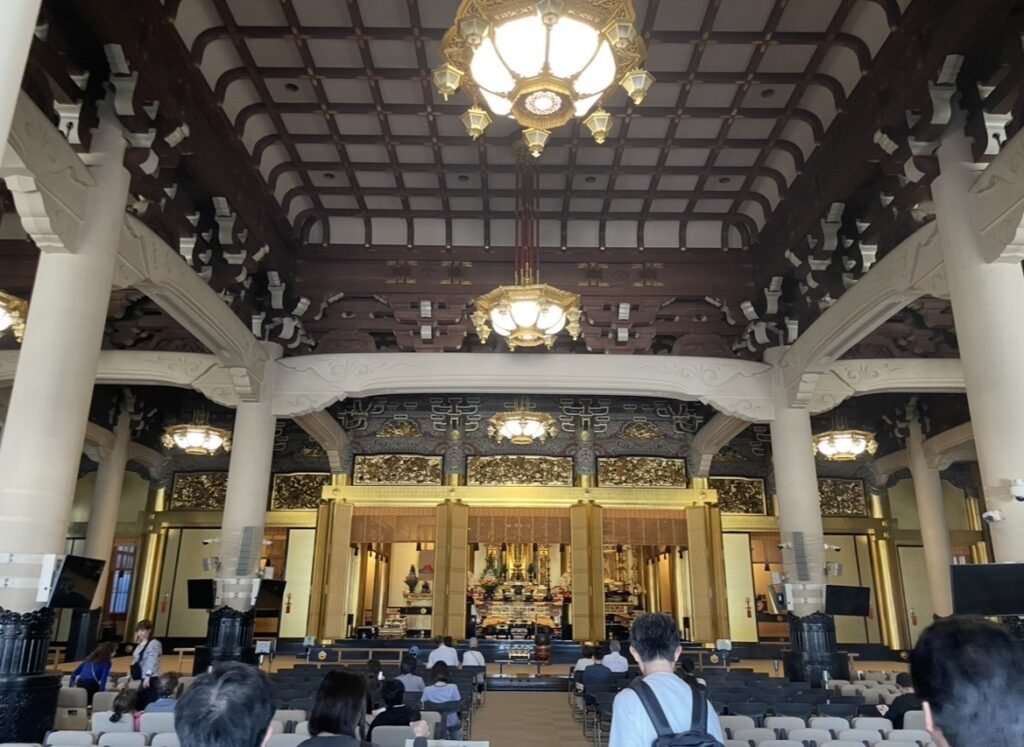
This building was designed by architect Chūta Itō when the main hall, destroyed in the Great Kantō Earthquake, was rebuilt. Guided by his idea of expressing the origins of Buddhism through architecture, he incorporated Indian architectural elements, giving the temple an appearance rarely seen in Japanese Buddhist structures. The interior of the main hall is open to the public, and inside, a quiet sense of solemnity unfolds—quite different from the exterior. The high ceiling and golden altar create a calm, serene atmosphere, making it a peaceful place to pause and reset, just a short step away from the bustle of the market.
The Strengths of Toyosu and Tsukiji, and Who Each One Suits
Toyosu Market and the Tsukiji Outer Market may both be “markets,” but the experiences they offer are quite different. Based on what I felt while walking through each area, here is a summary of their strengths and the types of visitors they suit.
Toyosu Market is ideal for those who want to enjoy a modern market facility and observe the tuna auctions. With its new buildings and well‑organized visitor routes, it allows you to explore the workings of the market at a relaxed pace. While many of the dining options focus on seafood bowls and sushi, there are also lighter items that can be eaten outside the shops, making it possible to enjoy a bit of food while walking as well.
On the other hand, the Tsukiji Outer Market is perfect for those who want to experience a lively, local, and slightly chaotic atmosphere. Small shops line the narrow alleys, and the calls from vendors and the energy spilling out from their storefronts create the unmistakable feel of a working market. Many stalls offer dishes in small portions—like ordering sashimi by the plate—so you can sample whatever catches your eye as you walk.
Both markets have their own unique strengths, so the choice feels simple: visit Toyosu if you want to explore a modern market facility, and choose Tsukiji if you want to wander through a market that feels like part of the city itself.
That concludes everything introduced in this article. As you walk through both areas and notice their differences, you begin to realize that Toyosu and Tsukiji, though both “markets,” each have a completely distinct character.
Both places offer experiences that enrich your travels, so I hope these impressions serve as a helpful guide when you visit the markets in the future. Choose the style that best suits the way you like to spend your time.