
teamLab Planets Tokyo is an immersive art museum where light, digital projections, water, and large-scale spatial installations come together to create a multi‑sensory experience. Instead of simply “looking” at art, you feel each work with your whole body—from the texture under your feet to the sense of space expanding around you.
If you’re visiting for the first time, you might wonder:
- What should I wear?
- How deep is the water?
- Is it suitable for kids?
- How long does the experience take?
In this article, I’ve put together all the essential information you’ll want to know before visiting teamLab Planets Tokyo—based on my actual experience visiting with my child. You’ll find practical tips on what to wear, how long the visit takes, things to know about the water areas, visiting with kids, ticket options, and the museum’s location.
To help you picture what the day will be like, I’ll walk you through each point in a clear, easy-to-follow order.
What Is teamLab Planets Tokyo?
teamLab Planets Tokyo is an immersive art museum created by the art collective teamLab. The museum features large‑scale installations that combine light, digital projections, water, and mirrored spaces, allowing visitors to walk through the artworks rather than simply view them.
Inside, the museum is divided into several zones where the environment itself becomes part of the artwork. The texture under your feet changes, your field of vision suddenly opens up, and the scale feels far larger than what photos or videos can capture. It’s an experience that surrounds your entire body.
The museum attracts many international visitors and has become a popular destination for travelers in Tokyo. At the same time, the layout and staff support make it easy for families with children to enjoy the experience as well.
If you’re visiting for the first time, it’s helpful to know a few things in advance—such as what to wear, how long the visit takes, and what to expect in the water areas.
Things to Know Before Your Visit (Preparation Guide)
Here are some key points to know in advance to help you fully enjoy your time at teamLab Planets Tokyo.
Tickets and Reservations
Because crowd levels at teamLab Planets Tokyo vary significantly depending on the time of day, the way you book your ticket can directly affect how much you enjoy the experience. Weekend slots and peak travel seasons fill up quickly, so understanding how the reservation system works in advance makes planning your day much easier.
Here, I’ll walk you through the key points of the reservation process and the steps from arrival to entering the museum.
Advance Reservations Are Essential
teamLab Planets Tokyo operates primarily on an advance reservation system. Same‑day tickets are not completely unavailable, but they are sold only when there are remaining time‑slot openings, and there is no permanent ticket counter on site. Weekend slots and peak travel seasons often fill up in advance, so relying on same‑day tickets may result in not being able to enter.
Advance reservations are almost mandatory in the following situations:
- Weekends and public holidays
- Long vacation periods such as summer break or New Year
- Times when there are many international visitors
- When visiting with children and you want to plan your schedule smoothly
Tickets are purchased through the official website with a designated date and time, and entry slots are divided into 30‑minute intervals. You can enter slightly before or after your selected time window, but depending on crowd levels, you may need to wait before entering.
You can also book tickets through various international travel platforms, but availability may differ depending on the site. Even if your preferred time slot appears sold out on a travel website, you may still find openings on the official website. Since there are multiple ways to book, it’s helpful to check more than one option depending on your situation.
After purchasing your ticket, you can change the date and time up to three times. The deadline for making changes varies depending on the type of pass, so be sure to check the details on the official HP.
How to Enter on the Day of Your Visit
At teamLab Planets Tokyo, you enter during the time slot you selected when purchasing your ticket. Entry windows are divided into 30‑minute intervals, and it’s generally fine to arrive slightly before or after your designated time.
When you line up, you’ll first show your reservation screen to a staff member so they can confirm that your booking matches the current time slot. Then, when you reach the actual entrance gate, your QR code will be scanned once more. You only need to show the code on your smartphone—there’s no need to print a paper ticket.
After entering, you’ll proceed to an area where you remove your shoes and store your belongings in a locker. The lockers are free to use and can hold items like shoes, bags, and jackets. There is also a dedicated space for larger items such as strollers and carry‑on suitcases, making the experience convenient for families with children or travelers visiting with luggage.
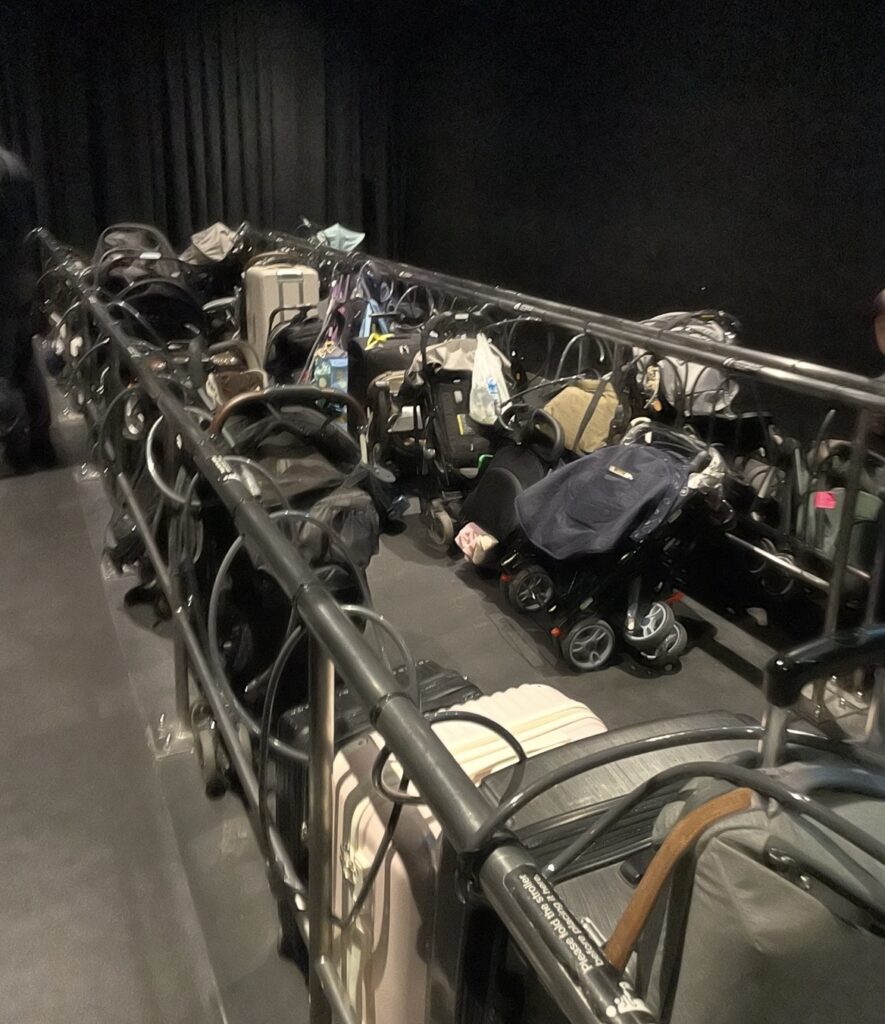
After getting ready, you’ll follow the staff’s guidance to proceed to the first area. The museum is designed as a one‑way route, and staff members are stationed at the entrance of each zone, so even first‑time visitors won’t get lost. Depending on crowd levels, you may need to wait briefly before entering certain areas, but the overall flow is smooth.
Estimated Time Required
A typical visit to teamLab Planets Tokyo takes about 60 to 90 minutes. However, the duration can vary depending on how long you spend in each installation and how many photos you take. If you prefer to explore at a slower pace, planning for 90 to 120 minutes will give you a more relaxed experience.
The museum follows a one‑way route, and depending on crowd levels, you may need to wait briefly before entering certain areas. This is especially common on weekends and during peak travel seasons, when popular zones tend to take longer to move through.
If you’re visiting with children, it’s common to spend extra time in areas where the floor texture changes or in the water installations, so the total visit often exceeds 90 minutes. For those who want to take plenty of photos or spend more time in multiple installations, scheduling around two hours will give you plenty of room to enjoy the experience comfortably.
Clothing Tips
Because teamLab Planets Tokyo includes areas where you walk through water, there are a few things to keep in mind when choosing what to wear. Some sections have water that reaches up to just below an adult’s knees, so long skirts or long, non‑rollable bottoms may get wet.
Any comfortable outfit is fine, but bottoms that can be rolled up above the knee or short‑length bottoms are the safest choice. If you wear a dress or a long skirt, it may be difficult to walk and more likely to touch the water, so it’s better to avoid them or choose materials that won’t bother you if they get a little wet.
You’ll walk through the museum barefoot, so you’ll need to remove your socks before entering. In colder seasons, your feet may get chilly, so bringing a towel can make the experience more comfortable. Towels are also available to borrow on site, so it’s perfectly fine to come empty‑handed.
Because some areas feature mirrored floors, wearing inner shorts is recommended if you’re visiting in a skirt. The museum also provides free loaner shorts, and you can request a pair from the staff whenever needed.
Water Areas and Hygiene
teamLab Planets Tokyo includes several areas where your feet are immersed in water. In some sections, the water reaches just below an adult’s knees, and the ripples created as you walk are designed to be part of the artwork itself.
Some first‑time visitors may worry about cleanliness or whether conditions like athlete’s foot could spread, but the water is continuously circulated and carefully maintained to ensure proper hygiene. In my own experience—and that of my family—we didn’t feel any itching or discomfort at all. From the perspective of someone who has actually visited, there were no hygiene concerns during the experience.
Some visitors may feel hesitant about walking barefoot since your feet come into direct contact with the floor. However, the floors are thoroughly cleaned, and staff members regularly patrol the area, so the environment is well maintained and comfortable to walk through.
The water areas are also where you can feel the museum’s immersive qualities most strongly. When combined with light and digital projections, the experience becomes uniquely atmospheric. As long as you wear clothing that can get a little wet, you can enjoy these sections comfortably.
Location
The most convenient way to reach teamLab Planets Tokyo is via Shintoyosu Station on the Yurikamome Line. It’s only a 1–2 minute walk from the station to the venue, and the route is very straightforward, making it easy to find even for first‑time visitors.
The area surrounding teamLab Planets Tokyo includes Toyosu Market and Senkyaku Banrai, both of which are within easy walking distance. This makes it convenient to combine your visit with market sightseeing or enjoying local food, creating a well‑balanced sightseeing route.
For a detailed guide to the highlights and recommended ways to explore Toyosu Market and Senkyaku Banrai, please refer to the article linked here.

Buses from Shimbashi Station are also available, but the Yurikamome Line is the more enjoyable option because you can take in the scenery along Tokyo Bay. From the train windows, you’ll see views of the Rainbow Bridge and the waterfront area, turning the short ride itself into a small sightseeing experience.
Visiting with Children
teamLab Planets Tokyo is an interactive art museum that children can genuinely enjoy. The examples here are just a few, but the museum features several installations where kids can move their bodies while engaging with light and digital projections—each designed to capture their curiosity and keep them fully immersed.
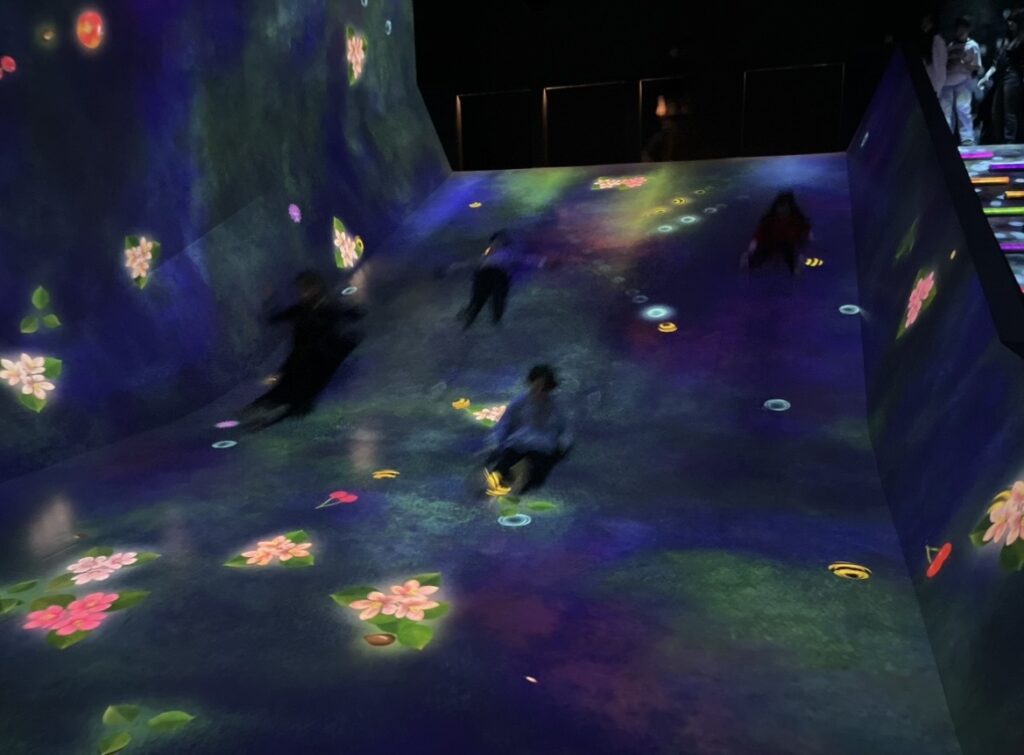
In the light‑filled slide area, vivid visuals shift beneath your feet as you slide down, creating the sensation of diving directly into the artwork.
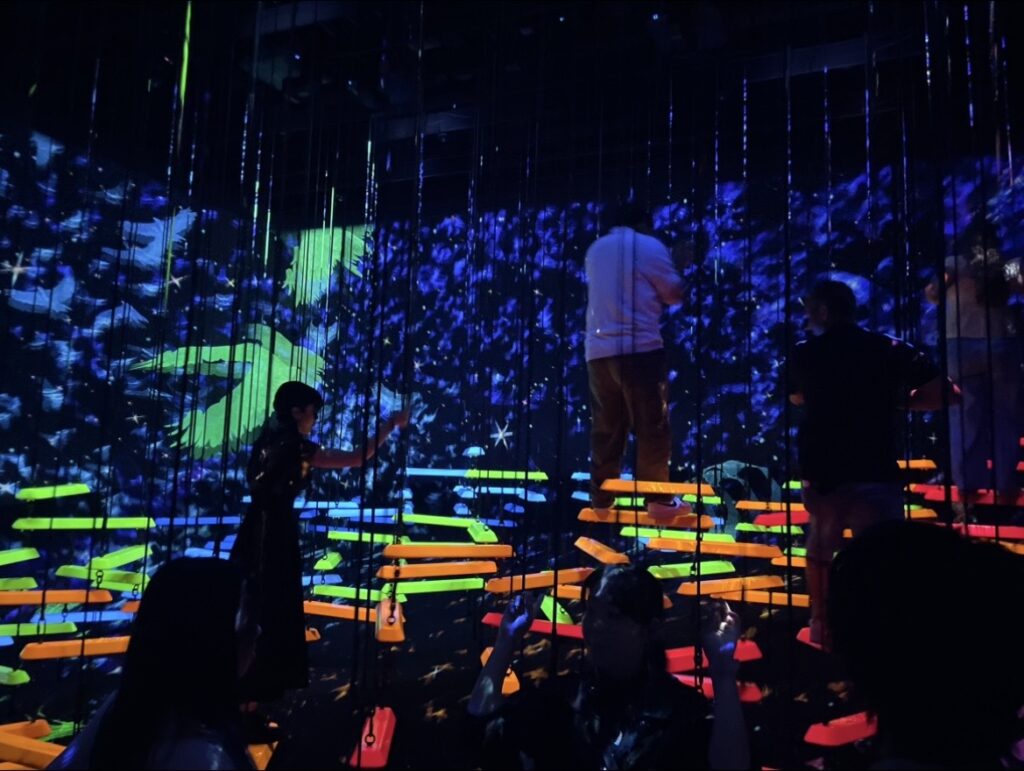
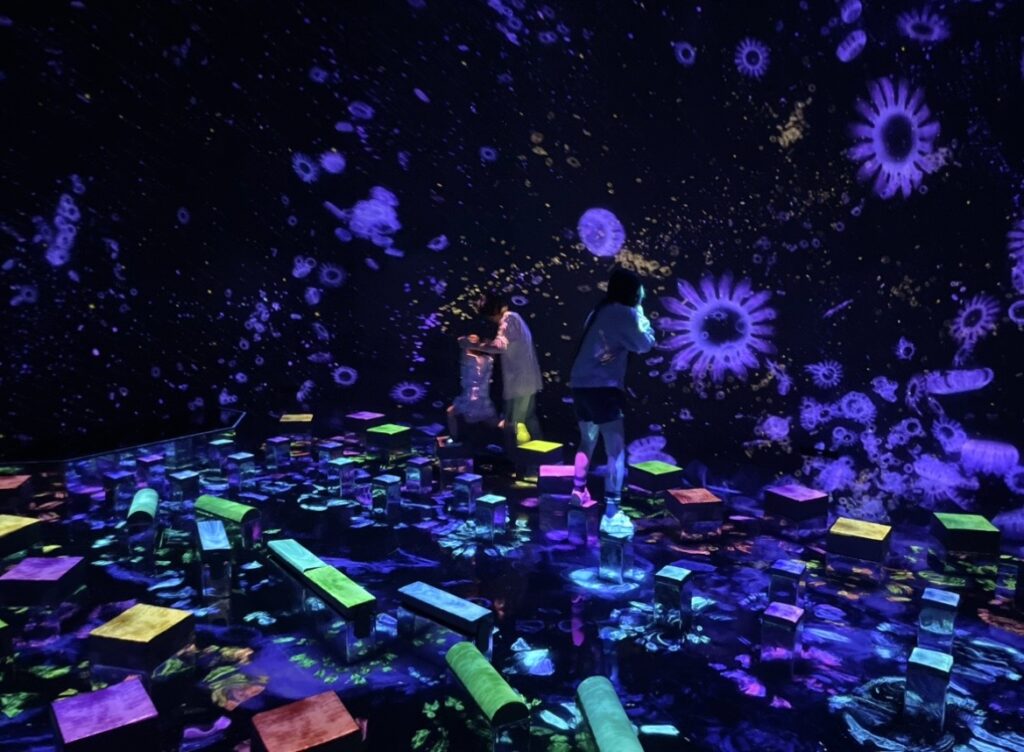
In the space lined with glowing blocks, children can climb and scramble as if navigating an athletic playground. Moving through the shifting lights adds a sense of adventure, making it feel like an exciting exploration.
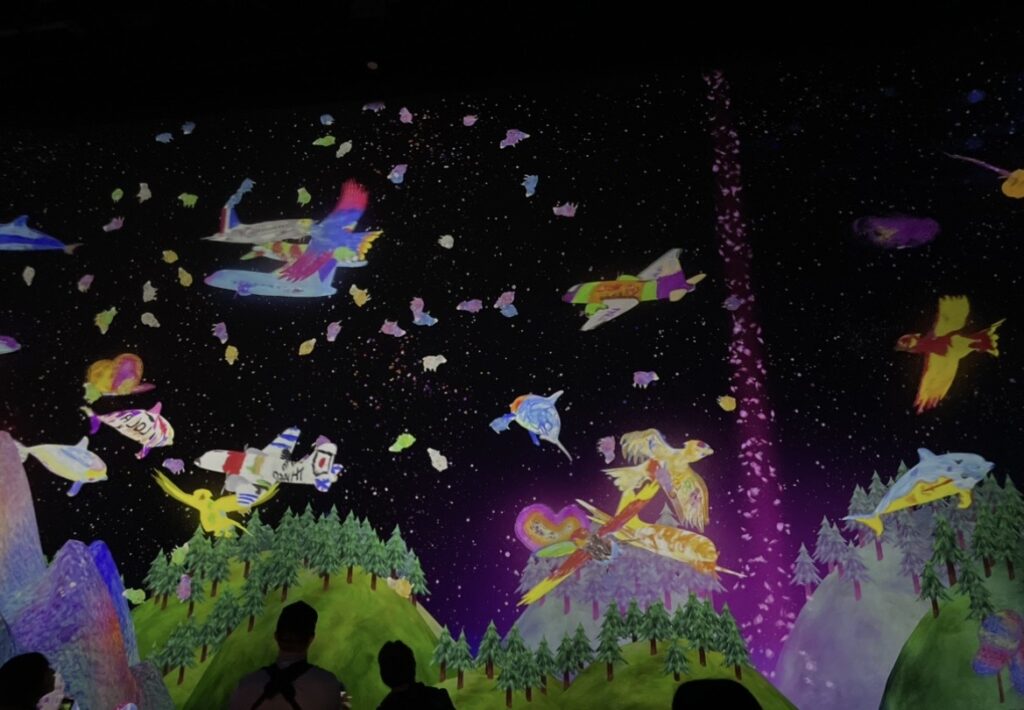
Another popular attraction is the area where children can scan their drawings and watch them come to life on a massive wall. Seeing their own airplanes or animals move freely through a world of light is a moment that excites both kids and parents.
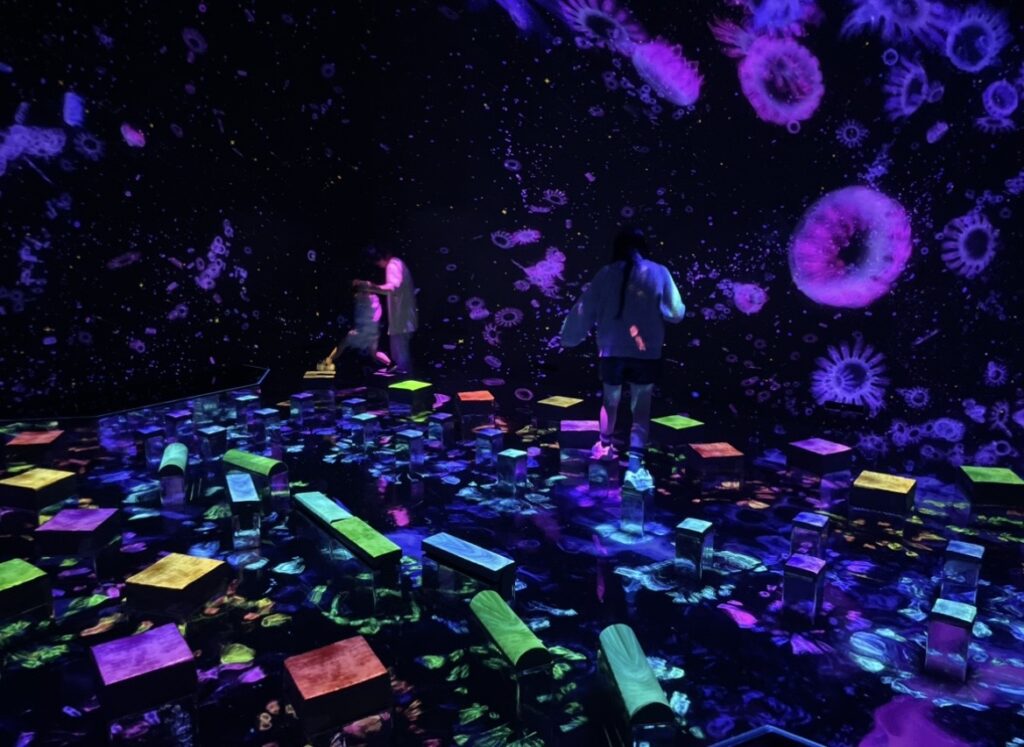
There is also an area where you cross a pool of projected light by stepping on illuminated blocks arranged like stepping stones. The light shifts with each step, creating the feeling of walking inside a video game.
Experience in Each Area(Real Visit Review)
The interior of teamLab Planets Tokyo is divided into three distinct areas—Water, Forest, and Garden—each with its own unique atmosphere. With every step, the air seems to shift, and the textures of light and sound subtly change, creating the sensation of peeling back the layers of different worlds.
Moving through the quiet, immersive water spaces, then into the more dynamic zones where you explore with your whole body, and finally arriving in the gentle, flower‑filled environment, the scenery transforms gradually, almost like taking a short journey.
From here, I’ll share my experience in each area.
Water Area
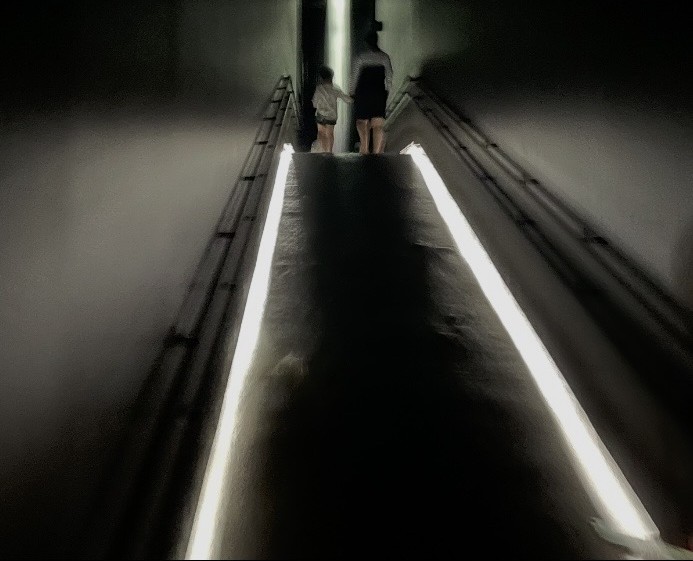
After passing through the entrance, you walk into a narrow corridor lined with bands of white light on both sides. A thin layer of water already covers the floor, and the reflections of the lights shimmer across the surface, quietly guiding you forward. Moving slowly over the water in this first passage felt like stepping into an entirely different world.
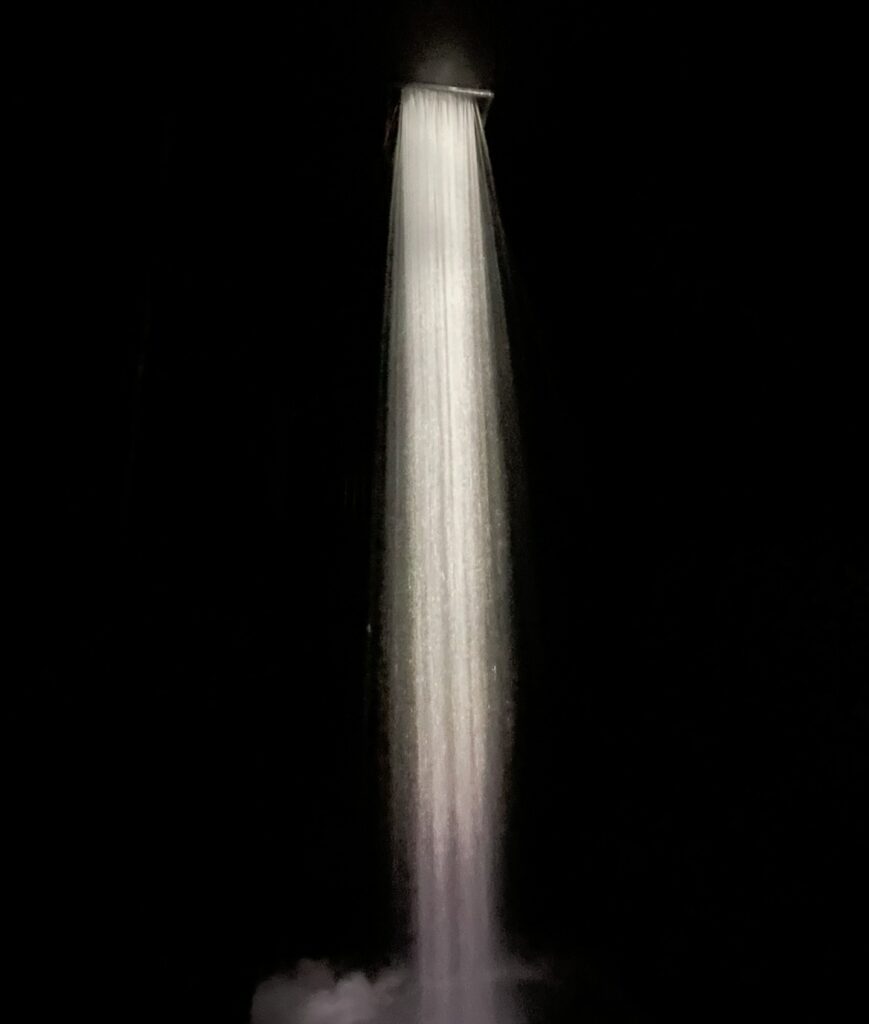
As you walk out of the corridor, you begin to see a single beam of light falling straight down in the darkness ahead. The closer you get, the stronger its presence becomes, illuminating the space like a quiet waterfall made of light. The sound of water echoes through the room, blending with the water around your feet and signaling that the true beginning of this “world of water” is just ahead.
Stepping out of the dark corridor, your vision suddenly opens up into a space filled with countless three‑dimensional lights. The colors aren’t static—purple, blue, green, and yellow slowly blend into one another, as if the light itself were breathing. Reflections on the water at your feet deepen the glow, blurring the boundary between the floor and the space around you.
Shadows of people move gently across the room, and each time the particles of light shift in response, the entire space seems to pulse quietly. As you walk farther in, you enter an area where the lights scatter like stars. Countless points of light overlap with mirrored reflections, making it feel as though every direction—above, below, and all around—is filled with light.
The deeper you go, the more your sense of place begins to dissolve, as if your vision were melting into the light itself. It was a deeply immersive moment, one that made me almost forget where I was standing.
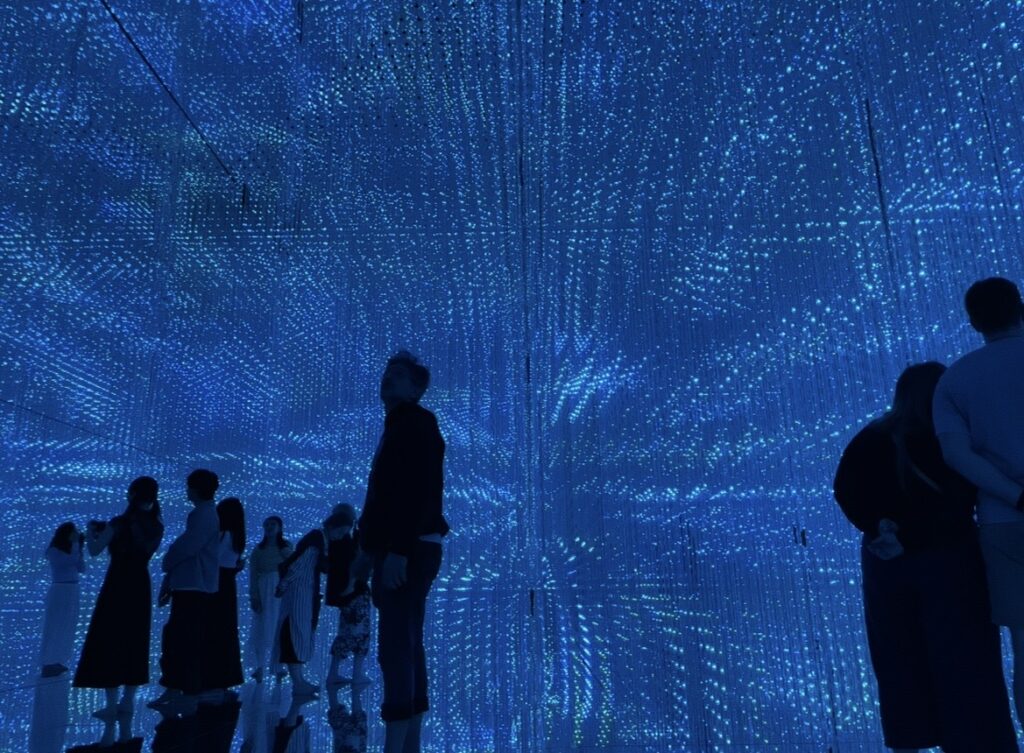
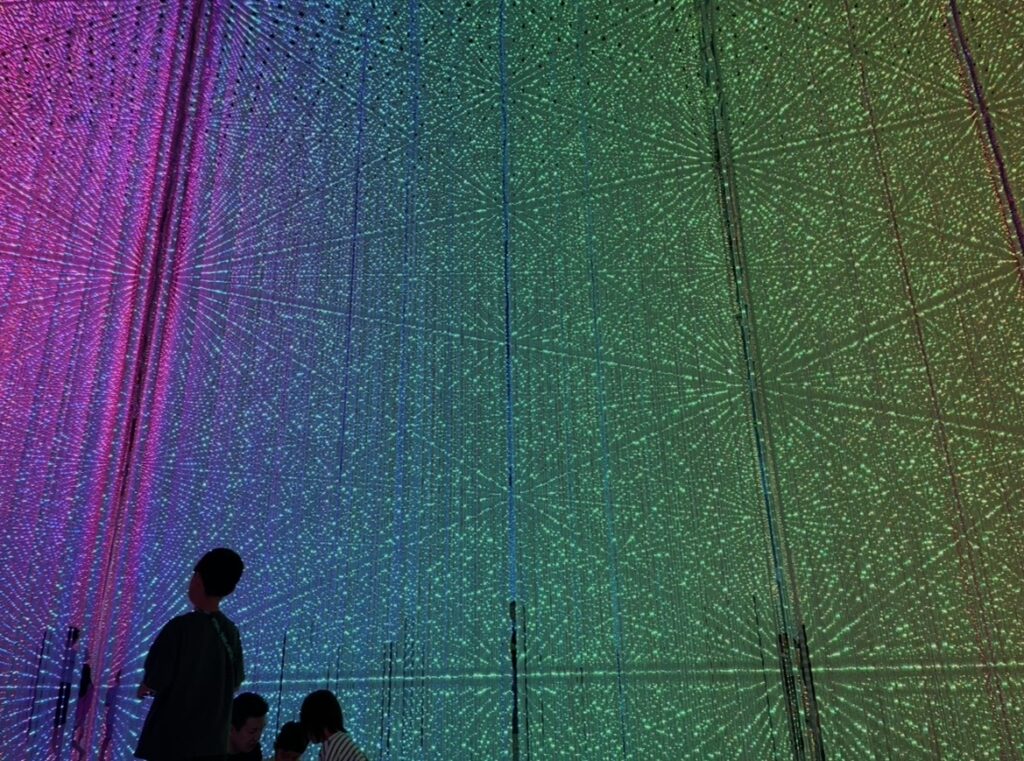
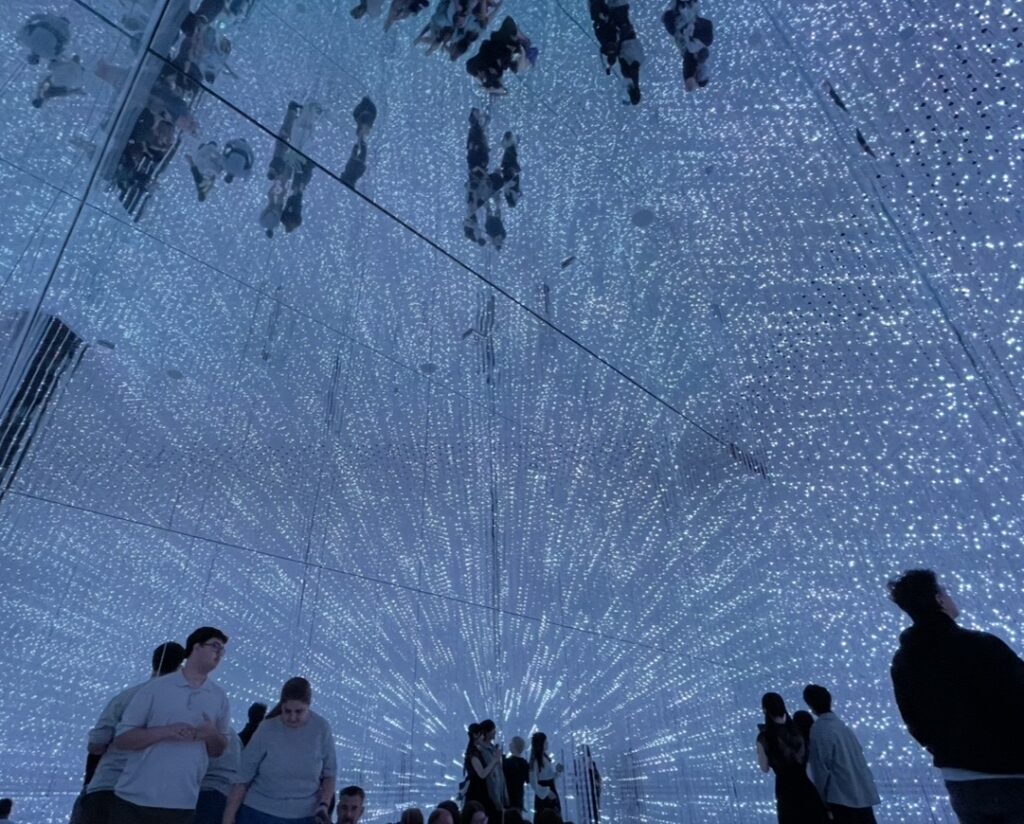
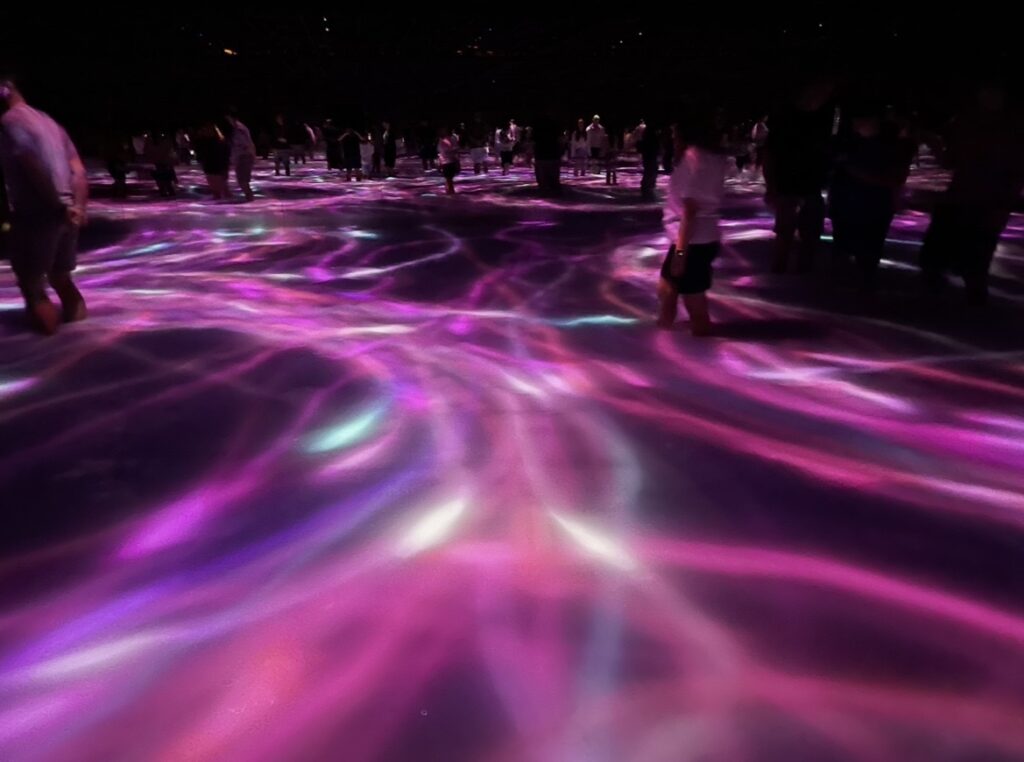
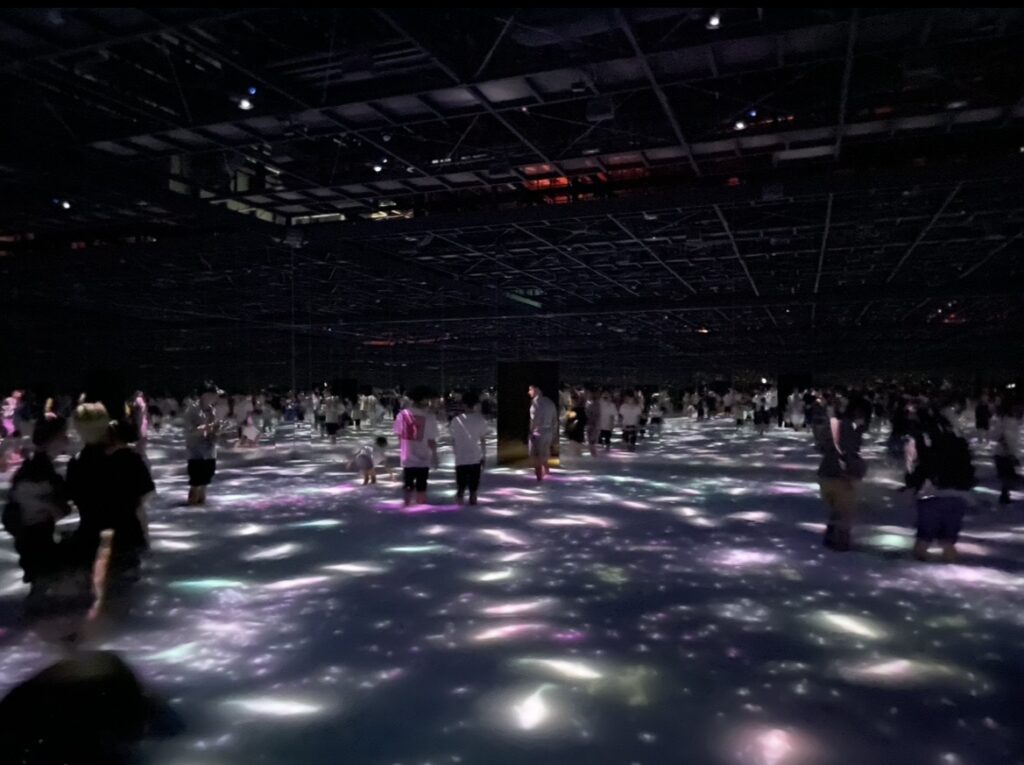
As you continue past the corridor, the scenery at your feet shifts, and you enter an area where the water rises to just below your knees. Light flows across the surface, with layers of purple, blue, and white ripples overlapping as if you were walking inside a luminous body of water. Each step sends a gentle wave through the space, and the light subtly changes shape in response. It feels as though your movements blend into the environment, with the water and light breathing together like a single living organism.
People around you naturally slow their pace, pausing as if to surrender themselves to the waves of light, and the entire space becomes wrapped in a calm, unhurried atmosphere. The coolness of the water and the warmth of the light coexist in a way that creates a strangely soothing and deeply immersive experience.
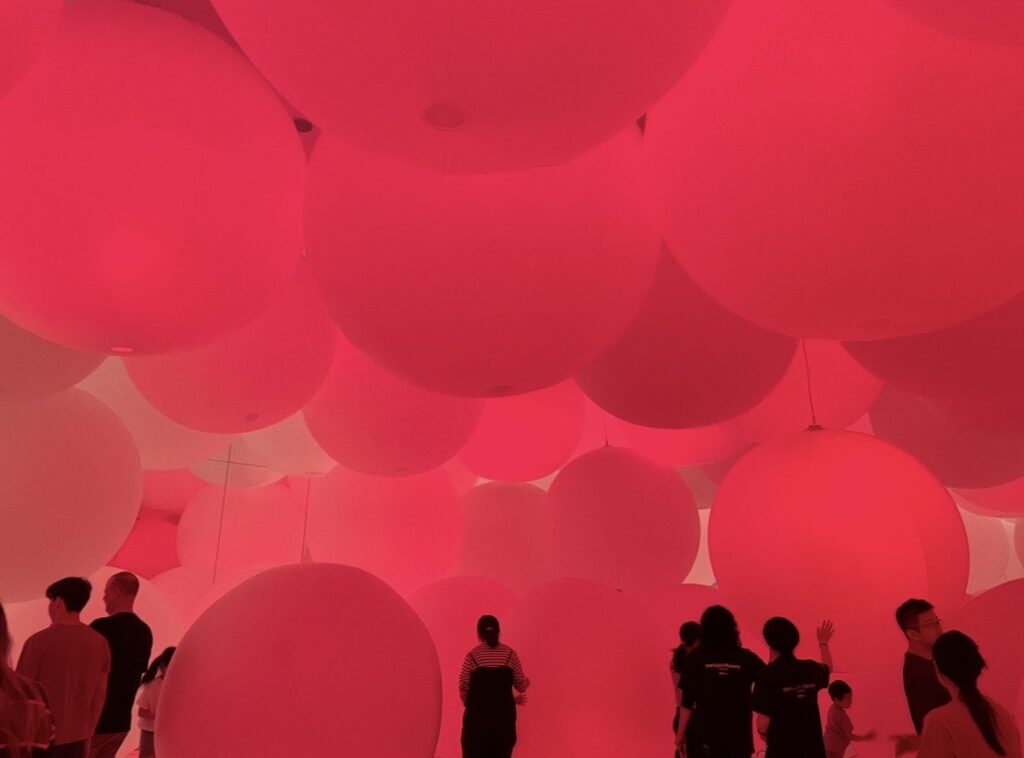
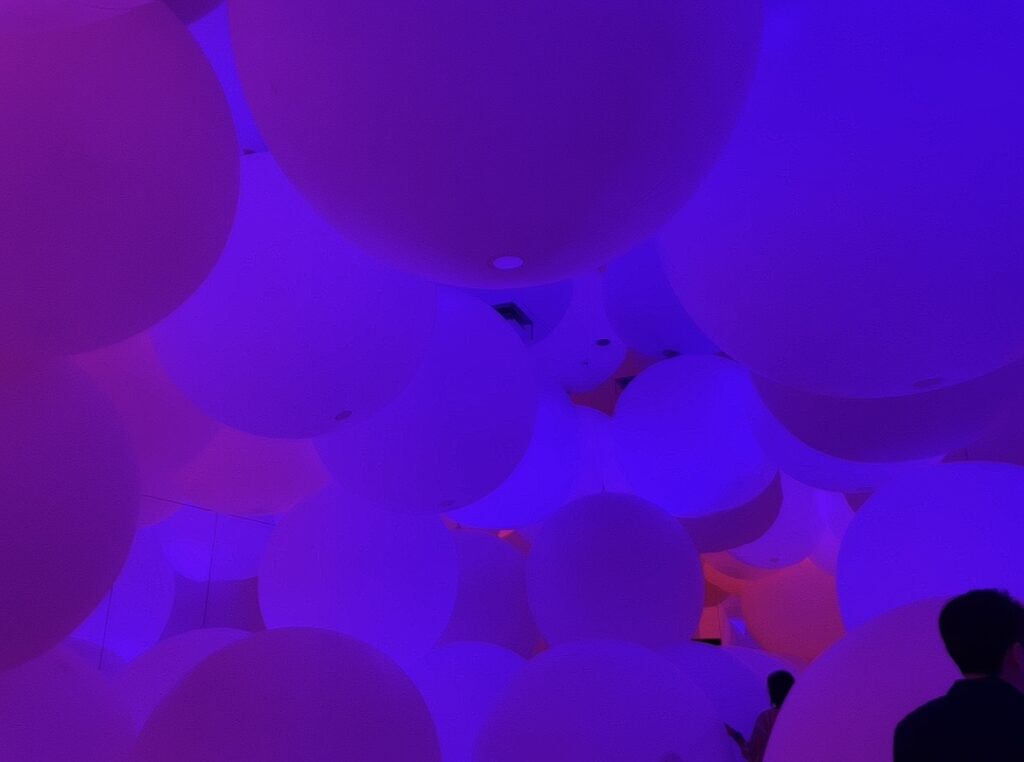
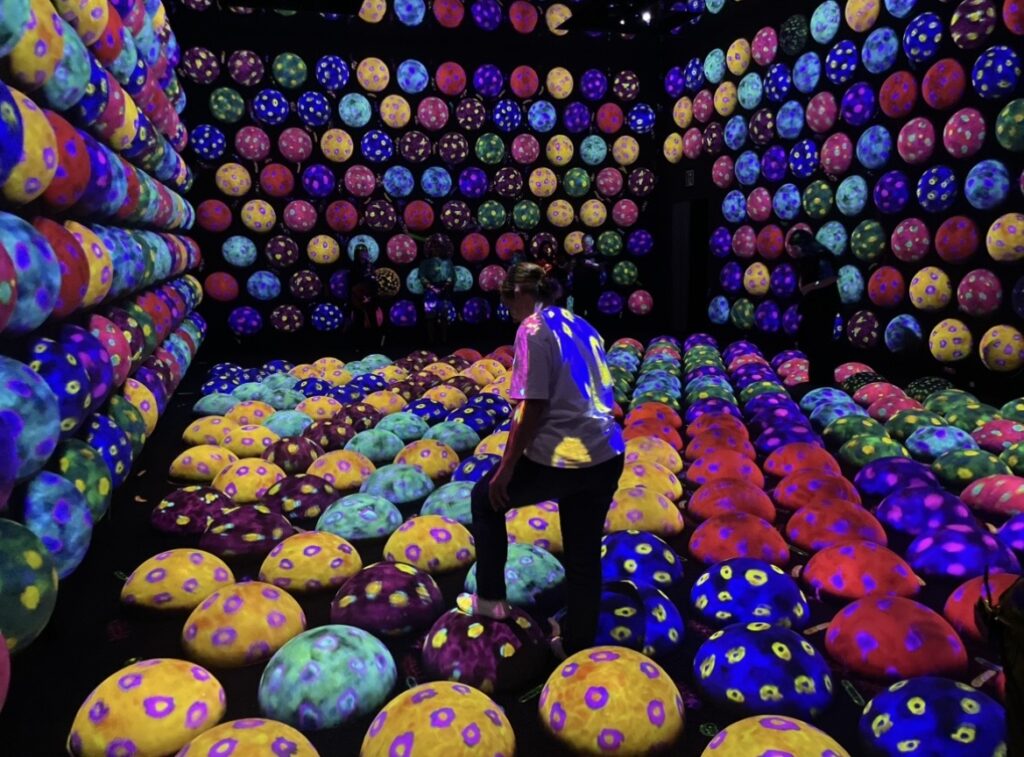
As you step into the next area, enormous floating spheres slowly drift across your field of vision, making the entire space feel as though it is gently pulsing. Each sphere is illuminated in shifting colors, and when you touch one, it pushes back ever so slightly, altering the shades of light that ripple across its surface. With every movement of the people around you, the spheres sway, and the light softly spreads as you pass by, creating the sensation that your own motions are becoming part of the space itself.
The faint pressure you feel when slipping between the spheres and the way the light seems to draw close to your skin create a strangely comforting experience, as if you were walking through a cluster of soft, living creatures. It is an immersive, almost otherworldly moment that invites you to move slowly and simply feel the space around you.
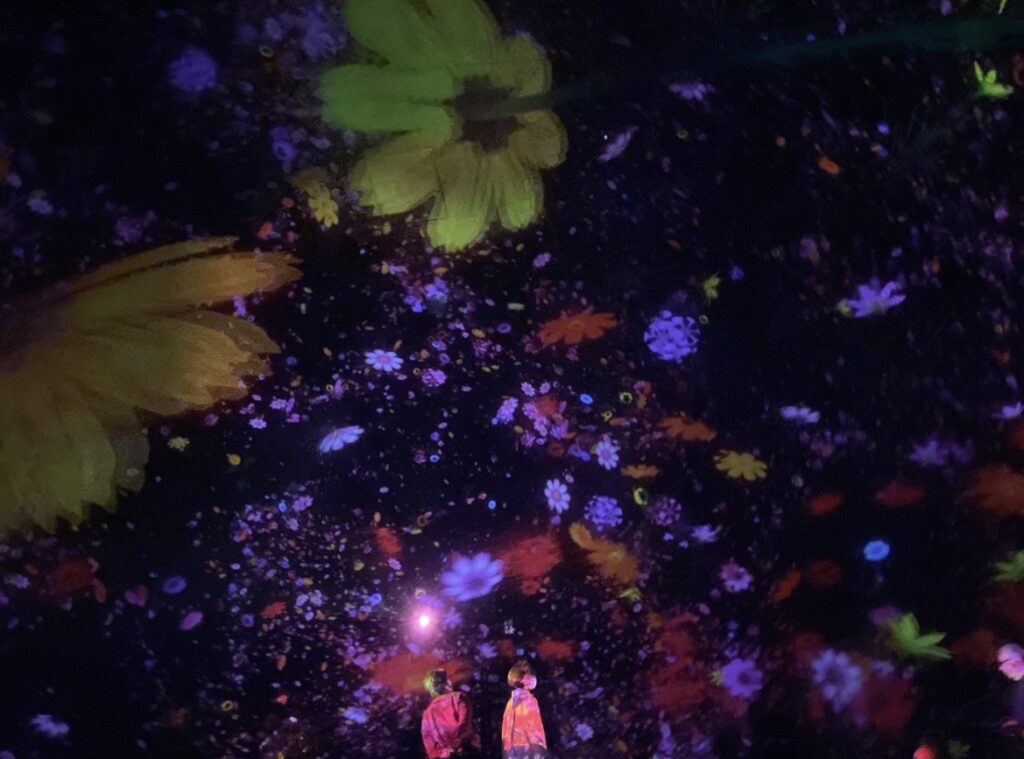
As you step into the next space, countless flowers softly emerge in the darkness, filling the walls, ceiling, and even the floor with flowing colors. The flowers drift gently as they spread, with layers of purple, yellow, and red light blending together, making it feel as though you were standing inside a field of luminous blossoms. Each time a person’s shadow passes slowly across the flowers, the colors tremble slightly, and the entire space seems to breathe.
Watching the petals rise as particles of light and seeing the colors melt into one another creates a moment where time feels distant, leaving you with a deep sense of immersion—as if you were simply surrendering yourself to the light.
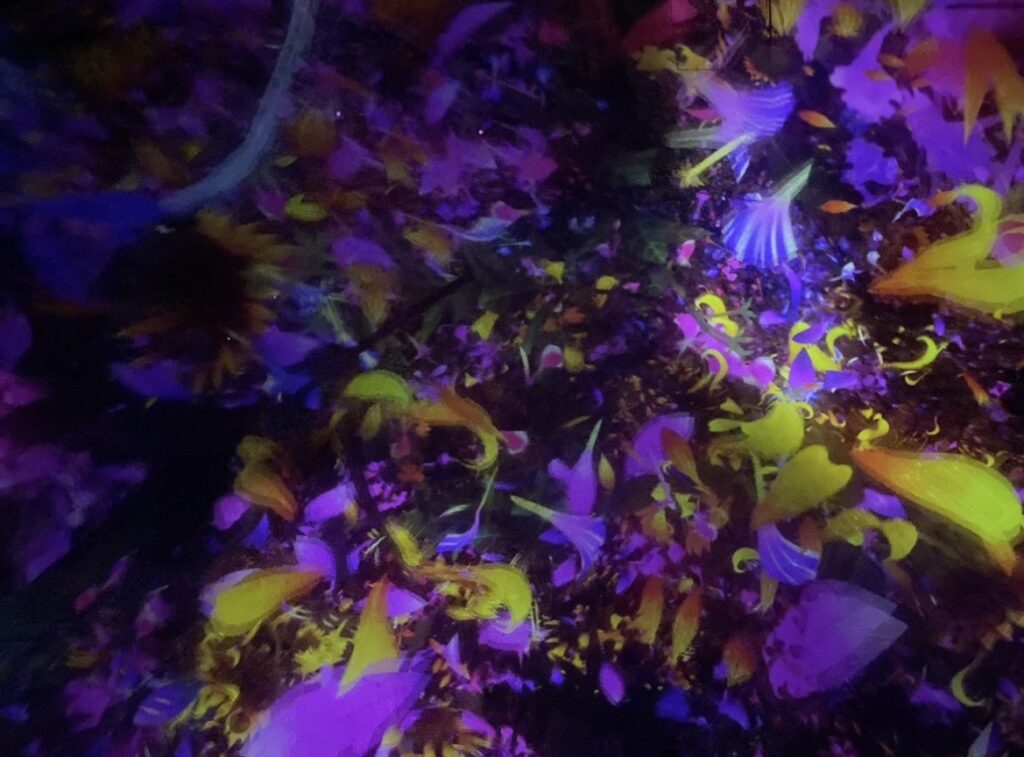
This brings us to the end of the Water area. Leaving behind the world where light and water blend together, you step forward into the Forest area. From here, the texture of the space and the character of the light shift once again, marking the beginning of a completely different atmosphere.
Forest Area
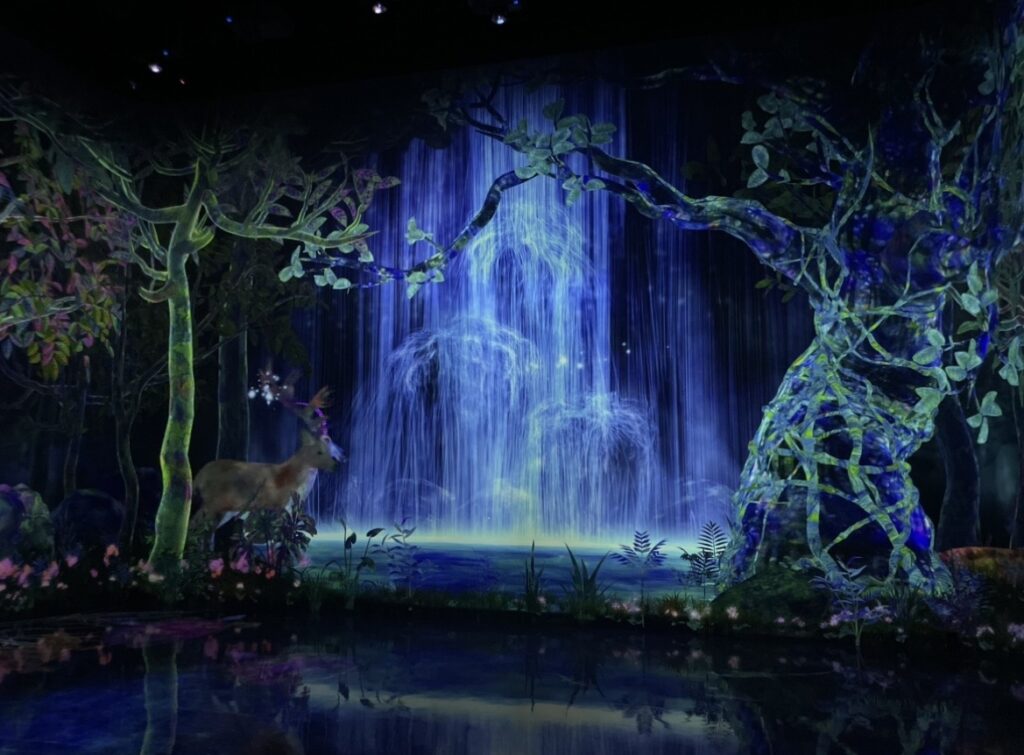
Continuing into the Forest area, you step out of the dark passage and find a quiet forest drawn in light spreading before you. The trees shimmer softly, their branches swaying with a gentle glow that makes the space feel as though a nighttime forest is quietly breathing. Reflections at your feet add depth to the scene, and as layers of light expand into the distance, the silhouettes of animals appear for a moment before dissolving into the space around them. In that instant, it feels as if you’ve slipped into the forest yourself. Moving on to the area where a waterfall of light flows, blue light ripples like water and blends with the surrounding colors, drawing you gently into the deeper, more dreamlike part of the forest.
This space, where the presence of light and the atmosphere of the forest overlap, offers more than just something to look at—it wraps you in a sense of immersion that deepens with every step, as though you are walking further into the heart of the forest.
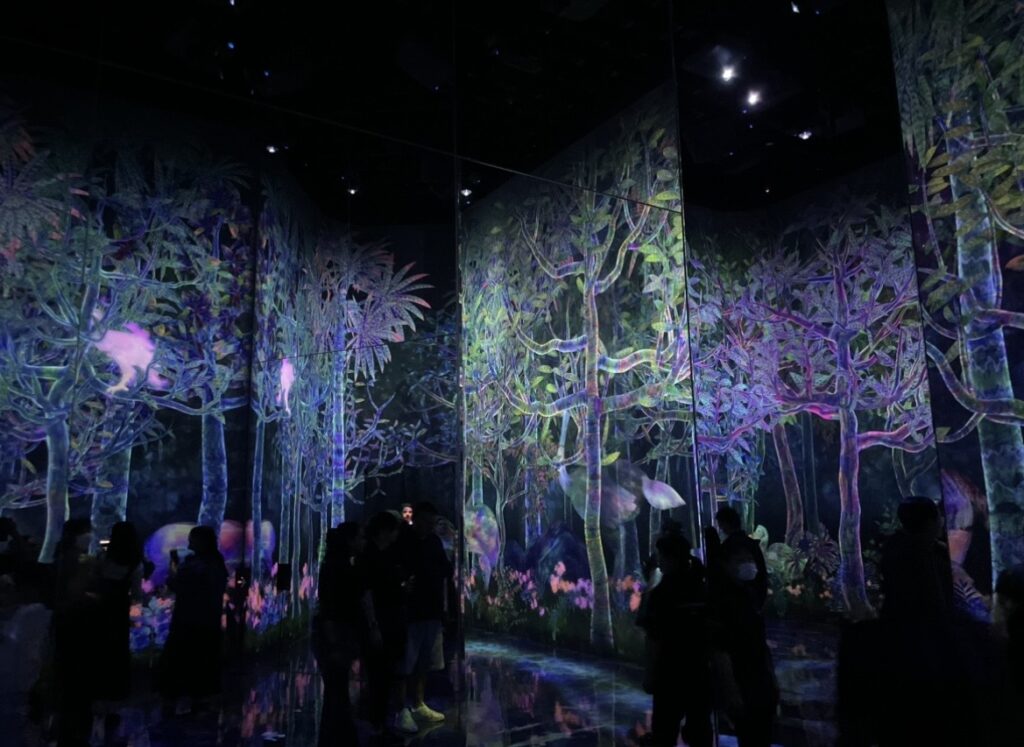
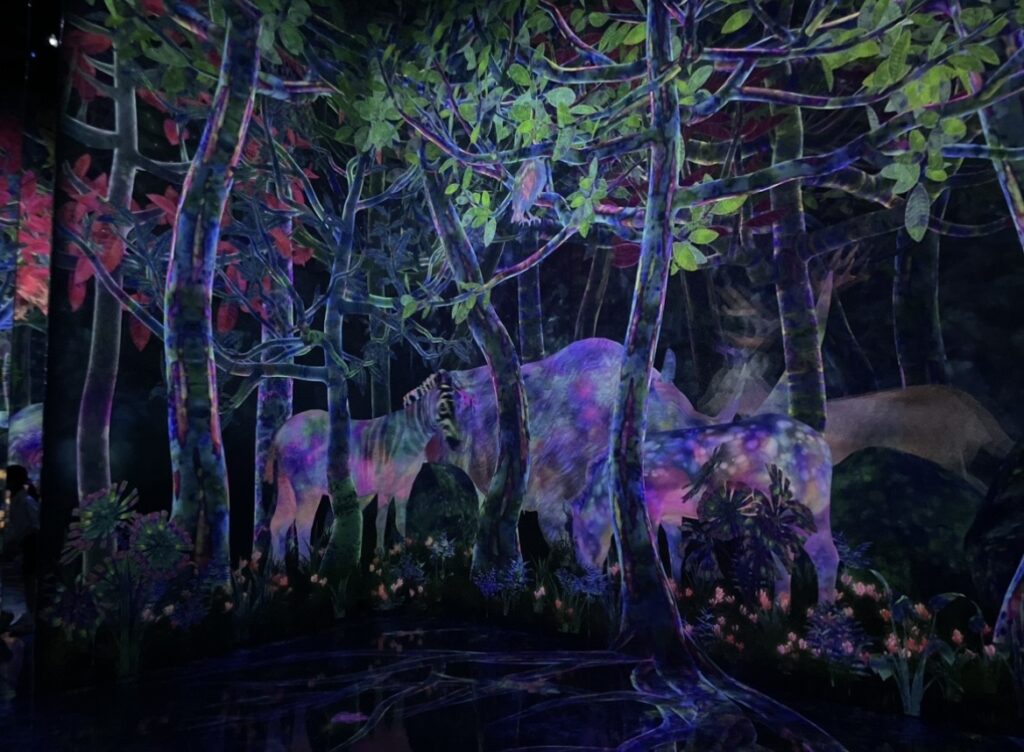
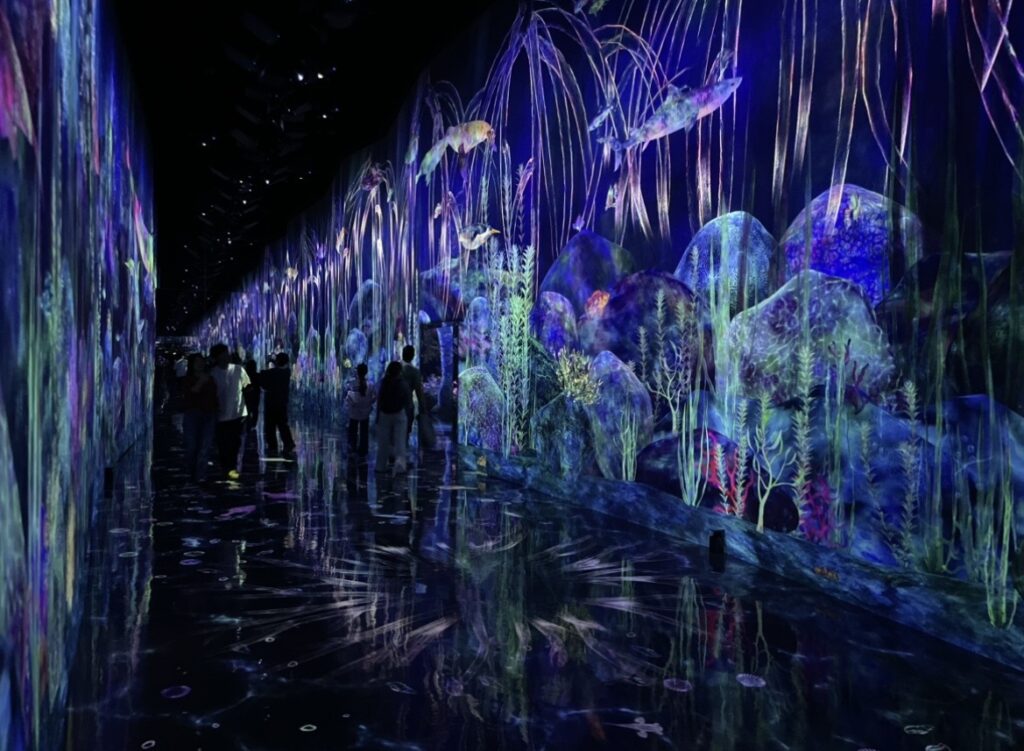
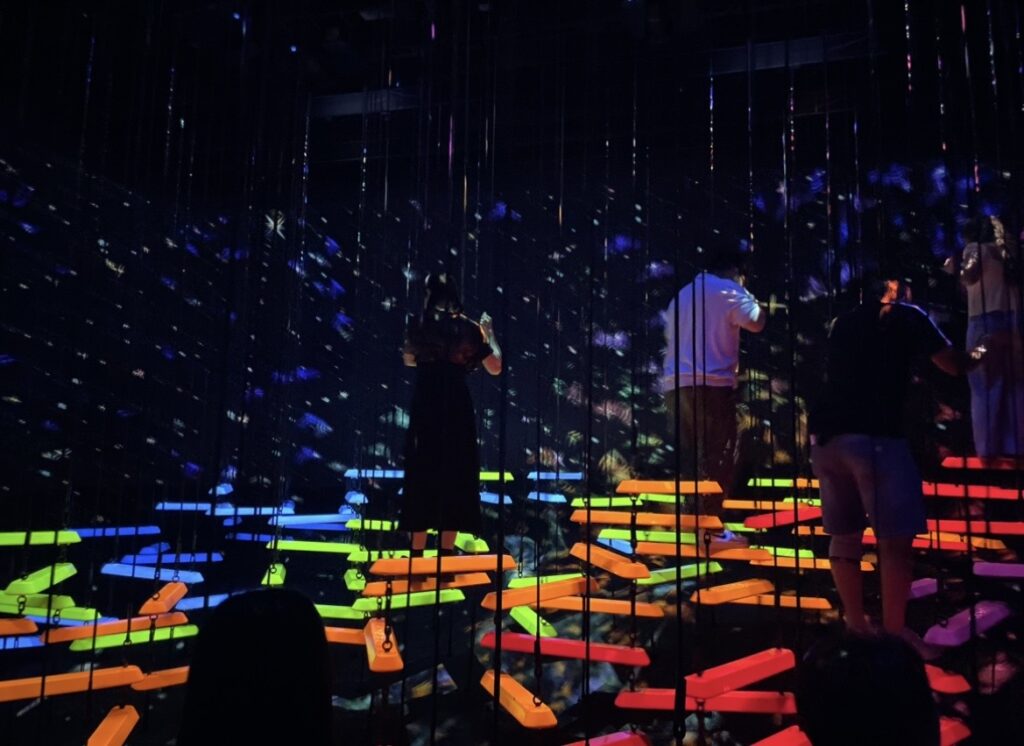
Deeper inside the Forest area, platforms appear to float in midair, along with various features for climbing and crossing, creating a playground‑like space that naturally draws children in. Although the setup looks a little thrilling at first glance, everything is designed to be safe, and kids eagerly take on each challenge as if they’ve stepped into a video game world.
Further inside, children’s drawings are projected across an entire wall—not just displayed, but moving freely through the space as if they’ve been brought to life. Each time a child’s airplane or animal drifts close by or flies off into the distance, their imagined world seems to expand vividly across the room. It was striking to see how these experiences gently draw out children’s creativity, allowing their own artwork to become part of the space.
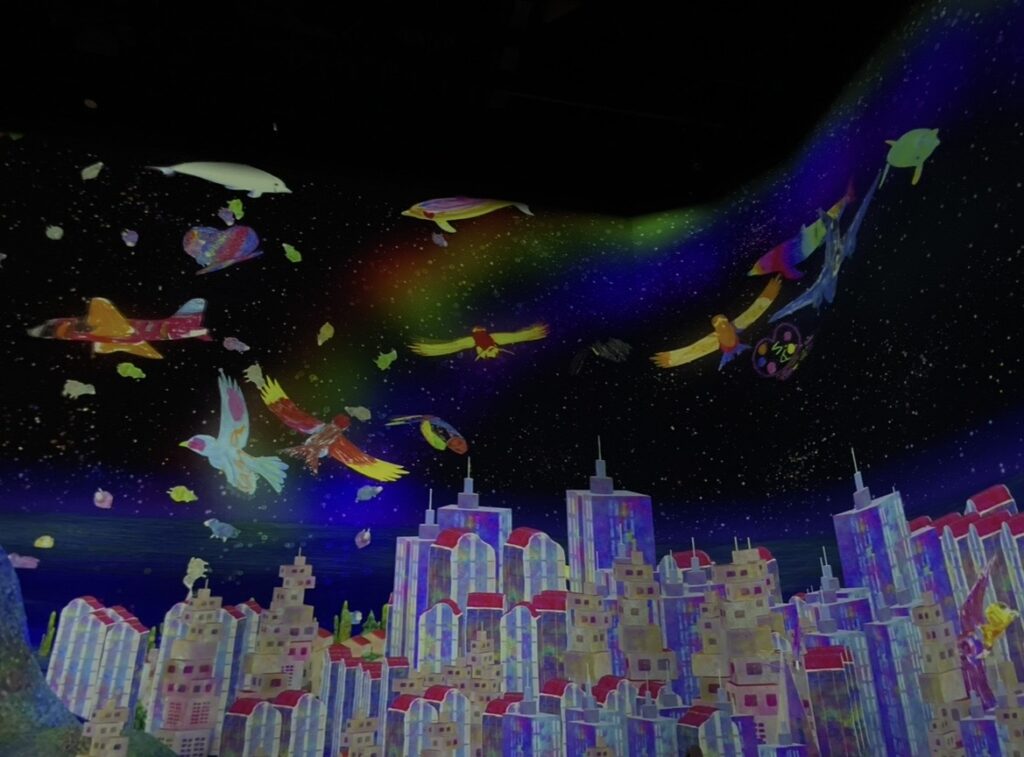
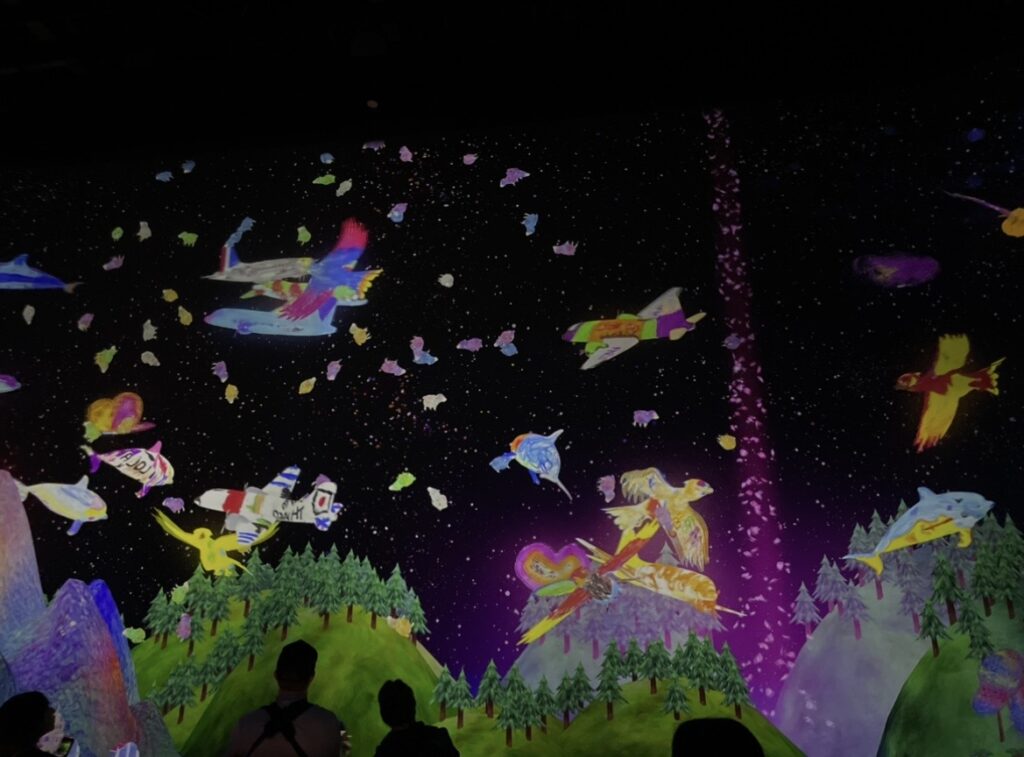
As you walk farther in, the quiet of the forest blends with the children’s imagination, creating a space where nature and play seem to merge seamlessly. Within this world of light, both creativity and a sense of playfulness quietly come alive, leaving a gentle and lasting impression.
Garden Area
The final part of the journey is the Garden area. After walking through the Water and Forest spaces, this section welcomes you with a quietness that makes your breath naturally deepen, along with a gentle, expansive sense of beauty.
The first thing you encounter in the Garden is an installation where countless lights float in the darkness. Round, egg‑shaped objects line the space, their reflections spreading across the mirrored surfaces and creating a scene that feels like wandering into clusters of light drifting in the mist. Although the installation sometimes features a slow, shifting play of colors, I didn’t happen to see that moment during my visit. Even so, the stillness shaped by the mist and reflections alone carried a deep, lingering sense of tranquility unique to this place.
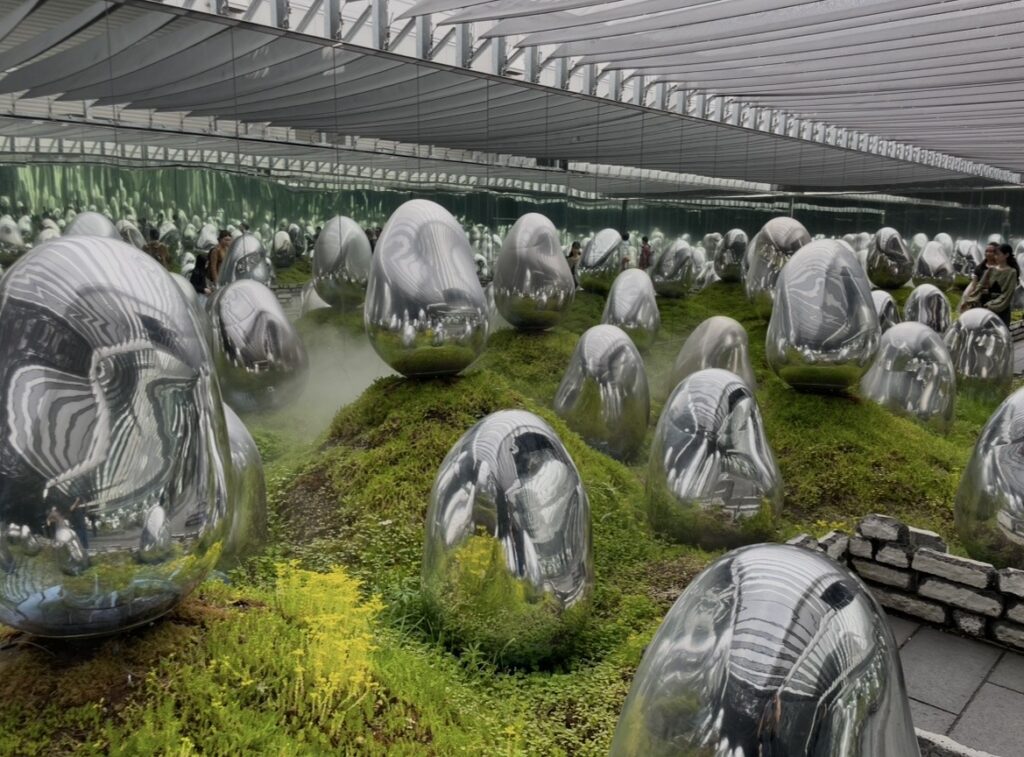
As you move farther in, the atmosphere shifts completely, opening into a vibrant space where countless orchids hang from above. This is one of the most iconic areas of teamLab Planets, featured prominently on the official website and serving as the landmark of the Garden zone. Reflected endlessly on the mirrored floor, the flowers seem to stretch on without end, creating a scene where stillness and brilliance coexist. It’s a space that brings a gentle, calming sense of closure—an atmosphere perfectly suited for the final moments of the journey.
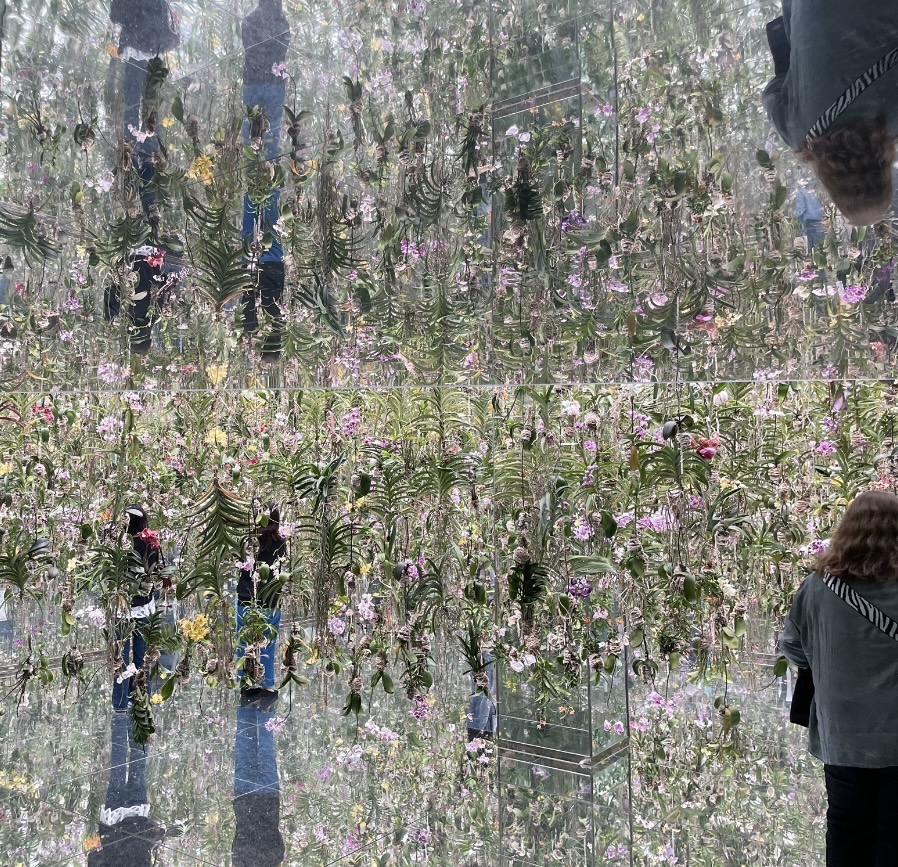
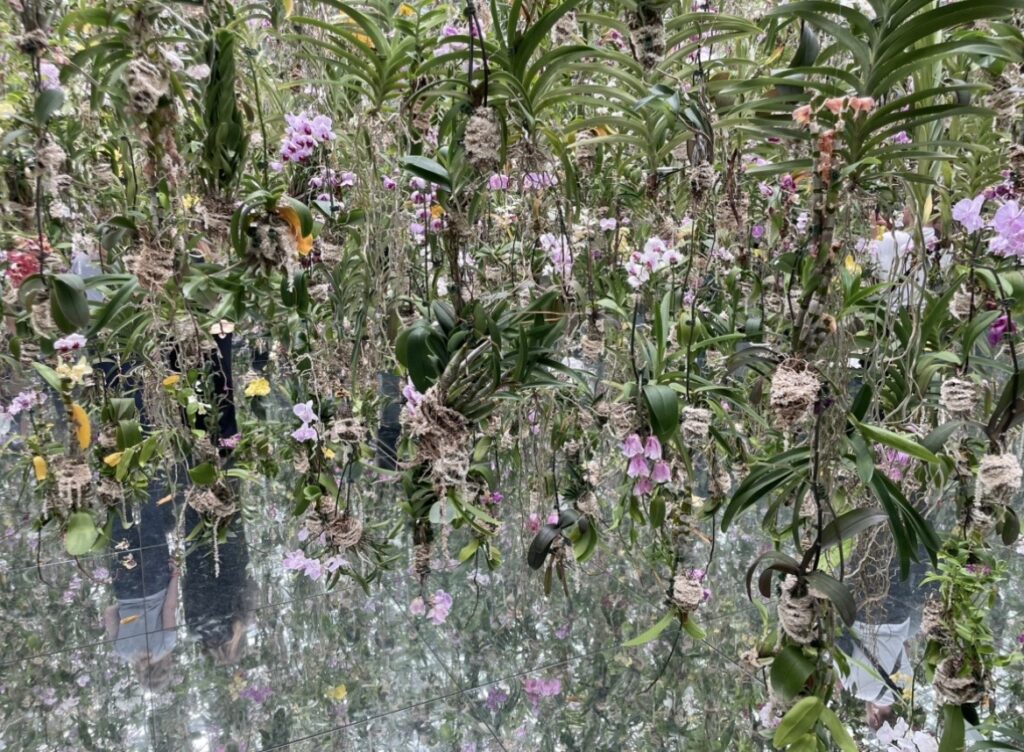
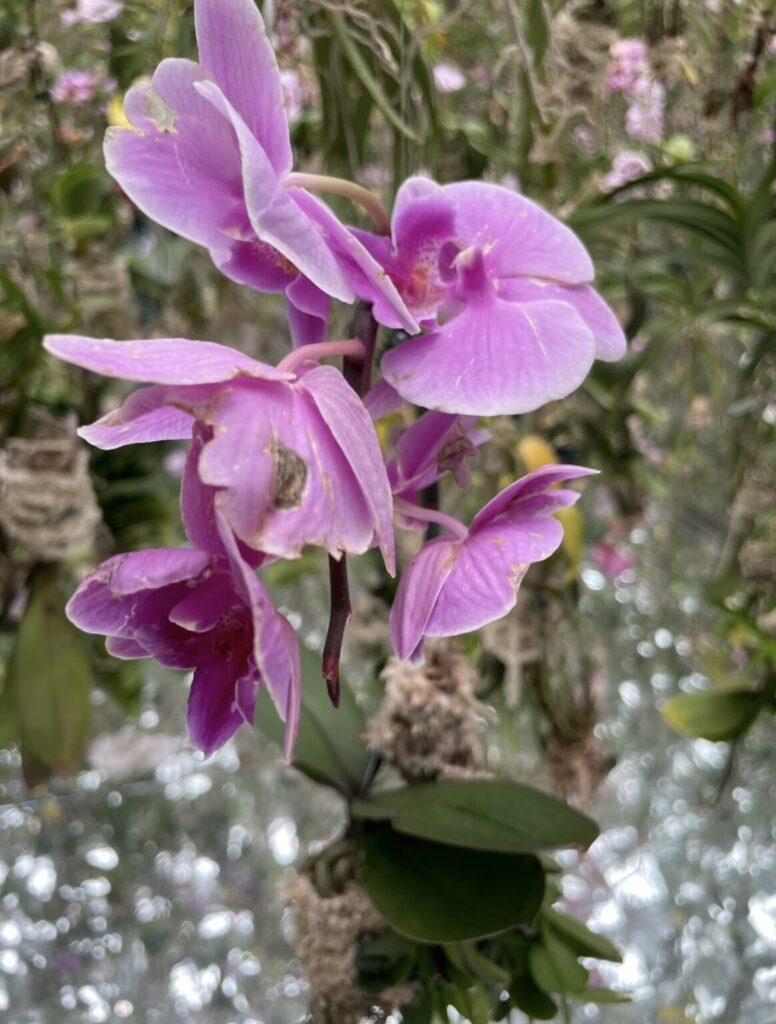
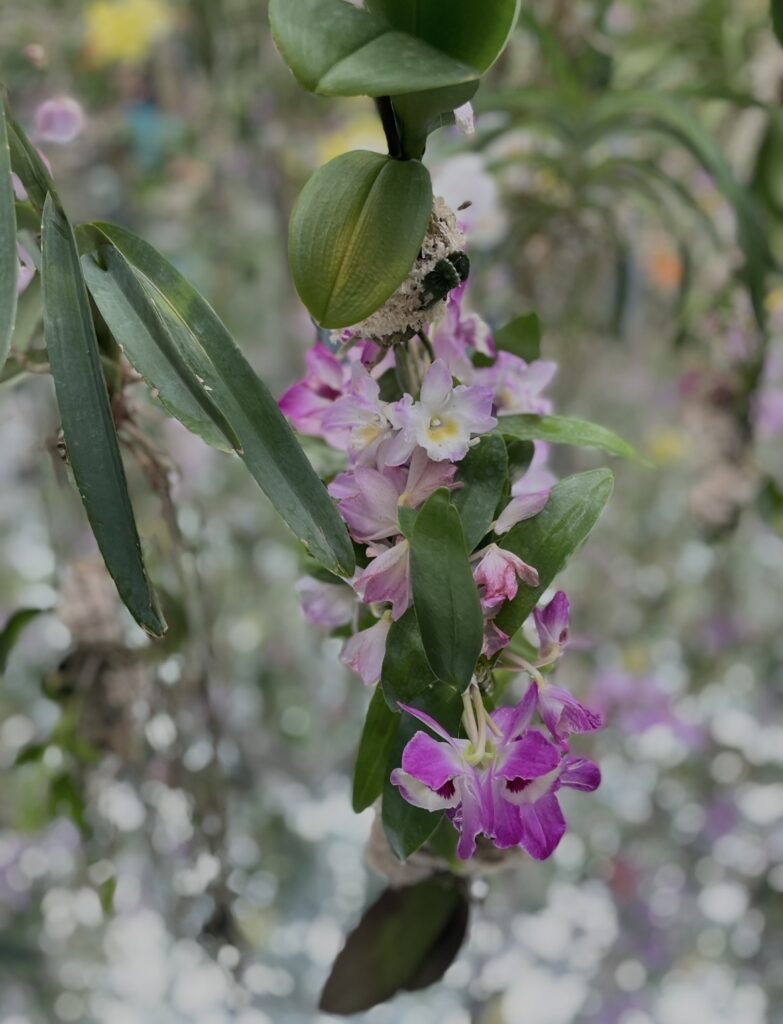
As I continued walking, the gentle shift from a world of light to a world of flowers made the journey to this final space feel like the closing chapter of a story.
This concludes what I wanted to share in this article. Walking through the gentle ripples of water, the quiet of the forest, and finally the garden filled with flowers and light, I felt that my time at teamLab Planets was less about “seeing” artworks and more like a journey where my senses slowly opened as I surrendered myself to each space. Every area has its own distinct character, yet together they create a calm, continuous experience that gradually settles the mind.
If you haven’t visited yet, I hope you’ll take your time and walk through it at your own pace. Depending on the light and water of that particular day, your own quiet story may begin to unfold.