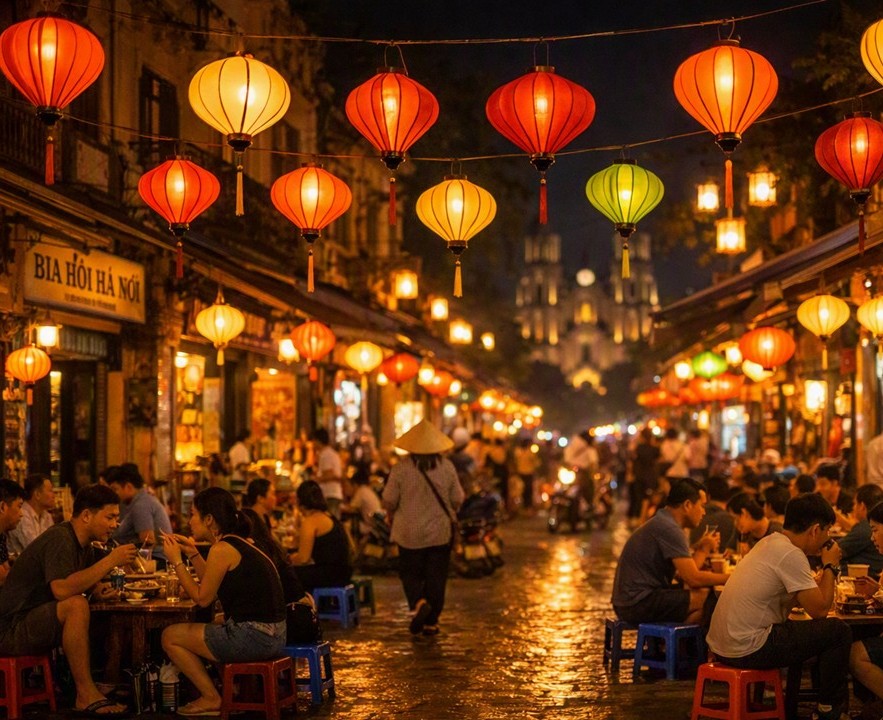


My first visit to Hanoi left me with a strange sense of nostalgia. Walking through the Old Quarter, the constant hum of motorbikes, the rising steam from street stalls, and the fresh scent of herbs blend together, making the entire city feel alive. When you reach the shores of Hoan Kiem Lake, the noise fades and time begins to slow. This contrast between energy and calm is what makes Hanoi so unforgettable.
The unique aroma drifting from local eateries, the warm glow of lanterns lighting up the night streets, and the quiet dignity of historic buildings—each of these moments becomes a lasting memory that makes you want to return.
Of course, there are a few things travelers should know to enjoy Hanoi safely and comfortably.
In this article, I share the charm of Hanoi’s Old Quarter as I personally experienced it, along with practical tips to help you explore the city with confidence. I hope your upcoming trip to Hanoi becomes richer, smoother, and filled with moments that stay with you long after you leave.
I also share information about sightseeing in Ha Long Bay, so feel free to take a look as well.

Essential Travel Information for Hanoi
Hanoi is a city where history and vibrant energy coexist. Overall, it’s a safe destination with relatively low rates of violent crime, but travelers should stay alert to heavy traffic and occasional pickpocketing. In the Old Quarter especially, pedestrians and motorbikes move closely together, so it’s best to stay aware of your surroundings while walking.
The city experiences four distinct seasons, and autumn (October to November) is the most comfortable time to visit. Summer is hot, humid, and marked by sudden downpours, while winter can be colder than expected. The changing atmosphere throughout the year is part of Hanoi’s unique charm.
With that in mind, let’s take a closer look at what makes Hanoi such a fascinating city.
Overview of Hanoi
Hanoi, located in northern Vietnam, is the nation’s capital and a historic city with more than 1,000 years of heritage. Its charm lies in the lively atmosphere of the Old Quarter, the elegant colonial architecture from the French era, and the calm surroundings of Hoan Kiem Lake.
- Population: over eight million
- Political and cultural center with government offices, embassies, and major museums
- Rich food culture featuring pho, bun cha, and banh mi
- Key travel hub for visiting Ha Long Bay, Sapa, and other major destinations
Hanoi is a city best explored on foot, offering a balanced blend of history, culture, and cuisine that makes sightseeing especially enjoyable. Even first‑time visitors will naturally feel the depth of the city through the Old Quarter’s atmosphere and its vibrant local food scene.
Safety in Hanoi
Hanoi is considered one of the safest cities in Southeast Asia. Violent crime is rare, and incidents involving tourists are uncommon. Many travelers even say they feel safer walking here than in major European cities.
However, the real concerns are not serious crime but everyday troubles that can happen during a trip. In the Old Quarter especially, pedestrians and motorbikes move closely together, and a moment of inattention can lead to unexpected danger.
- Very low rates of violent crime
- The city center remains relatively safe even at night
- Political stability keeps overall security conditions steady
- Heavy traffic makes crossing streets difficult (the biggest risk)
- Pickpocketing and bag snatching in the Old Quarter
- Overpriced taxis and fake tour companies
Traffic conditions are one of the biggest challenges for first‑time visitors to Hanoi. With few traffic lights and a constant flow of motorbikes, even crossing the street can feel intimidating until you get used to it.
As I’ll explain in detail later in the article, I personally encountered an overpriced taxi—specifically a fake Grab—during my stay in Hanoi, which turned into a tense moment. Knowing about these potential issues in advance is one of the best ways to avoid trouble.
Climate in Hanoi
Hanoi has a subtropical monsoon climate and is one of the few cities in Vietnam with four distinct seasons. Its weather differs greatly from Ho Chi Minh City in the south, and first‑time visitors are often surprised by how cold Hanoi can get in winter.
Below is a detailed look at the characteristics of each season.
■ Spring (March–April)
- Temperature: 20–28°C
- High humidity with frequent light drizzle
- Comfortable for sightseeing, though some days can feel humid and warm
■ Summer (May–September)
- Temperature: 30–38°C
- Extremely hot with very high humidity
- Risk of sudden downpours, typhoons, and flooding
■ Autumn (October–November)
- Temperature: 20–28°C
- The most pleasant and comfortable season of the year
- Dry, cool weather ideal for walking around the city
■ Winter (December–February)
- Temperature: 10–18°C
- Feels colder than the actual temperature due to high humidity and damp chill
- Many cloudy days with gloomy, overcast weather
Hanoi Old Quarter Model Course|Recommended Attractions
The Hanoi Old Quarter is a lively area where each street has its own unique character, making it a wonderful place to explore on foot. The mix of bustling energy, historic architecture, and the aroma of local street food gives you a deep sense of the city’s charm just by wandering around.
In this chapter, I’ll introduce the recommended sightseeing spots in the Old Quarter following the exact route I took, presented as a one‑day model course. I’ve organized the highlights and walking tips so that even first‑time visitors can easily get a feel for the atmosphere of Hanoi.
Hoan Kiem Lake
The first place I visited was Hoan Kiem Lake, which serves as the central landmark for exploring the Old Quarter.
Hoan Kiem Lake is often described as the “heart of Hanoi,” a place where history, legends, and everyday local life come together. It serves as a peaceful oasis slightly removed from the hustle and bustle of the Old Quarter.
The name “Hoan Kiem,” meaning “Returned Sword,” comes from a 15th‑century legend in which King Le Loi returned a divine sword to a giant turtle after liberating Vietnam from Chinese Ming rule. Around the lake, you’ll find several landmarks connected to this story, including Turtle Tower, Ngoc Son Temple, and the iconic red Thap Rua Bridge. It’s an ideal starting point for exploring the Old Quarter, offering a glimpse of local life from morning to night.
The first thing that catches your eye is Turtle Tower standing quietly at the center of the lake. Although visitors cannot enter the tower or its surroundings, its silhouette floating on the water has a mysterious presence and symbolizes Hoan Kiem Lake itself.
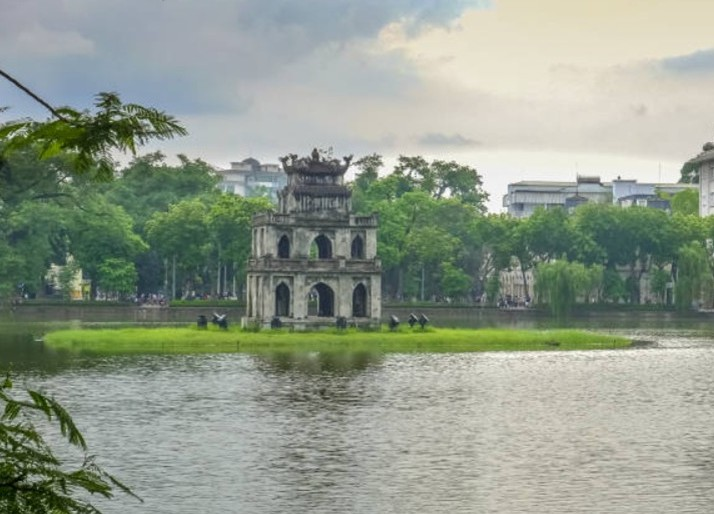
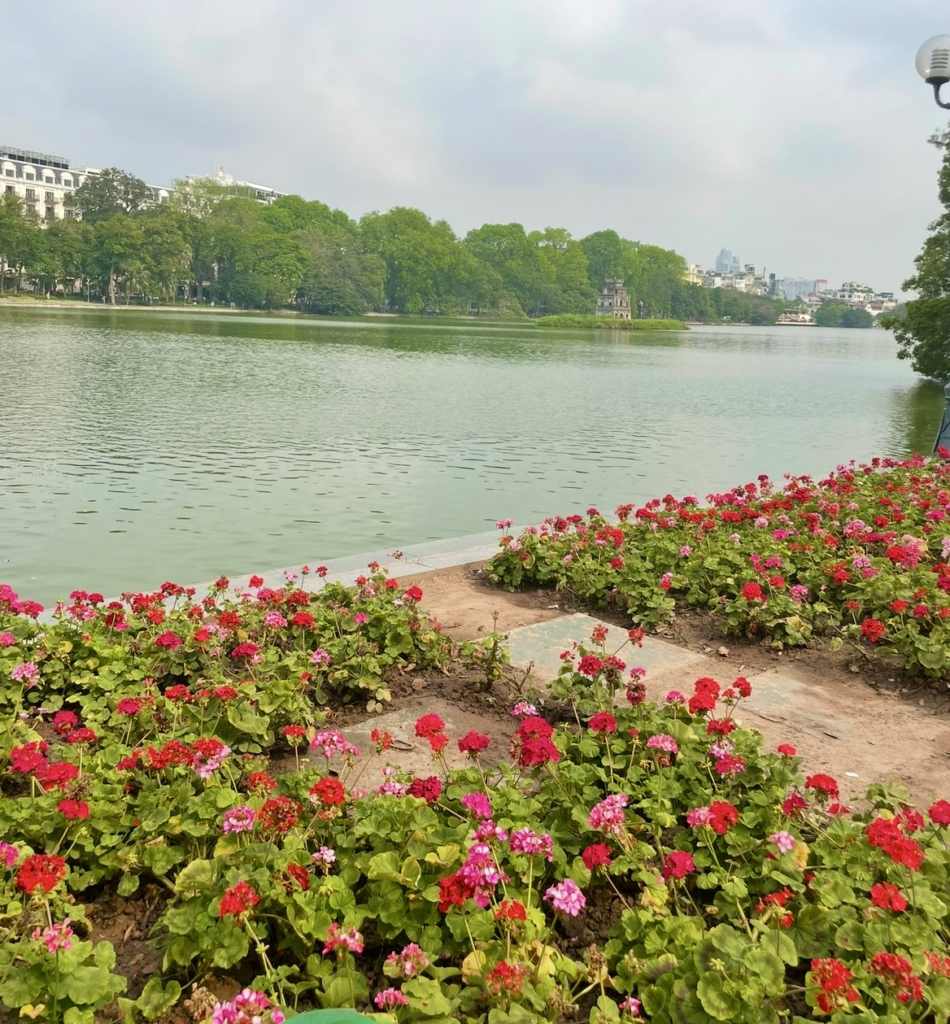
Along the lakeside, you can also enjoy seasonal flowers with Turtle Tower in the background.
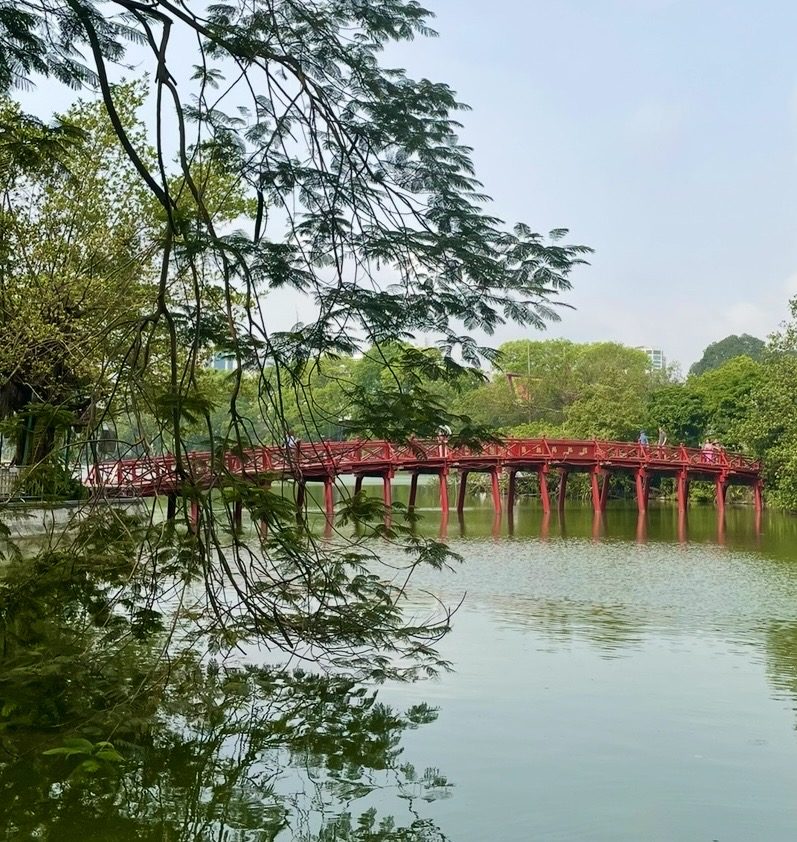
The most iconic view of Hoan Kiem Lake is the red Thap Rua Bridge. This bridge serves as the entrance to Ngoc Son Temple, and its vivid vermilion color contrasts beautifully with the green surface of the lake.
“Thap Rua” means “the place that receives the morning sunlight” or “the bridge that catches the light” in Vietnamese. In the early morning, the rising sun shines through, making the bridge appear as if it is glowing.
St. Joseph’s Cathedral
Next, I visited St. Joseph’s Cathedral (Hanoi Cathedral), one of the most popular spots in the Old Quarter and within walking distance from Hoan Kiem Lake.
St. Joseph’s Cathedral, built in 1886, is the oldest Catholic church in Hanoi. Constructed during the French colonial period and modeled after Notre‑Dame Cathedral in Paris, its exterior carries a distinctly European atmosphere.
Its most notable feature is the Neo‑Gothic architectural style. This style emerged from the 18th–19th‑century movement in Europe to revive medieval Gothic architecture, incorporating elements such as tall pointed towers, arched windows, and stained glass into modern construction. The cathedral’s solemn façade beautifully embodies the characteristics of Neo‑Gothic design.
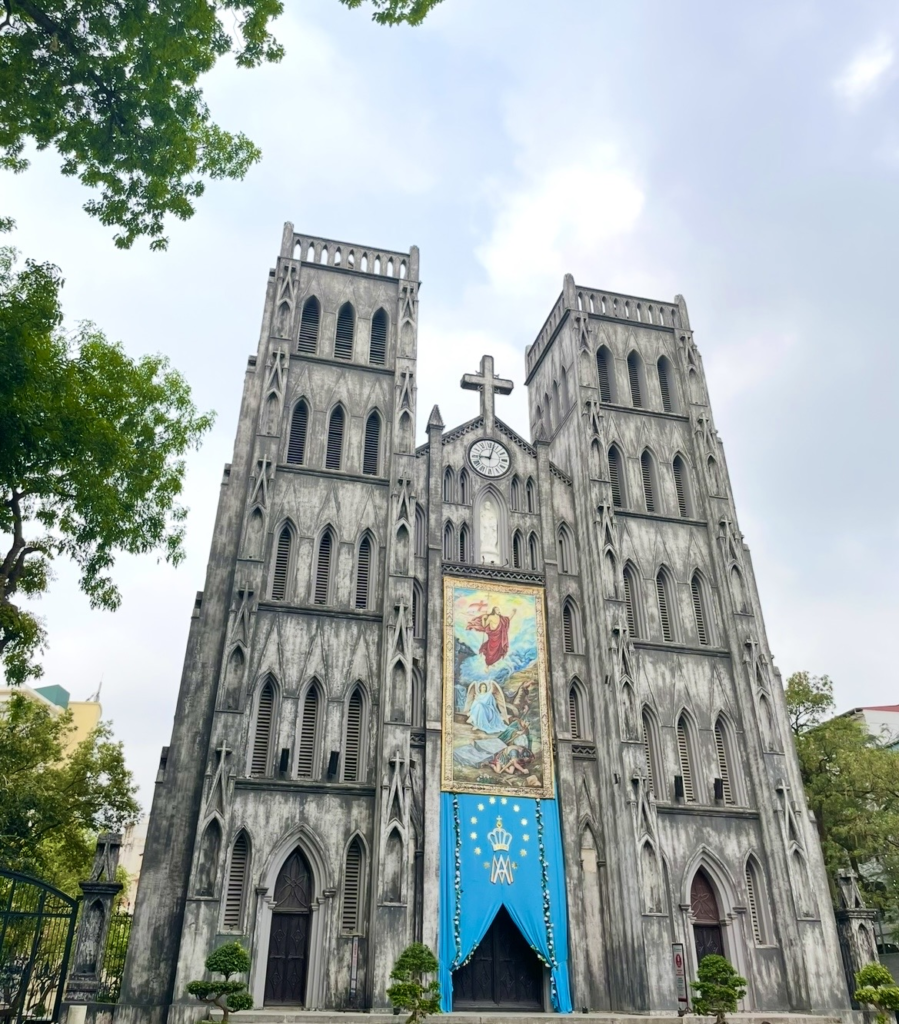
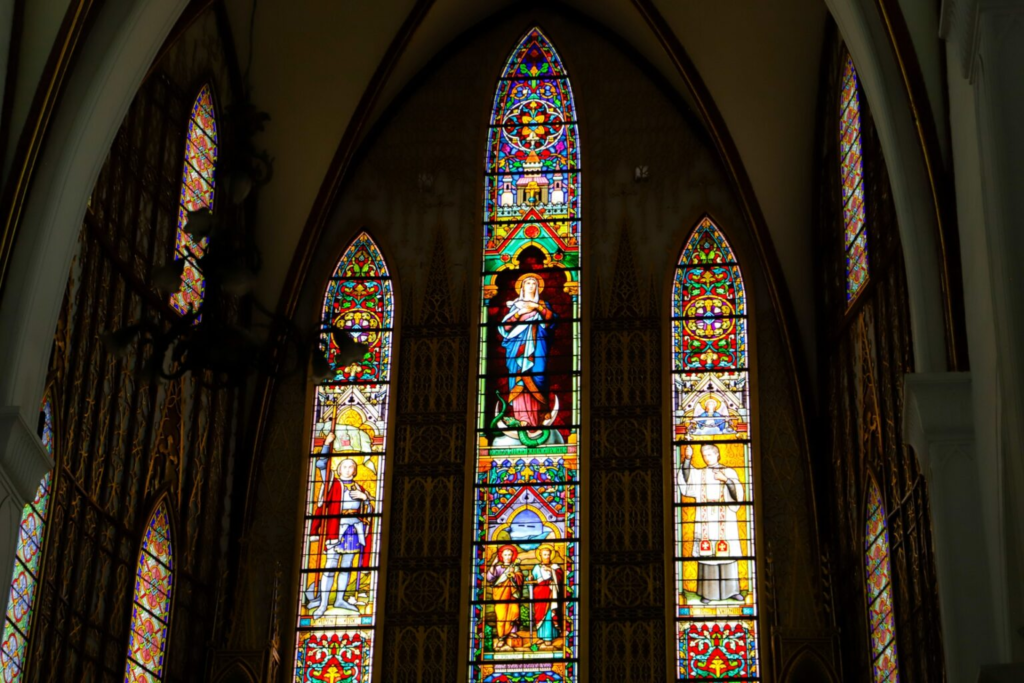
Outside of Mass hours, you can enter the cathedral and explore the interior for free. Inside, rows of vibrant stained‑glass windows create a serene beauty that feels quite different from the exterior.
When sunlight streams through the windows, the entire space becomes wrapped in soft colors, creating a wonderfully dreamlike atmosphere.
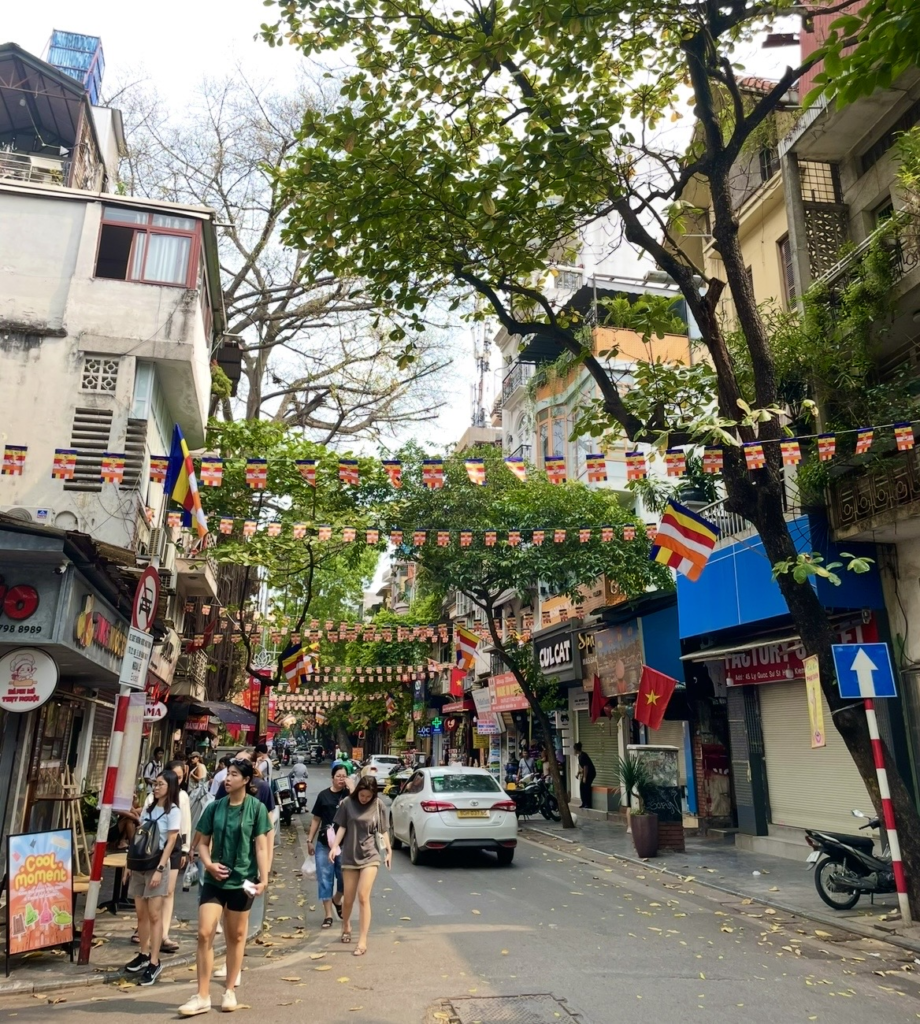
The area around the cathedral is lined with cafés and small shops, creating a unique atmosphere where the lively Old Quarter blends with European‑style architecture. Simply walking through these streets filled with foreign charm allows you to fully experience the essence of Hanoi.
Train Street
Next, I headed to Train Street, one of the most popular tourist spots in Hanoi’s Old Quarter.
Train Street is famous for trains passing just inches from the narrow alley, with only a few dozen centimeters separating the tracks from the surrounding buildings. Cafés and local homes line both sides of the railway, and right before a train arrives, residents quickly move chairs and motorbikes out of the way — a unique glimpse into everyday life. Its intensity and local charm have made it a globally popular spot on social media.
Although I couldn’t catch the moment when the train passed due to my schedule, even during non‑train hours, the area offers a fascinating mix of lively tourist energy and authentic local atmosphere.
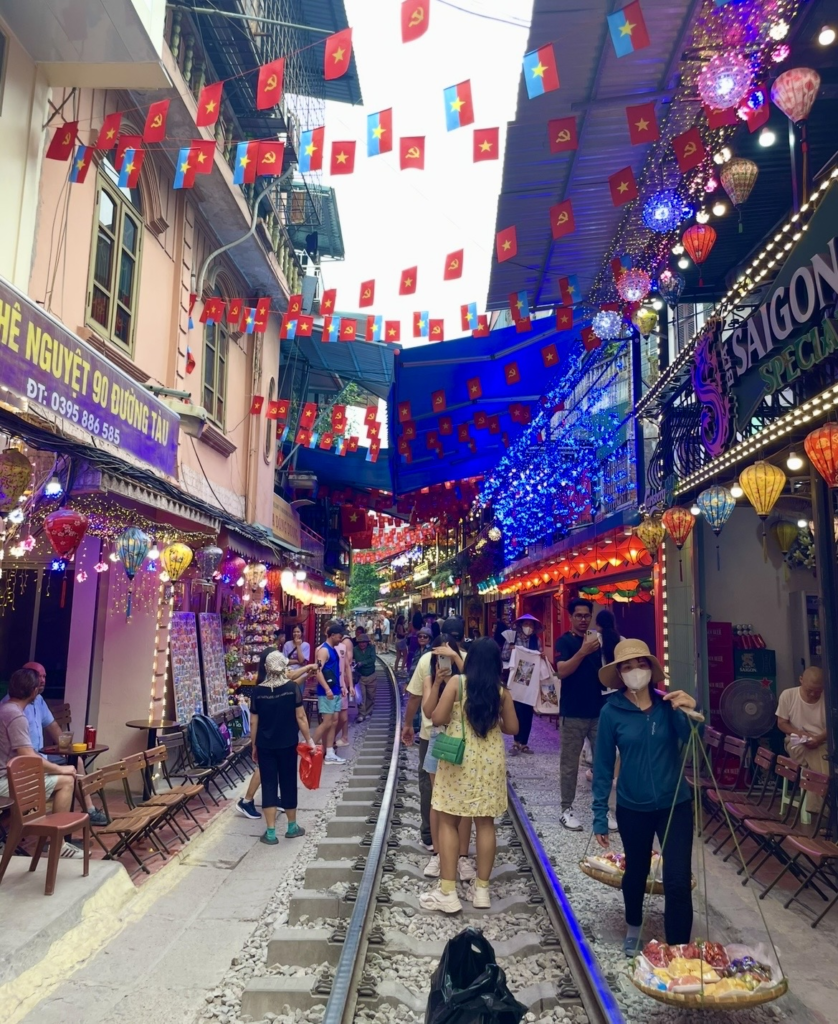
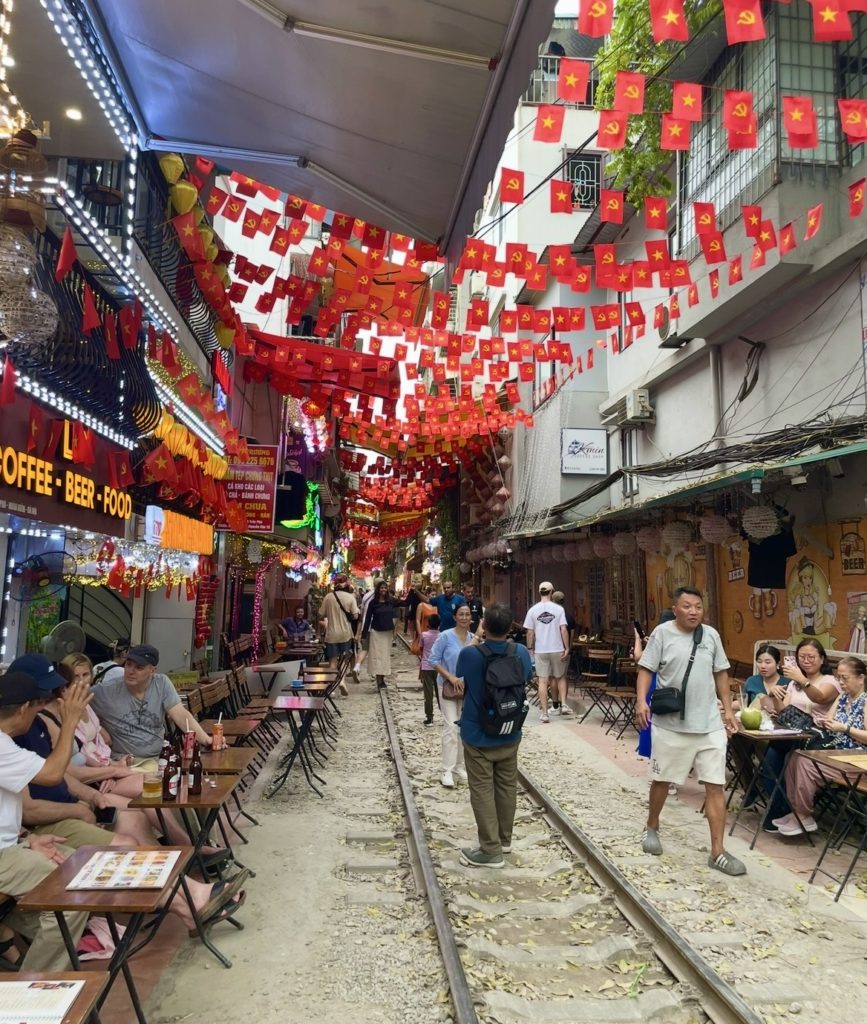
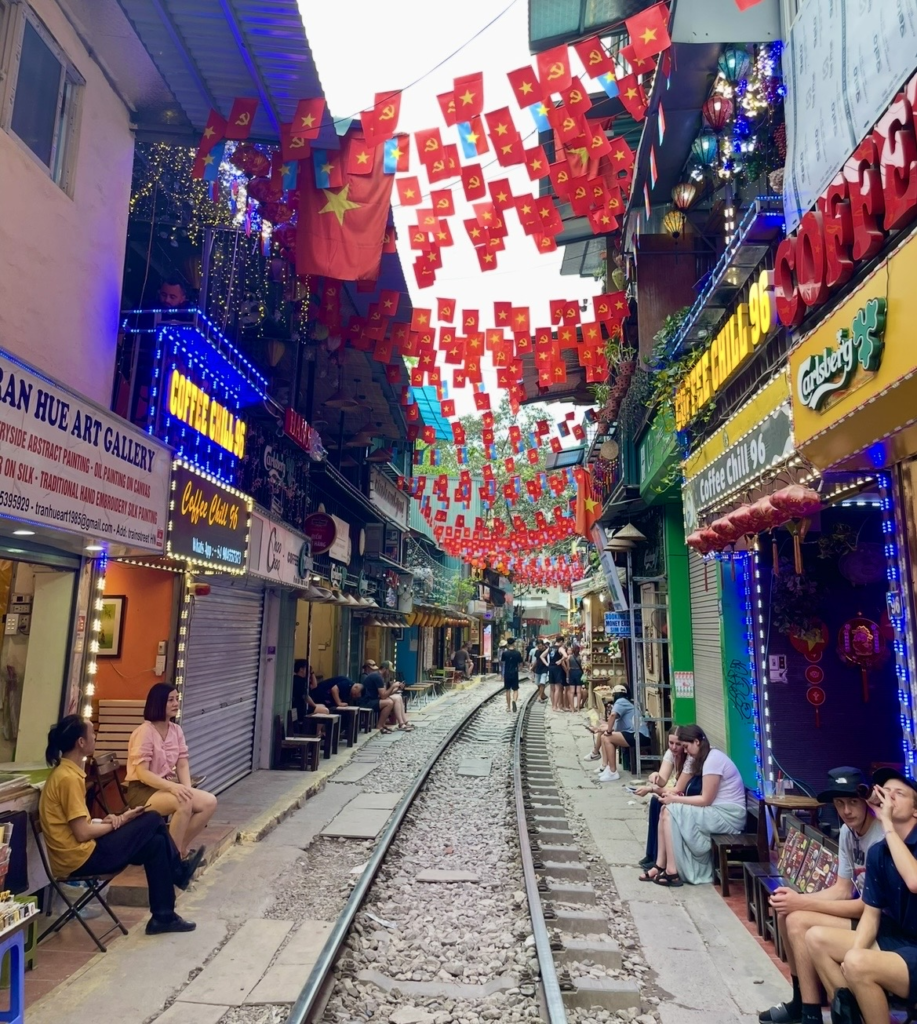
There are only a few trains per day, so checking the latest timetable in advance is essential if you want to witness the moment a train passes.
Typically, visitors wait for the train at one of the cafés along the tracks, but the number of tourists increases rapidly as the scheduled time approaches. To secure a spot, it’s best to enter a café at least 30 minutes beforehand.
Dong Xuan Market
Next, I visited Dong Xuan Market.
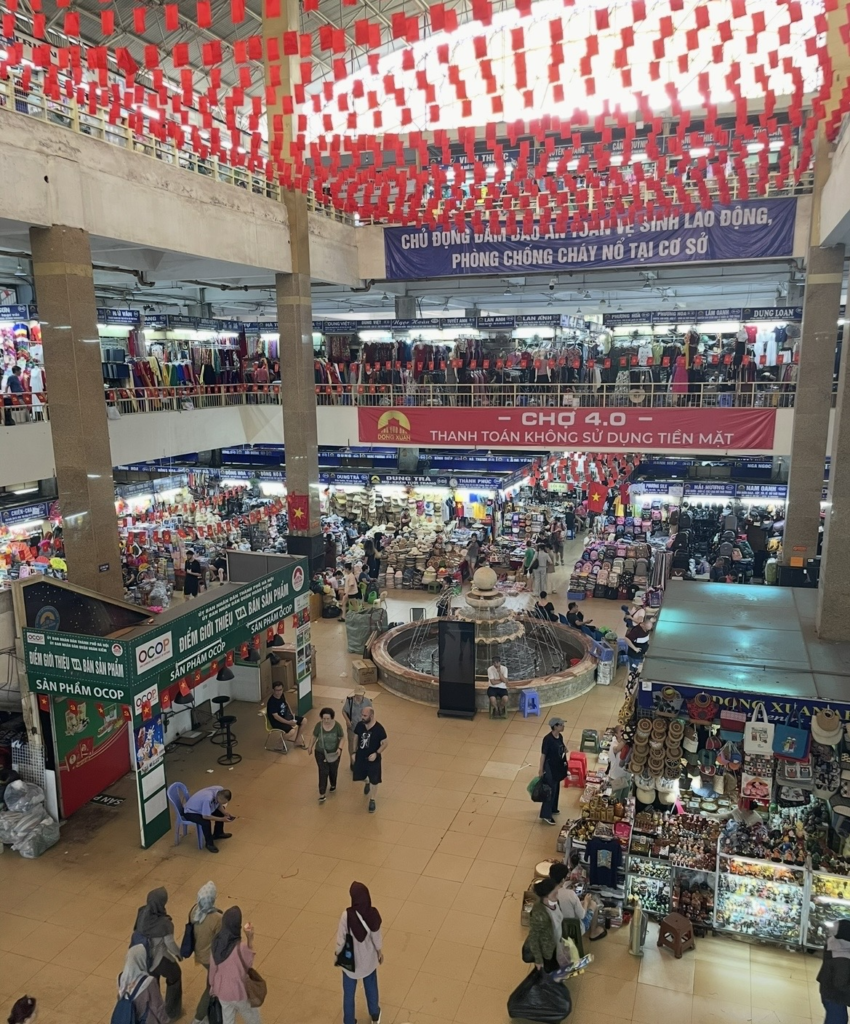
Dong Xuan Market is the largest indoor market in Hanoi’s Old Quarter, filled with a wide variety of goods such as clothing, food, and everyday items. It’s a vibrant spot that offers a strong sense of local life.
Founded in 1889, this historic market still functions as a major wholesale hub in Hanoi. The exterior of the building is somewhat rugged, but once you step inside, you’re greeted by a lively atmosphere that feels distinctly Vietnamese.
From my impression during the visit, the market caters more to local residents than tourists, offering mainly daily necessities. There weren’t many items—such as souvenirs or snacks—that I felt inclined to purchase as keepsakes.
That said, Dong Xuan Market is well‑known in Hanoi, and simply walking around to soak in the atmosphere is enjoyable enough. Rather than visiting with the goal of buying souvenirs, you’ll likely find it more satisfying if you approach it as a place to observe local life.
Thang Long Imperial Citadel
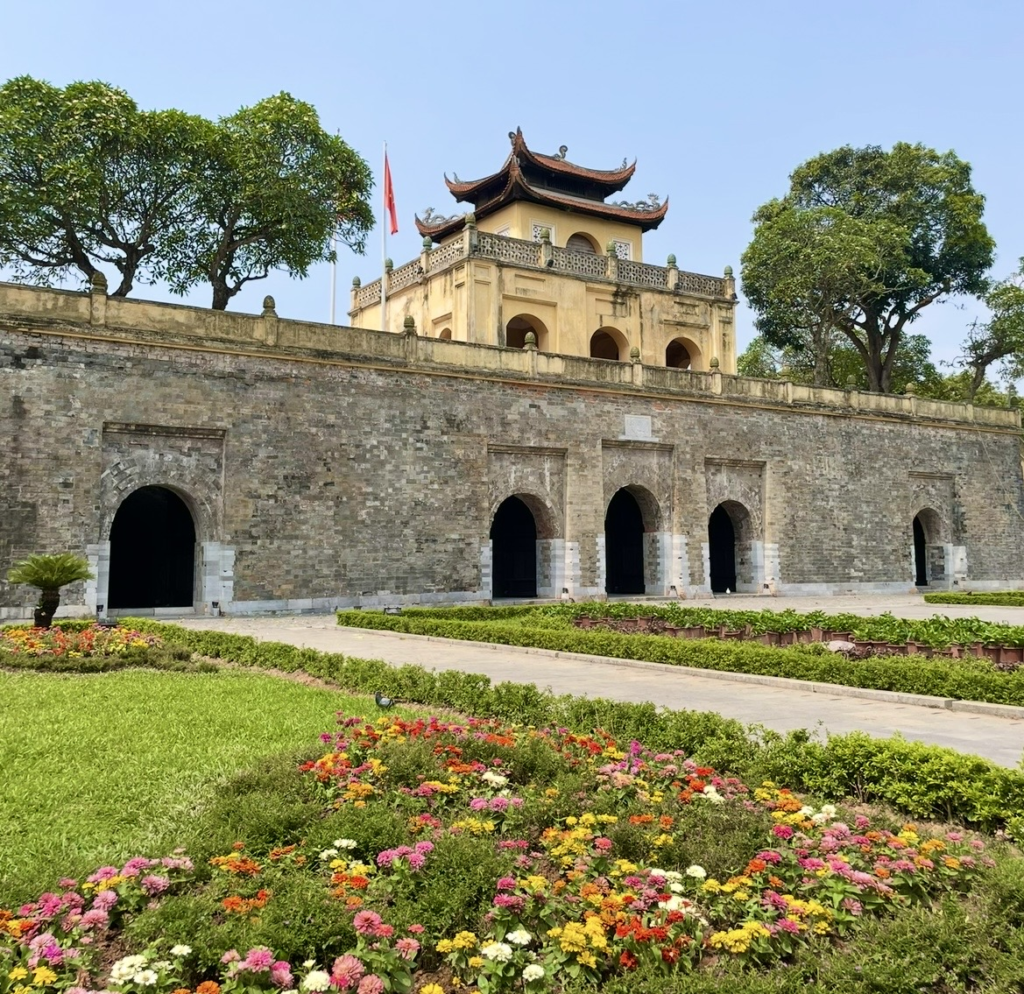
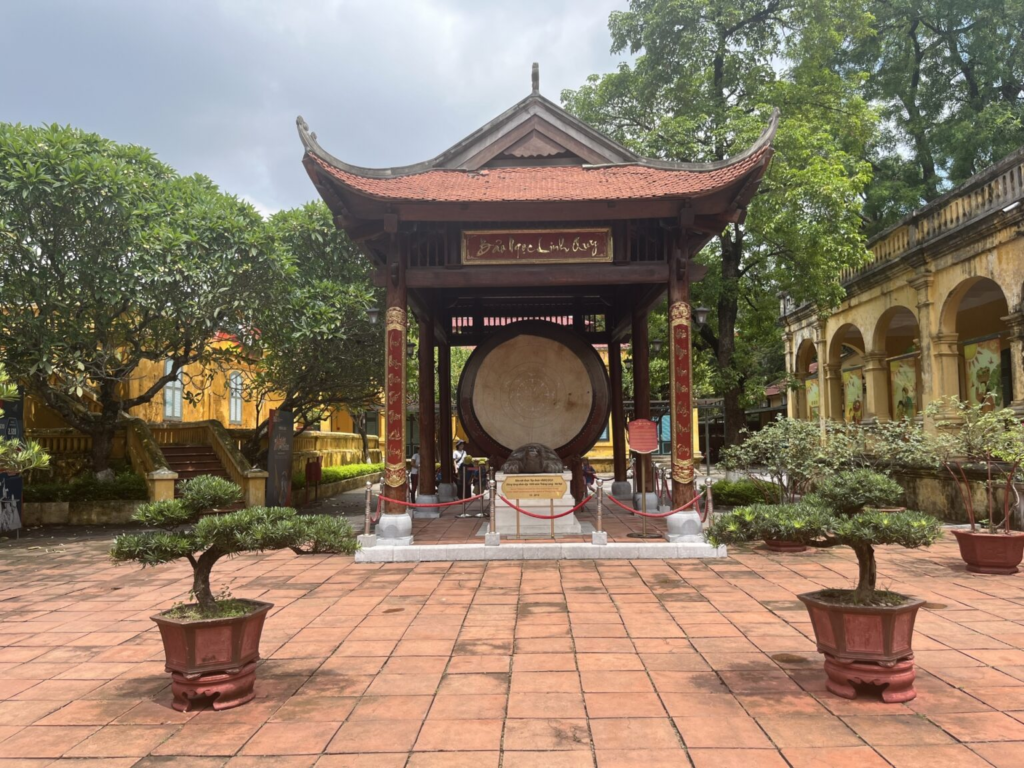
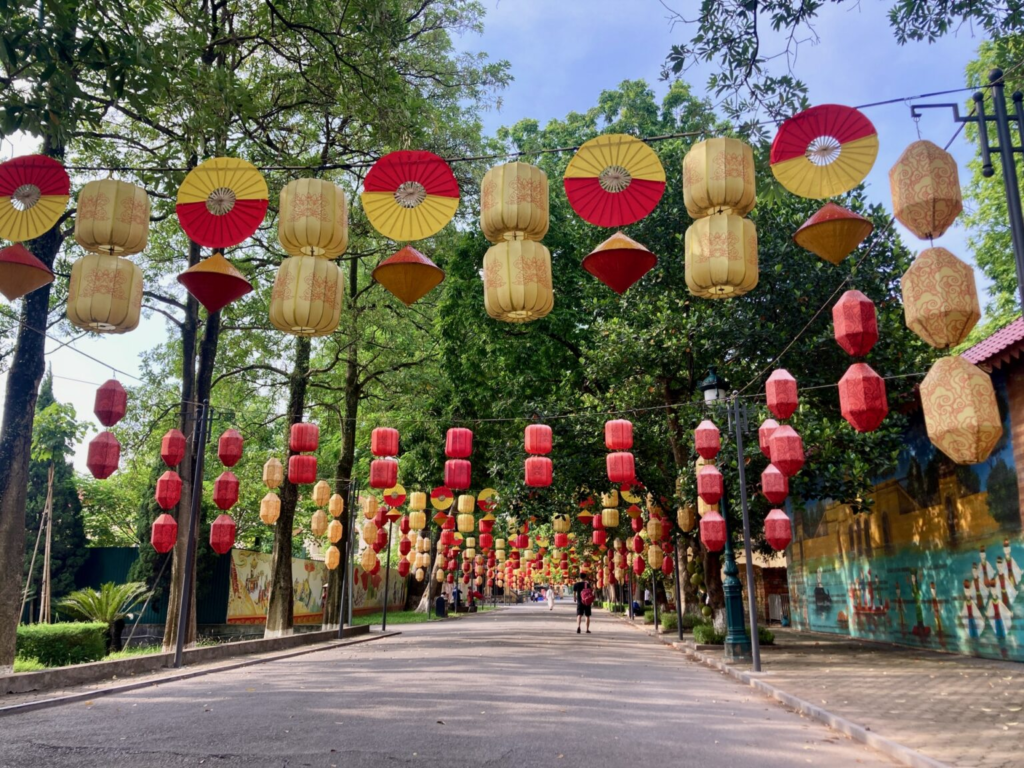
Next, I visited the Thang Long Imperial Citadel. The Thang Long site is the only UNESCO World Heritage location in Hanoi and served as the capital of various Vietnamese dynasties for roughly 1,300 years. It’s easily accessible from central Hanoi, making it a convenient stop even between sightseeing in the Old Quarter, and an unmissable spot for history lovers.
The greatest charm of the Thang Long Imperial Citadel lies in how more than 1,300 years of history remain layered within a single complex. The transitions from Chinese rule → Ly Dynasty → Tran Dynasty → Later Le Dynasty → Nguyen Dynasty → French colonial period → Vietnam War are all stacked in the same place. A site where so many eras overlap is rare even globally, giving visitors the feeling of walking through “layers of history.”
Ho Chi Minh Mausoleum
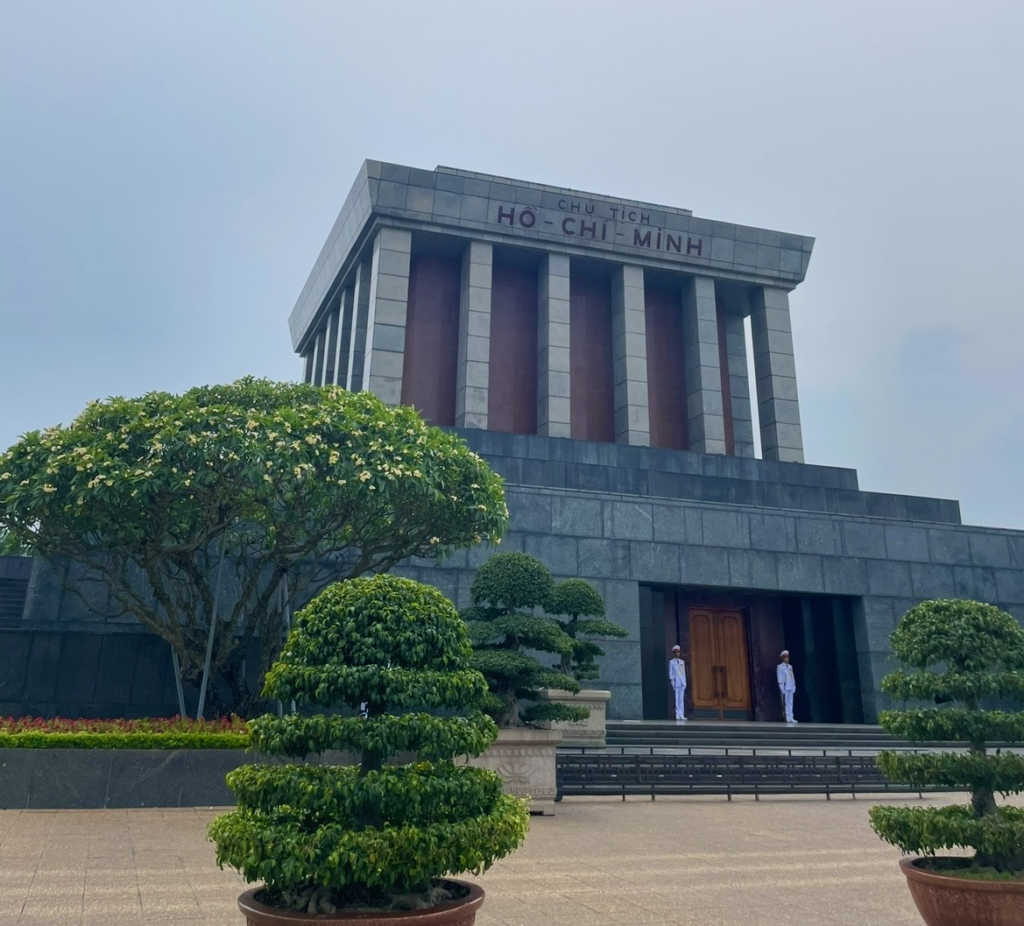
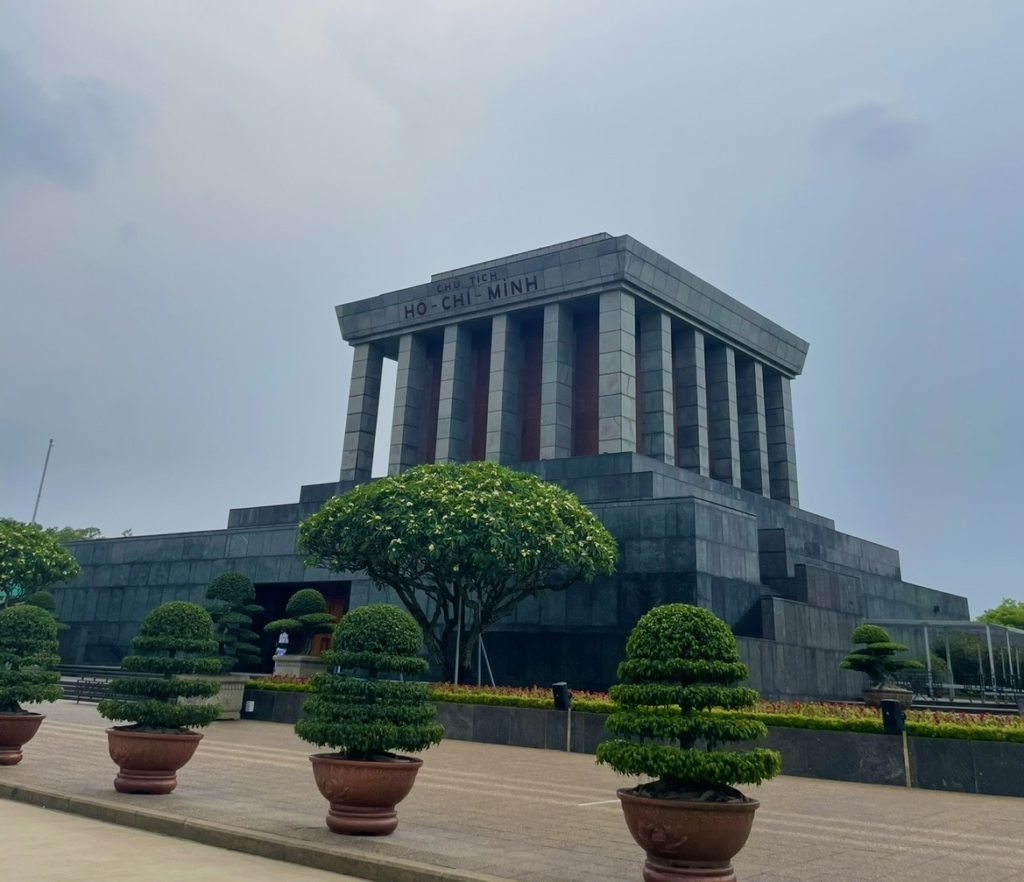
Right next to the Thang Long Imperial Citadel is the Ho Chi Minh Mausoleum, one of the central landmarks of sightseeing in Hanoi. Because it is located so close to the Thang Long site, it’s easy to visit both efficiently in a single route.
The Ho Chi Minh Mausoleum was built to enshrine the body of President Ho Chi Minh, who is regarded as the founding father of modern Vietnam. It is an important site visited by many people from both within the country and abroad.
The structure is made of massive granite and marble, combining the heavy, solemn style influenced by Soviet architecture with traditional Vietnamese elements. Materials sourced from various regions across Vietnam were used, symbolizing national unity through its construction.
Although the Ho Chi Minh Mausoleum is not a religious facility, it is treated as an extremely solemn place. For this reason, strict rules such as the following are enforced.
- Clothing that covers shoulders and knees (no revealing outfits).
- Removal of hats and sunglasses.
- Photography inside the mausoleum is prohibited.
- No talking or stopping while inside.
- Bag inspection required.
- Guards are constantly monitoring the area.
Since the atmosphere feels closer to a “national sanctuary” than a typical tourist attraction, be sure to follow all the rules when you visit.
Across from the Ho Chi Minh Mausoleum, with Ba Dinh Square in between, stands the National Assembly Building of Vietnam. Ba Dinh Square is known as the place where President Ho Chi Minh read the Declaration of Independence in 1945, making it a symbolic space in Vietnam’s modern history. Walking through this area, you can feel a striking continuity between the historic moment when the declaration was proclaimed and the present‑day political activities taking place in the National Assembly.
For those interested in architecture, the geometric design of the National Assembly Building and its modern form influenced by German architecture are worth noting. The contrast between its contemporary style and the heavy, symbolic architecture of the Ho Chi Minh Mausoleum is particularly impressive.

Night Walk in the Old Quarter
At night, Hanoi’s Old Quarter transforms into a place filled with a different kind of energy than during the day—an atmosphere where you can truly feel the city “alive.” From narrow alleys to wide streets, the lights of food stalls and neon signs flicker everywhere, while the sounds of motorbikes, laughter, and music blend together to create a unique rhythm.
Because both tourists and locals gather here, you can enjoy the lively mix of everyday local life and the vibrancy of a popular sightseeing area at the same time. Colorful lights illuminate the night streets, offering countless photogenic moments, making it a fun experience to stroll around with a camera in hand.
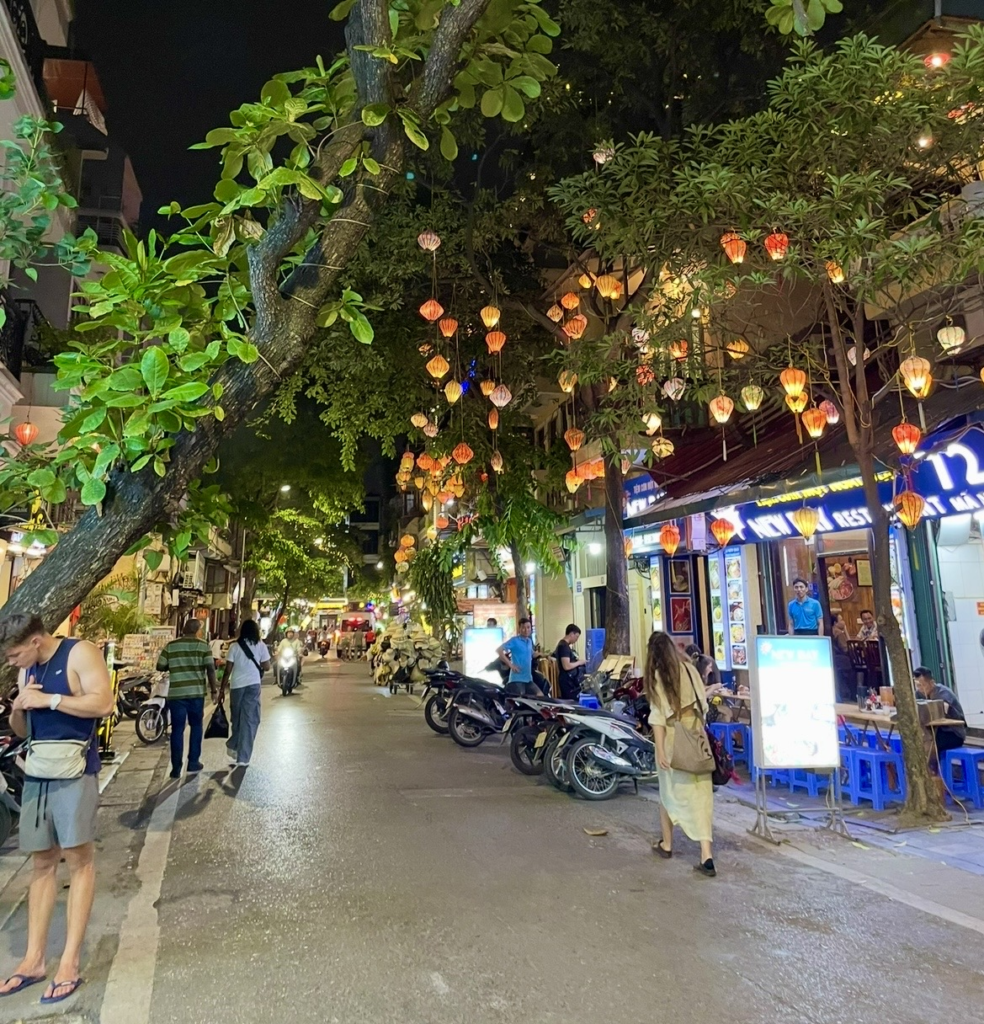
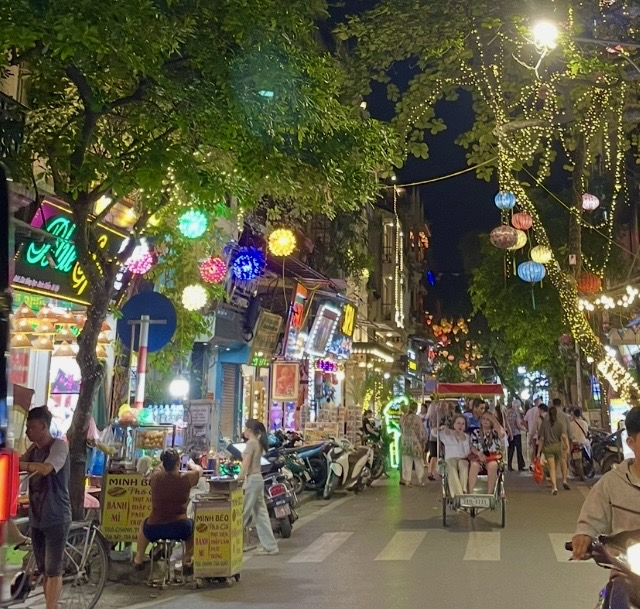
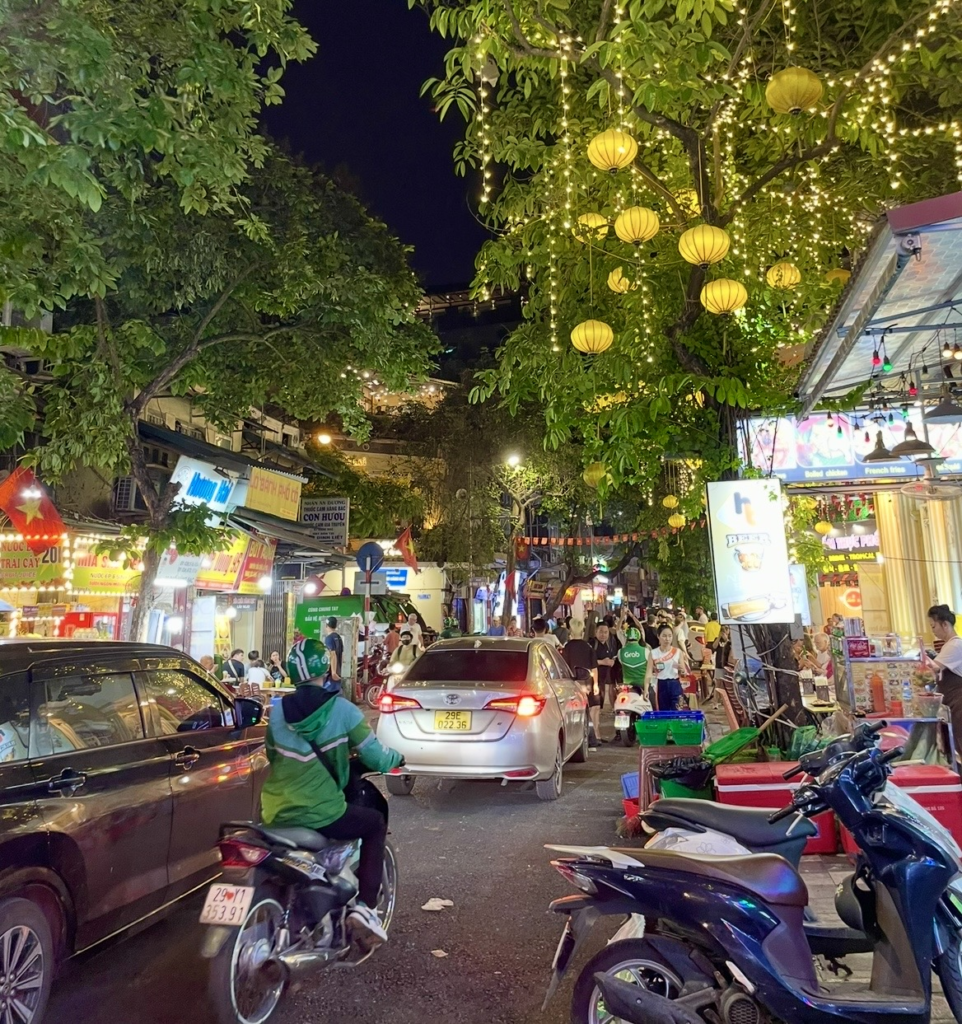
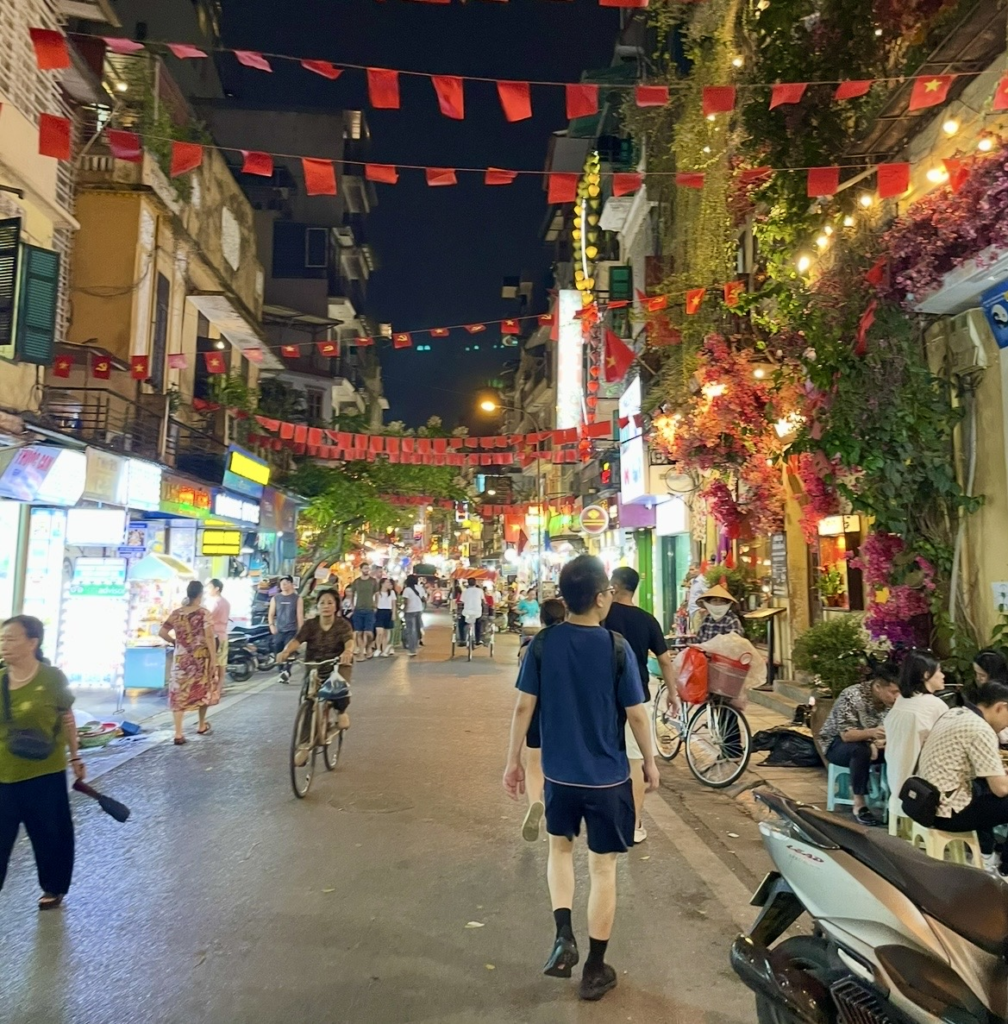
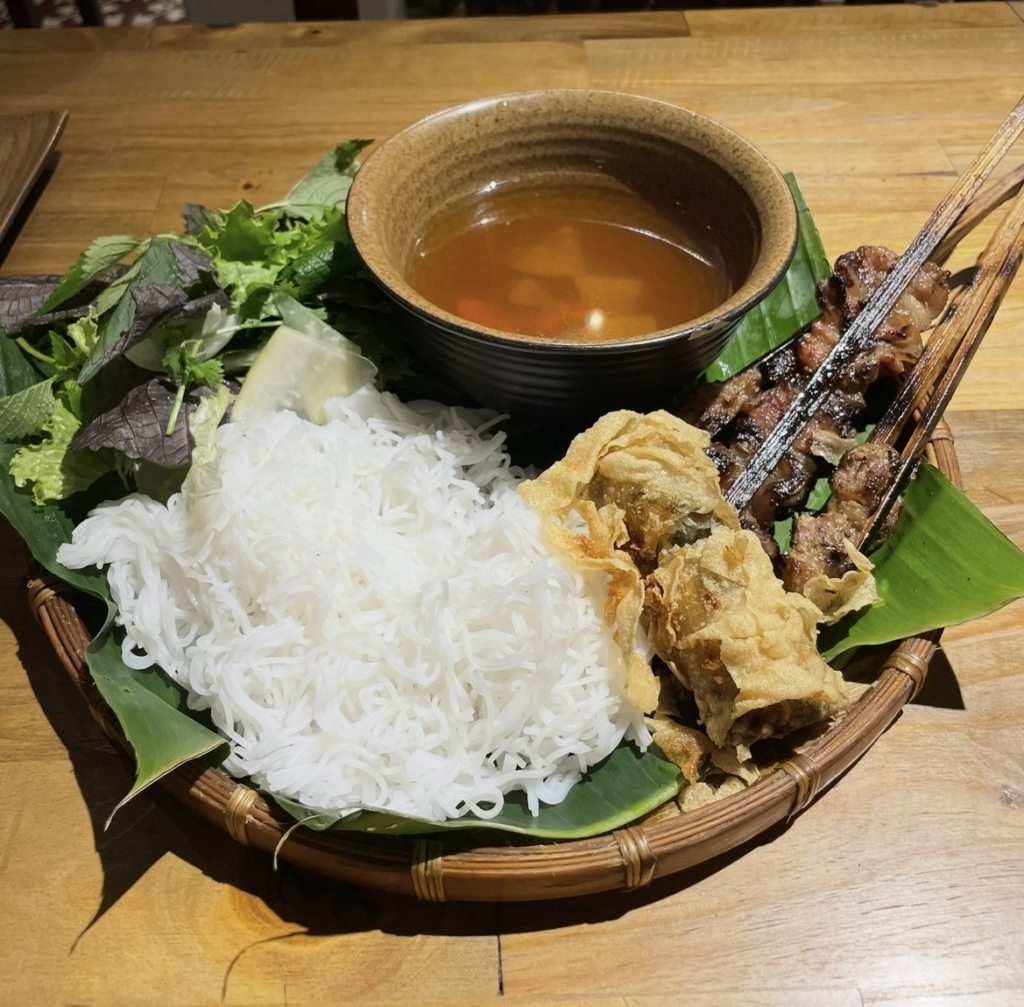
Along the streets, restaurants and small shops stay open late, and every time you walk around, you discover something new—one of the charms of the Old Quarter. I also stopped by a casual local spot and enjoyed bun cha, one of Vietnam’s signature dishes alongside pho and banh mi.
Bun cha is a local dish where charcoal‑grilled pork is soaked in a sweet and tangy dipping sauce and enjoyed together with plenty of herbs and thin rice noodles (bun). It’s richer than pho yet lighter than banh mi. This unique combination of “grilled pork × dipping noodles × herbs” leaves a strong impression even on first‑time visitors.
Important Tips for Visiting Hanoi
Hanoi is generally safe, and I personally never encountered any dangerous situations. However, there was one thing that made me feel, “You should really be careful about this.” That was the presence of fake Grab drivers—essentially taxi scams.
At Hanoi Airport and in the Old Quarter, you may find “fake Grab” drivers displaying the Grab logo and approaching travelers. They often charge inflated prices without using the official app, and travelers arriving at the airport are particularly easy targets.
Here is the sequence of events from when I actually encountered the situation.
When I was heading from Hanoi Airport to my hotel, it was late at night and I was tired. Feeling overly confident because I had gotten used to using Grab, I carelessly fell for a fake Grab driver. The method they used went like this:
- A person holding a Grab placard approaches and asks, “Grab?”
- They tell you that “your car is already here” and urge you to cancel your booking in the app.
- They then quote a price verbally without using the official app and demand cash payment.
- If you say you don’t have cash, they lead you to an ATM.
- They even grab your luggage and carry it to the car, creating a situation where you feel unable to walk away.
After riding for a while, I was suddenly charged an additional highway toll that had not been included in the price quoted beforehand. In the end, even the fare to the hotel was higher than the initial amount they had stated. I resisted, saying, “This isn’t what we agreed on, so I can’t pay,” but the driver wouldn’t back down. Being inside a car, in an unfamiliar city at night, put me in a completely disadvantageous position. Since the amount wasn’t extremely high and I wanted to avoid the worst‑case scenario, I paid what they demanded and got out safely—but I was sweating nervously until the moment I stepped out of the car.
From this experience, if you notice the following behaviors, it’s safest to assume it’s a fake Grab and ignore them completely.
- Someone approaches you saying “Grab?” (real Grab drivers never solicit passengers).
- They quote a price verbally without showing the app (real Grab confirms the fare inside the app).
- They say things like “Pay in cash” or “The app is broken” (real Grab uses credit card payment only).
※ If you hand over your luggage or follow them to the car, it may be very difficult to get out of the situation.
I may have gotten away with only a minor loss, but I’ve heard of cases that are much more serious. To fully enjoy Hanoi safely, please stay alert and keep this in mind.
This concludes the content introduced in this article. The coexistence of contrasts—noise and stillness, history and everyday life, local culture and tourist energy—breathing together in the same place is what makes Hanoi so fascinating. It became a special moment that left a deep mark on my travel memories.
I hope this article helps inspire your choice for your next travel destination.