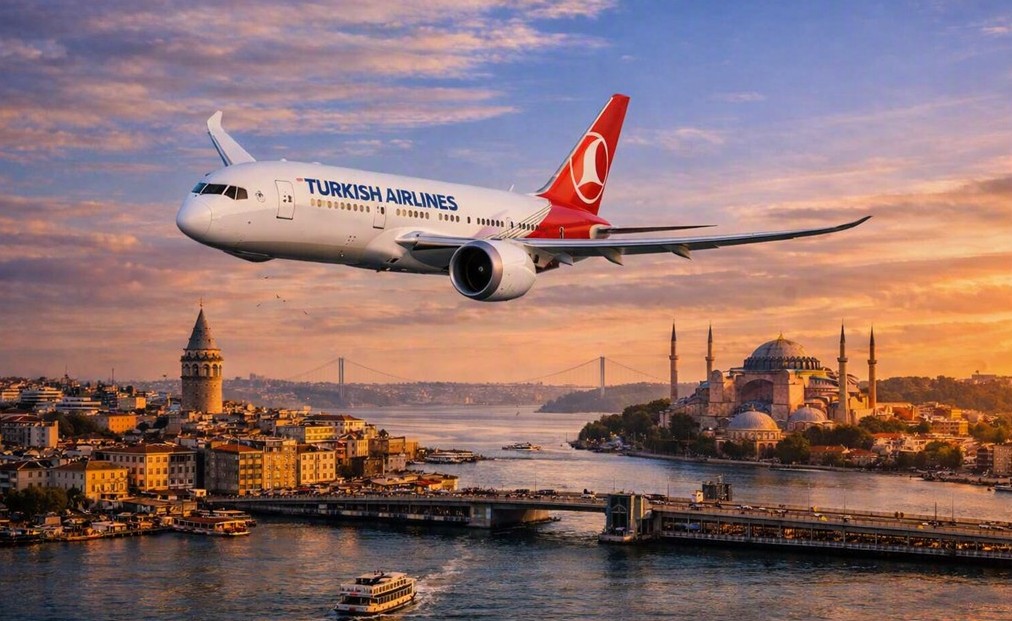


Traveling abroad always brings a slightly special feeling. Knowing that a completely different culture and landscape await after a long journey in the sky, my heart begins to quietly lift even before departure.
This time, I had the opportunity to fly with Turkish Airlines. Based in Istanbul, the airline operates routes all over the world and is often considered a strong option when traveling from Tokyo to Europe. I’ve used Turkish Airlines several times, and each time I’m reminded how gently—and with a touch of elegance—it colors the beginning of a trip.
In this article, I’ll walk through the overview and key features of Turkish Airlines, along with my personal impressions from actually flying with them. I hope it helps anyone considering the airline for their next journey.
I also introduce a complete guide to Istanbul Airport, so feel free to take a look if you’re interested.
Overview and Reputation of Turkish Airlines
To understand Turkish Airlines more deeply, it’s helpful to first look at its background and reputation.
Knowing what kind of history the airline has and how it is generally perceived makes the upcoming flight review easier to picture in a realistic way.
Establishment
The history of Turkish Airlines began in 1933, when a small set of wings first took to the Turkish sky. Although the airline started with only a few small aircraft, it gradually expanded its network as a vital link across Turkey.
In 1947, the airline operated its first international flight from Istanbul to Athens. That initial step beyond the border marked the beginning of the path that would eventually grow into today’s vast global network.
By 1955, the airline officially adopted its current name, “Turkish Airlines (Türk Hava Yolları),” and began its full-fledged expansion as Turkey’s flag carrier. Thinking about how a modest aviation venture has grown into an airline connecting cities all around the world is something that warms the heart of any traveler.
Safety
Turkish Airlines has long built its commitment to safe operations as a carrier with an extensive global network. For first‑time passengers, safety is naturally one of the biggest concerns, but the airline maintains a solid system that aligns with international standards.
They actively introduce the latest aircraft from Boeing and Airbus, and both maintenance and operational management are carried out according to global regulations. The airline also continues to hold IOSA (IATA Operational Safety Audit) certification, a major international safety audit program, earning strong recognition worldwide.
I’ve flown with Turkish Airlines several times, and each experience has left me feeling confident in entrusting my journey to them. Even first‑time travelers should be able to enjoy long flights to destinations around the world with peace of mind.
On journeys that cross vast skies, trust in the airline greatly influences the comfort of the trip. Turkish Airlines is, in my view, a carrier that steadily upholds safe operations to maintain that trust.
Awards and Recognitions
Turkish Airlines has earned high praise not only for the quality of its service but also for the breadth of its global network. One symbolic achievement is its recognition by Guinness World Records as the airline that flies to the most countries. In 2024, based on its operational performance over the previous 12 months, the airline was officially certified for serving 120 countries, setting a Guinness World Record.
Furthermore, when including seasonal routes, temporary suspensions, and newly launched destinations, the airline’s network is sometimes described as spanning 131 countries, offering travelers an exceptionally wide range of options. No matter where you plan to go, there is a reassuring sense that “you can get there with Turkish,” supported by this expansive global network.
Turkish Airlines has also received high recognition from Skytrax, a major airline rating organization, earning awards such as:
- Best Airline in Europe
- Best Business Class Catering
- Best Economy Class Catering
Its in‑flight meals, in particular, are often described as “unbelievable for being served in the sky,” making them one of the defining charms of flying with Turkish Airlines.
These awards are more than just titles—they translate into real satisfaction and peace of mind when you actually fly with the airline. During a journey across the world, seeing the Turkish Airlines logo often brings a reassuring feeling of “I’ll be fine with this airline.” Perhaps it is these solid achievements that sustain such trust.
Key Features of Turkish Airlines
Turkish Airlines has long been chosen by travelers around the world as a carrier that connects the skies on a truly global scale. Its appeal lies not only in the vastness of its route network but also in the comfort of its cabin experience, the quality of its service, and its commitment to safety—elements that together shape the airline’s unique character.
In this section, I’ll introduce the distinctive qualities you can actually feel when flying with Turkish Airlines. By highlighting the points that contribute to a comfortable journey, we can get a clearer picture of what makes this airline stand out.
Destinations Served
One of the major strengths of Turkish Airlines is its exceptionally wide global network. As of 2026, the airline operates flights to 133 countries and 351 cities, including 305 international destinations. With Istanbul as its hub, routes extend across Europe, Asia, Africa, and the Americas—truly making it an airline that can take you “almost anywhere in the world.”
When you look at the departure board at Istanbul Airport, the scale of this network becomes immediately clear. Although flights from other airlines are mixed in, the sheer number of city names displayed is overwhelming, giving you an intuitive sense of just how many destinations Turkish Airlines connects.
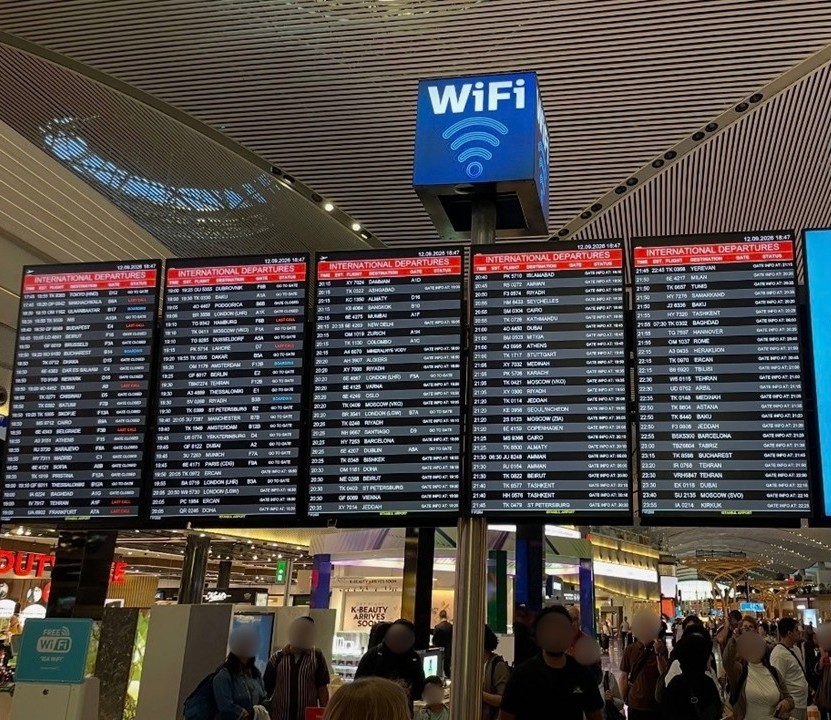
Turkish Airlines also serves 53 domestic cities, offering excellent convenience for travel within Turkey. With both its international and domestic networks being highly extensive, travelers can reach almost any destination smoothly via Istanbul, regardless of where they are headed.
In‑Flight Meals
The in‑flight meals of Turkish Airlines are one of the airline’s defining charms. Even in economy class, passengers are served a warm main dish accompanied by appetizers and dessert, offering a satisfying meal regardless of whether the flight is short‑haul or long‑haul. Side dishes featuring yogurt and other distinctive flavors not often seen on other airlines add a touch of cultural richness, making mealtime a memorable part of the journey.
In business class, some flights even feature a dedicated “Flying Chef,” known for delivering more refined, restaurant‑quality dishes. Many travelers describe the experience as enjoying a restaurant in the sky, making it one of the signature elements of Turkish Airlines’ service.
I’ll introduce the actual meals served on my flight later in the trip report.
Stopover Program
Turkish Airlines’ stopover service is well known as a benefit that allows passengers to make good use of their layover time in Istanbul. For eligible international transit passengers, the airline offers complimentary hotel stays when certain conditions are met.
The requirement is a layover of 20 hours or more in Istanbul. Economy class passengers receive one night of free hotel accommodation, while business class passengers are offered two nights. Hotel grades differ by class, with economy passengers typically staying in 4‑star hotels, and business class passengers in 5‑star hotels.
By using the stopover program, travelers can enjoy a short visit to Istanbul. From historic landmarks in the old city to views of the Bosphorus Strait, there is plenty to experience even within a limited time, adding a small but memorable sightseeing element to the journey. Being able to rest at a hotel during long travel itineraries is another major advantage.
For details, please refer to the airline’s official website.


Istanbul Airport
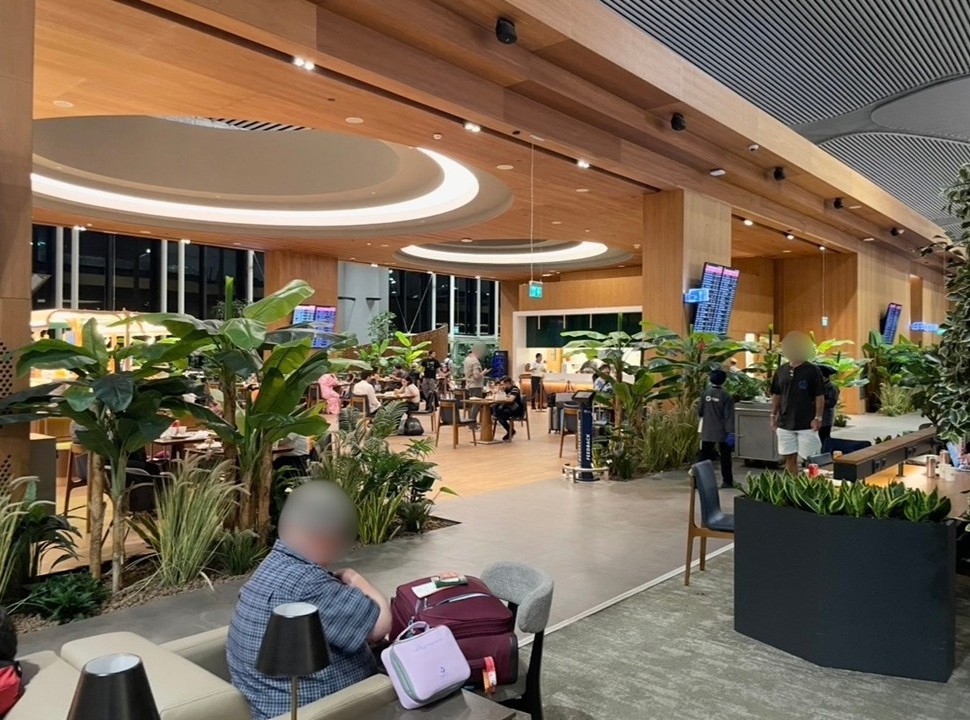
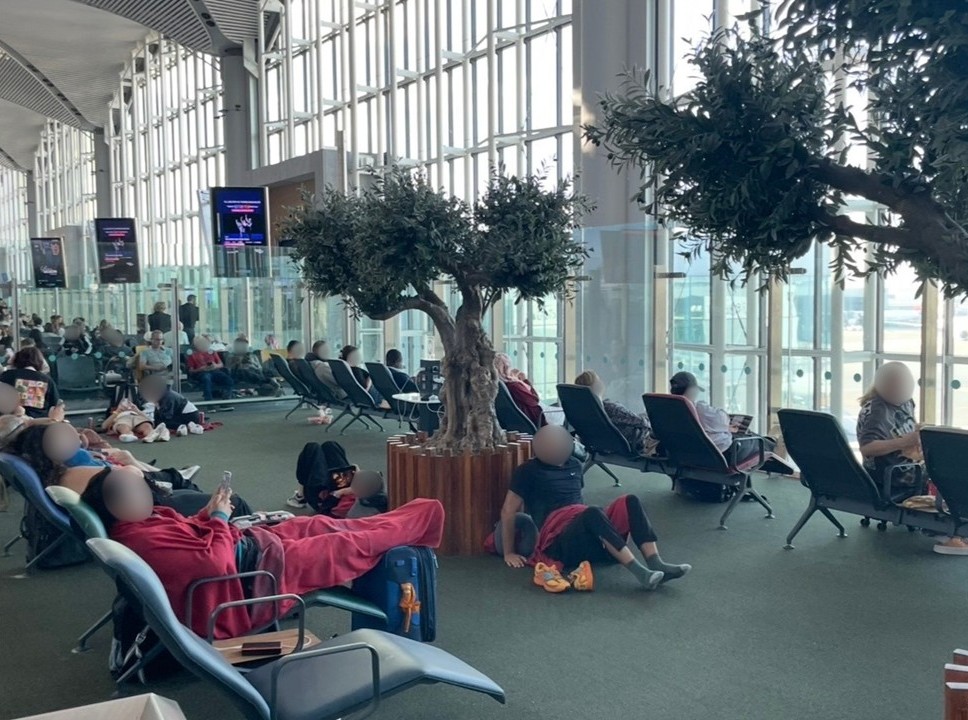
Istanbul Airport (IST), the home base of Turkish Airlines, is an essential part of the airline’s identity. Fully opened in 2019, the airport sits at the crossroads of Europe, Asia, and the Middle East, and within just a few years has become known as one of the world’s leading mega‑hub airports.
Its annual passenger volume ranks among the highest globally, and the vast terminal is filled with shops and restaurants, offering plenty to enjoy even during long layovers. One reason Turkish Airlines can maintain such an extensive global network is the strength of this airport as a hub. Connections between arriving and departing flights are highly efficient, and even for long‑haul transfers, the flow of movement is easy to understand.
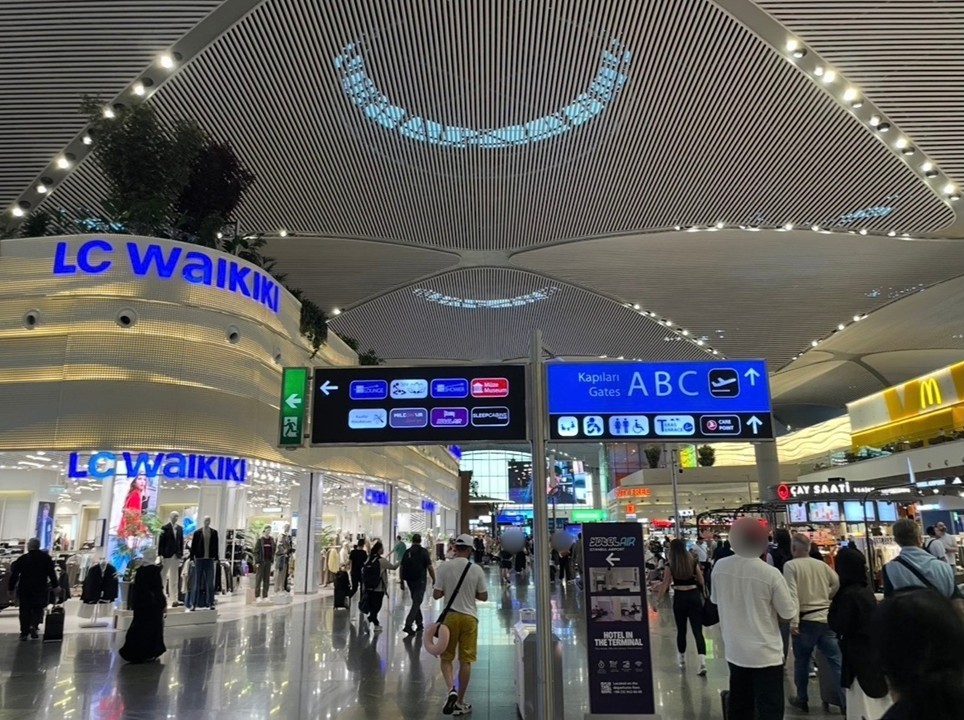
Walking through the terminal, you may be struck by its sheer size and the number of people—first‑time visitors might feel as though they’ve wandered into a “massive city” rather than just an airport. The facilities are modern, with up‑to‑date security and passenger flow design, making it a comfortable place to spend time during extended layovers.
Flight Review|A Look at My Actual Experience Onboard
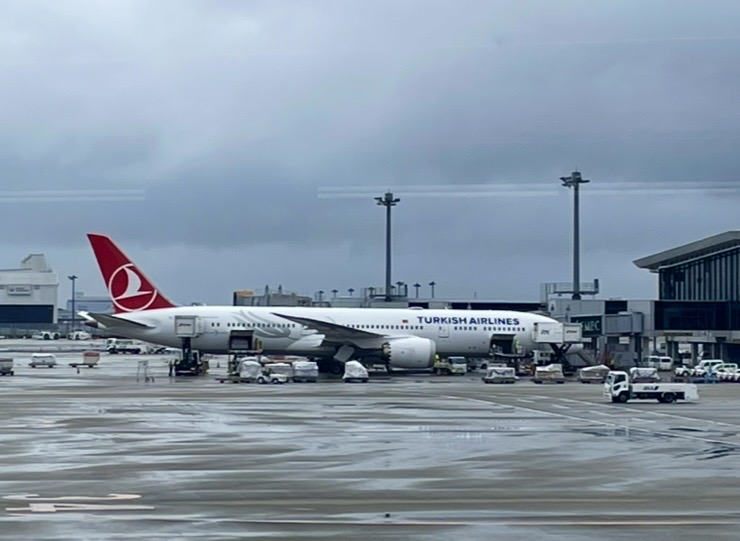
On this trip, my main long‑haul flight was the Tokyo–Istanbul route (B787‑9 / Economy Class). I’ll review that experience in detail while also touching on the short‑haul flights I took— Istanbul–Malta and Bari–Istanbul.
The Tokyo–Istanbul flight was operated with a B787‑9 featuring a 3‑3‑3 seating layout. Each seat came equipped with a pillow, blanket, headphones, and a full amenity kit. The kit included slippers, socks, an eye mask, and a toothbrush—everything you need for a long journey, making the set feel genuinely thoughtful.
The amenities were presented in a pouch designed to resemble the Trojan Horse, which left a memorable impression and added a touch of Turkish cultural charm.
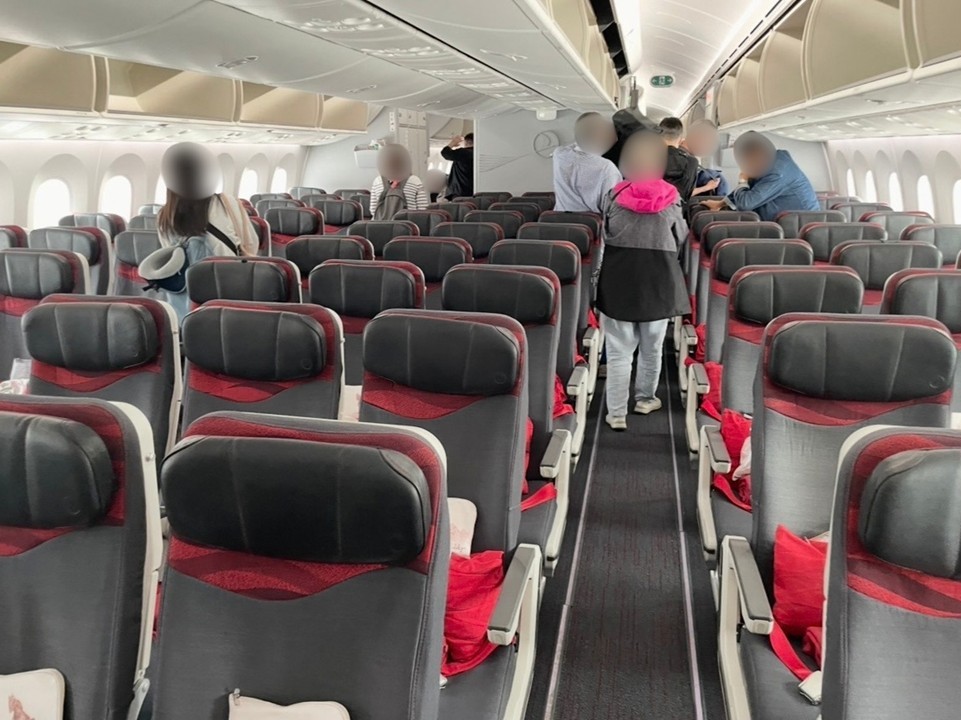
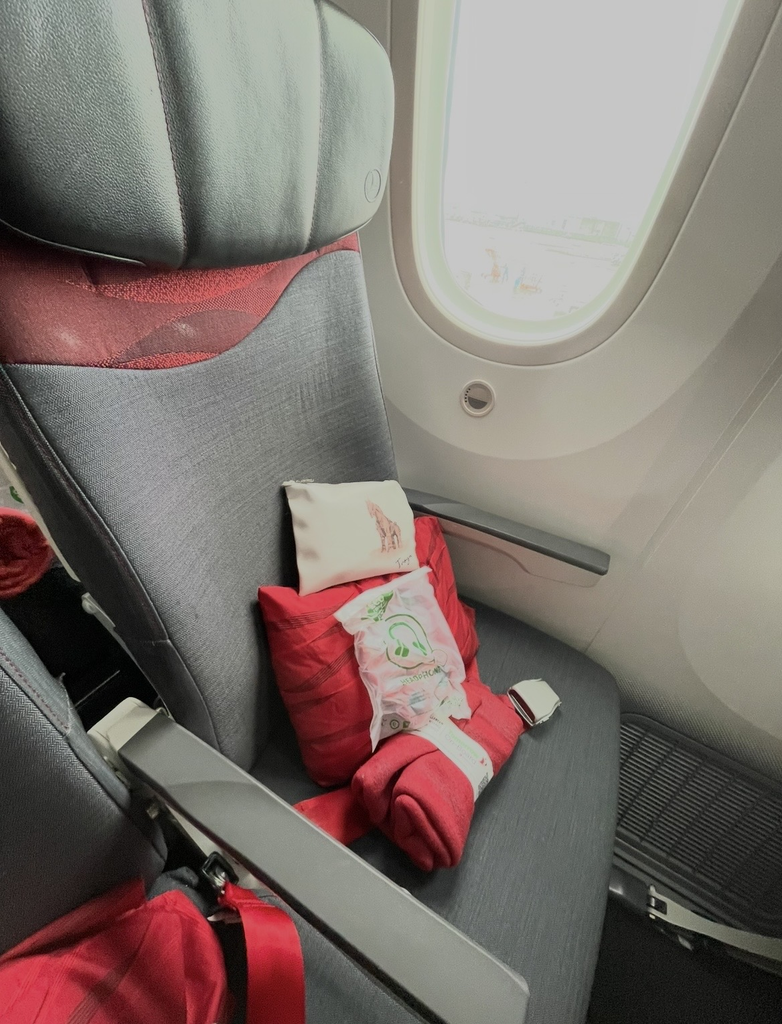
Seats are assigned at check‑in, though advance seat selection is available for an additional fee. During online check‑in, many seats appeared open, so I chose one with an empty seat next to it. However, once onboard, the flight turned out to be completely full, and the seat beside me was occupied. Most likely, the “available seats” shown online were simply seats that had not yet been assigned.
Since the Tokyo–Istanbul route is very popular and usually operates with a high load factor, it may not be necessary to pay extra for seat selection as long as you are comfortable with any standard seat.
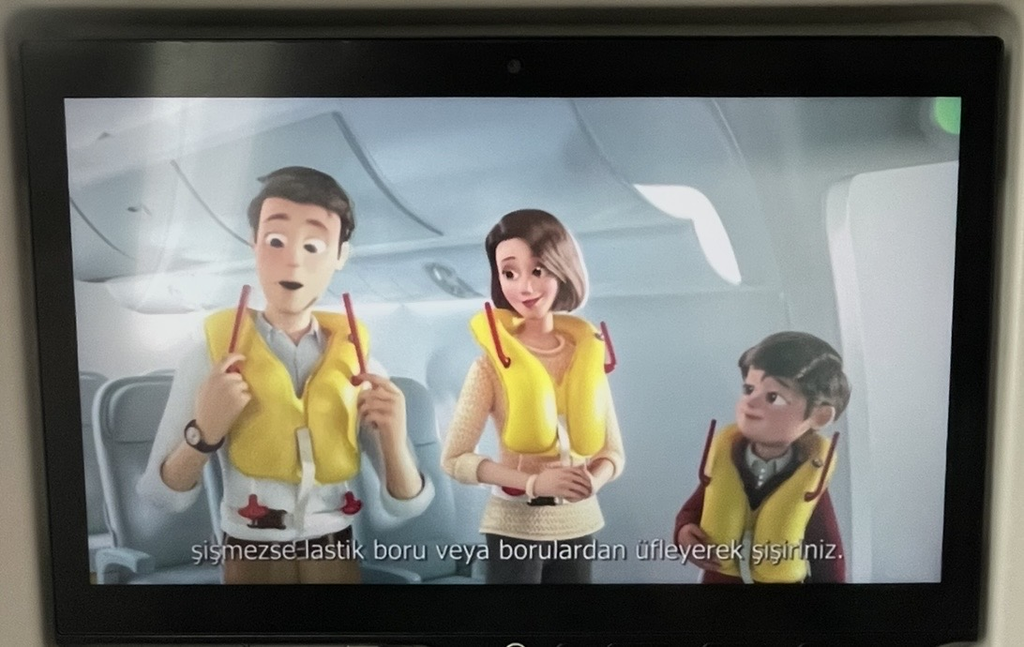
Shortly after boarding, the safety video begins. It features a soft, Disney‑like animation style that gently eases the slight tension many people feel before takeoff.
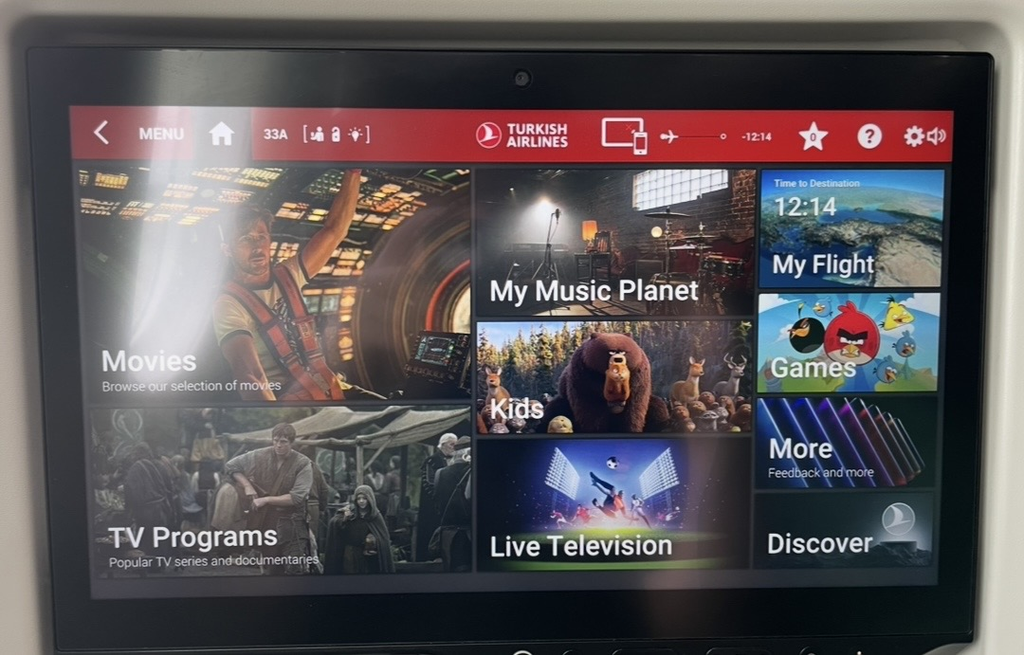
The in‑flight entertainment offers a wide variety of movies, TV shows, and children’s programs, ensuring that even long flights remain enjoyable and never feel boring.
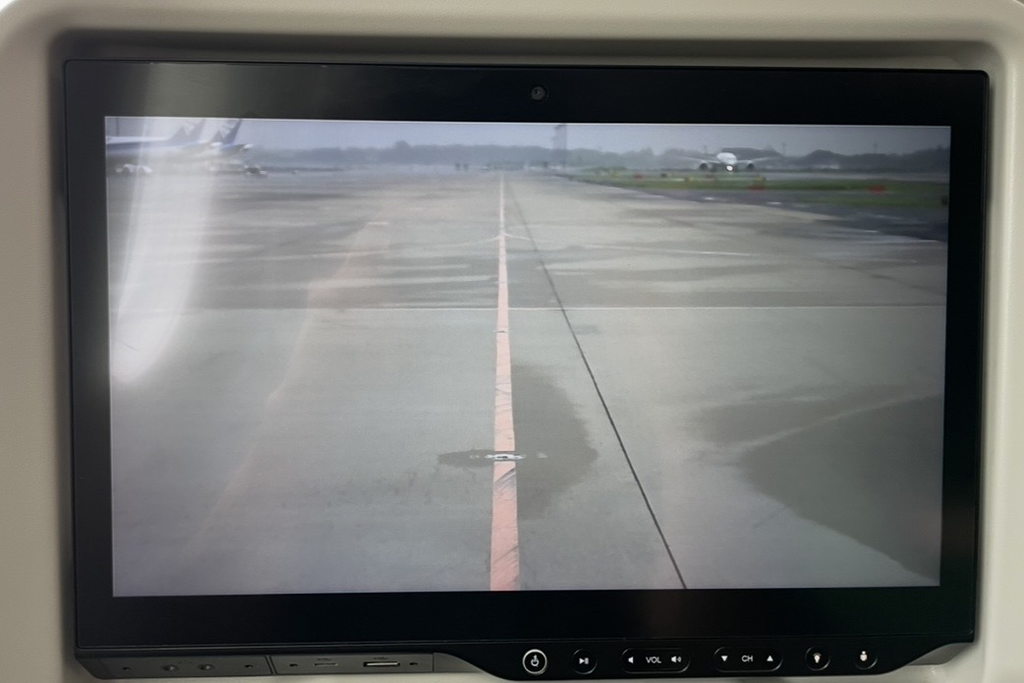
The aircraft is equipped with an external camera system, allowing passengers to enjoy real‑time views during takeoff, landing, and even while cruising—something that feels uniquely Turkish Airlines.
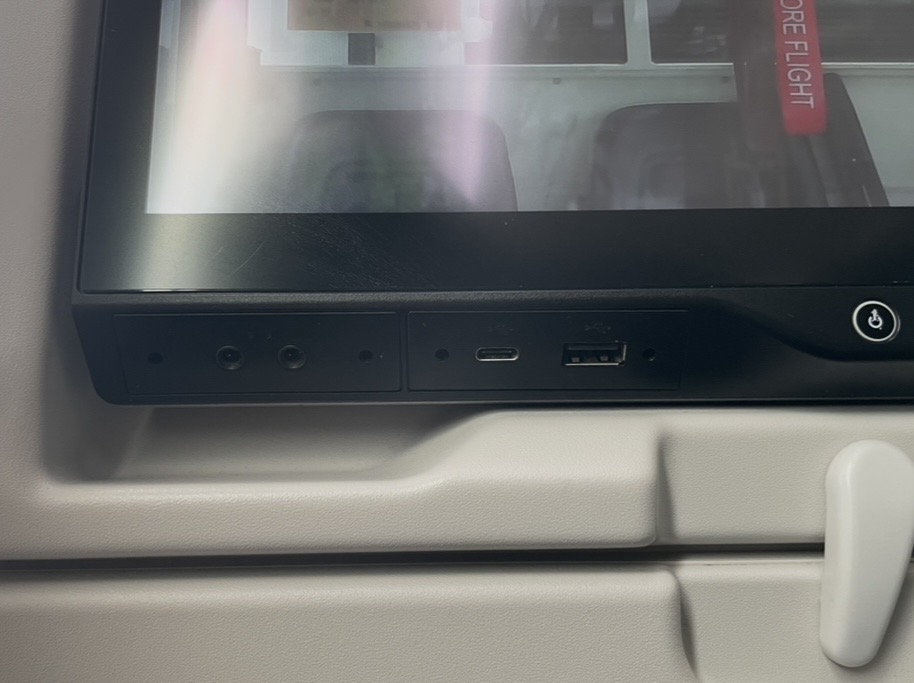
A USB port is located beneath the monitor, allowing you to charge your smartphone and other devices without any issues.
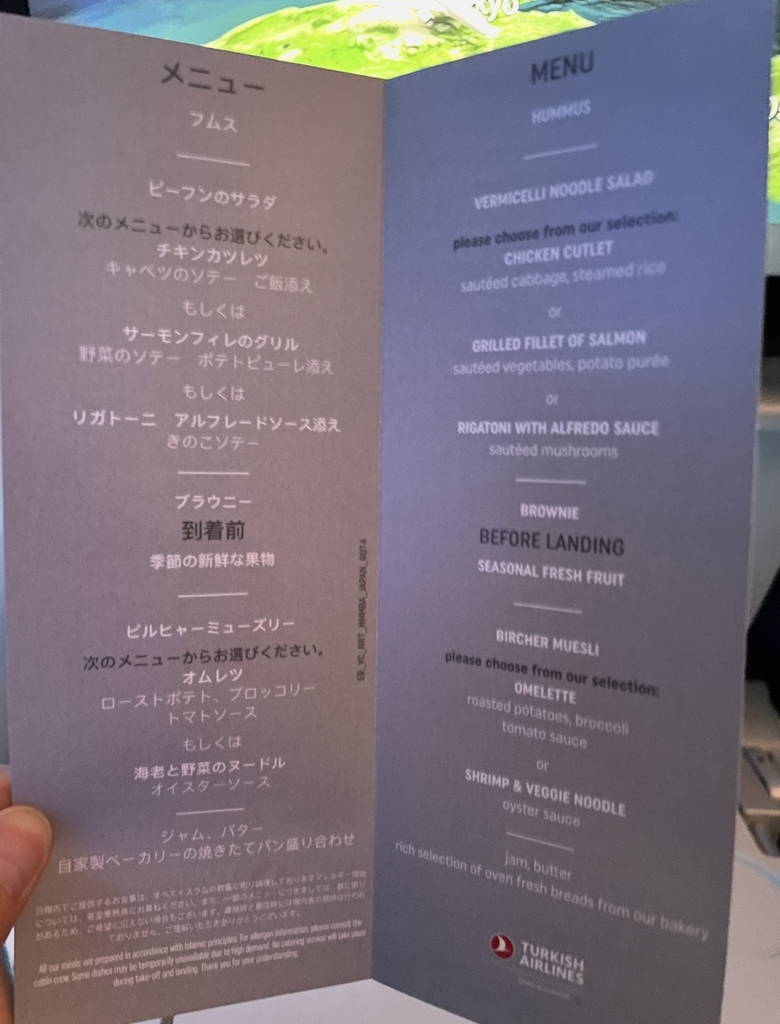
On the Tokyo–Istanbul route, two meal services are provided. The first meal is served about two hours after takeoff, and the second about two hours before landing. Menus are handed out in advance, allowing passengers to choose their preferred dish—something I personally appreciate. Many airlines don’t reveal the options until the meal is served, so having time to think “Which one should I pick?” adds a small but enjoyable element to the journey.
For my flight, I chose rigatoni for the first meal and noodles for the second.
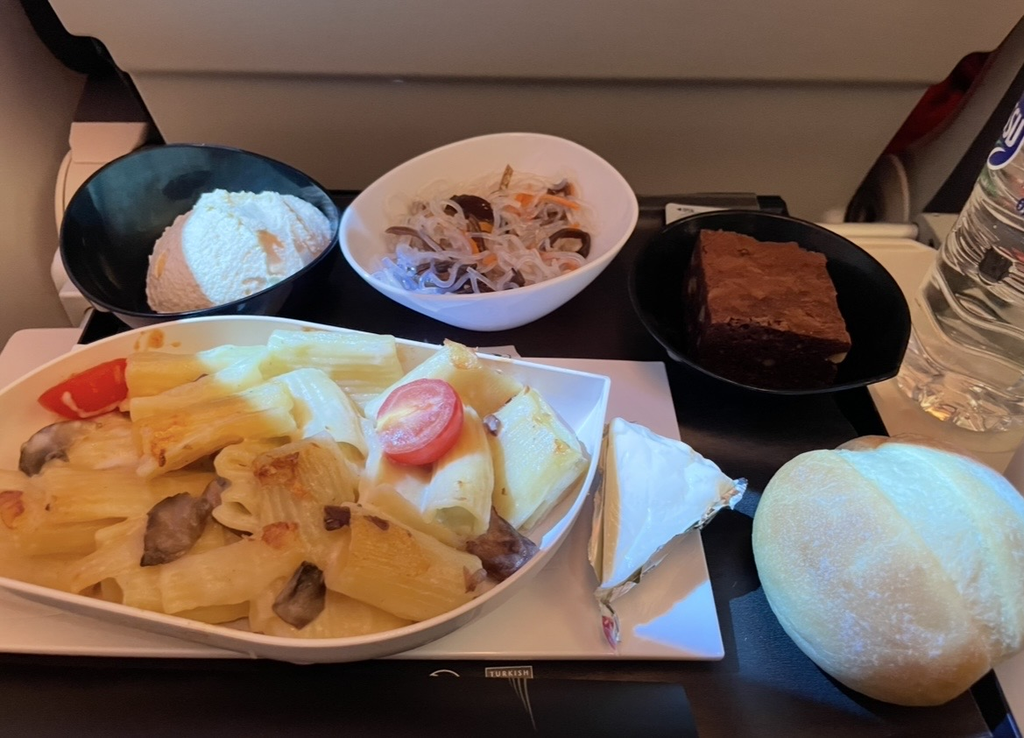
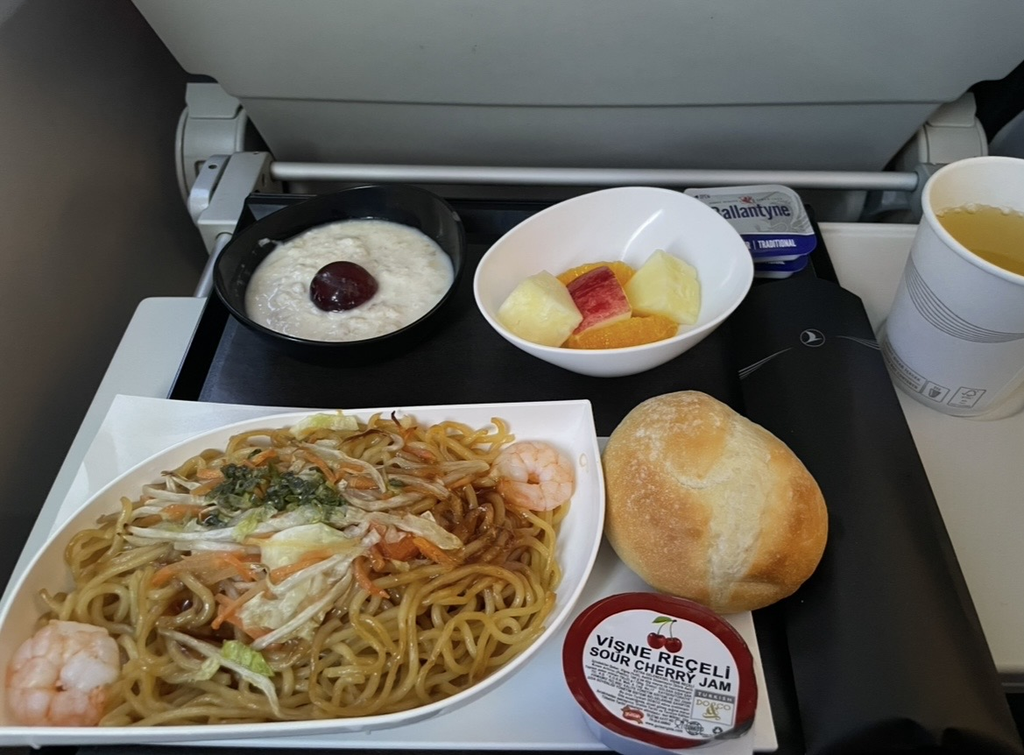
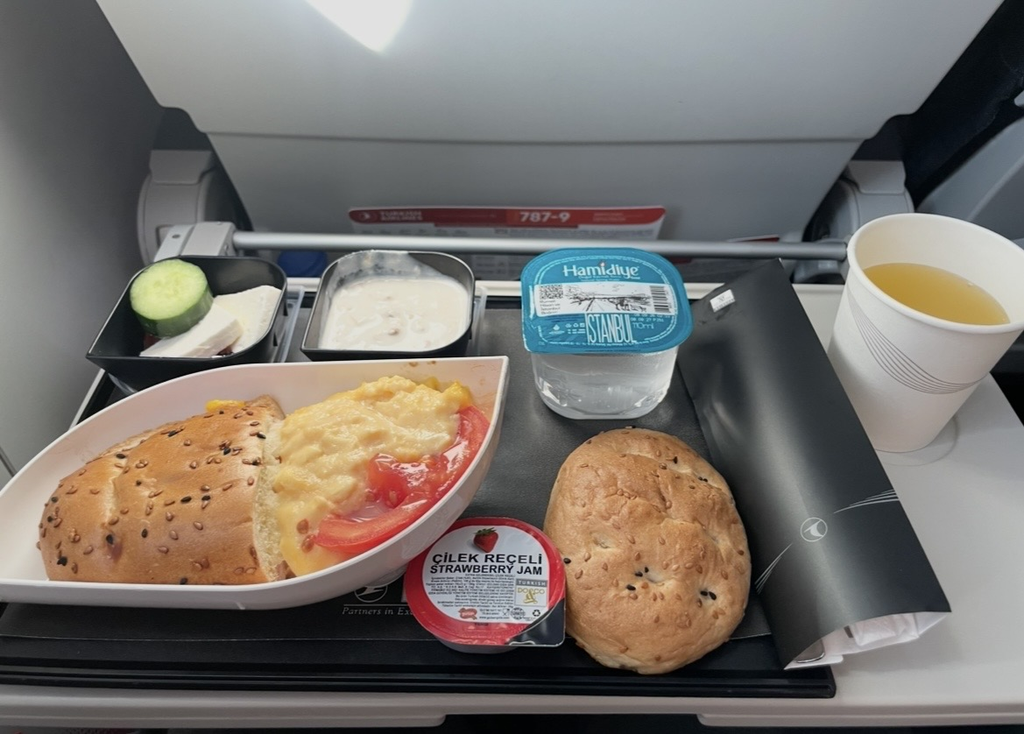
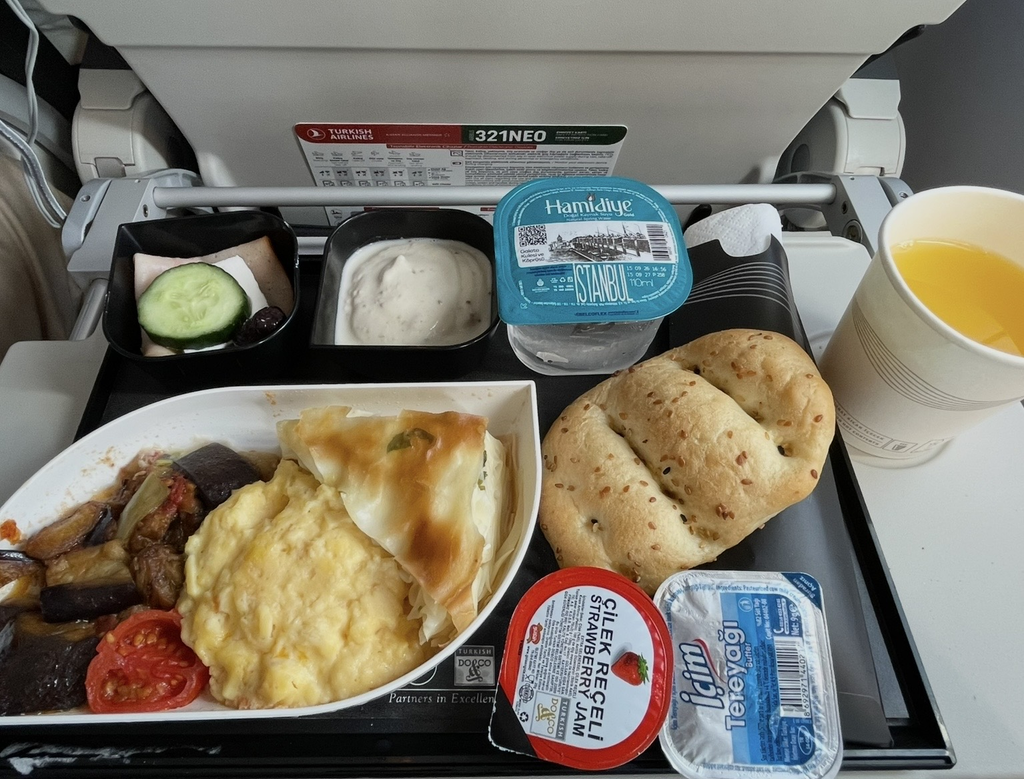
Although there were no menu choices on the short‑haul flights, proper in‑flight meals were still provided. The top photo shows the meal on the Istanbul–Malta flight, and the bottom one is from the Bari–Istanbul flight. Both were early‑morning departures, and the meals offered were just right for breakfast.
I enjoy looking out the window during flights, but there is one thing to keep in mind. Despite the Tokyo–Istanbul flight being a daytime service, the cabin lights are kept dim for most of the time between the two meal services. Moreover, the B787 uses electronically dimmable smart windows instead of physical shades, and the brightness is controlled by the cabin crew. During the dimmed period, the windows become completely dark, meaning that even on a daytime flight, there are long stretches when you can’t see the scenery outside. For those who look forward to window views, this might feel a bit disappointing.
That said, I’ve experienced similar lighting policies on long‑haul flights with other airlines, so while details vary, it may simply be standard practice to keep the cabin dark even during daytime long‑haul flights.
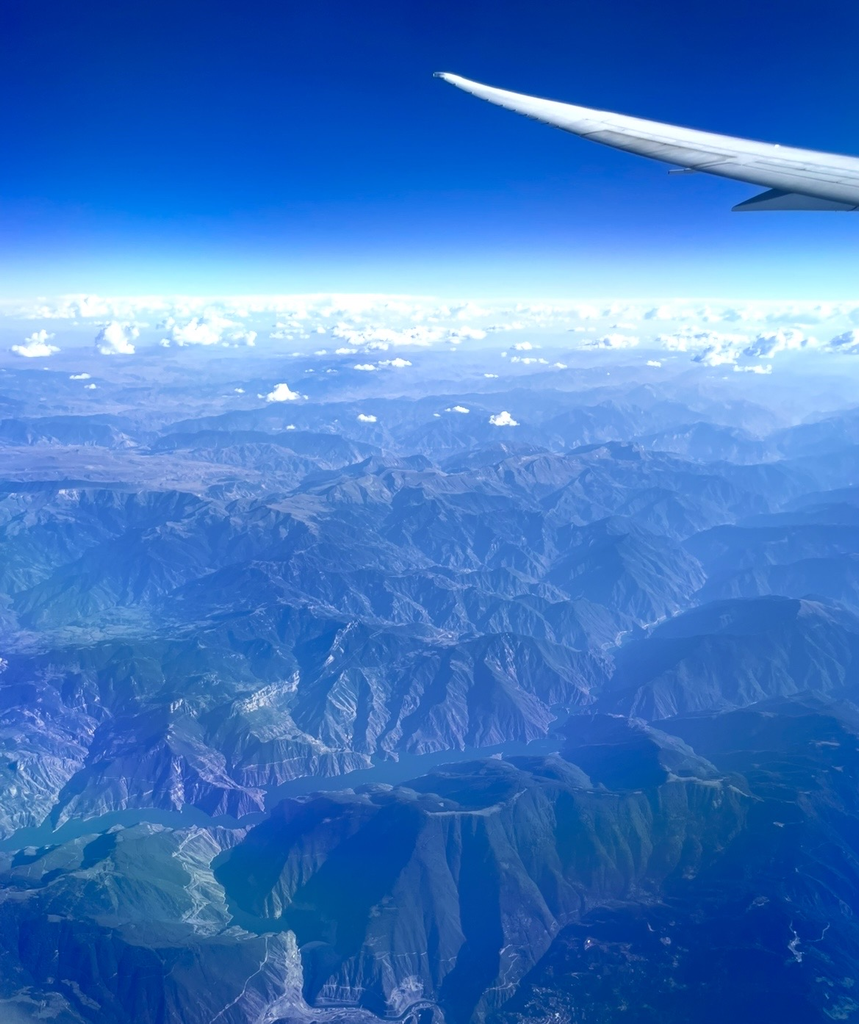
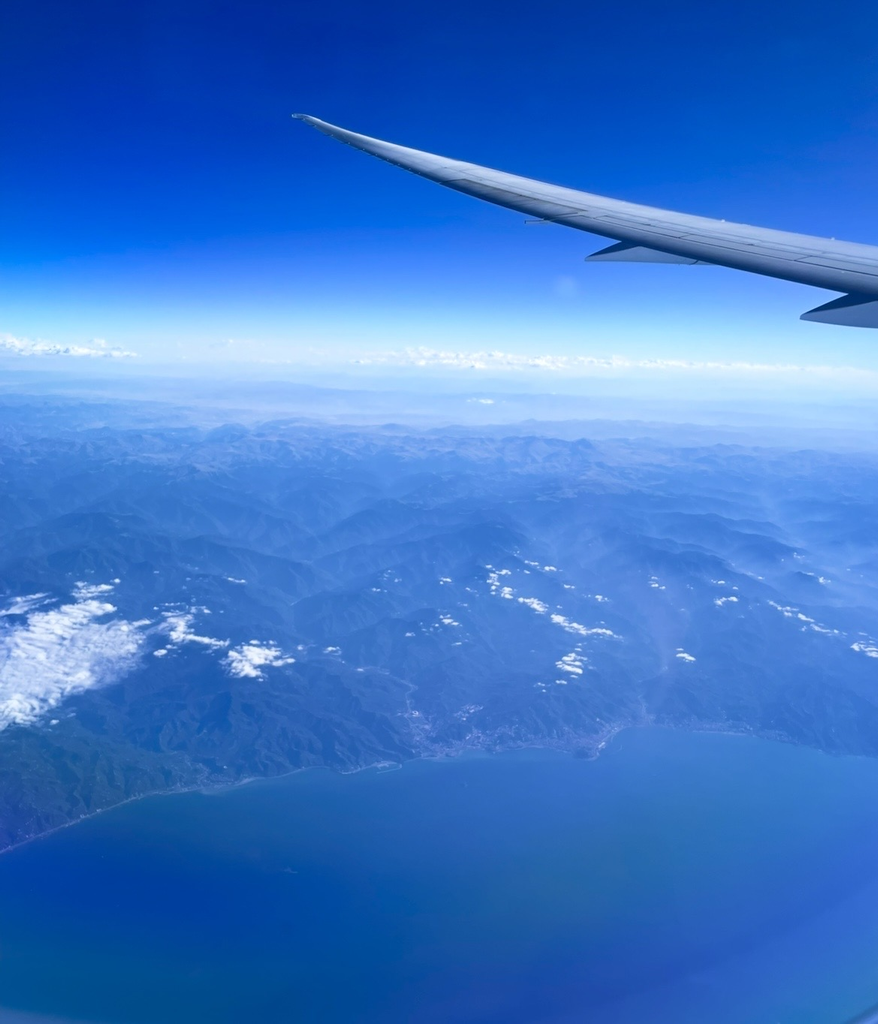
By the time the second meal service begins, the cabin lights are turned back on and the windows can be brightened again. Around that time, the aircraft is flying near the Caucasus region, offering stunning views of the mountainous areas around the Turkey–Georgia border and the vast expanse of the Black Sea. This scenery appearing toward the end of the flight is one of the highlights of a long journey.
Before landing, the vast cityscape of Istanbul spreads out beneath the aircraft. No matter how many times I fly, that moment when the scenery of the destination comes into view always feels special—it’s when the excitement for the journey ahead suddenly rises.
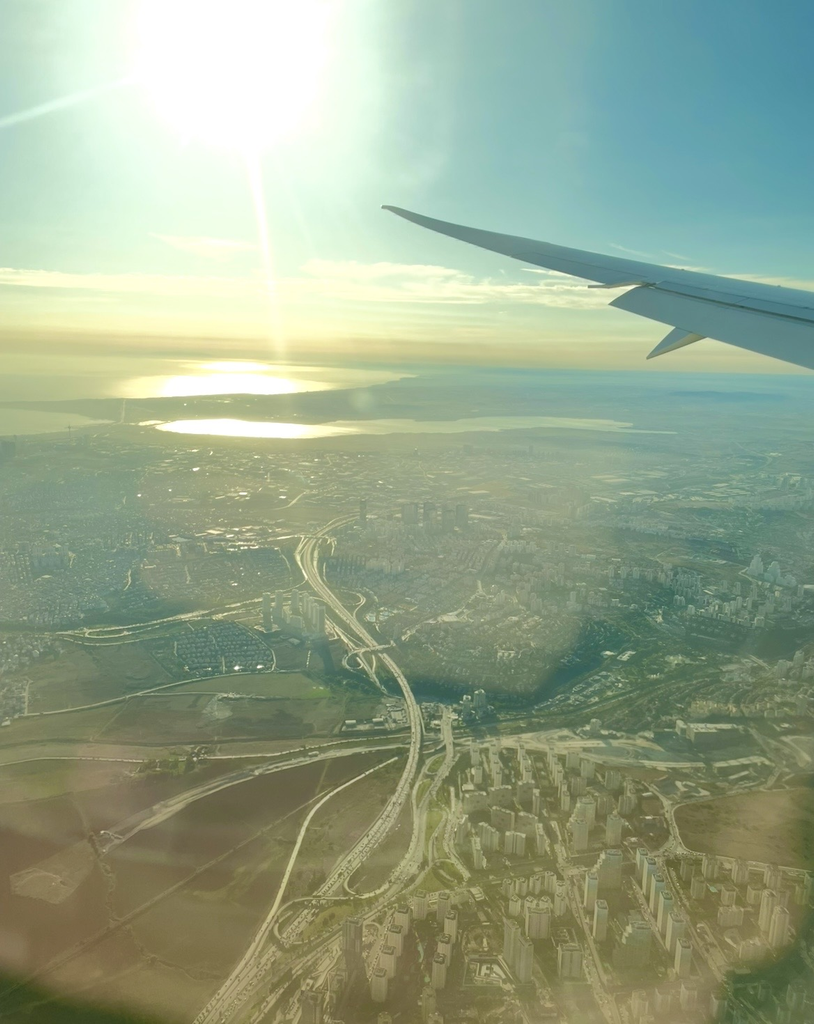
Thanks to the favorable weather conditions, the Tokyo–Istanbul flight—and the short‑haul segments as well—had almost no turbulence, making the entire journey extremely comfortable.
I could really sense the skill of the flight crew, and the experience further strengthened my trust in Turkish Airlines.
That’s all for this review. I hope it helps those who plan to fly with Turkish Airlines or are considering it, giving a clearer picture of what to expect.