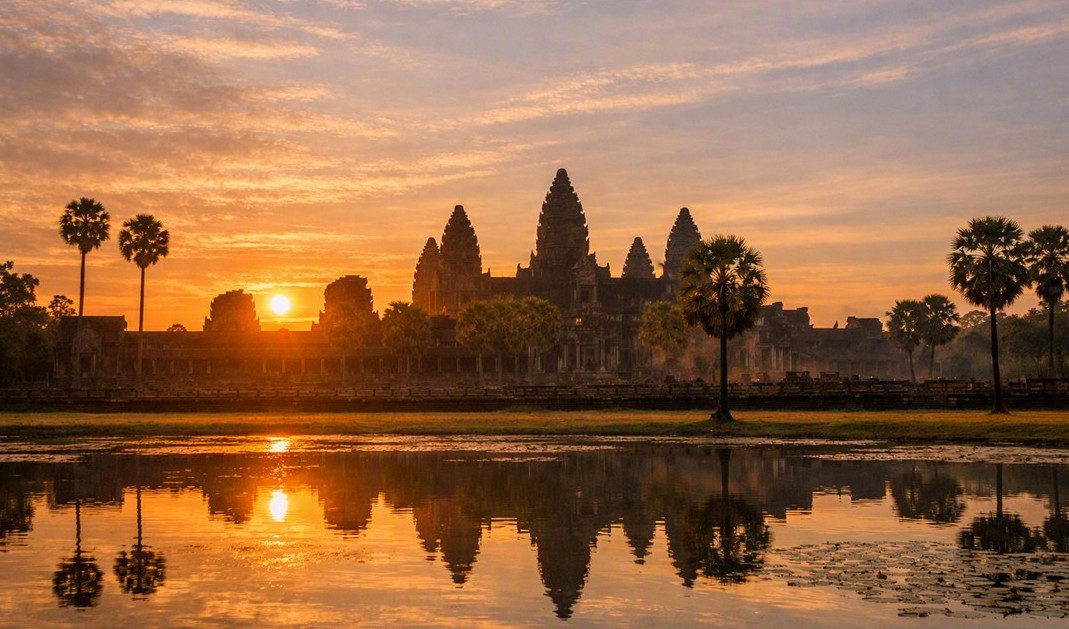


Siem Reap is the gateway to the world-famous Angkor Archaeological Park, drawing travelers from all corners of the globe. This vibrant town perfectly blends awe-inspiring historical heritage, welcoming local culture, and the laid-back charm of the Old Market area, making it one of Cambodia’s top travel destinations. From the iconic Angkor Wat to the floating villages of Tonle Sap Lake, lively nightlife, authentic Khmer cuisine, and rich museums, Siem Reap packs an incredible mix of nature, culture, and food into one unforgettable place.
In this guide, we will share practical and up-to-date travel information, covering top tourist spots, the best local tours, must-try food options, and essential safety tips to ensure first-time visitors can travel with confidence. Whether you are planning a trip to Siem Reap or just want to learn more about this magical destination, stick around until the end!
Siem Reap Essential Travel Info
Siem Reap is a world-class destination that serves as the main hub for exploring the Angkor ruins. However, to ensure a smooth and comfortable trip, it is essential to understand the basics, such as its location, climate, and safety. In this section, we will cover the foundational travel information you need to know before you go so you can arrive with complete peace of mind.
Location and Overview
Siem Reap is located in northwestern Cambodia and serves as the main gateway to the world-famous Angkor Archaeological Park, welcoming travelers from all over the globe.
It only takes about 15 to 20 minutes by car or tuk-tuk from the city center to reach massive ancient temple complexes like Angkor Wat and Angkor Thom, which is why the town has naturally thrived as the ultimate base for temple touring. Beyond the ruins, the city itself features a wide range of attractions, including Pub Street with its bustling restaurants and bars, the Old Market filled with local stalls, and Tonle Sap Lake, famous for its fascinating floating villages.
It is one of Southeast Asia’s most captivating travel destinations, offering visitors the unique chance to experience both the awe-inspiring power of historical monuments and the warm charm of local, daily life at the same time.
Climate and Best Time to Visit
Siem Reap features a tropical savanna climate with high temperatures year-round, and its weather is broadly divided into three seasons: the dry season, the hot season, and the rainy season. The most comfortable time to visit is during the dry season from November to February, when the humidity drops and the mornings and evenings feel pleasantly cool. This period makes exploring the ancient ruins much easier and is widely considered the peak travel season.
From March to May, the region experiences its hottest weather, with daytime temperatures frequently soaring above 35°C (95°F). If you plan to walk around the Angkor Archaeological Park during these months, it is absolutely essential to schedule your visits during the cooler early morning or late afternoon hours.
The rainy season runs from May to October, and while heavy squalls are common, it rarely rains all day long. In fact, this is a beautiful time for photography, as the rain brings out the lush green moss and vibrant foliage across the ancient stones. Additionally, the water levels of Tonle Sap Lake rise during this period, offering a more dramatic and authentic look into the daily life of the floating villages.
Siem Reap’s climate offers a completely different experience depending on when you visit: choose the dry season if you prioritize physical comfort, or the rainy season if you want to witness the dramatic lake scenery and lush greenery enveloping the ancient ruins.
Safety and Crime Prevention
Siem Reap is known as one of the relatively safer tourist cities in Cambodia, making it an easy and welcoming destination even for first-time visitors. When I actually visited, I noticed a large number of tourists—including Japanese travelers—even at night. I never felt in any immediate danger whether I was walking around during the daytime or exploring alone after dark. The areas around Pub Street and the night markets, in particular, are bright and constantly bustling with people, creating an environment where you can comfortably walk around well into the evening.
That being said, you still need to stay alert to petty crimes typical of major tourist hubs. Incidents of pickpocketing and bag snatching targeting tourists do happen quite regularly in recent years, so it is highly recommended to keep a close eye on your valuables in crowded markets and nightlife spots. Additionally, minor disputes over tuk-tuk fares or instances of massage parlors overcharging tourists have been reported. Basic travel precautions, such as confirming the price before getting into a vehicle and sticking to establishments with good online reviews, remain absolutely essential.
Fortunately, there are no specific high-risk or off-limits areas, and walking alone at night is generally safe within the city center. As long as you follow these standard safety practices and keep an eye on current local guidelines, Siem Reap offers a safe and secure environment where you can fully enjoy your sightseeing.
How to Get to Siem Reap
Many travelers head to Siem Reap from neighboring hubs like Bangkok or Phnom Penh, and there are several transportation options available. Traveling from Bangkok offers a clear choice between land and air routes. However, international border-crossing routes can be easily affected by shifting regional regulations, and operational schedules may vary depending on the season. It is essential to choose the travel method that best fits your trip style, budget, and peace of mind based on the most up-to-date information. In this section, I will focus on the cross-border bus route from Bangkok that I personally used, while also briefly covering flights via Siem Reap Angkor International Airport and overland travel from Phnom Penh.
How to Get There from Bangkok
There are several ways to travel from Bangkok to Siem Reap, but I chose to take a long-distance bus operated by Giant Ibis to cross the border by land.
The bus interior was clean and comfortable, and the staff was incredibly kind. Printing out your e-VISA is required for the immigration process at the border, and before departure, the crew checked each passenger one by one to ensure everyone had it ready. Although I had accidentally forgotten to print mine, the staff arranged the printing right on the spot without charging me anything extra. Thanks to this attentive support, I felt completely at ease even though it was my very first time crossing a land border.
While passengers riding with Giant Ibis must get off the bus temporarily to go through customs and immigration at the Poipet border, it offers a unique and memorable experience of crossing a national border on foot. Furthermore, the bus crew explains the exact steps for immigration in detail before you arrive, allowing everyone to pass through without getting confused.
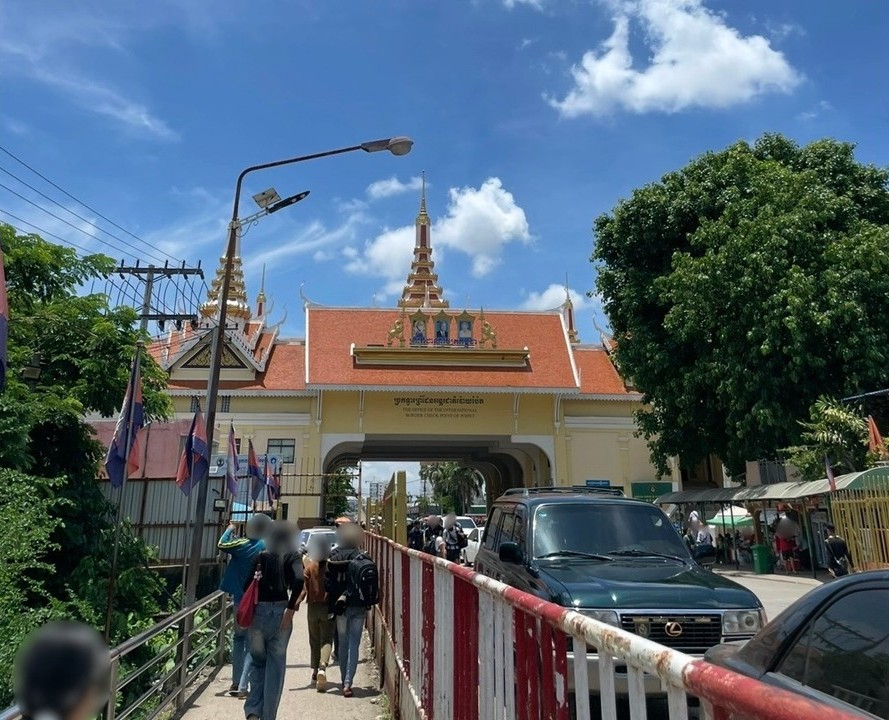
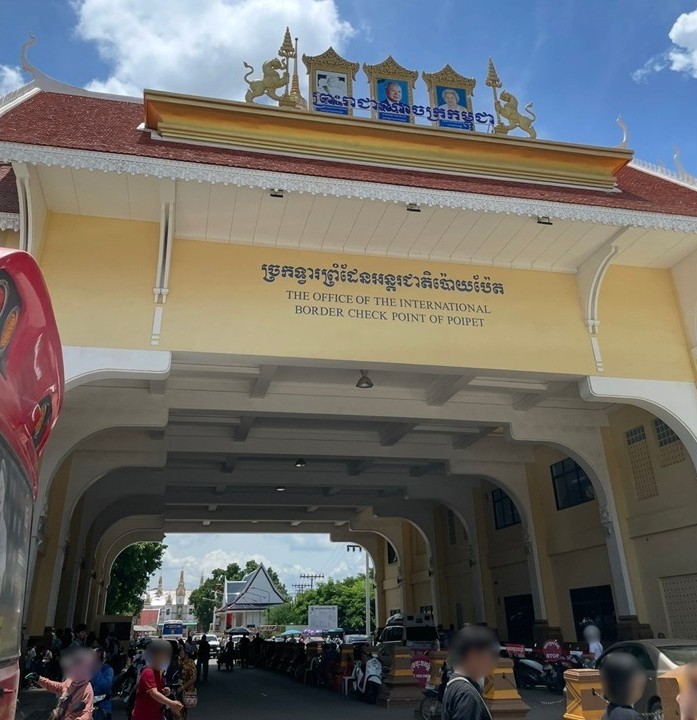
Aside from getting on and off at the border, the bus takes you directly to Siem Reap without any vehicle transfers, making it an incredibly convenient option.
Although the drop-off point in Siem Reap is slightly outside the immediate city center, it is well within walking distance, and navigating your way into town is very straightforward. While tuk-tuk drivers will be waiting for passengers at the final stop, if you do not wish to use them, simply politely ignore them and start walking, and they will not persistently follow you.
However, keep in mind that land travel takes a significant amount of time; even if you leave Bangkok early in the morning, you will not arrive in Siem Reap until around evening. Additionally, border crossings can sometimes be affected by sudden shifts in regional regulations between Thailand and Cambodia, making land routes somewhat unpredictable. If you prefer to avoid these uncertainties or want to minimize your travel time, flying from Bangkok is an excellent alternative.
Direct flights to Siem Reap depart from both Suvarnabhumi Airport and Don Mueang Airport in Bangkok. The flight time is incredibly short at around one hour, and it remains completely unaffected by changing border situations. If you prioritize reliability or have a tight schedule, flying is undoubtedly the smoothest way to travel.
As a side note, Siem Reap Angkor International Airport is located about 50 km away from the city center, meaning that even if you book a ride via Grab, the commute into town will take around an hour.
How to Get There from Phnom Penh
Travelers looking to move from Phnom Penh to Siem Reap also primarily choose between land and air travel. Based on official travel guidelines, here is a breakdown of the most reliable transportation options available.
Long-distance buses are the most popular and widely used method for traveling from Phnom Penh. Multiple bus companies operate this route daily, with a total travel time of approximately 6 to 7 hours. Fares are remarkably affordable, making it the perfect choice for budget-conscious travelers who want to keep costs to a minimum.
If you prefer a much faster journey, taking a domestic flight is highly convenient. Flights from the airport in Phnom Penh to Siem Reap Angkor International Airport take only about 45 minutes, offering an effortless way to commute between the two major cities. Flying is undoubtedly the smoothest and most efficient choice if you wish to maximize your sightseeing time or have a tighter itinerary.
Top Highlights of Siem Reap
While Siem Reap is primarily famous as the gateway to the Angkor ruins, exploring the town reveals that its charm goes far beyond just ancient temples. The city beautifully blends a rustic, laid-back local atmosphere with the overwhelming grandeur of the World Heritage Angkor ruins, the fascinating daily life found on Tonle Sap Lake, and the energetic hustle and bustle of the Old Market and Pub Street. History, nature, local culture, and modern entertainment blend perfectly here, ensuring that even a short stay offers an incredibly rich and immersive experience.
In this section, I will introduce the top highlights of Siem Reap, focusing on the places I personally visited. From the city’s unique atmosphere to ancient temple complexes, sweeping lake views, lively markets, and nighttime hubs, this guide is designed to help you visualize your ultimate trip.
Neighborhoods and the Vibe in Siem Reap City
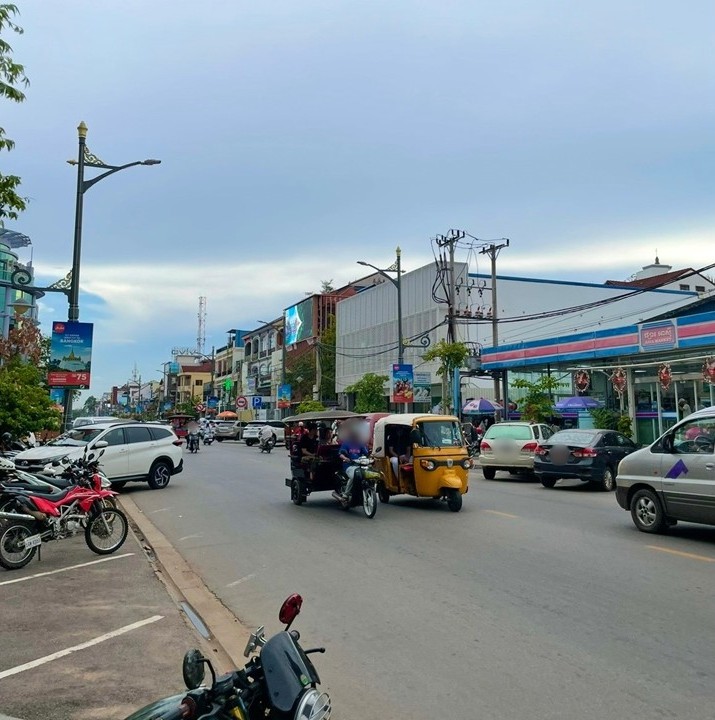
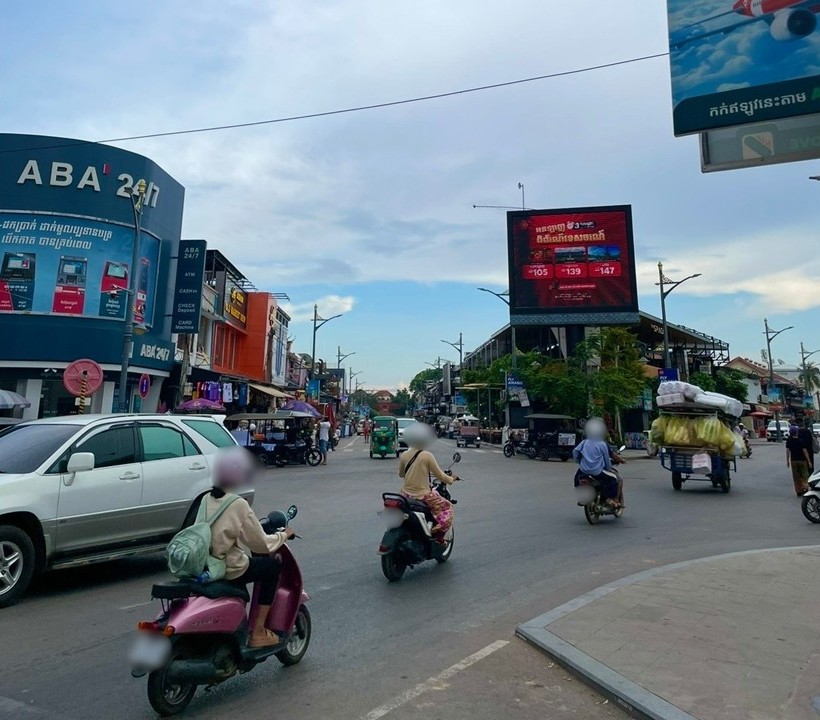
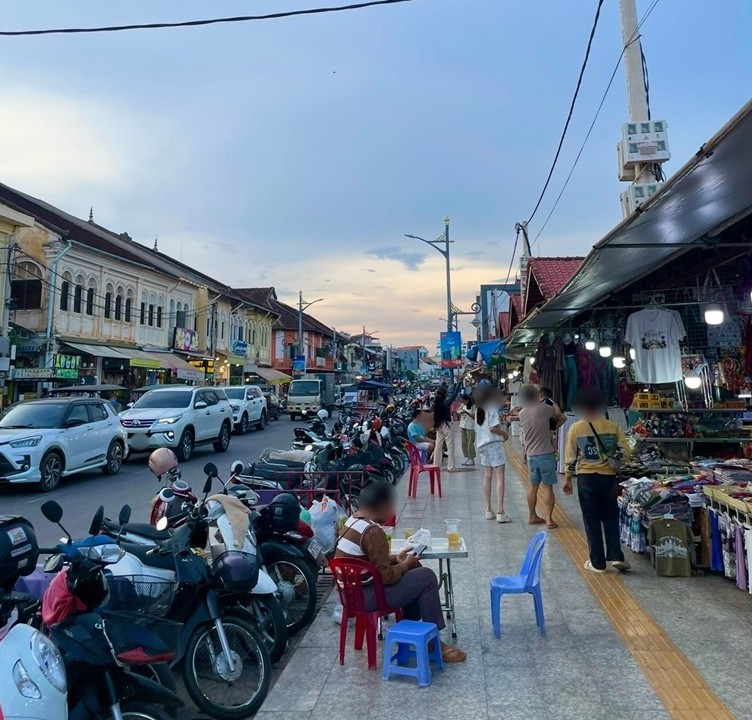
Upon arriving in downtown Siem Reap, the first thing you notice is the town’s incredibly laid-back atmosphere and how well-developed it is as a major tourist destination. Thanks to recent urban development and infrastructure upgrades, the main roads and sidewalks are beautifully paved, creating a clean and highly walkable environment for exploring on foot.
Unlike many overseas destinations where chaotic traffic can make walking stressful, the flow of cars and motorbikes here is relatively calm, allowing tourists to stroll around with complete peace of mind. Along the streets, you will find plenty of supermarkets and convenience stores scattered about, meaning you will never have trouble picking up drinks, snacks, or daily essentials.
At the same time, the iconic sight of scooters and tuk-tuks weaving through the streets remains alive and well, ensuring that the local energy is beautifully preserved within this modernized tourist hub. The seamless blend of clean, organized streetscapes and the exotic, traditional way of life naturally builds your excitement, making you feel the true joy of traveling just by taking a simple walk.
Angkor Archaeological Park
The Angkor Archaeological Park is the beating heart of tourism in Siem Reap and the single biggest reason why travelers from all corners of the globe flock to this city. This vast complex contains the breathtaking ruins of the Khmer Empire’s capital, which flourished from the 9th to the 15th centuries, and it is recognized as a UNESCO World Heritage site for being one of the most important archaeological areas in Southeast Asia.
The true wonder of the Angkor ruins lies in the fact that they are not just a random collection of stone temples, but rather the remnants of a massive “cradle of civilization” that once stood as the largest imperial city in Asia. The combination of monumental architectural engineering, intricately carved bas-reliefs, the dramatic intertwining of ancient stone and nature, and the remaining mysteries of its history continue to leave visitors completely spellbound.
In this section, I will introduce three of the most iconic temples within the park.
Angkor Wat
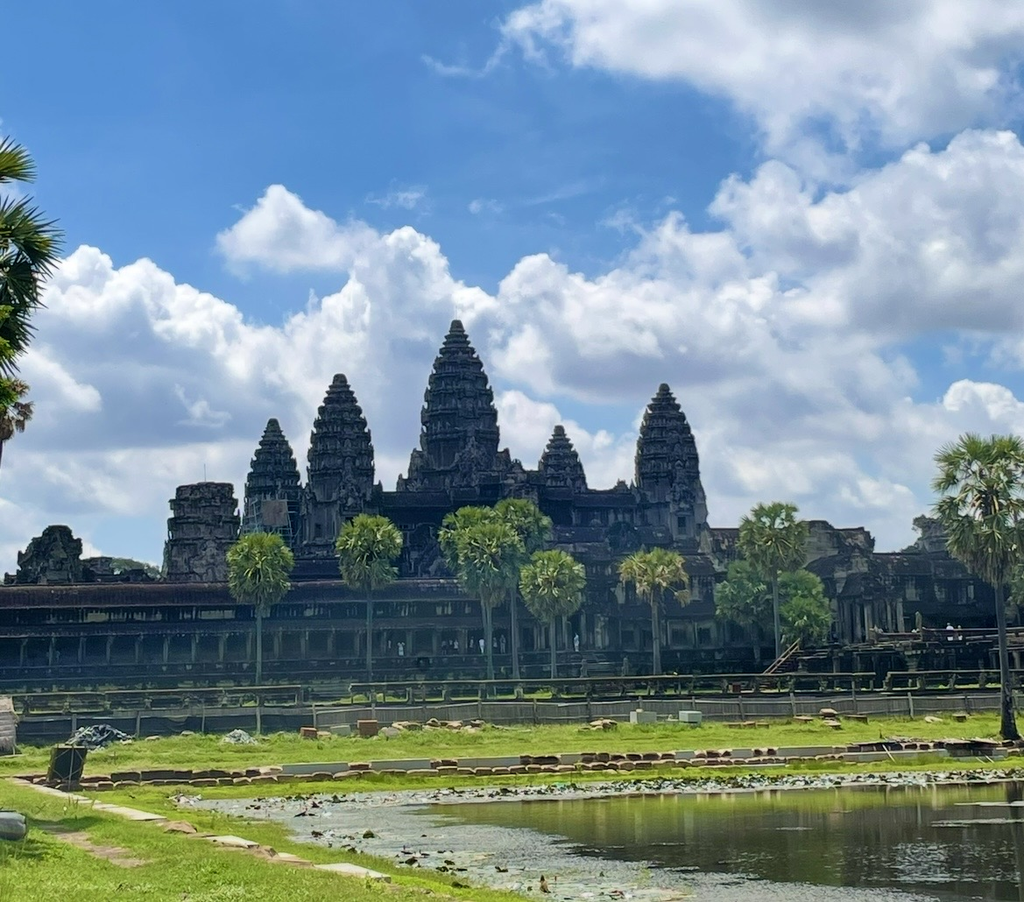
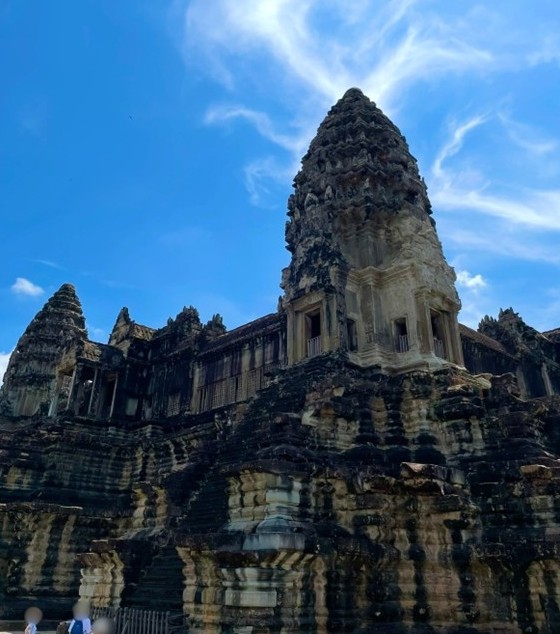
Angkor Wat is one of the world’s largest religious monuments, constructed in the 12th century by King Suryavarman II. As a national icon proudly depicted on the Cambodian flag, it is an absolute must-visit destination that no traveler to Siem Reap should ever miss.
The five central towers soaring at the heart of the temple represent Mount Meru from ancient Hindu cosmology. Mount Meru is considered the sacred mountain standing at the center of the universe, and a key feature of Angkor Wat is that the entire complex was designed as a massive cosmic model of the universe itself.
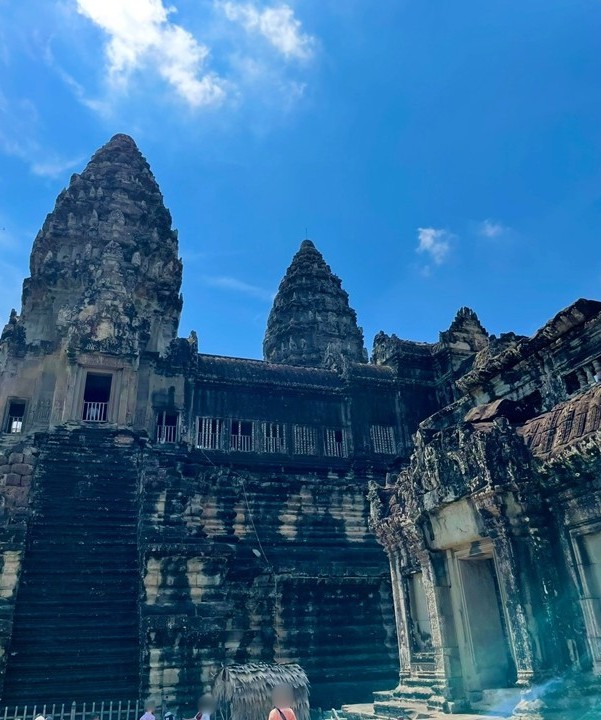
The gallery walls feature numerous intricately carved bas-reliefs depicting myths and historical battles, making it an incredibly precious heritage site for understanding the culture and philosophy of that era.
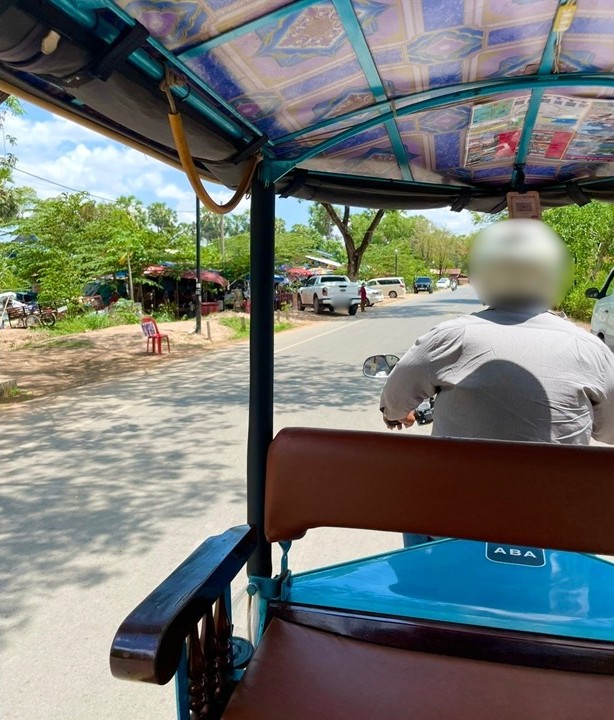
I booked a tuk-tuk through Grab and headed toward Angkor Wat, cutting through the dense forest. Riding in a tuk-tuk as it tears through the crisp morning air feels less like standard sightseeing and much closer to the “beginning of an adventure,” filling you with excitement from the moment you hit the road. The wind blowing through the trees and the faint signs of local daily life blend together, transforming the commute to the ruins into a truly special experience in itself.
As a practical tip, while you can also choose standard car options on Grab, drivers in cars often pitch guided tours to you inside the vehicle. Therefore, if you prefer to sightsee casually and at your own pace, I found the tuk-tuk to be a much more comfortable and hassle-free choice.
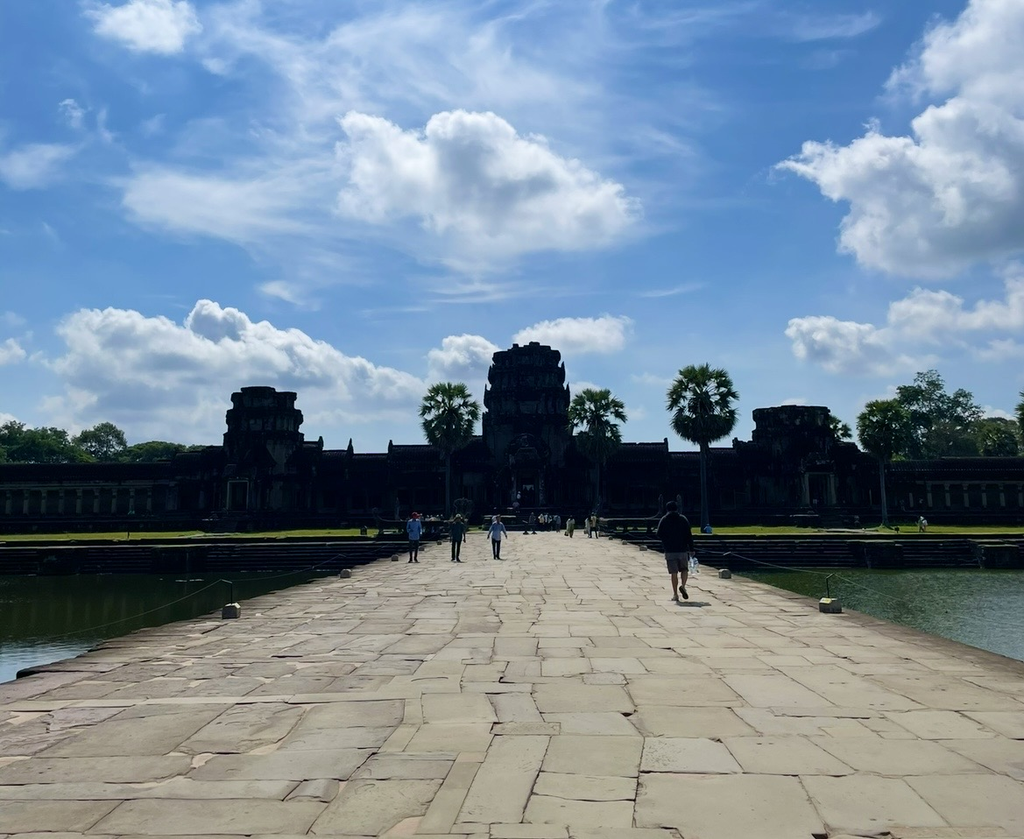
Upon arriving at the entrance, you first walk along the long stone western causeway. A massive moat, stretching about 1.5 km in length and 200 meters in width, expands on both sides, with its tranquil water surface beautifully reflecting the morning light. This moat is said to symbolize the oceans of the world, making it clear that the entire temple was engineered on a monumental scale to mirror a grand cosmic worldview.
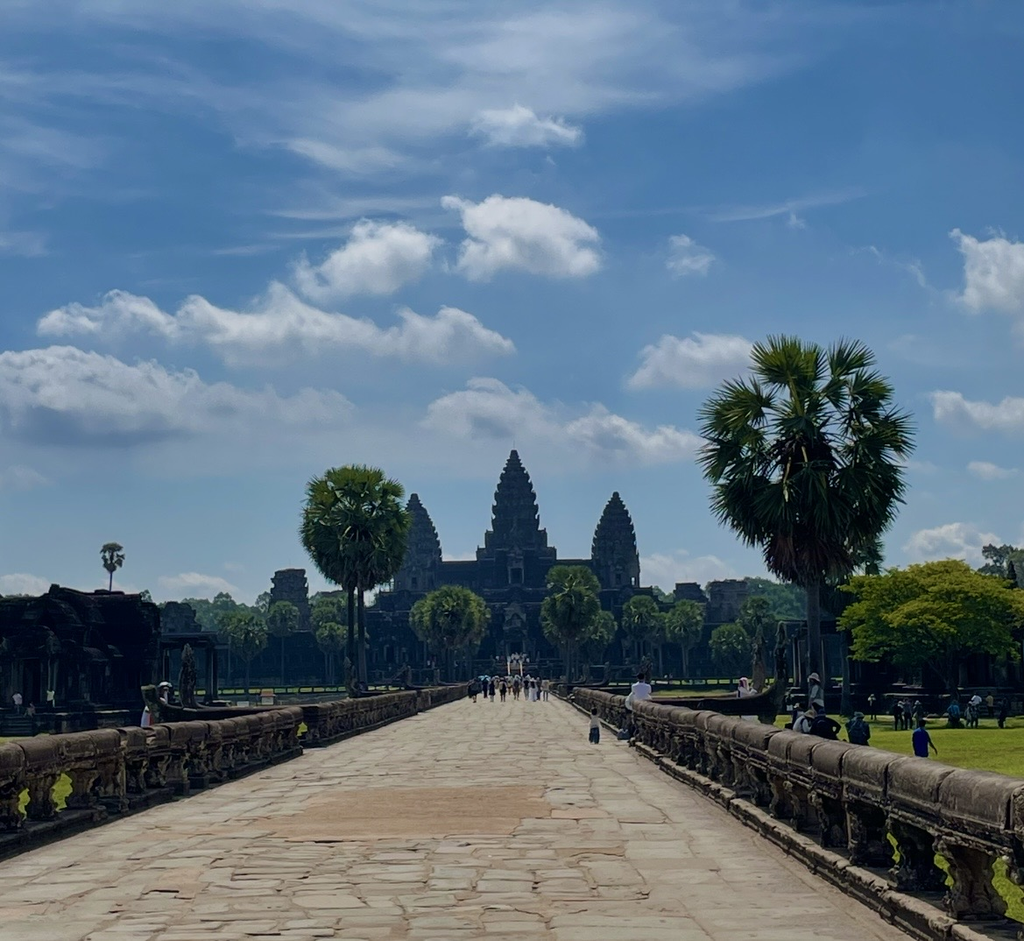
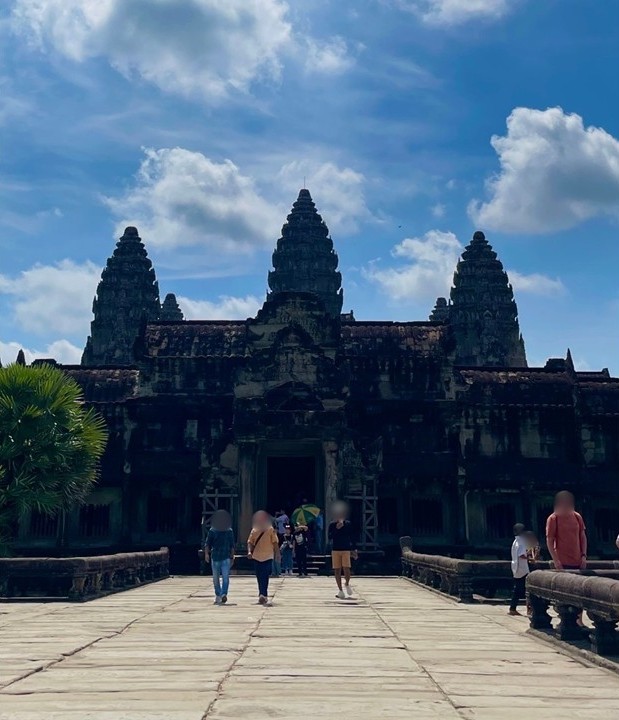
As you walk further down the causeway, Angkor Wat’s iconic five towers gradually reveal themselves. The towers, which looked so small from a distance, grow larger, closer, and more overwhelmingly powerful with every single step you take. The surroundings are wrapped in silence, and despite being a popular tourist destination, a deeply solemn atmosphere naturally fills the air.
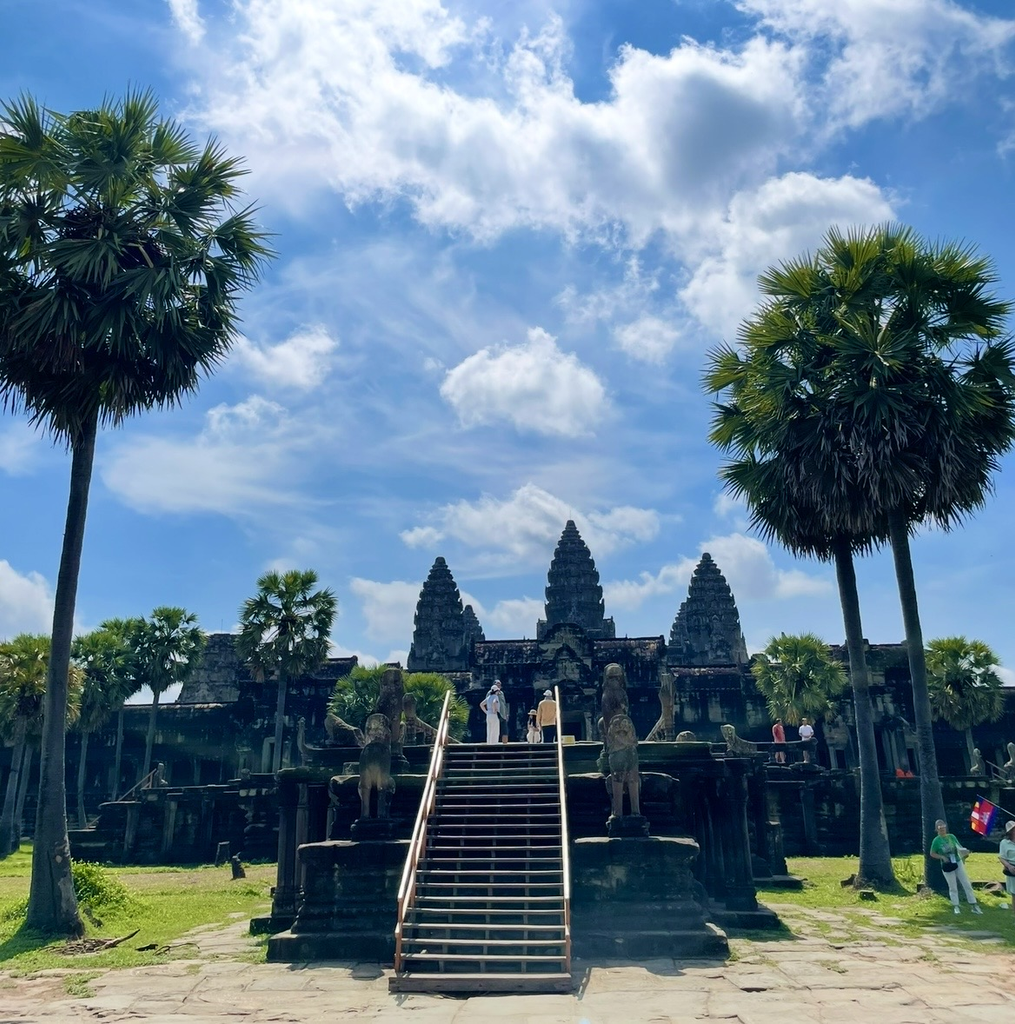
Once you step inside, the cool air trapped within the stone architecture brushes against your skin, offering a momentary and refreshing relief from the outside heat. The layout makes it even clearer how the towers represent Mount Meru, and the walls feature detailed bas-reliefs that seem to stretch on endlessly. Mythology, battles, and scenes of daily life—as you walk along while tracing these carved stories, you feel as though you have completely lost yourself in the ancient world of that time.
Angkor Thom
Angkor Thom is the last grand walled capital city of the Khmer Empire, constructed between the late 12th century and the early 13th century by King Jayavarman VII. It is estimated that more than 100,000 people lived here during its peak, and among all the sites within the Angkor Archaeological Park, this is the place where the true image of an ancient “functioning city” remains most vividly preserved.
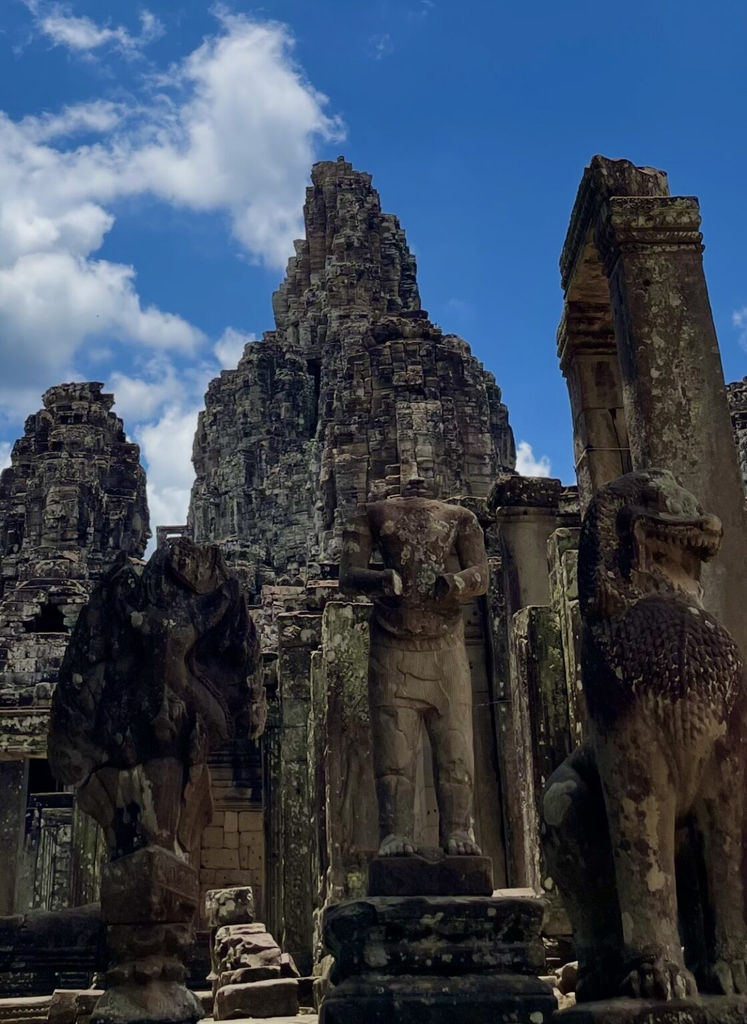
Located right at its exact center is the iconic Bayon Temple, the signature symbol of Angkor Thom. Best known for its magnificent “smiling faces carved on four-sided towers,” it features massive stone statues radiating calm and serene expressions that gently envelop anyone who visits.
To get from Angkor Wat to Angkor Thom, you will continue traveling along a path cutting through the deep forest for a little while. Between the thick trees, the shadows of ancient stone architectures occasionally begin to reveal themselves, and with each passing moment, you can feel the distinct atmosphere of approaching an ancient city growing thicker. The bumpy swaying of the tuk-tuk as it drives along the unpaved paths feels less like a simple commute and much more like a natural part of a grand adventure heading straight toward the ruins.
Before long, the view completely opens up, and the Bayon Temple standing at the heart of Angkor Thom finally appears before your eyes. With its complex, intertwined galleries and endless stone staircases, the entire structure has an atmospheric vibe that makes you feel as though you have completely wandered into an RPG dungeon. Every single time you move forward through the narrow corridors enclosed by towering stone walls, your perspective shifts entirely, filling you with the thrilling excitement of exploring a long-lost labyrinth.
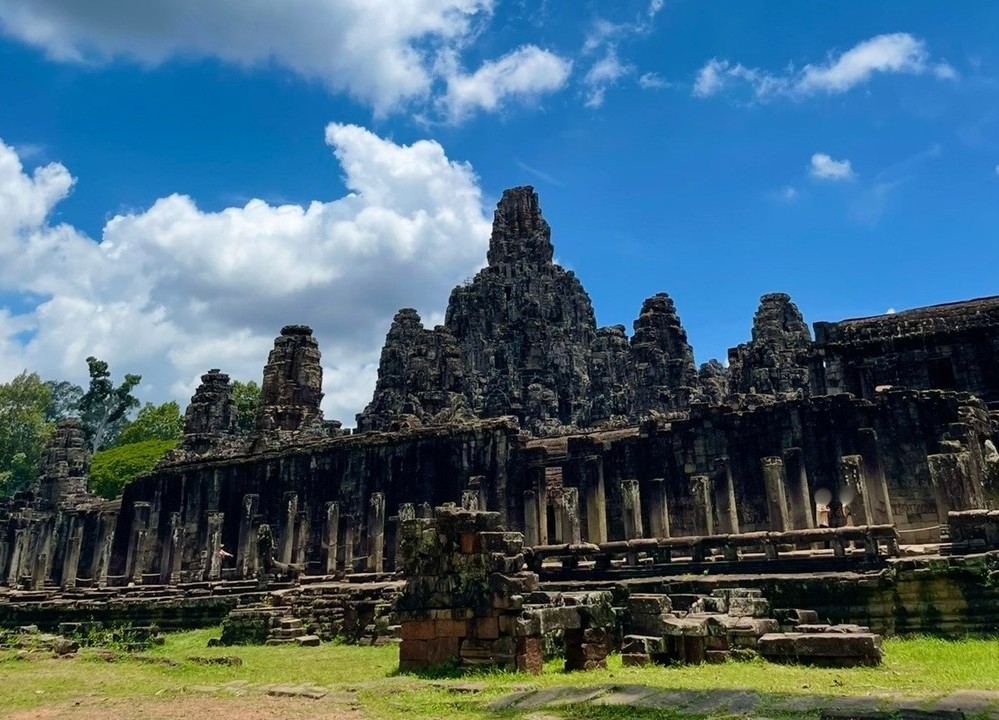
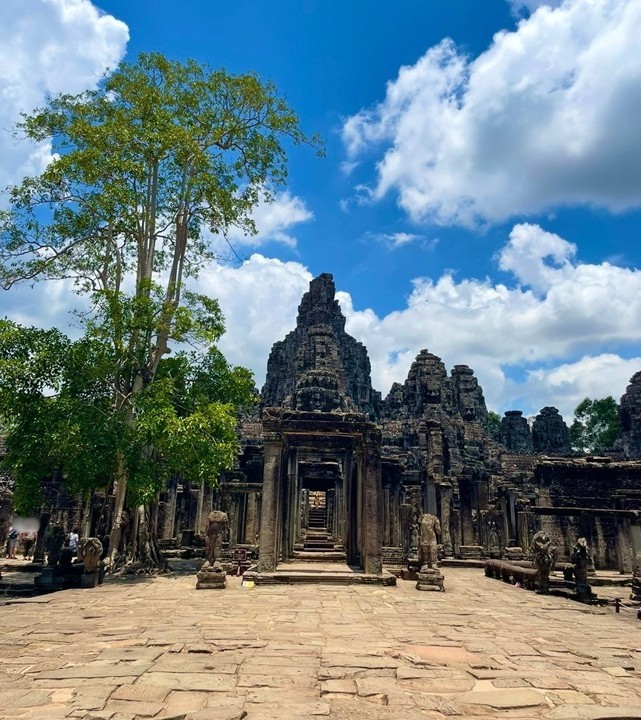
The absolute crown jewel of Bayon Temple is its collection of giant stone-carved faces, which are said to number well over 200 in total. These serene, gently smiling facial expressions are meticulously carved facing all four cardinal directions, creating a surreal and magical sensation where no matter where you stand, you feel as though your eyes are perfectly locking with their gaze. There is actually a face hidden somewhere in the photograph below—can you find where it is?
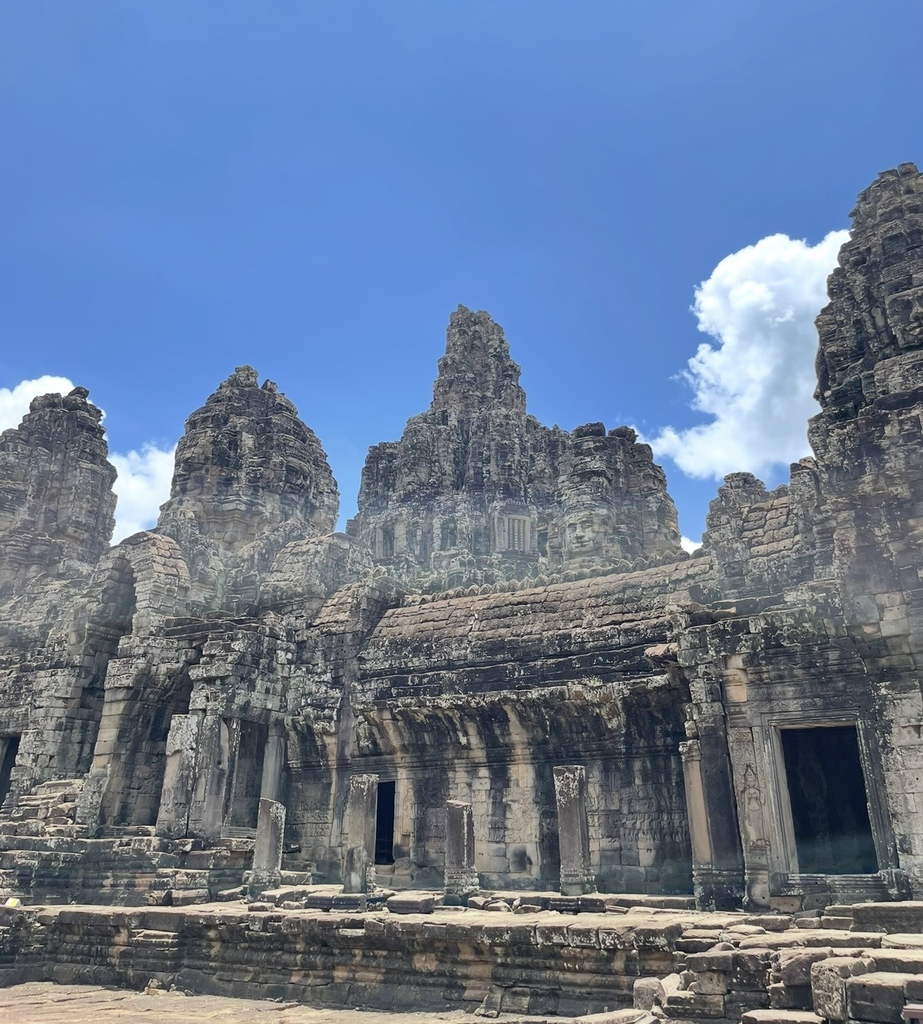
A vast array of three-dimensional sculptures and intricate bas-reliefs also remain well-preserved inside the temple. While some sections have naturally suffered damage over its exceptionally long history, the beautifully remaining details of the decorations are still visible today. Getting up close to examine the raw texture of the stone and the deep, precise cuts of the carvings leaves you in complete awe of the incredibly advanced craftsmanship and technological skills of that era.
Ta Prohm
Ta Prohm is a temple within the Angkor Archaeological Park that leaves a particularly powerful impression due to the striking way nature and ancient architecture coexist. Massive banyan trees completely wrap and drape themselves over the stone structures, creating a deeply unique landscape where it truly looks as though the ruins are being swallowed alive by the surrounding jungle. It is also globally renowned as a featured filming location for the movie Tomb Raider, making it an exceptionally popular spot for international travelers.
Although I had originally planned to visit Ta Prohm as well, the temperature on this particular day was extremely high. By the time I finished exploring both Angkor Wat and Angkor Thom, I had already drained a massive amount of my physical energy, and concluding that walking through any more ruins would be too difficult, I decided to leave the archaeological park for the day. The ancient complexes have very little shade, and the intense sun reflecting off the stone architecture robs you of your physical stamina far quicker than you might imagine. Because the Angkor ruins are incredibly vast and the direct sunlight is remarkably fierce, I strongly recommend that you thoroughly prepare for the heat by bringing a hat, a sun umbrella, staying properly hydrated, and planning your visits during the cooler hours of the day.
Even though I missed the chance to see it this time, Ta Prohm is widely said to be the absolute best place to fully experience the seamless fusion of nature and ancient monuments. The way giant tree roots grow as if they are tightly holding the buildings, making the stone architecture and nature melt into a single entity, feels like stepping right into a fantasy world, so I highly encourage all of you to definitely visit. Deep within the ruins cradled by the forest, a completely different world awaits your arrival.
Tonle Sap Lake
Tonle Sap Lake is the largest freshwater lake in Southeast Asia and is widely renowned for its unique water level fluctuations and fascinating floating lifestyle and culture.
The most defining characteristic of this lake is how drastically its surface area changes depending on the season. During the dry season, it spans approximately 2,700 km², but when the rainy season arrives, water from the Mekong River flows backward into the lake, causing it to rapidly expand to over 16,000 km². To put it in perspective, the lake changes from roughly the size of Rhode Island during the dry season to the size of the entire state of Hawaii or Connecticut during the rainy season. The water depth also shifts dynamically from around 1 meter in the dry season to a maximum of about 10 meters in the rainy season, making it perfectly fitting to describe it as a living, “breathing lake.”
Stilt houses line the shores around the lake, and numerous floating houses are scattered across the water itself. Everything from schools and churches to local shops is built directly on the water, forming one of the largest floating communities in the entire world. The true charm of Tonle Sap Lake lies in your ability to experience this highly unique culture where “a town exists right on top of a lake,” a rare sight that you can hardly find anywhere else.
I visited this time by joining a local tour departing directly from downtown Siem Reap. After a 30 to 40-minute drive from the city center, we arrived at Tonle Sap Lake, where rows of wooden boats were docked along the pier, marking the beginning of our lake cruise. As the boat slowly moved across the water to the steady hum of its engine, it felt less like standard sightseeing and much closer to the sensation of gently stepping into the daily lives of the people living on the water.
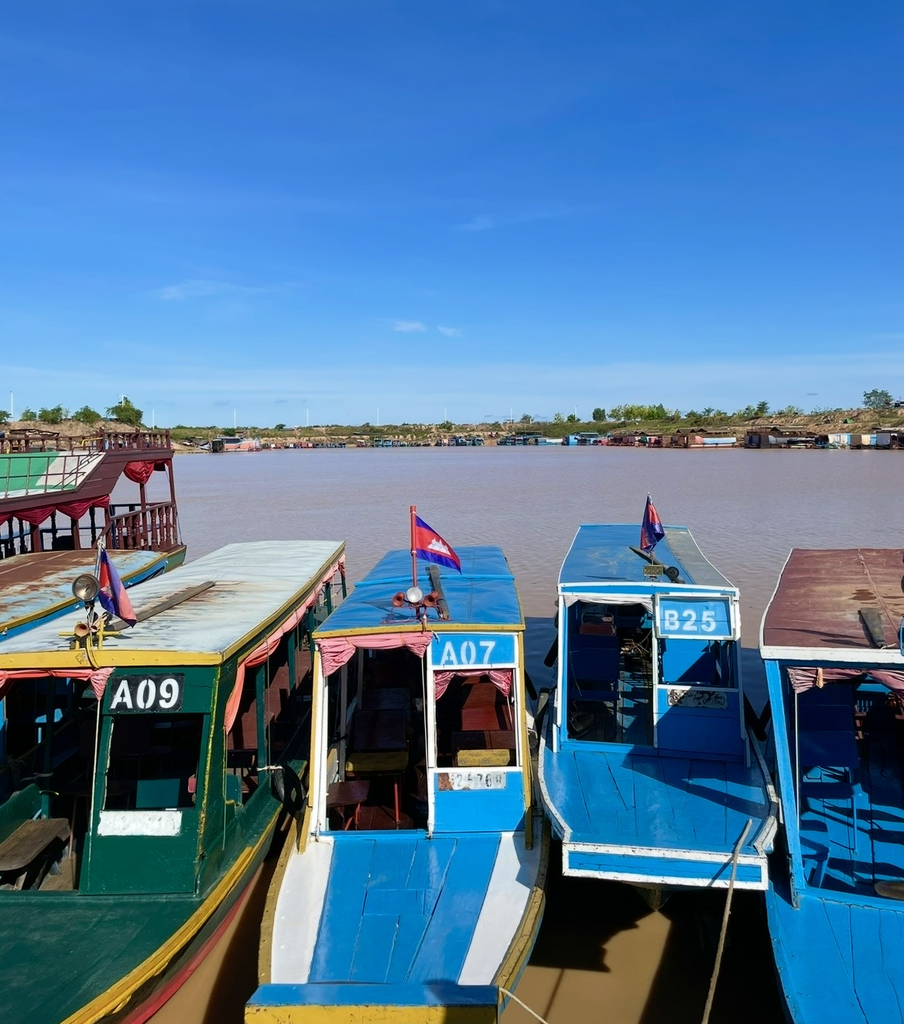
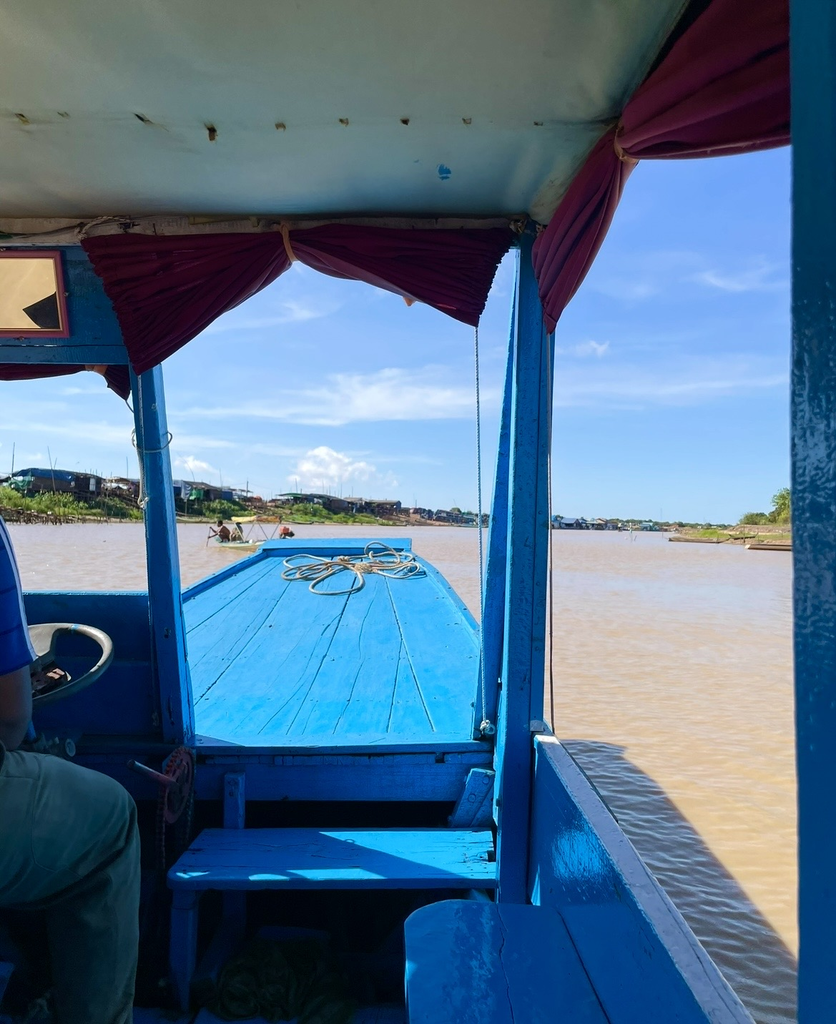
Out on the lake, fragments of everyday life naturally unfold right before your eyes: children playing in the water, locals fishing with hand-woven gear, and even water buffaloes resting along the muddy banks. Rather than feeling like a manufactured tourist trap, it is a place where the genuine, everyday routines of the inhabitants spread out completely, offering picturesque scenes everywhere you look that will make you want to capture them in a photograph.
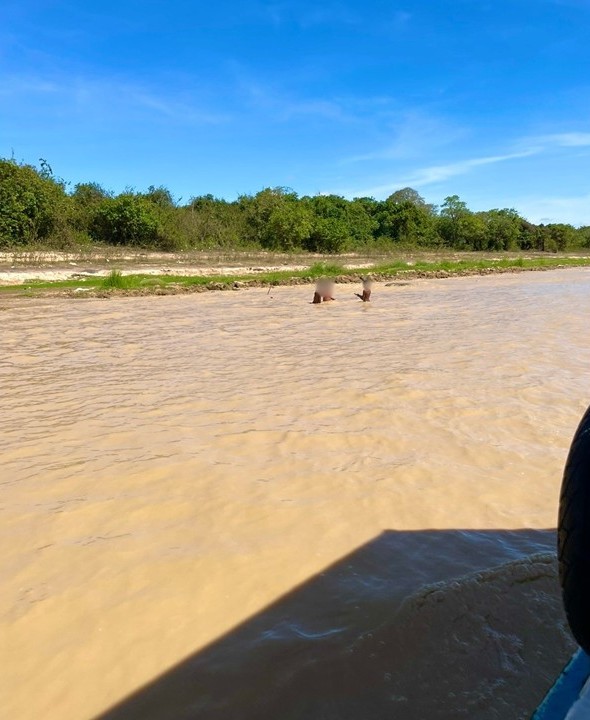
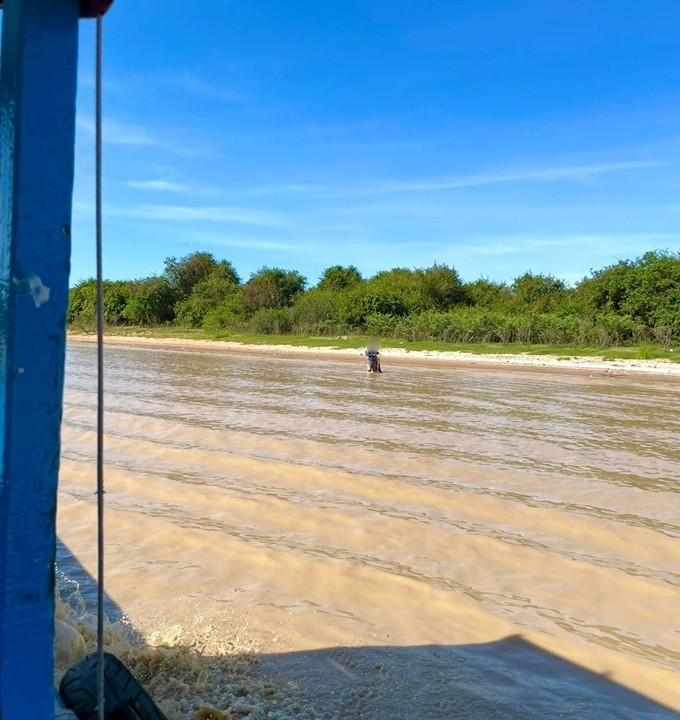
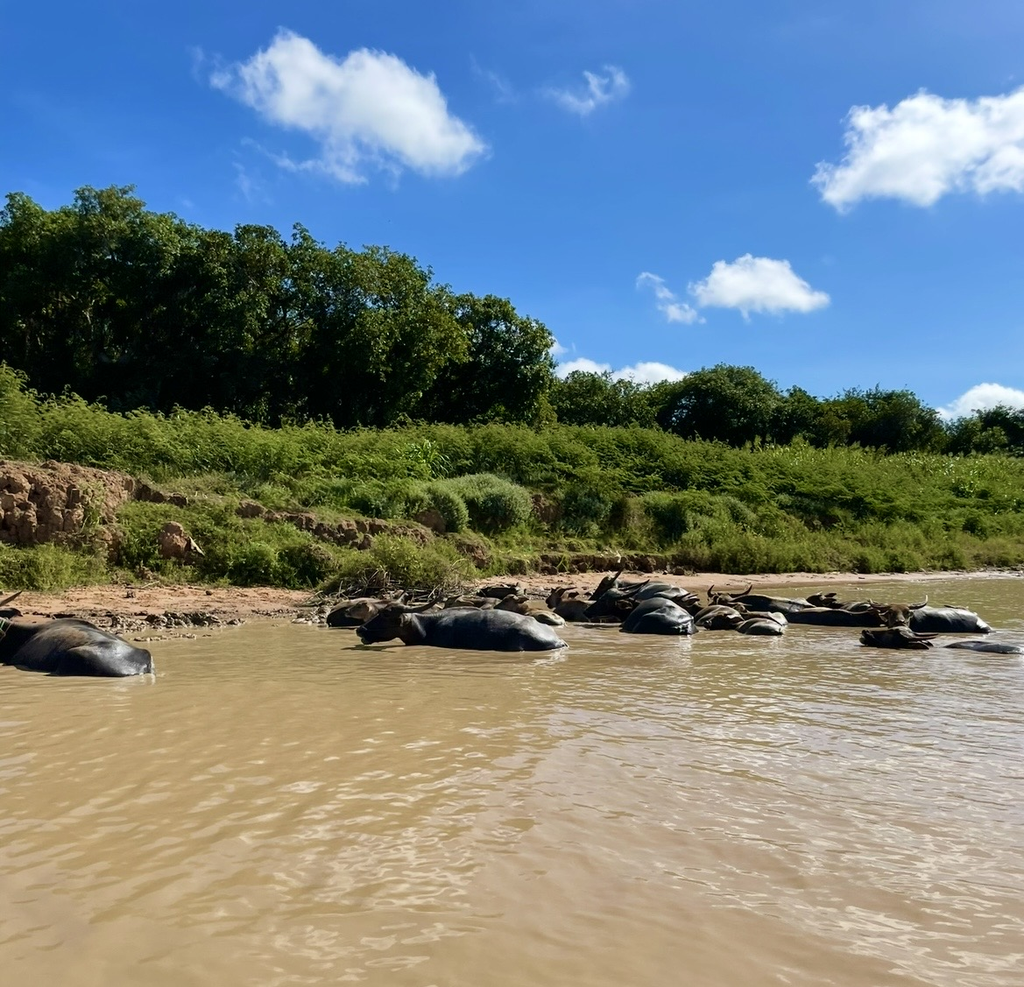
A wide variety of buildings, including schools and shops, float directly on the water, allowing you to witness an incredibly precious lifestyle that is sustained entirely on the lake itself. The tour also gives you the opportunity to stop by one of the floating shops, where you can enjoy a brief and heartwarming interaction with the local residents.
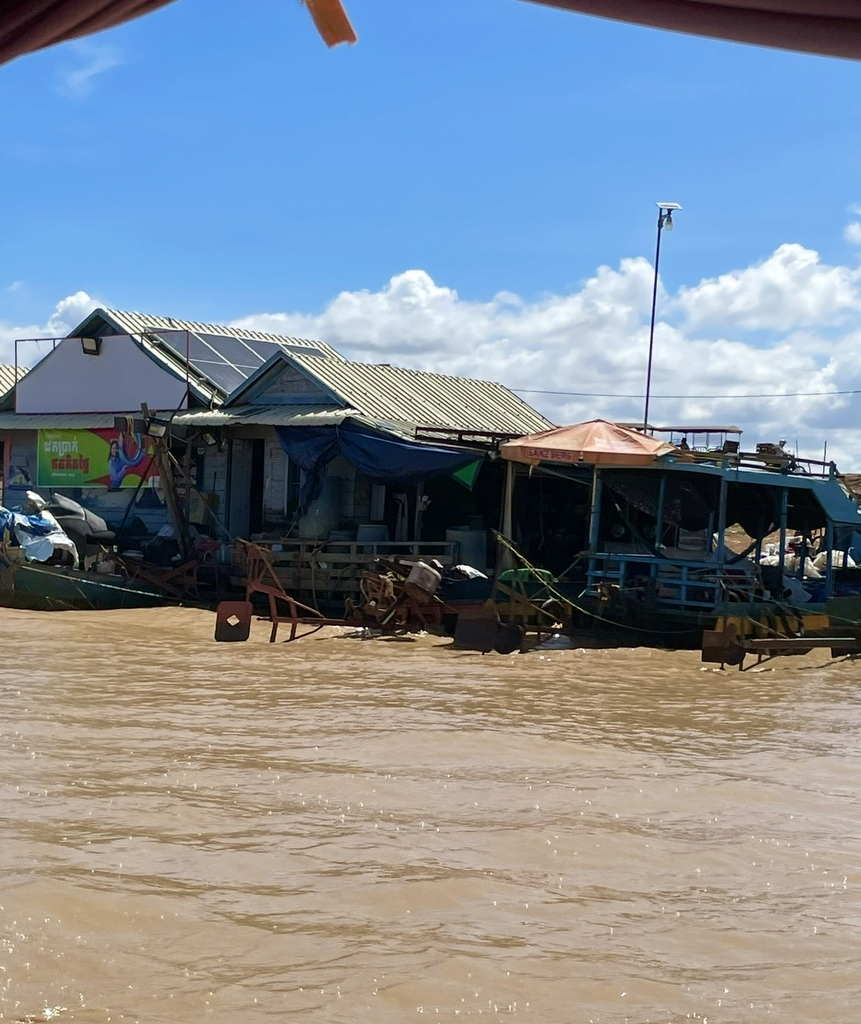
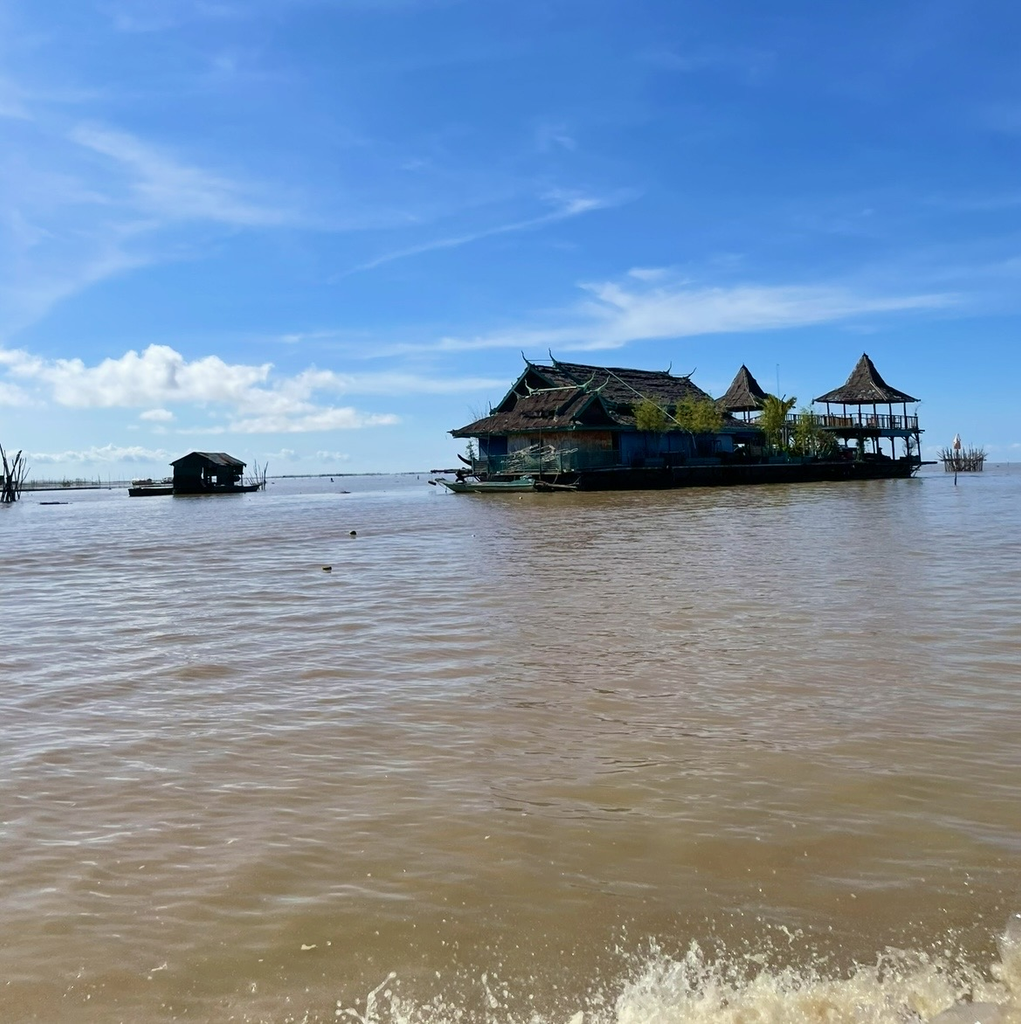
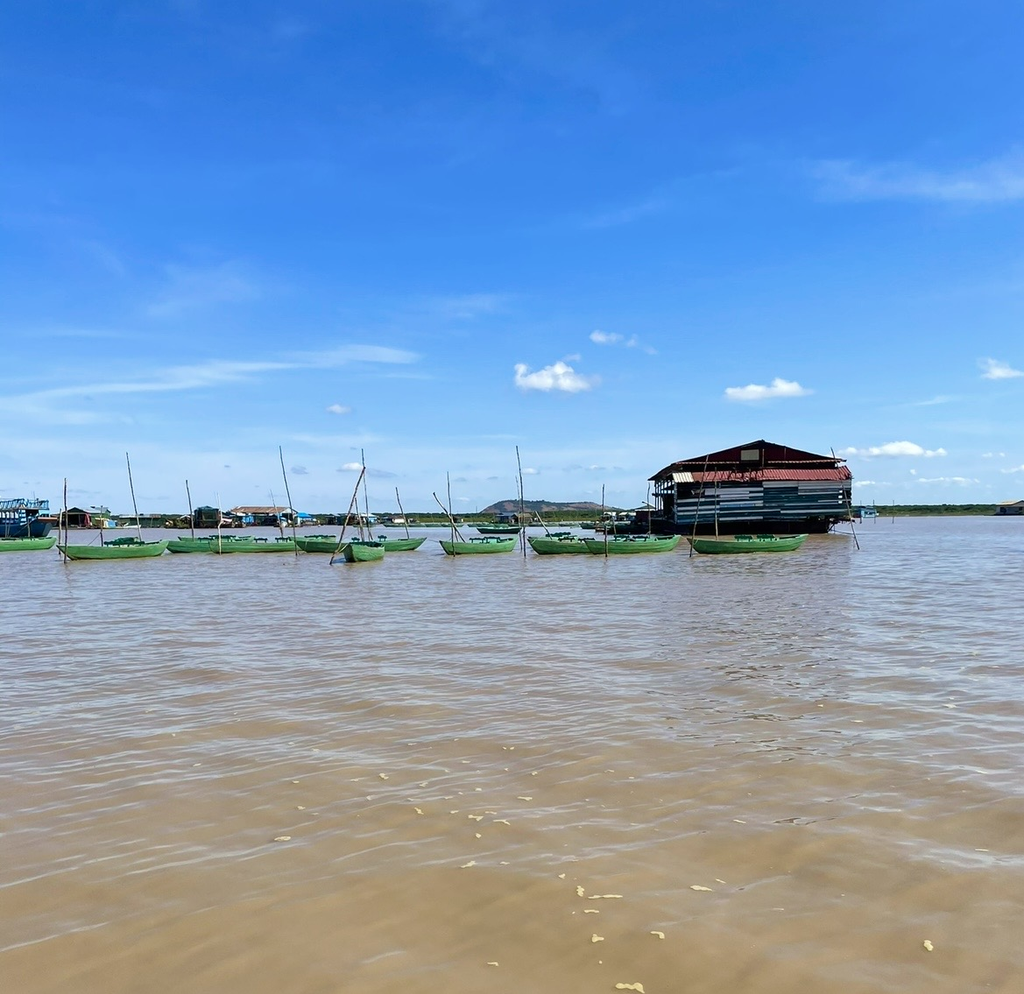
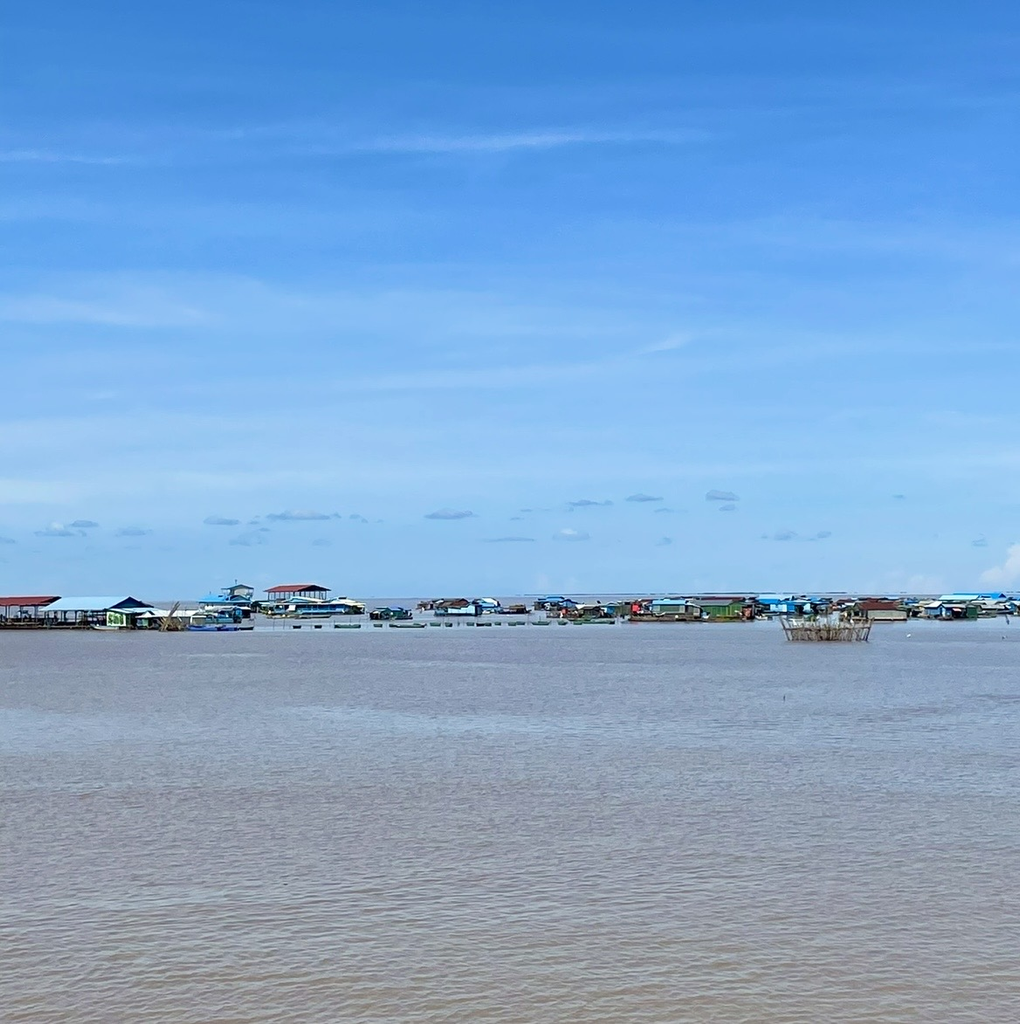
Tonle Sap Lake is a destination where you can experience the vibrant pulse of everyday life, offering a completely different atmosphere from the ancient majesty of the Angkor ruins. If you are planning to visit Siem Reap, expanding your travel itinerary beyond the temples to include this remarkable lake will undeniably add a much deeper layer of unforgettable memories to your trip.
Old Market
The Old Market is a spot where you can truly feel the vibrant “warmth of daily life” unique to Siem Reap, with souvenir shops aimed at tourists and fresh produce markets used by locals sitting side-by-side in the exact same space. The area is packed with rustic local eateries and street food stalls, making it a place where the genuine rhythm of local life flows strongly despite being right in the heart of a major tourist hub. It is located just a stone’s throw away from Pub Street—which I will introduce next—and its incredible accessibility makes it the perfect place to drop by while casually strolling around town.
Standing near the entrance of the Old Market, the very first thing that catches your eye is the massive rows of parked scooters. The atmosphere instantly shifts from a sanitized tourist destination to a authentic “local living space,” and the neighborhood overflows with an authentic local vibe from the exact moment you start walking.
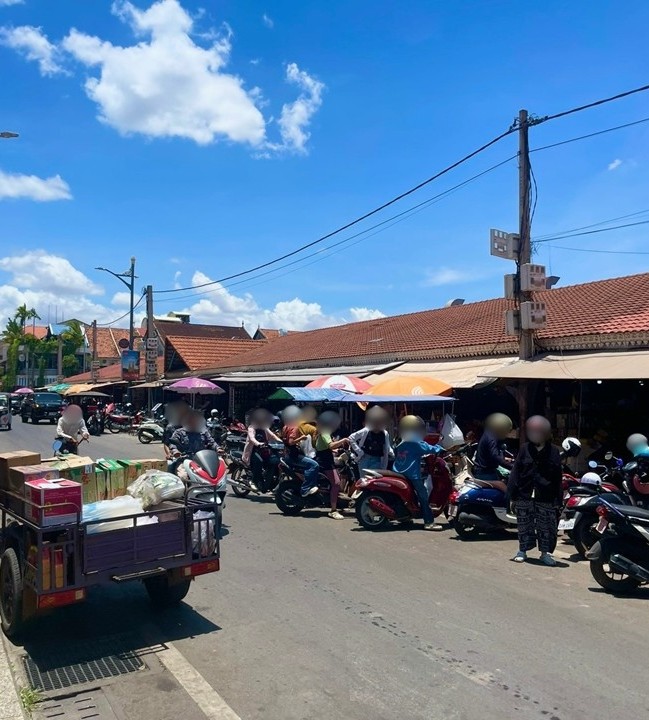
Heading further inside, rows of charming boutique and souvenir stalls line the narrow paths, tightly packed with Cambodia-style textiles, small trinkets, and beautiful handmade accessories. I was deeply impressed by how many of the items felt wonderfully rustic, radiating the distinct warmth of being crafted by hand.
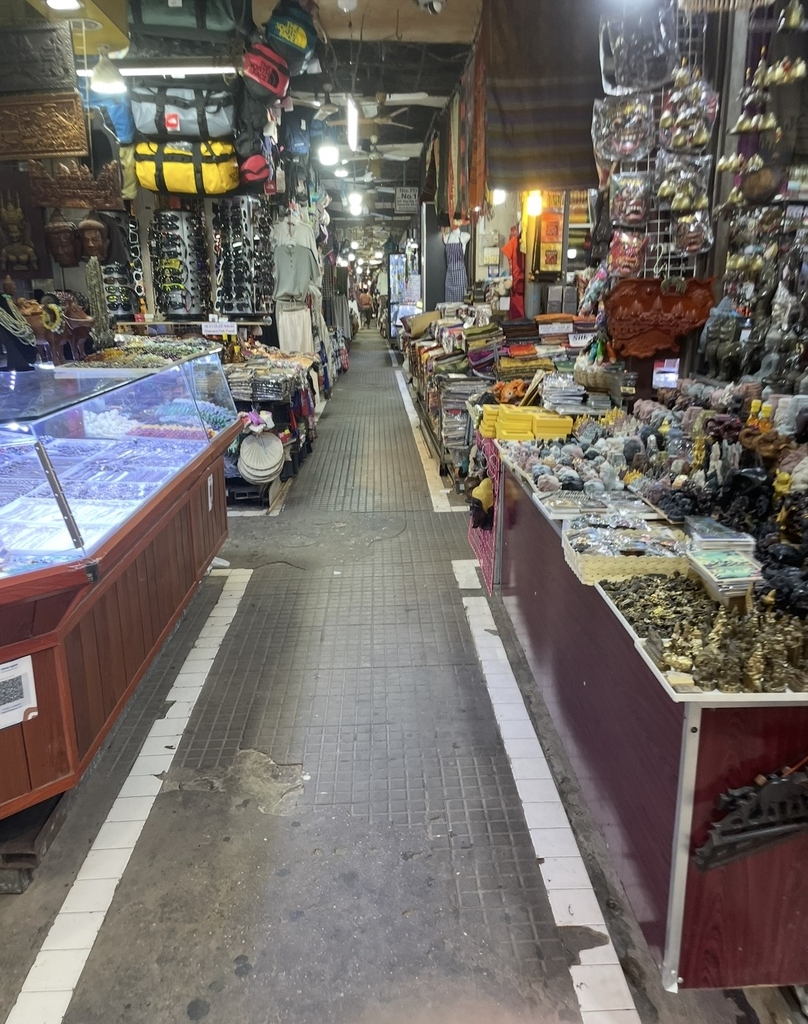
Venturing even deeper into the heart of the market, you will come across dining stalls heavily frequented by the local residents, revealing a genuine “everyday dining scene” that stands in stark contrast to standard tourist restaurants. Walking past, I felt a wave of excitement, thinking that if I could eventually sit down and blend in with the locals for a meal in an eatery like this, it would feel like I had leveled up as a true traveler.
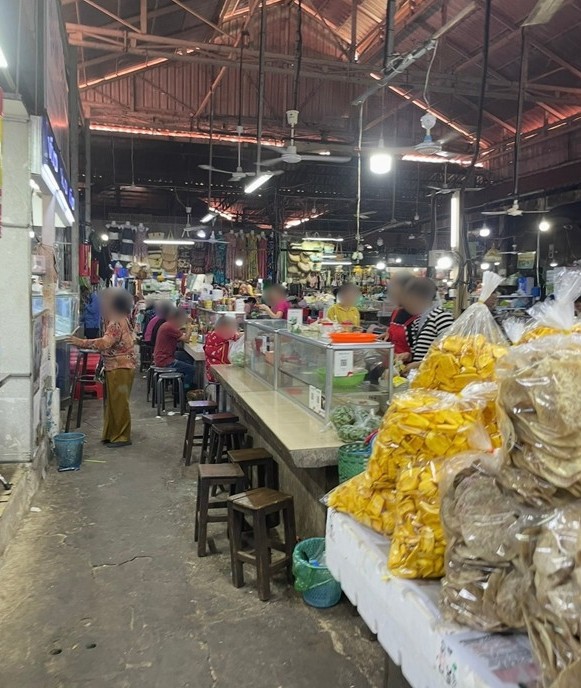
The Old Market is a wonderful place where tourism and daily life seamlessly melt together, allowing you to catch a glimpse of the true, unvarnished face of Siem Reap. Even just dropping by for a short visit undeniably adds a much richer layer of depth to your entire journey.
Pub Street
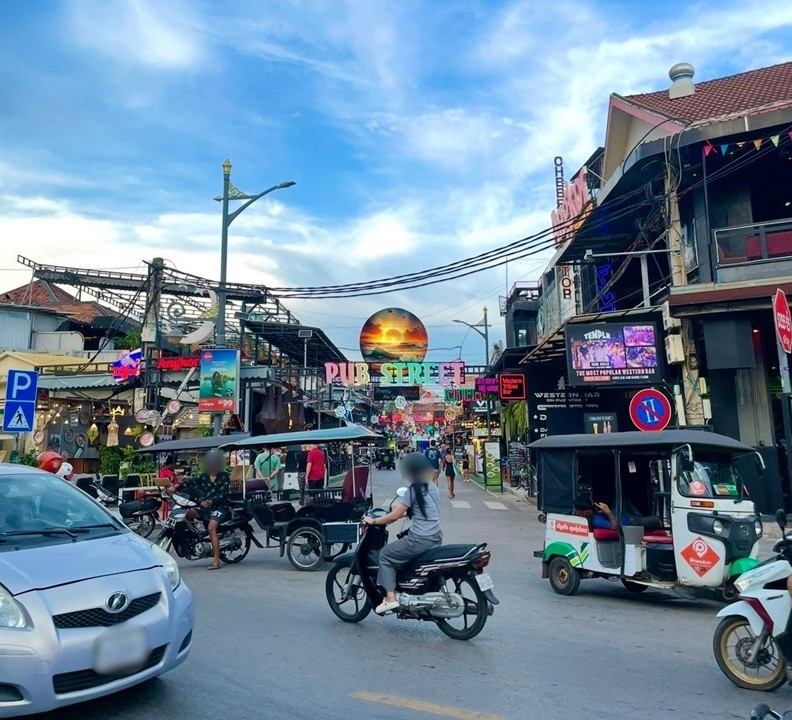
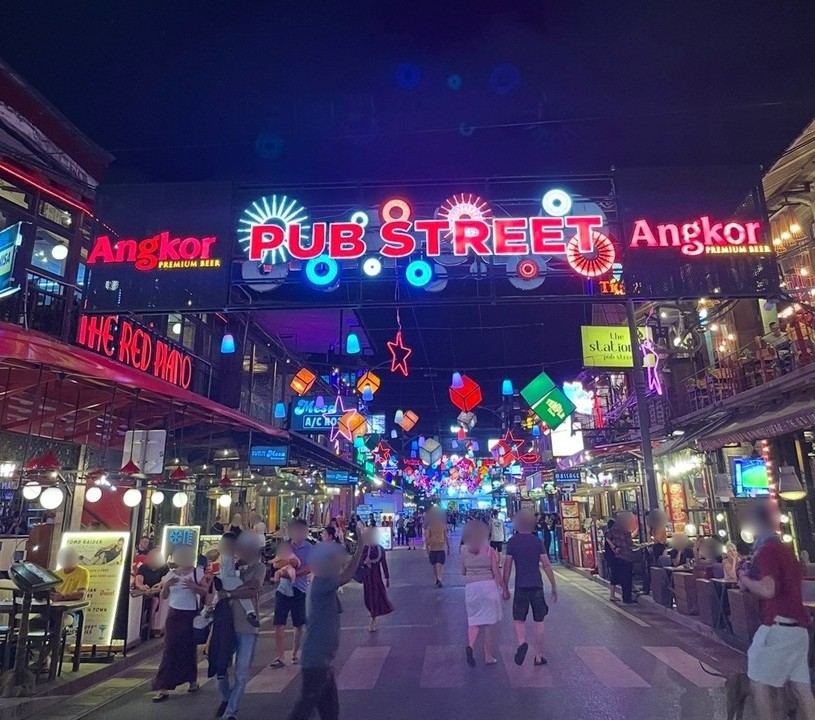
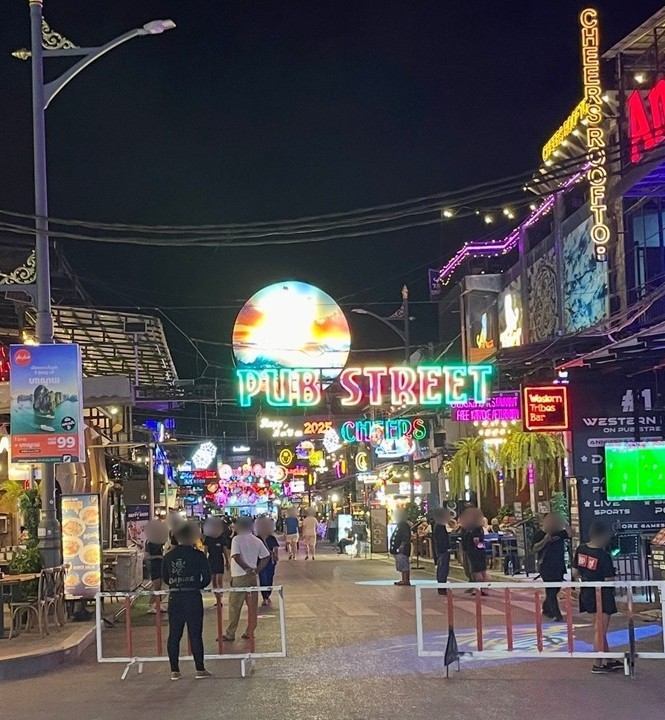
Pub Street is the single premier nightlife hub in Siem Reap, a compact area spanning about 100 meters that is tightly packed with neon lights, music, street food carts, and bars. When night falls, the energy levels skyrocket instantly, transforming the entire street into an electric environment wrapped in brilliant lights and booming sounds.
It is a highly popular spot not just for international tourists but also for younger Cambodians, well-known as a “classic route” to drop by after a long day of touring the Angkor ruins. Standing in stark contrast to the profound silence and solemn grandeur of the ancient temples during the day, this is the absolute best place to feel the vibrant “night face” of Siem Reap.
As I walked through the street, I noticed that the touts and street promoters were not nearly as aggressive as I had expected, and I never felt any sketchy vibes or uncomfortable atmosphere. For a major nightlife district in a tourist city, I think it is a relatively safe and secure place where you can enjoy yourself with peace of mind. However, the prices at the food and drink establishments here are a bit higher compared to restaurants outside the Pub Street zone. Since I had read beforehand to watch out for potential overcharging and rip-offs, I decided to keep it simple this time and focused solely on soaking up the lively atmosphere. Just taking a stroll around is more than enough to fully savor the essence of a Siem Reap night.
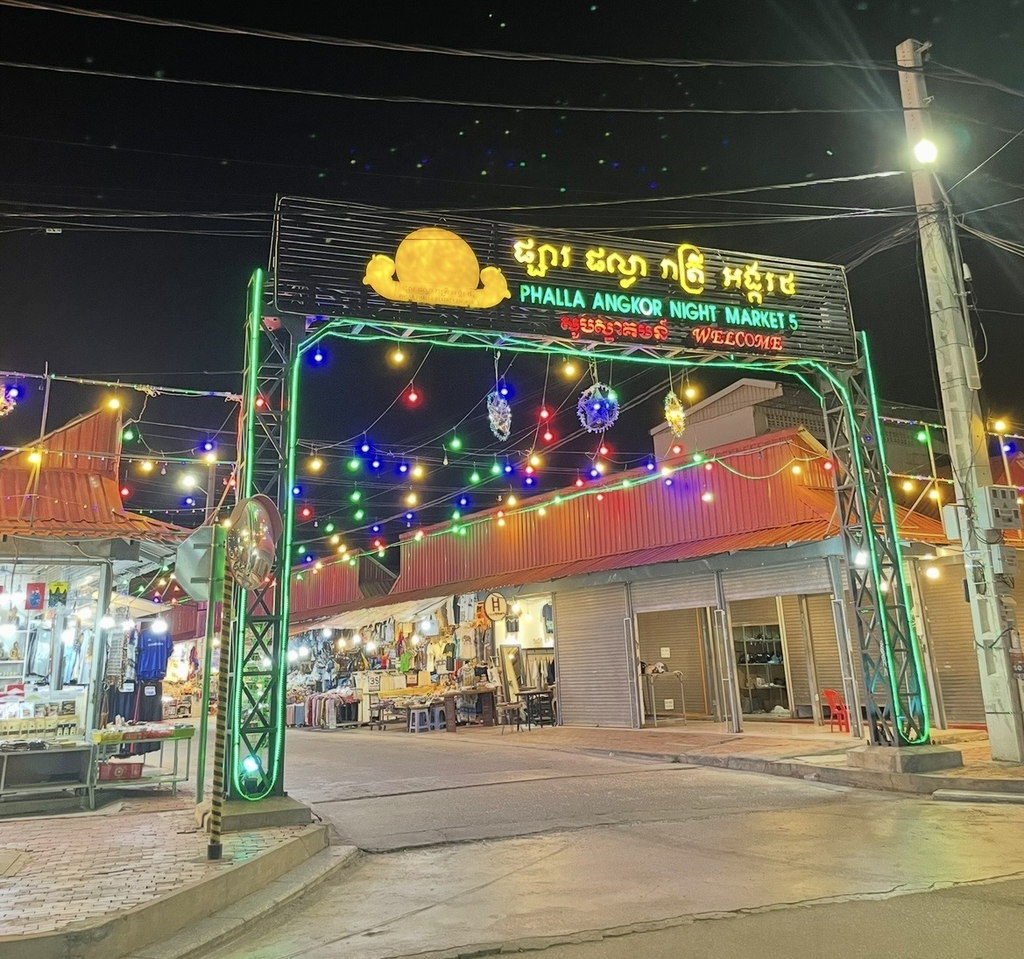
As a side note, the Angkor Night Market is located quite close to Pub Street. While it is frequently featured in travel guides as a major, must-visit night market, the crowds were incredibly thin when I visited, and the entire venue was wrapped in a somewhat lonely, desolate air. While this might have just been due to the specific timing of my visit, my personal impression was that it is not necessarily worth going out of your way to spend your precious travel time on.
Pub Street is a destination where you can experience a completely different side of Siem Reap, world’s apart from your temple-hopping adventures. Just taking a walk through the glowing nighttime streets feels like a perfect way to switch up the overall mood of your journey.
Savoring the Local Food in Siem Reap
While Siem Reap stays incredibly bustling as a major tourist destination, its city center is dotted with charming local restaurants where you can easily drop by for a casual meal during your travels. Khmer cuisine is characterized by its mild flavors and subtle use of spices, making it exceptionally approachable and easy to enjoy even for first-time visitors. While it relies on unique flavor profiles created by aromatic herbs, coconut milk, and traditional fermented seasonings, it always leaves a comforting, gentle aftertaste.
In this section, I will introduce two local restaurants that I personally visited and felt a strong “I absolutely have to recommend this” connection with. These are spots that will allow you to feel closer to Siem Reap’s rich culinary culture and add an extra layer of enjoyment to your overall journey.
Khmer Taste
The very first restaurant I want to showcase is “Khmer Taste,” a highly popular eatery located along Sok San Road. While this particular area is packed to the brim with tourist-oriented restaurants, this establishment stood out by being noticeably crowded, and it was a place I had firmly decided to visit ever since the pre-trip planning phase.
When I actually arrived, the sheer volume of customers inside was night and day compared to the surrounding restaurants, and the dining room was constantly buzzing with high energy. Another lovely touch was that they provide one complimentary bottle of water per person, which is an incredibly thoughtful and welcome service in the intense heat of Siem Reap.
The menu item I personally want to recommend the most is their Fresh Spring Rolls. Plump, chewy rice paper wrapped tightly around an abundance of crisp, crunchy vegetables paired flawlessly with their zesty, spicy dipping sauce. While it is a relatively simple dish, the natural flavors of the ingredients shine through beautifully, creating a refreshing plate that feels like it completely melts away your travel fatigue. The Pineapple Fried Rice also left a powerful impression with its distinct tropical vibe. The balanced mixture of natural sweetness and savory smokiness pairs wonderfully with the gentle seasonings of traditional Khmer cooking.
What shocked me the most, however, was the price of their draft beer. You can actually order a glass for a mere US$0.50—a local price point that is almost too good to be true for budget-conscious travelers. Delicious food, a wonderful atmosphere, and highly affordable prices; it became instantly clear to me exactly why this restaurant is so incredibly popular.
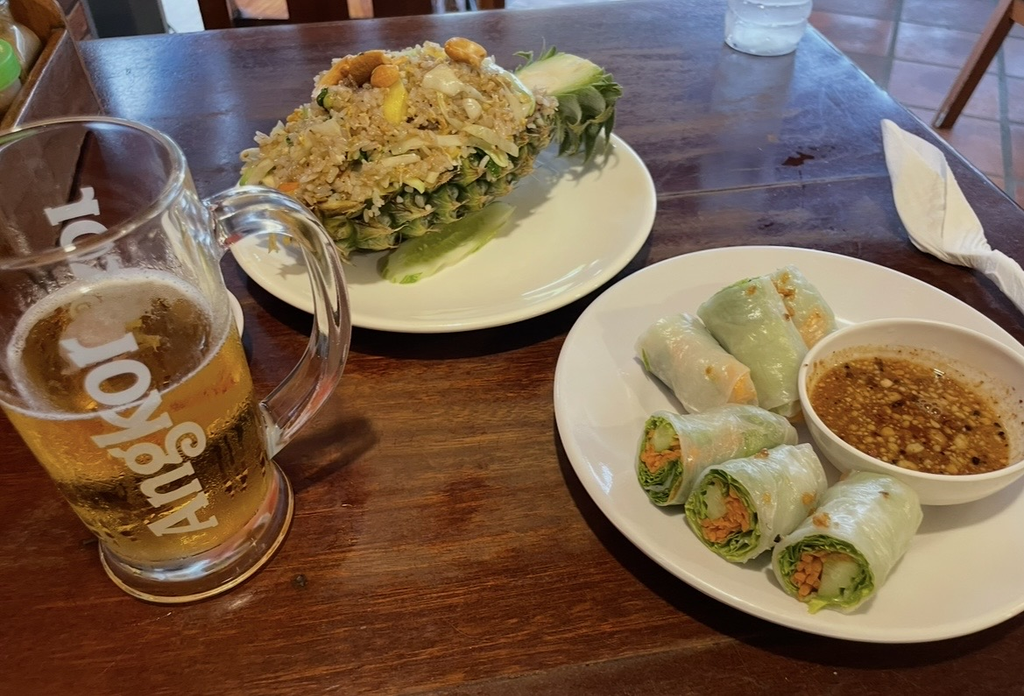
當天實際前往後,發現這裡的來客數與周邊其他餐廳相比,明顯不是同一個層次,店內始終維持著極高的人氣與活力。
入座後店家還會貼心地免費提供一瓶瓶裝水,這對於天氣炎熱的暹粒來說,真的是一項讓人大讚貼心的加分服務。
在我品嚐過的料理之中,我個人最推的就是他們的生春捲。
帶有彈性的春捲皮裡包裹著大量口感清脆的蔬菜,沾上微微辛辣的特製醬汁一同入口,簡直是絕配。
雖然是一道看似簡單的料理,卻能扎扎實實地品嚐到食材本身的鮮甜,是一道能讓旅途的疲憊感瞬間煙消雲散的美味佳餚。
另外,黃金鳳梨炒飯(Pineapple Fried Rice)也散發著濃濃的南國風情,令人印象深刻。
鳳梨的酸甜與炒飯的鑊氣香氣完美交織,與高棉料理溫和的調味風格一拍即合。
而最讓我大吃一驚的,莫過於他們家生啤酒的價格了。
竟然只要花費區區的0.5美元(US$0.5)就能點上一杯,這種對旅人來說簡直是天使下凡般的在地超低破盤價,真的太佛心了。
料理美味、氣氛極佳、價格又親民──實際吃過一趟後,我完全體會到這間店之所以能天天高朋滿座的真正原因了。
The Red Angkor Restaurant
The next place I highly recommend checking out is “The Red Angkor Restaurant,” also located right along Sok San Road. It is situated just a stone’s throw away from Khmer Taste, which I introduced earlier, making it another incredibly convenient local restaurant to drop by within the exact same area.
To be completely honest, this restaurant wasn’t on my radar at all initially. However, a staff member happened to call out to me on the street to invite me in, and I decided to step inside with a completely casual, lighthearted mindset. To my surprise, when I actually had my meal, the food was absolutely delicious, the staff members were incredibly friendly, and the overall atmosphere was so welcoming and comfortable that I ended up dining there twice during my short stay. When I looked it up later, I discovered it was a highly-rated restaurant on TripAdvisor as well; a chance encounter turned out to be an unexpected jackpot spot.
The dish pictured here is a traditional Cambodian specialty called Fish Amok. The natural sweetness of coconut milk blended seamlessly with a fragrant wave of spices, and with every spoonful, a gentle, well-rounded spiciness combined with the refreshing undertone of local herbs expanded across my palate. The steamed fish was remarkably tender, so soft that it could be effortlessly scooped up with a spoon. Being elegantly wrapped and served inside a banana leaf perfectly locked in the rich aromas, making the gentle, tropical flavor profile stand out even more beautifully.
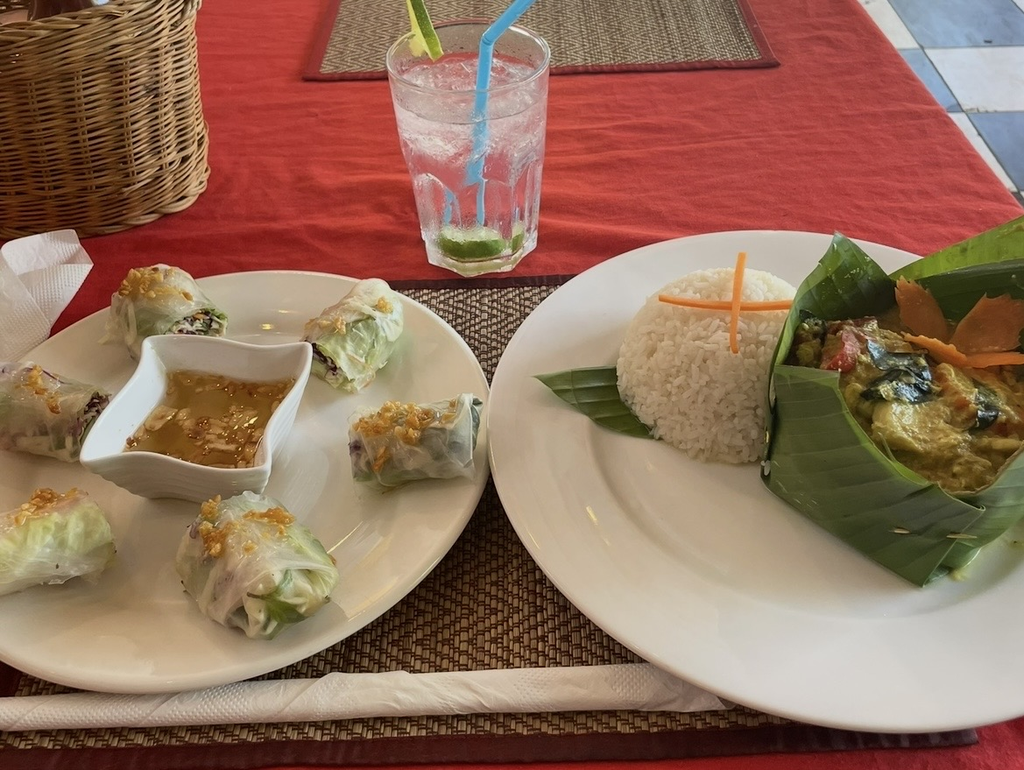
For this next dish… I am incredibly sorry, but the exact name has completely slipped my mind! That being said, it featured that signature Khmer style of subtle, restrained usage of spices, allowing a deep, savory umami flavor to gradually spread with every single bite. Combined with the delightfully crisp, crunchy texture of the fresh vegetables, the flavor profile was perfectly balanced and not heavy at all, making it a dish I could easily finish in no time even in the middle of a tiring journey. It paired absolutely flawlessly with a glass of ice-cold lassi, which is a truly wonderful and refreshing combination in the intense heat of Siem Reap.
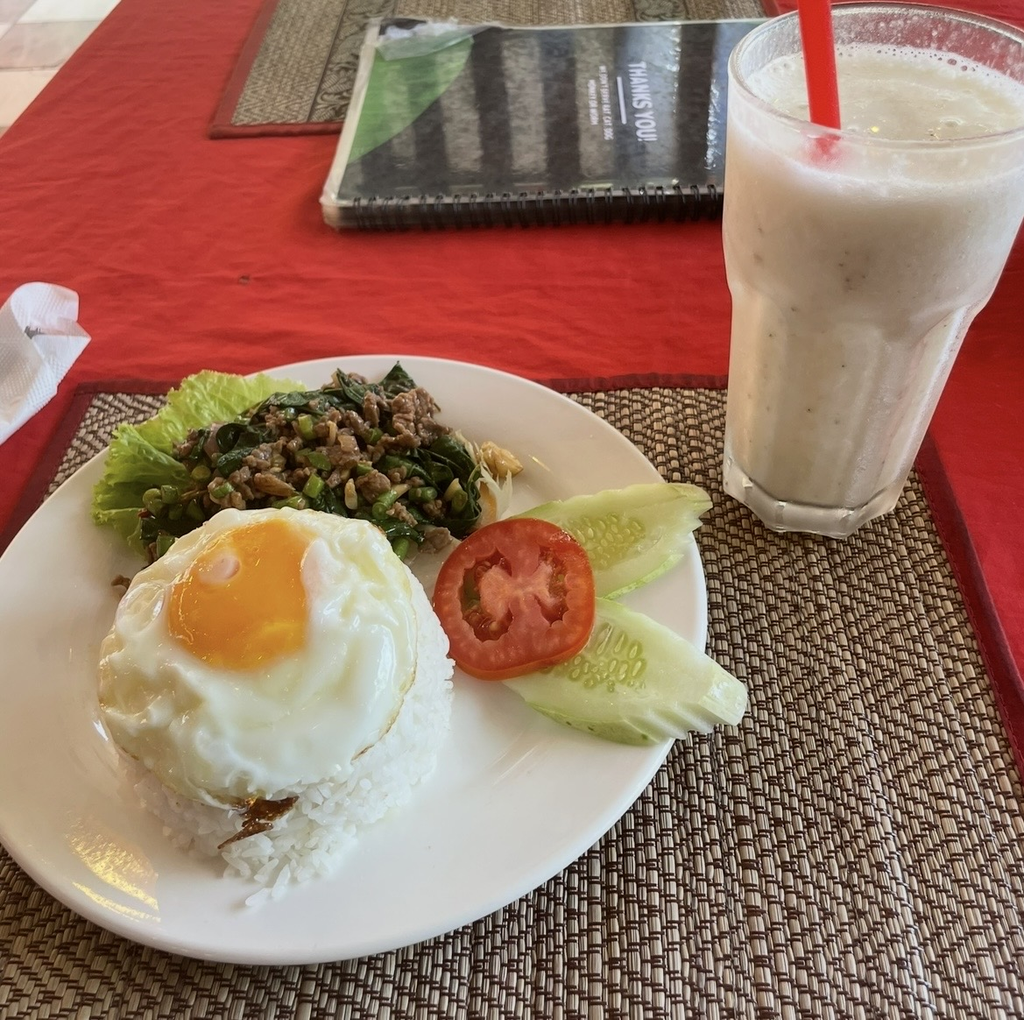
Just like Khmer Taste, this is an highly affordable restaurant offering incredible value for your money, so I strongly encourage you to definitely drop by when you are out sightseeing in Siem Reap.
I hope you enjoyed this guide! Siem Reap proved to be an incredibly welcoming and comfortable destination for travelers, offering an abundance of world-class tourist attractions, delicious local cuisine, and highly affordable prices. While the commute might make you feel the physical distance a little bit, the city is packed with an undeniable charm that makes the journey completely worth it. The overwhelming power of the ancient ruins, the vibrant energy of the town, and the wonderfully calm and gentle hospitality of the people—every single piece is guaranteed to leave a beautiful and lasting impression on your travel memories.