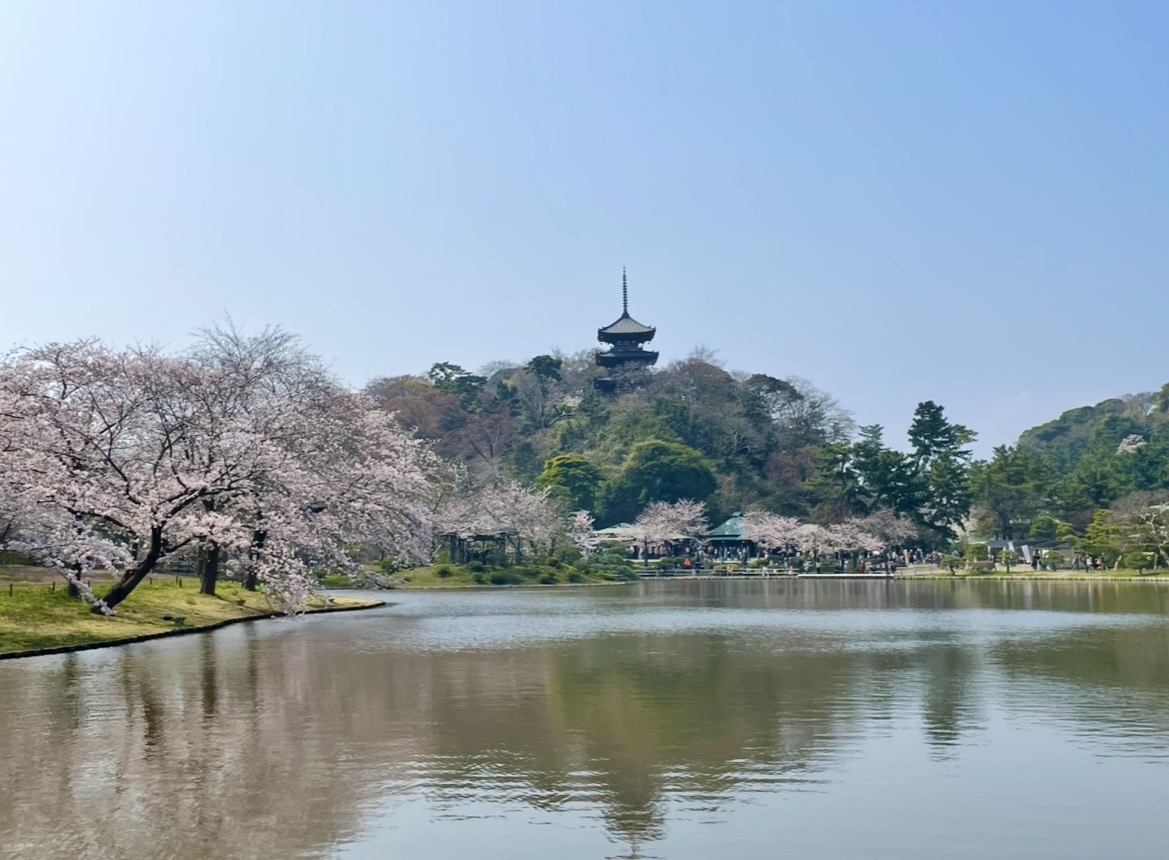


Just a short ride from central Yokohama lies a peaceful haven where time seems to slow down. Sankeien Garden—home to a reflective pond with a three‑story pagoda, seasonal flowers, and historic buildings relocated from Kyoto and Kamakura—welcomes visitors with the feeling of stepping into the timeless landscape of traditional Japan.
Spring at Sankeien is especially breathtaking. The combination of cherry blossoms and historic architecture creates scenery so beautiful that it’s hard to believe you’re still in Yokohama. Every year, countless visitors come to enjoy the blossoms, and even if the season has passed, the garden’s charm remains unchanged for the next year.
Beyond cherry blossoms, Sankeien offers completely different expressions throughout the year: plum blossoms in early spring, lotus flowers in early summer, and vibrant autumn foliage. No matter the season, you’ll always encounter a picture‑perfect moment in this remarkable Japanese garden.
In this guide, we’ll clearly break down the key questions many visitors have:
- What makes Sankeien Garden truly special
- Where its historical and architectural value lies
- The best spots to enjoy cherry blossoms and other seasonal scenery
Whether it’s your first visit or you’ve been to Sankeien many times, this article will help you experience the garden’s beauty to its fullest. Understanding the history and seasonal charm of this iconic Japanese garden in Yokohama will make your trip even more rewarding.
As you continue reading, discover your own way of enjoying Sankeien—every visit can become a memorable journey.
Overview of Sankeien Garden|A Historic Japanese Garden and Cultural Landmark in Yokohama
Sankeien Garden, located in Yokohama’s Honmoku district, is a vast traditional Japanese garden created by businessman and artist Sankei Hara during the Meiji and Taisho eras. Hara, well‑versed in painting, calligraphy, and the tea ceremony, was a prominent cultural figure known for preserving temples and historic buildings that were falling into decline. He purchased and relocated these structures to ensure they would be passed on to future generations. Sankeien stands today as the embodiment of his passion for cultural preservation.
Throughout the garden, visitors will find historic buildings relocated from Kyoto, Kamakura, Wakayama, and other regions of Japan—many of which are designated Important Cultural Properties. These structures are not simply displayed; they are thoughtfully positioned to harmonize with the surrounding landscape, creating one of Sankeien’s most distinctive features.
The garden follows the traditional “chisen‑kaiyū‑shiki” (pond strolling) style, designed so that the scenery changes as you walk around the central pond. Views open up unexpectedly, buildings reflect beautifully on the water’s surface, and the landscape unfolds like a moving picture scroll—one of the garden’s most captivating qualities.
Among the highlights of Sankeien Garden are several iconic historical structures:
- Rinshunkaku (Important Cultural Property)
- Chōshūkaku (Important Cultural Property)
- The former Tōmyō‑ji Three‑Story Pagoda (dating back to the Muromachi period)
These buildings symbolize Sankeien Garden and are cherished not only for their historical significance but also as popular photo spots. Whether during cherry blossom season, autumn foliage, or a casual stroll, these landmarks offer picture‑perfect scenery that captures the essence of a traditional Japanese garden.
Sankeien Garden is also renowned for its beautiful seasonal transitions. Plum blossoms in early spring, cherry blossoms in full bloom, lotus flowers in early summer, vibrant autumn foliage, and the quiet architectural beauty of winter— no matter when you visit, you’ll encounter moments that look like scenes from a painting.
With its harmonious blend of history, architecture, and nature, Sankeien Garden offers a unique opportunity to experience the depth of Japanese culture right in Yokohama. A stroll through the garden reveals the tranquility and elegance that define traditional Japanese landscapes, making it a must‑visit destination for travelers.
Access to Sankeien Garden|How to Get to Yokohama’s Historic Japanese Garden
When traveling to Sankeien Garden by public transportation, the simplest and quickest option is taking a bus from Negishi Station. This route is easy to follow, has frequent bus services, and is ideal for first‑time visitors.
After exiting the ticket gates of JR Negishi Station, you’ll find a bus rotary directly in front of you. From here, a Yokohama City Bus will take you to Sankeien Garden in about ten minutes.
There are two bus routes from Negishi Station that go to Sankeien: one bound for Sankeien South Gate and another for Honmoku. Both routes provide convenient access to the garden and are commonly used by visitors.
Sankeien South Gate Bus Stop|The Fastest Route to Reach Sankeien Garden
- Bus Lines: 54 and 97
- Boarding Point: Negishi Station, Bus Stop No. 7
- Get Off At: Sankeien South Gate
- Walking Time: About 3–4 minutes to reach the garden entrance
The Sankeien South Gate bus stop is the closest stop to the garden, making it the most convenient option with the shortest walking distance. However, during cherry blossom season, autumn foliage, weekends, and holidays, buses tend to get crowded due to the high number of visitors. This route is ideal for those who want to arrive as quickly as possible or minimize walking.
Honmoku Bus Stop|The Best Route for Avoiding Crowds at Sankeien Garden
- Bus Lines: 58 and 101
- Boarding Point: Negishi Station, Bus Stop No. 1
- Get Off At: Honmoku
- Walking Time: About 7–8 minutes to reach Sankeien Garden
Although the walking distance from the Honmoku bus stop is slightly longer than from the Sankeien South Gate stop, the major advantage is that buses on this route are usually less crowded, making the ride more comfortable. When I visited Sankeien myself, I also chose the Honmoku route. Even during the busy cherry blossom season, the bus was surprisingly uncrowded, and there were enough seats available. Just walking a few extra minutes significantly reduced travel stress and made the visit much more pleasant.
Access to Sankeien Garden from Yokohama Station, Sakuragichō Station, and Motomachi‑Chukagai Station (Additional Guide)
Although the route from Negishi Station is the simplest, you can also reach Sankeien Garden by bus from Yokohama Station, Sakuragichō Station, and Motomachi‑Chukagai Station.
- Yokohama Station → Sankeien
Travel time is relatively long (about 30–40 minutes), and buses tend to be crowded due to the high number of tourists.
- Sakuragichō Station → Sankeien
This route passes through Chinatown and Yamashita Park, so weekends and holidays often see heavy crowds.
- Motomachi‑Chukagai Station → Sankeien
This option offers the shortest walking distance, but bus frequency is slightly lower.
Walking Through Sankeien Garden|Highlights of the Outer and Inner Garden with Photo‑Based Guide
The charm of Sankeien Garden lies in its “strolling-style scenery,” where the landscape changes as you walk. Starting from the main gate, the view opens toward the expansive central pond, and then leads into the inner garden where many cultural properties are concentrated— the experience feels like turning the pages of a traditional Japanese picture scroll, with the scenery shifting little by little.
Below, I introduce the highlights of both the outer and inner garden, following the exact route I walked during my visit.
Highlights of the Main Gate to Central Pond Area (Outer Garden)
Your walk through Sankeien Garden begins in the outer garden. Passing through the main gate, the scenery opens up to a spacious view centered around the large pond. The reflection of the three‑story pagoda, seasonal flowers, and buildings connected to Sankei Hara appear throughout the area, allowing you to feel the joy of exploring a traditional Japanese garden from the very first steps.
This area captures the welcoming charm of Sankeien as soon as you enter.
Main Gate|Your Journey Through Sankeien Garden Begins Here
Your walk through Sankeien Garden begins at its calm and understated main gate. The moment you step inside, the noise of the city fades away, and the garden’s gentle tranquility slowly surrounds you.

Just beyond the main gate, you’ll find the ticket checkpoint, and next to it a stack of free garden maps available for visitors. Since Sankeien Garden is divided into the outer and inner garden with attractions spread across a wide area, having this map in hand makes your walk much smoother and easier to navigate.


Although the area around the main gate is not decorated in an extravagant way, it naturally carries a sense that “your escape from the everyday begins here,” allowing you to settle into the mood even before you start walking.
A short distance past the gate, the view suddenly opens up, revealing the iconic central pond of Sankeien Garden. This moment—when the scenery expands all at once—is something that almost every visitor finds captivating. I personally felt, within that brief walk from the gate to the pond, a clear realization: “This place is truly special.”
From here, the outer garden unfolds around the large pond. Begin by passing through the main gate of Sankeien, and gently step into the world of the garden.
Central Pond|A Picture‑Perfect View with the Three‑Story Pagoda Reflected on the Water
A short walk beyond the main gate reveals an open view of Sankeien’s iconic central pond. Across the water stands the historic three‑story pagoda of former Tōmyō‑ji Temple, built in the Muromachi period. Its reflection on the pond creates one of the most picturesque and defining scenes of Sankeien Garden.
Spring is the most vibrant season around the central pond. When the cherry blossoms along the water’s edge reach full bloom, the soft pink petals, the dignified silhouette of the pagoda, and the calm surface of the pond come together in a single frame—spreading out like a beautifully painted landscape.

When I visited, this exact combination of elements was in front of me, and I couldn’t help but stop walking. Placing the cherry blossoms in the foreground and the pagoda in the distance naturally creates a perfect composition—one that captures the essence of Sankeien Garden.
The central pond sits at the heart of Sankeien and symbolizes the scenery of the outer garden. From here, you can stroll around the water and enjoy views of the three‑story pagoda from various angles. Because the scenery changes with the seasons and the time of day, this spot offers new discoveries no matter how many times you visit.
Kakushōkaku|The Guest Pavilion Connected to Sankei Hara
Walking along the edge of the central pond, you’ll find Kakushōkaku quietly appearing between the trees. This guest pavilion was used by Sankei Hara, the founder of Sankeien Garden, to welcome important visitors, and it carries an especially calm and refined atmosphere within the outer garden.
Although the building is not open to the public, its elegance is clear even from the exterior. There is no extravagance—only the warmth of traditional wooden architecture and a modest presence that blends naturally into the garden, perfectly fitting the idea of “a quiet stage for receiving cultural figures.” A wide lawn spreads out in front of Kakushōkaku, and depending on the season, cherry blossoms or fresh greenery gently wrap around the building.
Just a few steps away from the open scenery of the central pond, the air suddenly grows still, allowing you to experience another layer of tranquility within the garden.

For photography, the best spot is where the entire building can be seen through the gaps between the trees. The subtle beauty of Kakushōkaku and the surrounding greenery create a balanced composition, resulting in a photo that captures the quiet atmosphere of the outer garden.
In contrast to the vibrant scenery around the central pond, Kakushōkaku is a place where you can feel the beauty of stillness. As you walk through the outer garden of Sankeien, this is one of the spots where your mind naturally settles.
Kyoshi Takahama Haiku Monument|A Subtle Presence of Literature Blending into the Garden
As you walk around the central pond, a stone monument quietly appears between the trees. This is a haiku monument engraved with a verse by the poet Kyoshi Takahama, placed in a way that blends naturally into the calm atmosphere of Sankeien’s outer garden.
Although it lacks the visual impact of architectural structures, the texture and weight of the stone become striking when viewed up close, giving it a quiet yet distinct presence amid the surrounding greenery.

When photographed, the presence of the haiku monument becomes even more distinct. At moments when sunlight filters through the trees, a soft glow touches the surface of the stone, making the quiet beauty of the inscription gently emerge.
Although Sankeien is often admired for its grand scenery—such as the central pond and the three‑story pagoda—monuments like this subtly add a layer of cultural depth to the garden. Pausing during your walk to reflect on the engraved words feels like one of the unique ways to appreciate Sankeien.
Yokutē‑an|A Teahouse Enveloped in Deep Silence
As you walk around the central pond, a small teahouse quietly appears deep within the trees. This is Yokutē‑an—a particularly tranquil spot in the outer garden, wrapped in greenery and carrying a modest, calm atmosphere.
Though small in size, the teahouse has the simple charm of traditional wooden architecture, and its beauty becomes more apparent the closer you approach. There is no sense of grandeur; instead, it feels like “silence itself has become the scenery,” a place where your pace naturally slows as you walk by.

When photographed, the calm presence of Yokutē‑an becomes even more apparent. The outline of the building and the texture of the wood, gently illuminated by soft light, create an image that feels as if the quietness of the outer garden has been captured directly.
Just a short distance away from the open scenery of the central pond, the atmosphere changes so noticeably that you can feel a deeper sense of stillness. It’s a spot you’ll want to pause at during your walk—especially when you wish to settle your thoughts for a moment.
Highlights of the Former Tōmyō‑ji Area (Outer Garden)
After passing Yokutē‑an from the central pond, the scenery gradually shifts into a quiet forest. In this area, you’ll find cultural properties such as the former Tōmyō‑ji buildings relocated from Kyoto and a Buddha hall connected to Kamakura—places where the depth of history can truly be felt. Unlike the openness of the central pond, this part of the garden carries a gentle, contemplative atmosphere.
Former Tōkeiji Buddha Hall|A Quiet Temple with Deep Ties to Kamakura
Walking past Yokutē‑an and deeper into the forest, you’ll come across a calm, wooden structure—this is the former Tōkeiji Buddha Hall. Relocated from Tōkeiji in Kamakura, it is one of the cultural properties in the area that carries an especially quiet presence.
The strength of its wooden framework and the gentle curves of the roof are striking, and the building exudes the composed atmosphere that only long‑standing architecture can hold. There are no ornate decorations, yet the space feels as though it still preserves the “quietness of a place for prayer.”

When photographed, the refined form of the Buddha Hall blends gently with the surrounding forest, making its calm presence even more distinct. Depending on how the light falls, the texture of the wood softly emerges, creating an image that feels connected to the quiet path you walked to reach it.
Among the cultural properties in the former Tōmyō‑ji area, the former Tōkeiji Buddha Hall is a place where you can truly feel the beauty of a structure that “stands quietly.” It offers a different kind of charm from the scenery around the central pond—one that reveals the deeper allure of Sankeien.
Former Tōmyō‑ji Main Hall|A Muromachi‑period Structure Relocated from Wakayama
Following the path from the former Tōkeiji Buddha Hall, a solid, dignified structure appears within the forest—this is the former Tōmyō‑ji Main Hall. Relocated from Wakayama, it is a Muromachi‑period building that conveys a sense of openness and calm distinct from the Buddha Hall.
Standing before it, you’ll notice the deep eaves extending outward, creating a broad shadow that seems to embrace the entire structure. Nearby, cherry branches reach out gently, their pale colors softly complementing the calm wooden surfaces of the hall. With the addition of seasonal hues, the quiet presence of Muromachi architecture feels even more tender and refined.

Inside the main hall, the Buddha statue that was enshrined before relocation rests quietly. In the dim space where outside light cannot reach, only the outline of the statue gently emerges, creating an atmosphere of “sacred stillness” distinct from the building’s exterior. When photographed, it feels as though that silence has been captured and preserved within the image.

The spacious presence of the exterior and the quiet stillness of the interior—
feeling both at once is what makes the former Tōmyō‑ji Main Hall so compelling. The forest air you walk through and the long history held within the building blend naturally, making this one of the most serene spots in all of Sankeien.
Former Tōmyō‑ji Three‑Story Pagoda|The Iconic Silhouette of Sankeien
Across from the former Tōmyō‑ji Main Hall lies a small hill you can climb by a short set of steps. As you ascend, the silhouette of a pagoda rises gracefully beyond the trees—this is the former Tōmyō‑ji Three‑Story Pagoda. Originally built in Kyoto during the Muromachi period and later relocated here, it has become one of the most beloved symbols of Sankeien.
Up close, the beautiful balance of its three overlapping roofs stands out, and the strength of the wooden structure centered around the shinbashira quietly reveals itself. Viewed from different angles, the height and presence of the pagoda become even more striking, leaving a strong impression of a structure designed to be admired.

When photographed, the pagoda’s refined silhouette stretches upward into the sky, and the curves of its roofs and the texture of the wood emerge softly in the gentle light. From a slightly angled composition, the three overlapping tiers appear more three‑dimensional, highlighting the rhythmic beauty unique to a three‑story pagoda.
The distant view across the central pond is well known, but seeing the pagoda up close reveals a different charm. Amid the quiet of the small hill, you can experience the moment when Sankeien’s “symbol” rises right before your eyes.
Highlights Around Rinchū‑kaku in the Inner Garden
Passing through the gate, you enter an area with a calmer atmosphere, distinct from the open scenery of the outer garden. Within the inner garden, study-style buildings, small halls, and cultural properties carefully preserved by Hara Sankei are scattered throughout, creating a dense collection of architecture within a compact space. As you walk through the quiet garden, you can enjoy the unique character each structure reveals.
The Gate|A Quiet Entrance Leading into the Inner Garden
Walking along the path in the outer garden, a quietly composed gate appears among the trees. This is the Gomon, the entrance leading into the inner garden. Relocated from a temple in Kyoto, the gate carries a calm presence with a subtle, dignified air.

Beyond the gate, the atmosphere shifts subtly from that of the outer garden, and with a single step, the scenery feels as though it changes. From here begins the inner garden, where the buildings Hara Sankei cherished most are gathered. It is a quiet entrance that gently stirs a sense of anticipation.
Renge‑in|A Quiet Teahouse Nestled Beside the Bamboo Grove
As you pass through the gate and enter the inner garden, a small building appears straight ahead—this is Renge‑in. Designed and built according to Hara Sankei’s own vision, the teahouse blends naturally with the surrounding bamboo grove, and simply standing there lets a different kind of quietness flow in, distinct from the outer garden. The faint sound of bamboo leaves swaying in the wind adds to the calm atmosphere that fills the space.

Some parts of the structure incorporate old materials from the Phoenix Hall of Byōdō‑in in Uji, Kyoto, and lotus stems are woven into sections of the ceiling, reflecting Sankei’s characteristic attention to detail. Within its simple appearance, the teahouse carries a quiet sense of refinement. As you walk through the inner garden, catching sight of this small teahouse brings a gentle feeling of composure, a subtle calm that settles in. Its presence beside the bamboo grove deepens the tranquility of the inner garden.
Former Tensui‑ji Pagoda Cover Hall|A Historic Structure Preserved from Ruin
Walking beyond the quiet bamboo grove, a calm and understated structure comes into view. This is the former Tensui‑ji Pagoda Cover Hall. Originally built at Tensui‑ji Temple in Kyoto to protect a pagoda used for memorial offerings, the hall was nearly lost due to the temple’s decline until Hara Sankei purchased it and relocated it to Sankeien. Built as a shelter to shield the pagoda from wind and rain, the cover hall has a modest exterior, yet its wooden framework and roofline possess a quiet beauty. When viewed up close, the aged texture of the wood gently emerges, and even though it no longer serves its original purpose, it still conveys a subtle sense of prayer.

A structure that once stood on the verge of being lost amid decay now rests quietly in a corner of the garden, holding within its presence the gentle weight of time carried through history. Though it lacks ornament or grandeur, the fact that it remains here speaks softly of the long journey it has endured. In the stillness of the inner garden, this modest cover hall serves as a reminder that Sankeien is a place where history is carefully preserved.
Rinchū‑kaku|An Elegant Shoin‑style Masterpiece Standing Beside the Pond
As you walk through the inner garden, a building appears as though it is gently blending into the waterside scenery. This is Rinchū‑kaku. Built in the Edo period as a villa for the Kii Tokugawa family, the shoin‑style structure was later relocated to Sankeien after Hara Sankei fell in love with its beauty. Its three connected wings are arranged with subtle shifts in position, a deliberate design that captures the pond’s scenery so that wherever you stand, the light on the water and the colors of the seasons naturally come into view.
Turning your eyes to the broad veranda facing the pond, you can see the reflections on the water slowly shimmering, revealing how the building and the garden form a single, continuous landscape. Though modest in appearance, it carries a quiet elegance, and its harmony with the waterside scenery makes it one of the most memorable structures in Sankeien.

When you quietly peek inside from the outside, a different kind of charm unfolds. Soft light filters into the tatami room, filling the space with a calm and settled atmosphere. The simplicity characteristic of shoin‑style architecture, free from unnecessary ornamentation, contrasts with the waterside scenery outside and highlights the quiet beauty within the room.
Even when viewed only from the outside, its refined quality is unmistakably conveyed.

Rinchū‑kaku is one of the best‑preserved structures in Sankeien, a valuable example of refined residential architecture from the Edo period that remains intact today. The way its shoin‑style elegance overlaps with the scenery of the pond gives the building a depth that reveals different expressions depending on the time of day and the season.
Gekka‑den|A Shoin‑style Building Preserving Elegant Architectural Details
Walking on from Rinchū‑kaku, you come upon a building wrapped in a calm and composed atmosphere. This is Gekka‑den. Built in the Edo period in the shoin style, it possesses a quiet beauty that seems to glow under the light of the moon, just as its name suggests. Unlike the openness of Rinchū‑kaku by the water’s edge, Gekka‑den carries a dignified stillness as it stands quietly within the garden.
Though modest in appearance, its details reveal the refined craftsmanship characteristic of shoin‑style architecture. The subdued tones of the wood and the clean lines of the roof create a gentle harmony, allowing the entire structure to blend naturally into the surrounding garden scenery.

Gekka‑den stands in contrast to the elegance of Rinchū‑kaku, leaving an impression through the refined beauty it carries within its quiet atmosphere. Its presence, appearing almost unexpectedly as you stroll through the garden, feels like a symbol of the “quiet beauty” that defines the inner garden of Sankeien.
Tenju‑den|A Quiet Presence Harmonizing with the Garden Landscape
Beside Gekka‑den stands a building that seems to rest gently against the greenery of the garden. This is Tenju‑den. Originally located at Myōkian in Kyoto, it has retained its calm and harmonious presence even after being relocated to Sankeien. Rather than presenting any sense of grandeur, it leaves an impression through its modest character that blends naturally into the surrounding landscape.
Its exterior is simple, yet the refined qualities of shoin‑style architecture can be felt in its details. The soft tones of the wood and the clean lines of the roof create a quiet harmony, making the structure appear as though it breathes as part of the garden itself. As you walk nearby, the sound of trees swaying in the wind and the shifting light subtly change the building’s expression, allowing nature and architecture to share a gentle, peaceful moment.

Tenju‑den carries a different kind of quietness compared to Rinchū‑kaku and Gekka‑den, characterized not by ornate design but by a modest presence that gently aligns with the atmosphere of the garden.
Its appearance, catching your eye almost unexpectedly as you walk through the grounds, feels like a symbol of the “quiet beauty” that defines the inner garden of Sankeien.
Chōshū‑kaku|Architectural Beauty That Harmonizes Best with Autumn Foliage
As you walk through the inner garden, a small structure quietly appears among the surrounding trees. This is Chōshū‑kaku. Built in the Edo period, the three‑story pavilion leaves an impression with its gentle presence that seems to rest naturally within the landscape.
In spring, the soft green of newly budding leaves wraps around the building, and the filtered sunlight creates a calm and gentle atmosphere. Fresh leaves emerging at the tips of the branches blend softly with the subdued tones of the wooden structure. The sound of swaying branches and the quiet path leading toward the stone steps deepen the sense of “spring tranquility” that this place holds.

If you visit in autumn, the surrounding trees turn vivid shades of red and yellow, and the colors of the foliage enhance the quiet tones of Chōshū‑kaku, completing the scene as a single harmonious landscape. Rather than standing out with ornate design, it is a place where the “beauty of a background” that receives and reflects seasonal colors becomes most apparent. A building that shows different expressions with each season, it is one of the structures in Sankeien where you can most deeply feel the changing rhythms of nature.
Kaigan‑mon|An atmospheric gate that evokes the former seaside entrance of the garden
After walking through the inner garden and following the quiet path, a calm wooden gate comes into view. This is Kaigan‑mon. Once used as an entrance to the garden, it still carries a gentle atmosphere that hints at its past role. Rather than seeking grandeur, its presence is defined by the way it quietly aligns with the garden’s tranquility.
The natural texture of the wood and the clean lines of the tiled roof create a simple beauty, while the stone path leading to the gate softly guides visitors forward. The surrounding trees catch the gentle light, their bright branch tips framing a view that draws the eye quietly beyond the gate.
In this corner without unnecessary noise, a sense of calm lingers, as if the gate is quietly receiving the time spent walking through the inner garden.

Kaigan‑mon stands quietly as if concluding the walk through the inner garden, and when it comes into view after passing the buildings and landscape, it feels like a scene where the history and nature of Sankeien blend gently together. Although it has no special ornamentation, its modest presence softly invites you to reflect on the time spent walking through the garden.
This is where the walk through Sankeien comes to a gentle close. When you look back after finishing your stroll, you notice how the openness of the Outer Garden and the quiet of the Inner Garden have overlapped softly within a single journey, creating a subtle yet memorable landscape. Even though the scenery is understated, it leaves a curious and lingering impression.
If you have not yet visited, I hope you will take a quiet step there on a pleasant day. You will surely encounter a momentary expression of Sankeien that exists only at that time.
If this article becomes a small nudge that helps you choose your “next moment,” I would be truly glad.