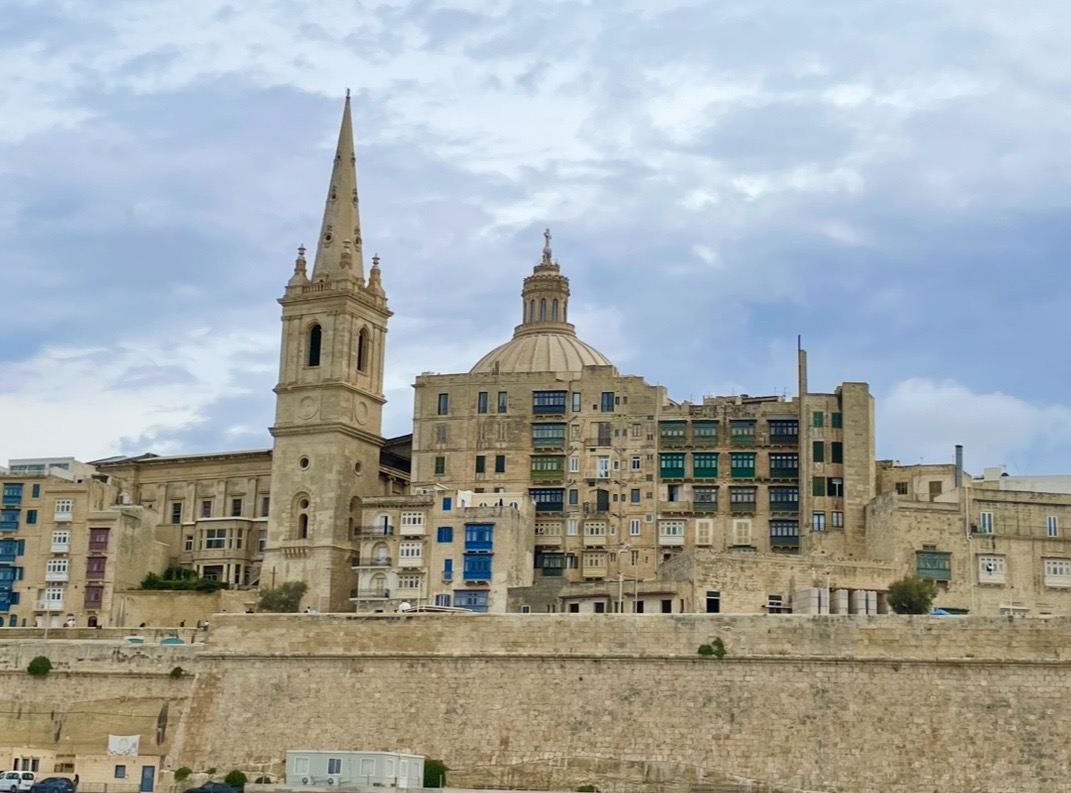


Malta is a beautiful island nation in the Mediterranean Sea. To fully enjoy its charm, mastering the local buses and ferries is absolutely essential. While navigating transportation in a new country can be a bit nerve-wracking, Malta’s transit system is incredibly smart. Once you get the hang of it, even first-time tourists can travel smoothly and without getting lost.
In this article, I will share a complete guide on how to ride the buses and ferries based on my personal experience visiting Malta. I have packed this guide with everything you need to know, from getting to Valletta from the airport to the comfortable ferry ride between Valletta and Sliema, including actual boarding procedures and the atmosphere onboard. This post will clear up any anxieties first-time visitors might have. I will go into detail to ensure your trip to Malta is smoother and more comfortable, so please use this as your reference.
💡 Recommended Reading: Malta Sightseeing Guide
The article below introduces plenty of must-see highlights in Valletta and Mdina. Checking it out will paint an even more vivid picture of what your trip to Malta will look like.


Is It True You Can Pay for Malta Transit with Just a Credit Card?
To get straight to the point, you can use a credit card for almost all your transportation needs in Malta with virtually no issues. During my stay in Malta, I was able to pay with a credit card on both buses and ferries. Especially on the main routes that form the core of local sightseeing, both systems support contactless payments, meaning you will rarely ever need to pull cash out of your wallet.
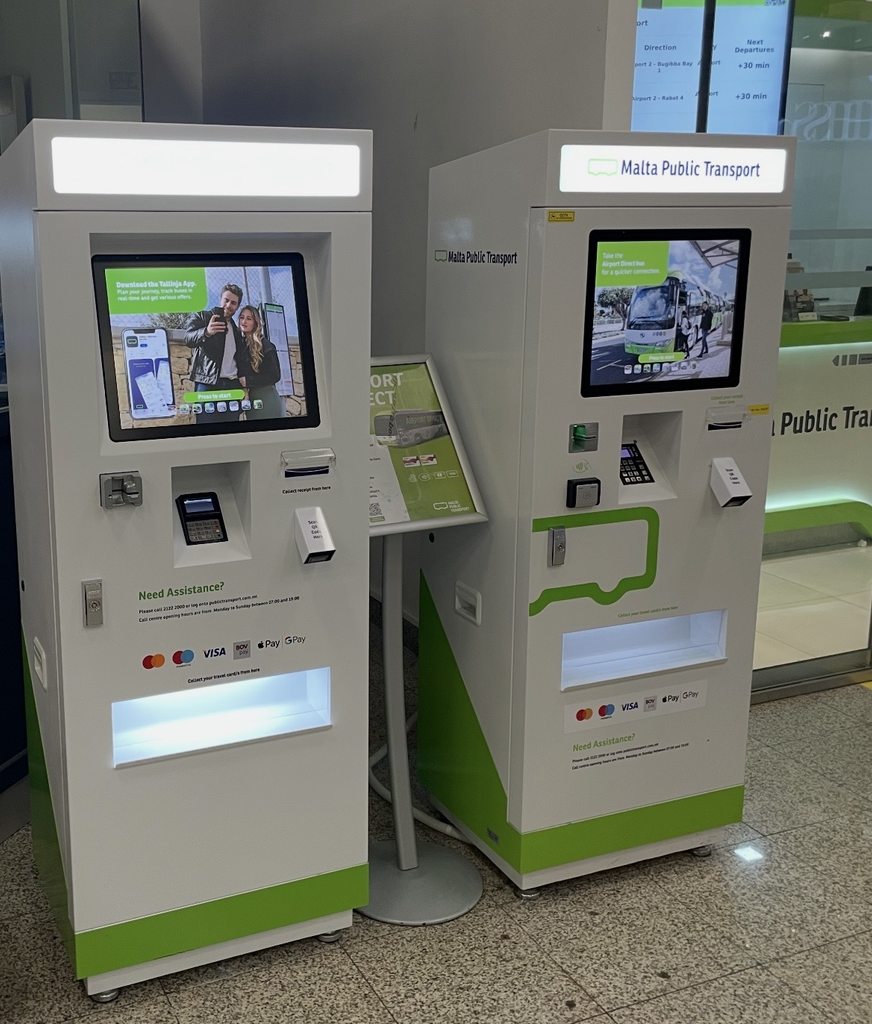
As you can see from the bus ticket machine at the airport (pictured below), major international brands like Visa and Mastercard are accepted, alongside smartphone contactless payments such as Apple Pay and Google Pay. I personally used Visa contactless, but I also noticed many other travelers simply tapping their smartphones to board. However, it is worth noting that there was no JCB card logo, meaning it is likely not supported, so that is one detail you will want to keep in mind.
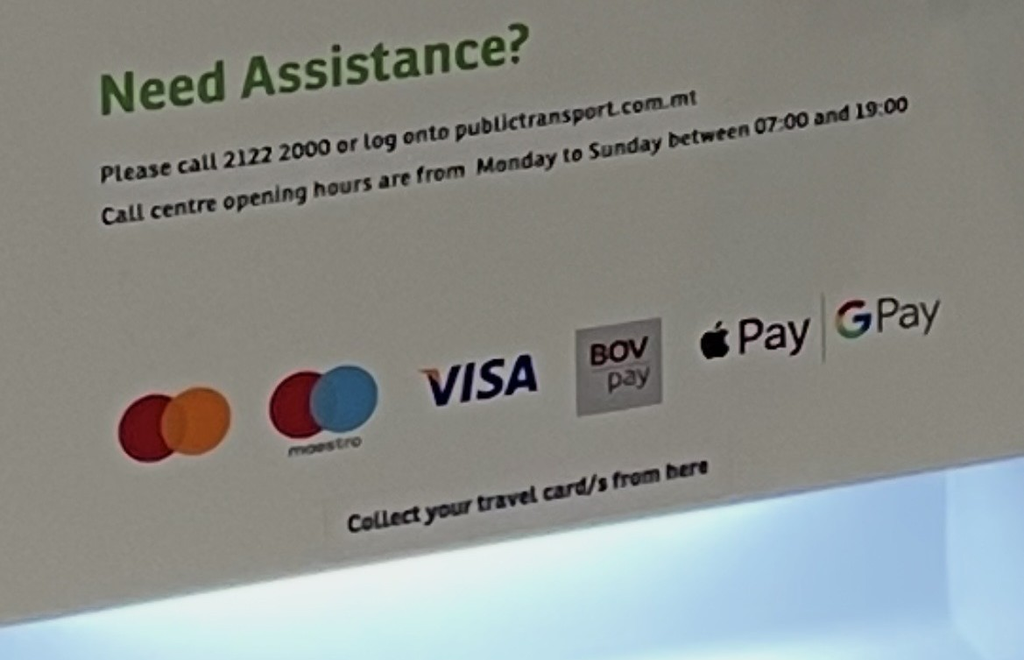
While you can generally travel light with just a credit card, there are a few rare exceptions. This is because card readers can occasionally experience temporary glitches, and in those situations, you will be asked to pay in cash. In fact, right after arriving in Malta, I encountered a terminal malfunction on my very first bus ride from the airport to Valletta and had no choice but to pay with cash. Although I panicked a bit doing this first thing in an unfamiliar place, that was the one and only time I ever needed cash during my entire stay; other than that, a single credit card took me absolutely everywhere.
While keeping a little cash on hand is reassuring just in case of unexpected trouble, my hands-on experience proved that a single favorite credit card is truly all you need to navigate Malta’s transit with complete comfort and ease.
The Complete Guide on How to Ride the Bus in Malta
Buses are a traveler’s best friend when sightseeing in Malta. They cover almost every major area across the island in meticulous detail. From your very first trip from the airport to Valletta to visiting all the various attractions during your stay, the bus will likely be at the center of your travel plans. While taking the bus in a new country can feel a bit intimidating, Malta’s bus system is actually very simple once you understand how it works. Based on my hands-on experience, I will break down the key points in an easy-to-understand way to make your trip to Malta much more comfortable and smooth.
How to Board and Exit the Bus
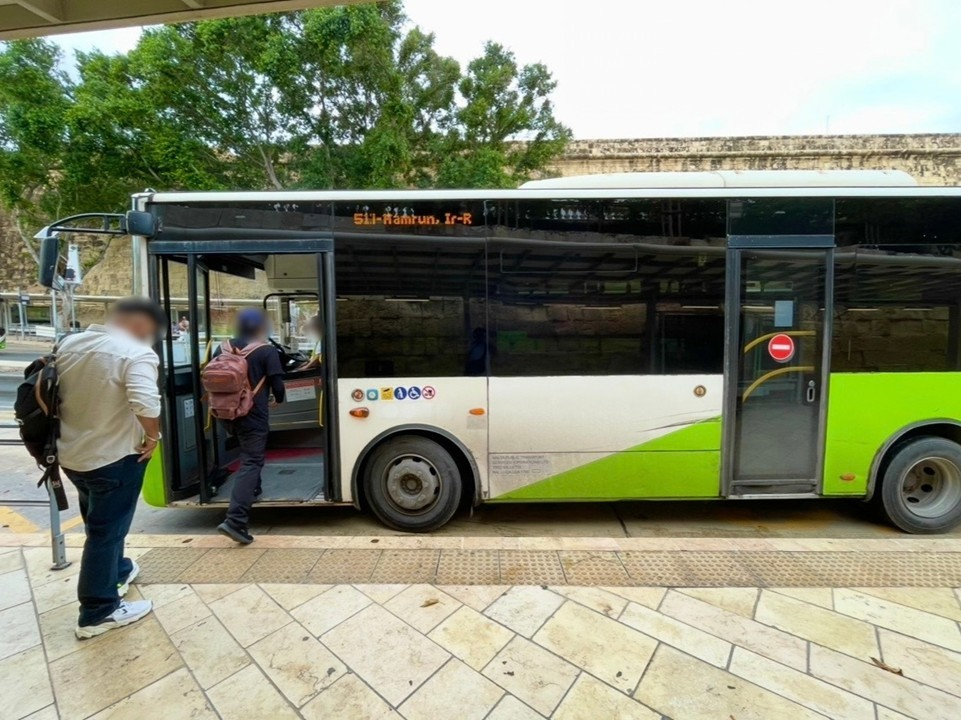
As a basic rule, the flow for riding buses in Malta is to board through the front door and exit through the middle door.
Paying your fare when boarding is as simple as tapping your credit card (or smartphone) against the payment terminal located right next to the driver’s seat. While it might be worth considering an unlimited ride pass or a multi-trip card if you are staying for a long period, for short-term stays of just a few days, paying as you go with a credit card each time is by far the easiest and most highly recommended option.
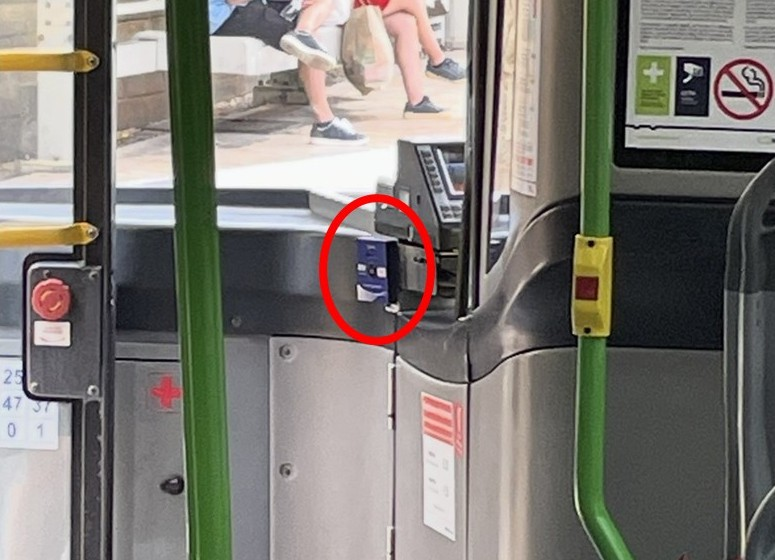
Bus fares in Malta are flat-rate rather than distance-based. Even better, they use a traveler-friendly system where you can go anywhere and transfer as many times as you like within two hours of boarding for the same single fare. Because of this, there is no need to tell the driver your destination when you get on. When you tap your credit card at the terminal, a paper ticket that looks like a receipt will automatically print out next to the driver’s seat. This ticket has the payment time printed on it, so if you transfer to another bus within two hours, you can just show it to the driver to ride for free.
The single biggest thing to watch out for when catching a bus is that, except for major starting terminals like the airport or Valletta, buses will not stop unless you wave your hand at the bus stop to signal that you want to board. When the bus you need approaches, make sure to clearly signal the driver. That said, you do not need to wave frantically; just raising your hand smoothly around face height—much like hailing a taxi—is more than enough for the driver to notice and pull over.
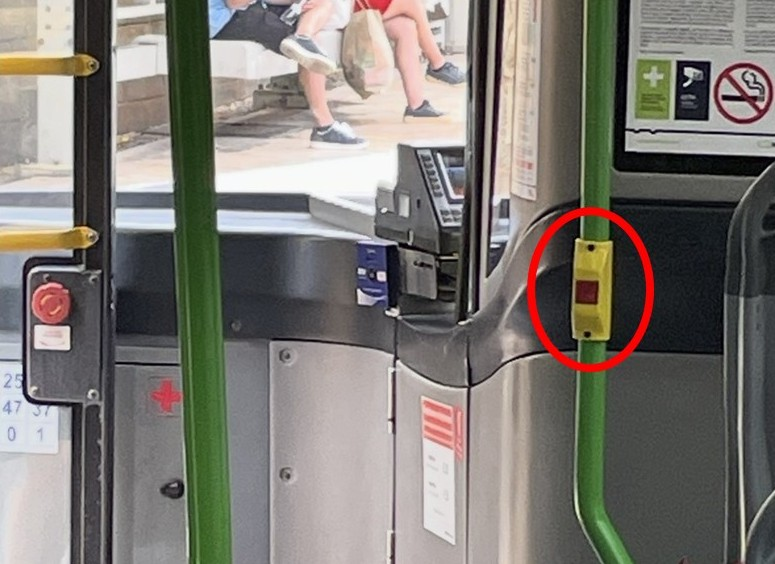
When you want to get off, simply press the stop button inside the bus to signal the driver. The next stop is announced onboard, so as long as you keep an ear out, you rarely have to worry about missing your stop. However, unlike buses in Japan or the US, buttons are not located at every single seat, and depending on where you sit, they can sometimes be slightly out of easy reach. Therefore, when finding a seat after boarding, it gives you extra peace of mind to pick one close to a stop button in advance.
What It’s Like Onboard: The Bus Interior and Atmosphere
The interior of Malta’s buses felt like your typical transit bus abroad—neither too spacious nor too cramped, leaving a very calm impression. However, the seat padding is on the thinner side. While it is perfectly fine for short trips around the Valletta area, your butt might start to ache a bit if you are taking a longer cross-island route that lasts over an hour, so that is something to keep in mind.
At the front of the bus, the current time and the upcoming stop are displayed in real time. This system works alongside the onboard voice announcements, making it easy to see exactly where you are at a glance. Even as a tourist with no sense of the local geography, you can track your drop-off timing perfectly and travel with total peace of mind.
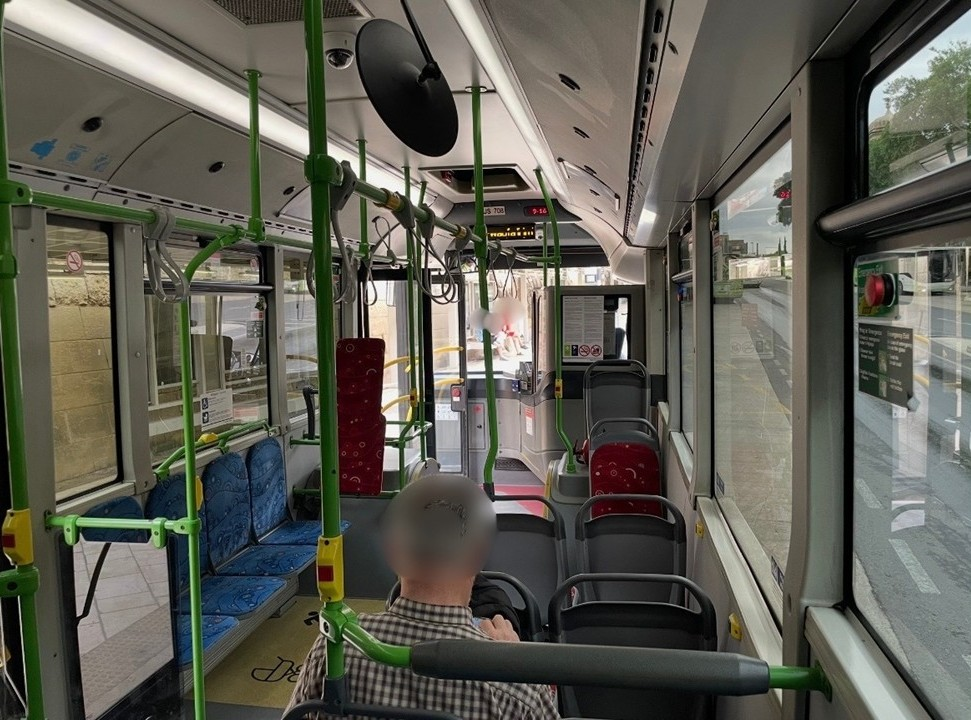
Additionally, while doing some research online before my trip, I kept seeing reviews warning that drivers in Malta are aggressive and scary. However, based on my experience taking the bus a total of four times during my stay, none of them felt rough at all. There were no sudden brakes or sharp turns that made standing passengers lose their balance, leaving me with the impression of just a perfectly normal bus ride abroad. Of course, it will vary depending on the individual driver, but my hands-on experience suggests that even if the bus is crowded and you have to stand, there is absolutely no need to overworry.
Getting Between Malta Airport and Valletta
First, I will explain how to travel from the airport to Valletta, which serves as the perfect starting point for your Malta sightseeing.
Upon arriving at Malta International Airport and stepping out of the arrivals gate, you will immediately spot the bus ticket machines and the service counter (ticket office). If you are looking to purchase an unlimited ride pass or a multi-trip card, you can take care of that right here; however, if you plan to pay as you go like I did, there is no need to stop by. You can skip the queue completely and head straight out of the airport.
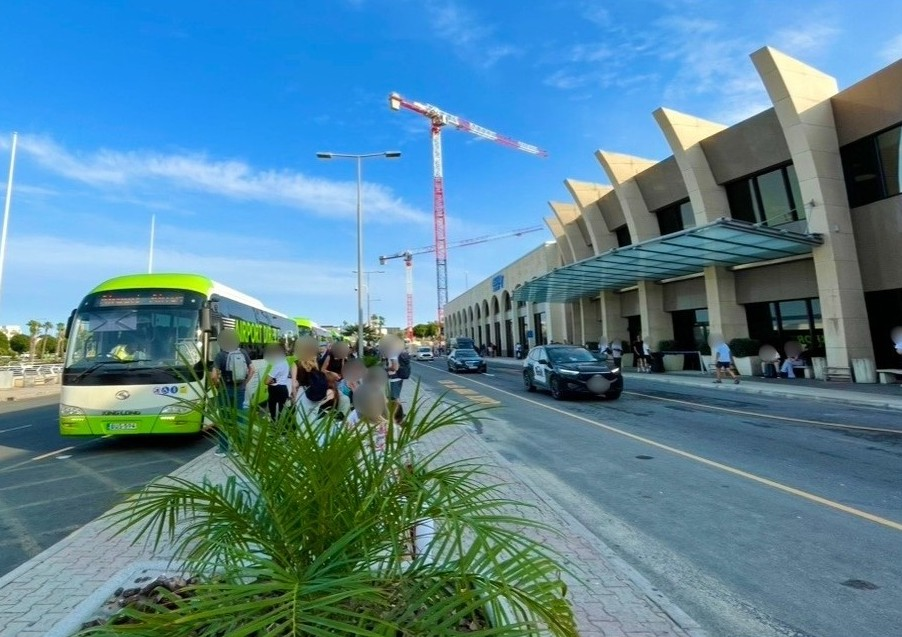
Once you step out of the terminal, the bus station is right in front of you, just across a single street. The destination is shown in large digital letters, such as “VALLETTA,” right at the top of the bus windshield, so looking at that should prevent any worries about getting lost. If you feel even slightly unsure, you can always ask the driver “Valletta?” as you board, and they will kindly help you out. Additionally, large rolling suitcases are apparently not allowed inside the bus passenger area; when I took the bus, the driver instructed me before boarding to put my luggage into the under-bus cargo compartment first.
On the other hand, if you are heading back to the airport from Valletta, you will board from Bus Stop B1 inside the Valletta Bus Station. The boarding locations for each route are clearly displayed throughout the station, and you will find plenty of travelers bound for the airport gathered at Stop B1. People carrying large suitcases will naturally serve as a visual landmark for you, so you should be able to find your way there without any trouble.
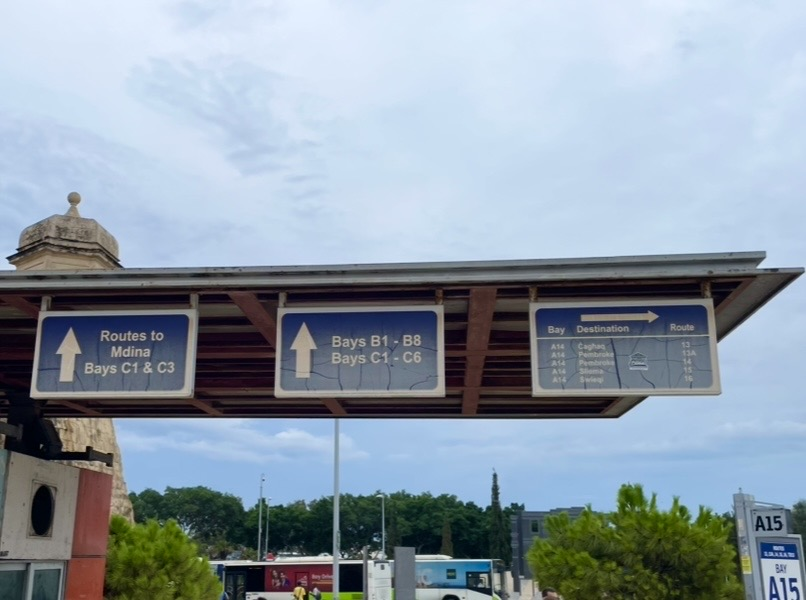
Here is a quick tip on how to handle yourself smoothly when using bus stops in Malta. In Malta, it is relatively common to see people smoking in public open spaces. Especially in crowded areas with a lot of passengers, like Valletta’s Stop B1, you might occasionally find yourself a bit bothered by the secondhand smoke from people around you.
Additionally, unlike in Japan, Malta does not have a culture of forming neat lines to wait for the bus. Therefore, if you are not a fan of cigarette smoke, I highly recommend waiting in a clean spot a short distance away until the bus arrives, and then moving toward the boarding door once your bus has pulled over. In fact, I used this exact method of waiting slightly away from the crowd, and I was able to board smoothly without having to rush at all.
The Complete Guide on How to Ride the Ferry in Malta
Ferries connecting the major towns are another fantastic option that will make your travel time in Malta remarkably comfortable. The biggest appeal is that they allow you to completely bypass the intense local traffic jams that are unavoidable by bus, while taking a shortcut filled with a refreshing Mediterranean sea breeze. While you might wonder exactly where and how to board when taking a boat for the first time, the ferry system is just as incredibly simple as the buses. Based on my hands-on experience, I will go into detail on the key points for a smooth ride, focusing on the highly popular Valletta-Sliema route.
Ferry Boarding Locations and How to Board
Just like the buses, boarding the ferry is incredibly simple. On both the Valletta and Sliema sides, you will find a ticket office right near the entrance of the boarding gate, where you can buy your ticket directly before stepping onto the boat. Contactless credit card payments work perfectly fine at these ticket offices as well, so there is no need to pull out any cash.
While you can buy one-way (Single) tickets, purchasing a Round-Trip ticket is slightly cheaper than buying two single tickets separately. If you plan to head out to Sliema and return to Valletta after sightseeing, I highly recommend getting a round-trip ticket right from the start. Please note that if you buy a round-trip ticket, you will use the exact same ticket for your return journey. You will need to show it to the staff for validation when boarding your return ferry, so make sure to keep it in a safe place so it does not get lost during your trip.
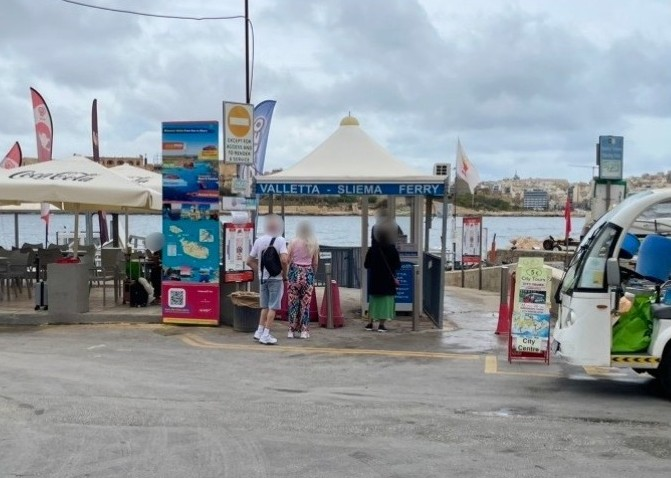
As for finding the ferry terminals, the Sliema side is virtually impossible to miss since you will easily spot the large signs and boats just by walking along the seaside promenade. On the other hand, the Valletta terminal—being located in a fortified city—requires you to walk quite a bit down toward the waterfront from the elevated city center, which might feel a little confusing for first-time visitors.
When heading to the terminal from within the city streets of Valletta, I recommend using the “Fortifications Interpretation Centre” as your landmark. Pass right in front of this building, turn at the large curve, and follow the sloping path as it leads straight down to the harbor.
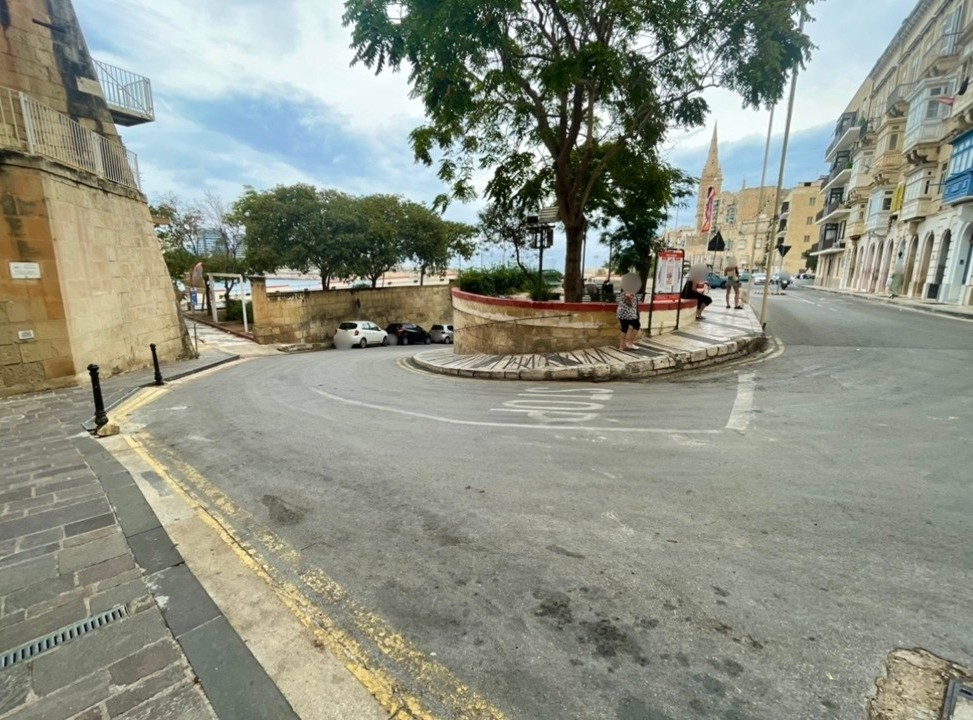
After walking down the sloping path for a bit, you will reach the waterfront, and the ferry boarding terminal will come into view just ahead.
What It’s Like Onboard: The Ferry Interior and Seating
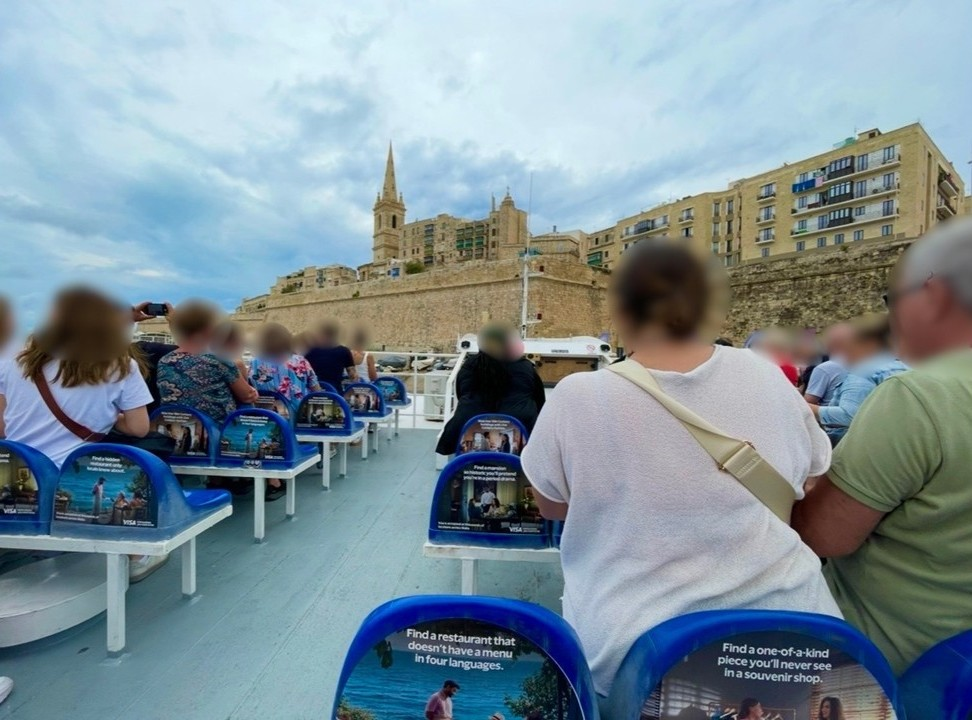
The ferry connecting Sliema and Valletta features indoor seating on the first floor and an open-air deck on the second floor.
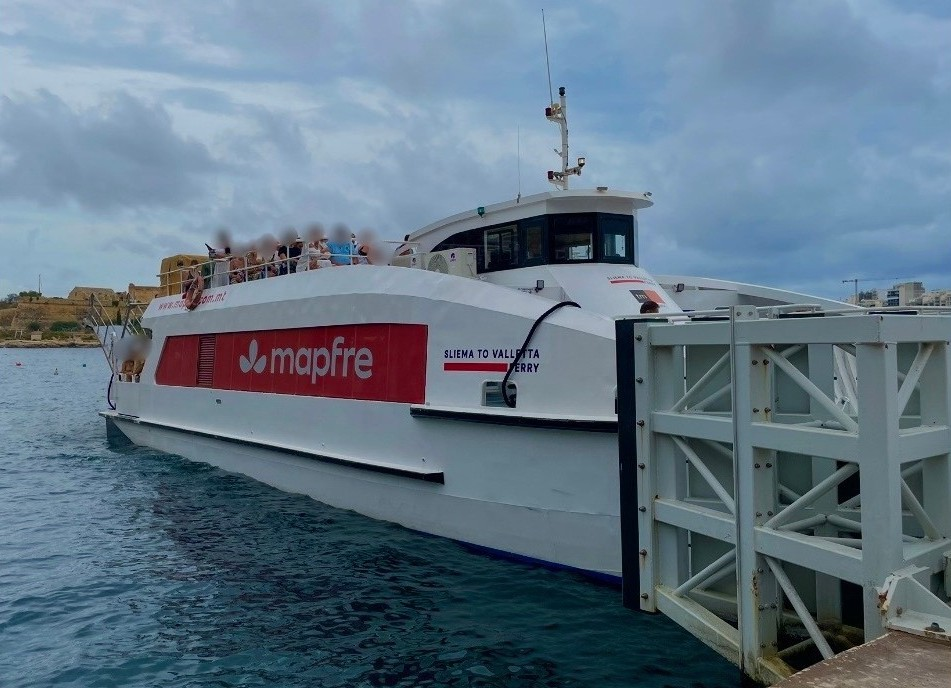
All seats on the ferry are unreserved, so you are free to sit anywhere you like once you board. However, the second-floor deck does not have an awning or roof to block the sun and rain. Because of this, it can be a bit difficult to use on rainy, overly sunny, or windy days. Depending on the weather that day, you might find it much more comfortable to opt for the indoor seating on the first floor.
Additionally, the second-floor deck is structured in a way that exposes you directly to the sea breeze at all times. Therefore, if you are wearing a hat, you will want to be careful so it does not get blown away by the wind.
Getting Between Valletta and Sliema by Ferry
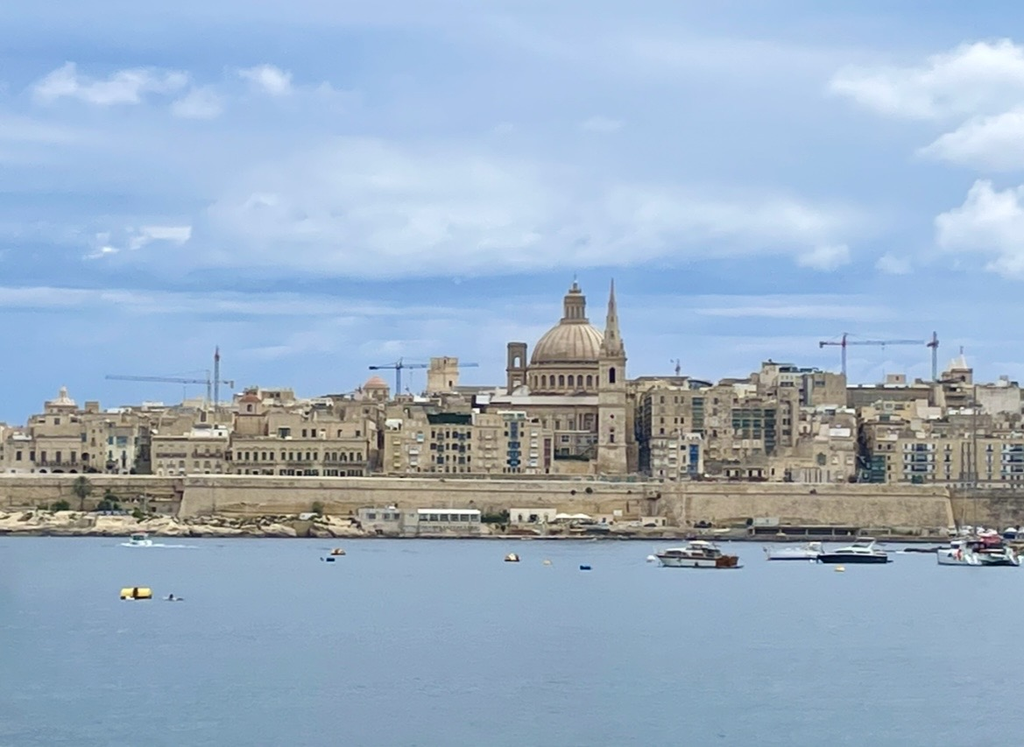
If you are traveling between Valletta and Sliema by ferry, I highly recommend the second-floor open-air deck, where you can fully enjoy Malta’s unique and breathtaking views. The sight of Valletta’s fortified walls and beautiful cityscape viewed from the water is truly picture-perfect, turning the brief 5-to-10-minute commute into a premium sightseeing activity all on its own.
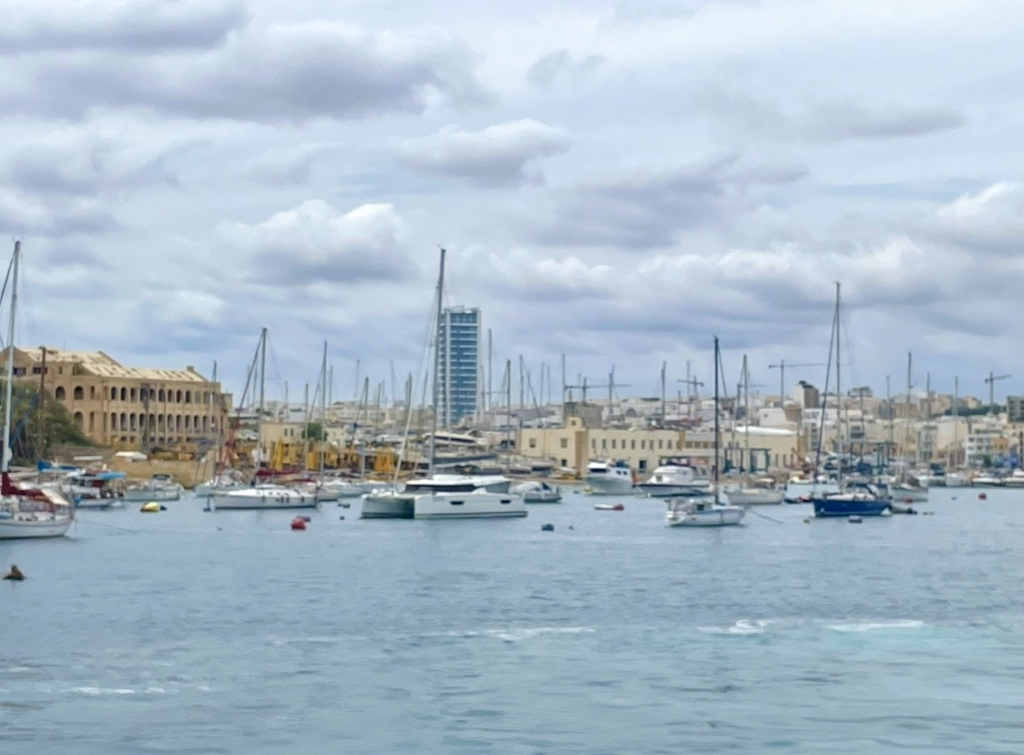
That being said, the deck seating is understandably highly popular among travelers, and the good spots fill up quickly as soon as boarding begins. Therefore, if you want to guarantee yourself a specific seat, it is best to arrive at the pier with plenty of time to spare before the ferry’s departure.
In fact, on my outbound trip from Valletta to Sliema, I boarded early with time to spare, which allowed me to secure a spot on the deck. On the flip side, for my return trip from Sliema back to Valletta, I cut it close and boarded right before departure, only to find the deck seating—and even the first-floor indoor cabin—completely packed to capacity.
However, you don’t need to be discouraged even if all the seats are taken. Standing room is allowed on this ferry, and because the water is calm with very little rocking from the waves, you won’t have to worry about losing your balance while standing.
Honestly, being forced to stand on my return trip turned out to be a blessing in disguise; it allowed me to capture photos of the beautiful Valletta cityscape without other passengers’ heads or smartphones blocking the view. The UNESCO World Heritage fortress city gradually looming larger from across the water was nothing short of spectacular, remaining one of the most deeply memorable sights from my entire stay in Malta.
Reflecting on this experience, especially when traveling from Sliema to Valletta, it might not even be worth the stress of lining up early just to get a seat. Even if the seats are full, you can still fully enjoy the scenery, and standing actually opens up plenty of great photo opportunities where you can get a clean shot.
If you have the chance to ride the ferry in Malta, make sure to head up to the second-floor deck area, even if all the seats are occupied. The view of the historic, honey-colored streets rising from the sea shows a completely different side of its inspiring beauty compared to looking at it from land, and it is bound to leave you deeply moved.
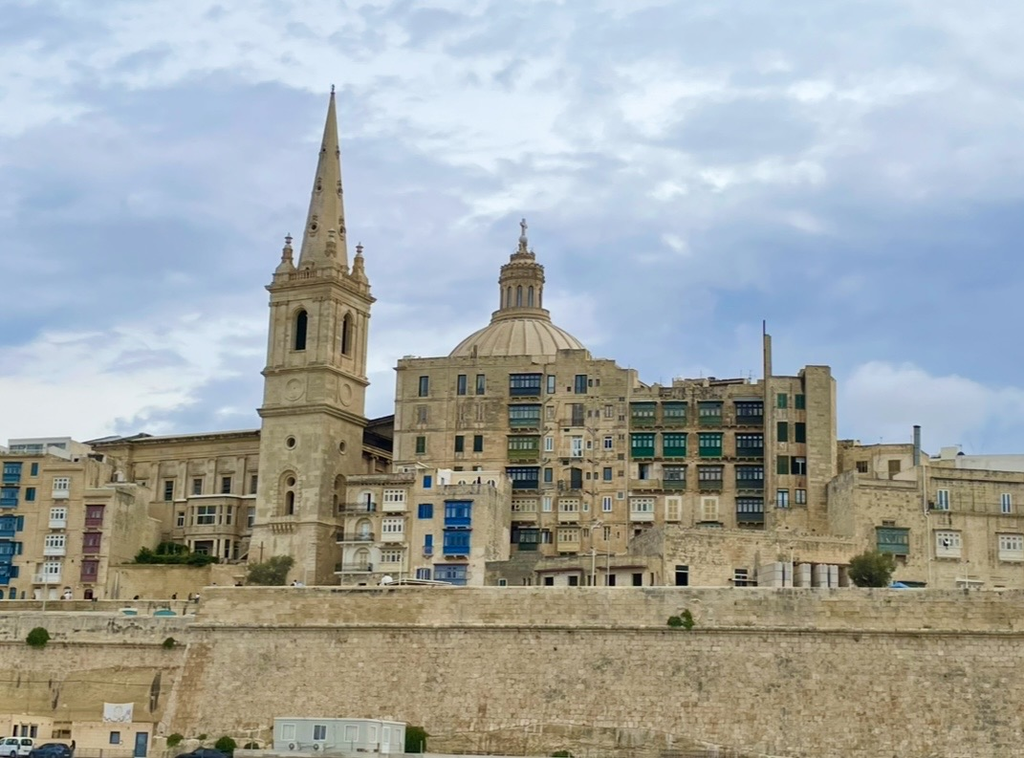
And that wraps up everything I wanted to share in this guide. Malta’s public transportation system is incredibly comfortable and easy to use, as long as you understand how it works ahead of time. I relied heavily on both the buses and ferries during my stay, and I rarely ran into any trouble, allowing me to skip around to all the best sightseeing spots efficiently and smoothly. The ferry, in particular, goes way beyond being a mere mode of transportation—it is a charming experience that easily becomes a true highlight of your trip. The sight of the stunning World Heritage cityscape rising above the sparkling sea is genuinely moving, so make sure to experience it for yourself when you visit Malta. It is bound to become one of your absolute best, lifelong memories.
Thank you so much for reading to the very end. I truly hope this article helps you plan a wonderful and unforgettable trip!