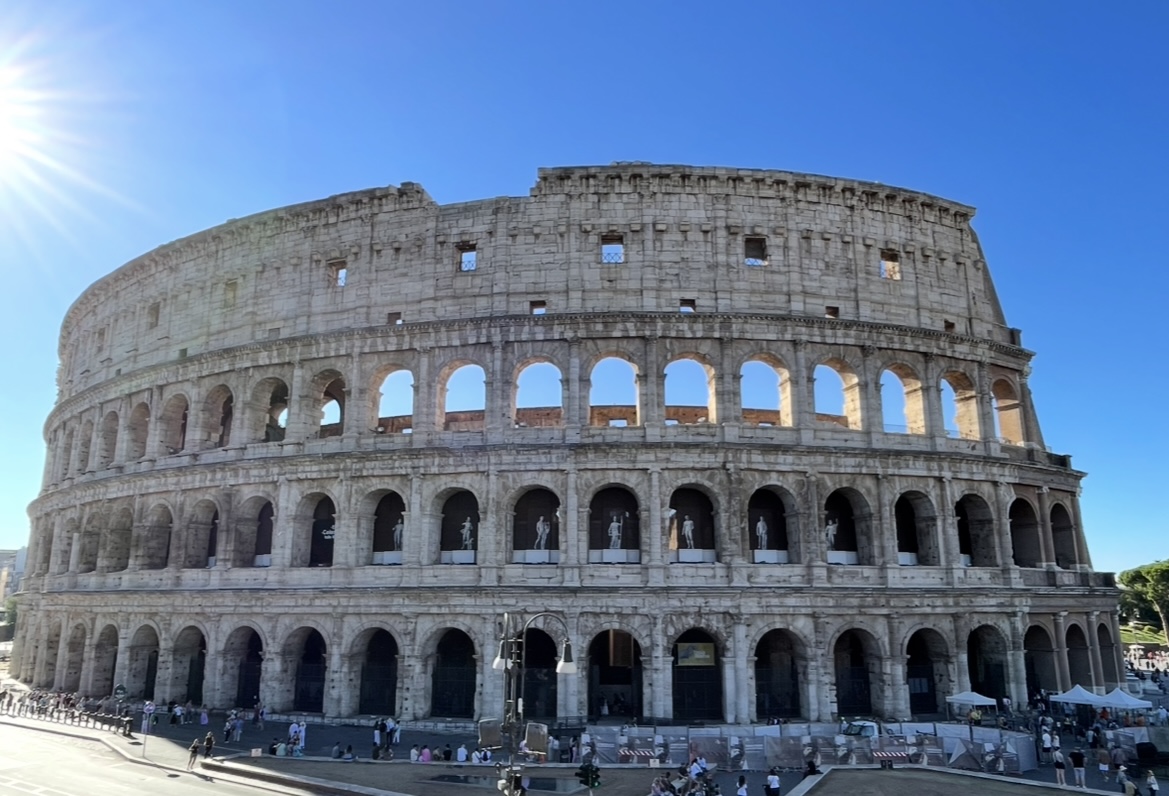


When planning a multi-city trip to Italy, there are so many must-see destinations like Milan, Florence, and Venice that your time in Rome can end up surprisingly limited. Although I stayed in Rome for three days and two nights, I only had about a day and a half for actual sightseeing.
Even so, with a well-planned route, you can easily visit major landmarks like the Colosseum, the Roman Forum, Vatican City, and the Trevi Fountain. What’s more, I covered the entire itinerary strictly on foot. Walking nonstop over cobblestone streets was a bit exhausting, yet exploring on foot allowed me to discover so many hidden views along the way.
In this guide, I’ll share a chronological breakdown of just how much you can see in Rome in 1.5 days based on my own experience. Whether you have 1.5 days, just one full day, or even two days in the Eternal City, I hope this route helps you plan your trip.
💡 Related Posts
For this trip, I flew to Italy with ITA Airways and took the Leonardo Express from Rome Fiumicino Airport into the city center. You can read more about my flight experience and how to get from the airport to downtown Rome in the articles below.


Overview of the 1.5-Day Rome Sightseeing Itinerary
I arrived in Rome the night before my sightseeing began and was scheduled to depart from Termini Station for my next destination in the early afternoon two days later. Because of this schedule, I only had about a day and a half for actual sightseeing.
To make the most of my limited time, I dedicated Day 1 to major landmarks that require advance reservations, such as the Colosseum, the Roman Forum, and Vatican City. On Day 2, I focused on exploring historic city center spots that don’t require reservations, including the Pantheon, the Trevi Fountain, and the Spanish Steps.
Please note that the itinerary shared below is the exact route I walked entirely on foot.
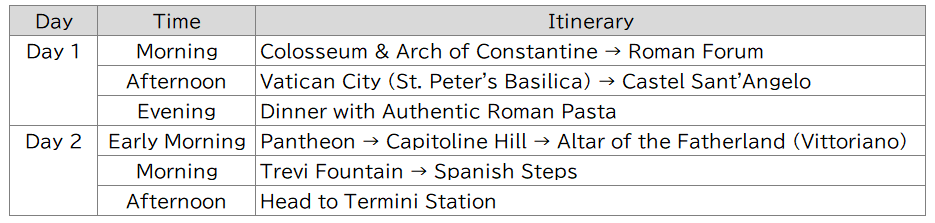
Rome has so many attractions that it’s simply not realistic to see everything in 1.5 days. To get the most out of your limited time, it’s important not to cram too much in, and instead build your route around the places you truly want to visit.
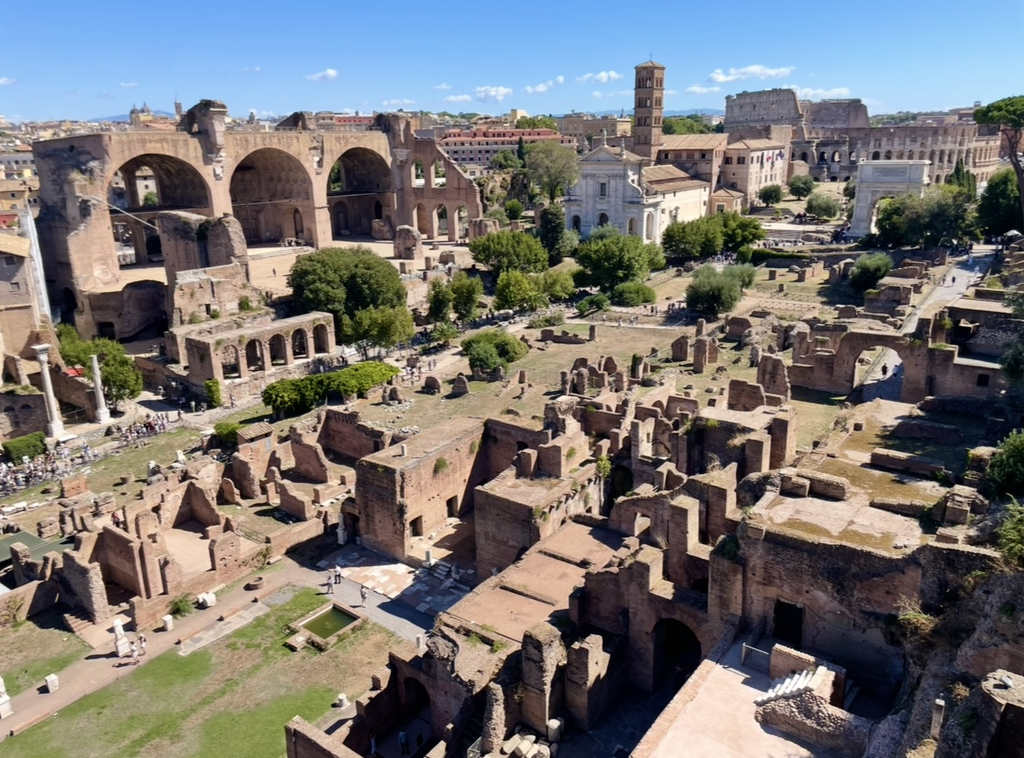
On Day 2, I originally planned to head straight from the Pantheon to the Trevi Fountain, but Capitoline Hill caught my eye along the way, and since I had a little extra time, I decided to make a spontaneous stop. This led me to a breathtaking panoramic view overlooking the Roman Forum, proving that unplanned detours are one of the greatest joys of exploring on foot.
Now, let’s dive into the actual 1.5-day Rome sightseeing itinerary I walked.
Day 1 | Major Landmarks Requiring Advance Reservations & Smart Timing
On Day 1 of my Rome trip, I focused on the city’s iconic major landmarks, including the Colosseum, the Roman Forum, and Vatican City.
While same-day tickets are sometimes available for these attractions, long wait times are common not only during peak season, but even in the off-season. When you only have about a day and a half to explore, spending precious time waiting in ticket lines is something you definitely want to avoid.
Additionally, because these spots are wildly popular, preferred time slots often fill up quickly, and tickets frequently sell out altogether if you wait until the last minute. To make the most of your limited schedule and tour efficiently, I strongly recommend booking your tickets for these major attractions well in advance.
Now, let’s walk through my actual Day 1 route step by step.
Colosseum & Arch of Constantine
The first stop of the day was the Colosseum, an absolute must-see when visiting Rome. Since the Arch of Constantine sits right next to it, you can easily see both together. While I walked there from my hotel, it is also super convenient to reach by metro—it appears right before your eyes as soon as you exit Colosseo Station.
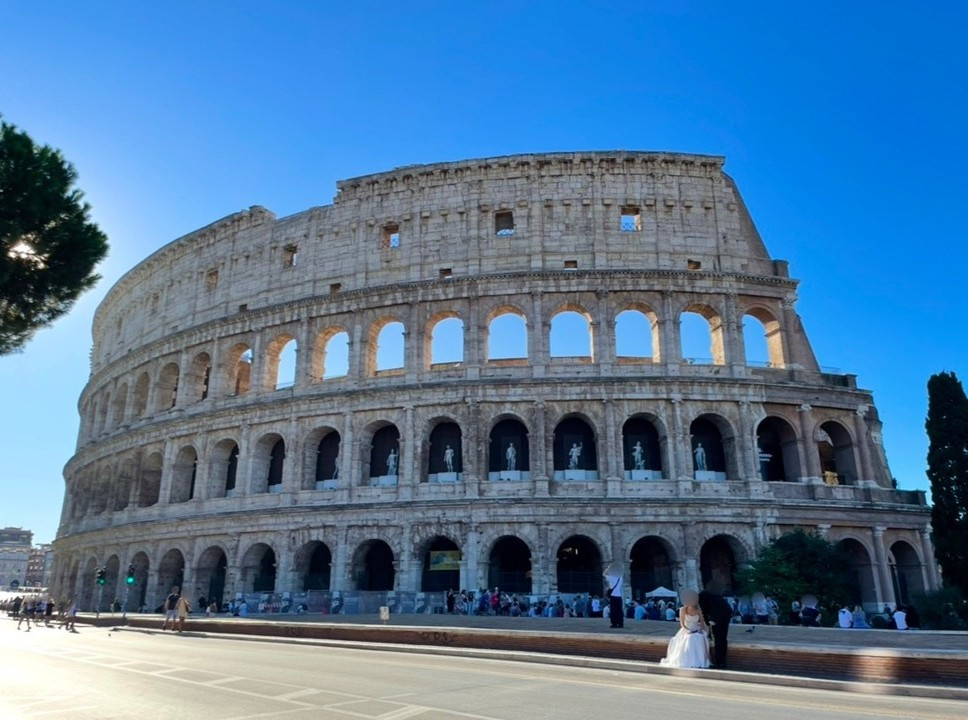

Interestingly, the tour company I had booked with contacted me the day before to let me know that my entry time was pushed back from 8:30 AM to 9:30 AM. The sudden change caught me off guard at first, but I ended up using that extra hour to stroll around the area and take photos from various viewpoints. Sightseeing in Rome is often a race against the clock, yet this experience reminded me how valuable it is to leave a little breathing room in your schedule rather than packing it too tight.
Inside the Colosseum, it took me about an hour to walk the entire circuit while stopping for photos. I moved on to my next destination after taking in the main structure, though if you plan to examine the indoor exhibits thoroughly, it’s safer to set aside 1.5 to 2 hours.
There are also free restrooms available inside the building. Since you’ll be walking through expansive areas like the Roman Forum afterward, it was reassuring to use them before heading out. Finally, keep in mind that you may be asked to show your passport when entering the Colosseum, so be sure to bring it with you.
Roman Forum
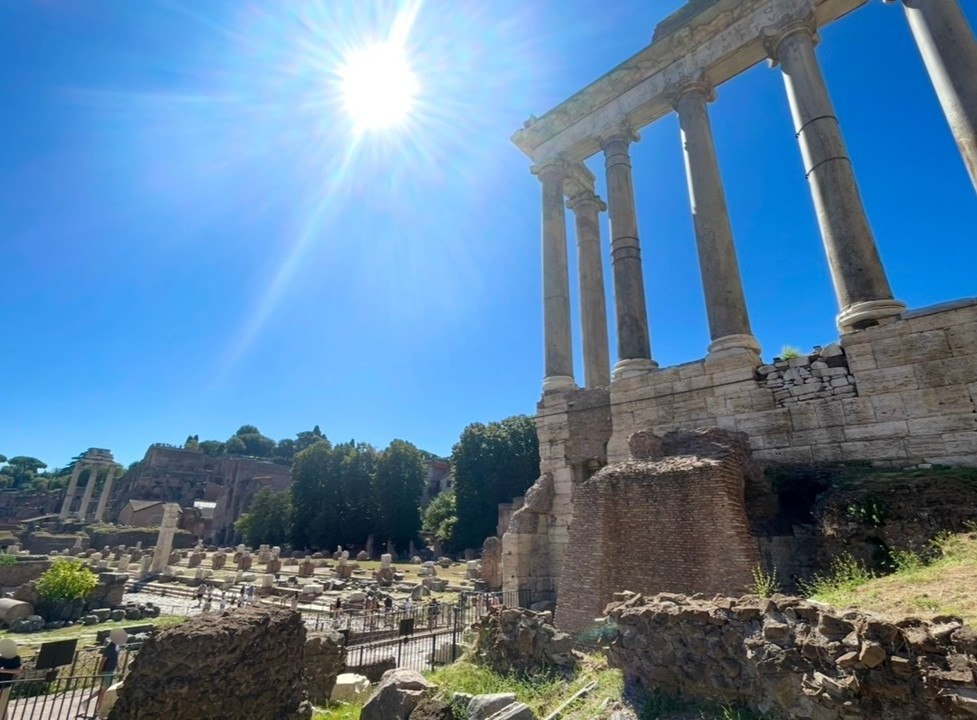
After touring the Colosseum, I headed straight to the Roman Forum right next door. Since they are so close to each other, combining them is the most efficient way to plan your Rome itinerary. Tickets are typically sold as a combined pass with the Colosseum, so booking them together ensures smooth entry.
I arrived just before 11:00 AM, and there was already a long line at the same-day ticket booth. Just like with the Colosseum, advance reservations are essential if you are short on time.
The Roman Forum is much larger than you might expect, and simply walking between the ruins covers quite a bit of distance. I moved at a fairly brisk pace to see about 70 to 80 percent of the main highlights, which still took roughly an hour. If you want to take your time reading the informational plaques in front of each structure, it’s best to allow around two hours.
Additionally, there is almost no shade inside the grounds. Because the sun gets quite strong from spring through autumn, bringing a hat and sunscreen is a smart idea. The terrain also features plenty of cobblestones and uneven steps, so I recommend wearing comfortable walking shoes like sneakers.

Vatican City (St. Peter’s Basilica)
After touring the Roman Forum, I took a break for lunch and headed to St. Peter’s Basilica in Vatican City in the afternoon.
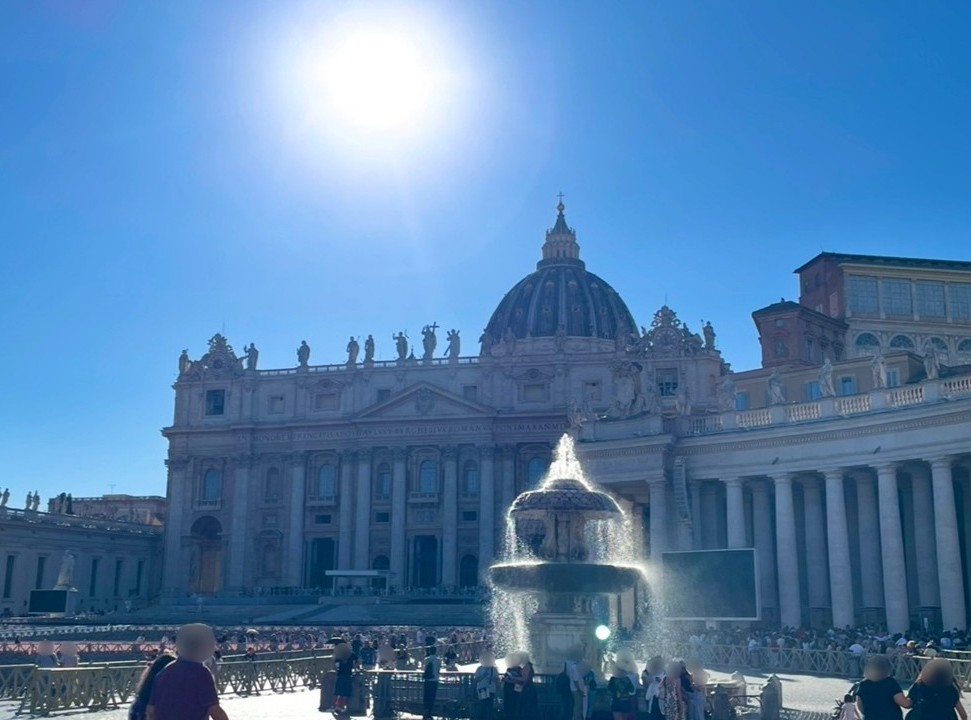
It is located a bit far from the Colosseum area and was the longest walking stretch of my entire itinerary, yet it is still completely walkable as long as you aren’t visiting in the peak of summer. Strolling through the city while taking in Rome’s streetscapes and glimpses of local daily life made the walk enjoyable and gave me a great feel for the local atmosphere.
While you can enter St. Peter’s Basilica with same-day access, the ticket and entry lines were packed with tourists. Around midday, there is almost no shade around the waiting area, which can really drain your energy, especially during the summer months. To tour efficiently on a tight schedule, booking a skip-the-line ticket in advance is definitely the safest bet.
I had purchased a 3:00 PM skip-the-line ticket, though there was still a line near the entrance gate, and I actually made it inside around 3:15 PM.
As a UNESCO World Heritage site and the center of the Catholic Church, the interior of the basilica is breathtaking in scale. However, if you’re making the trip, don’t stop at just the main floor—be sure to climb up to the dome (Cupola) observation deck as well. From the top, you can look straight down over St. Peter’s Square and enjoy a 360-degree panoramic view of Rome, which easily became one of the most memorable sights of my entire stay.

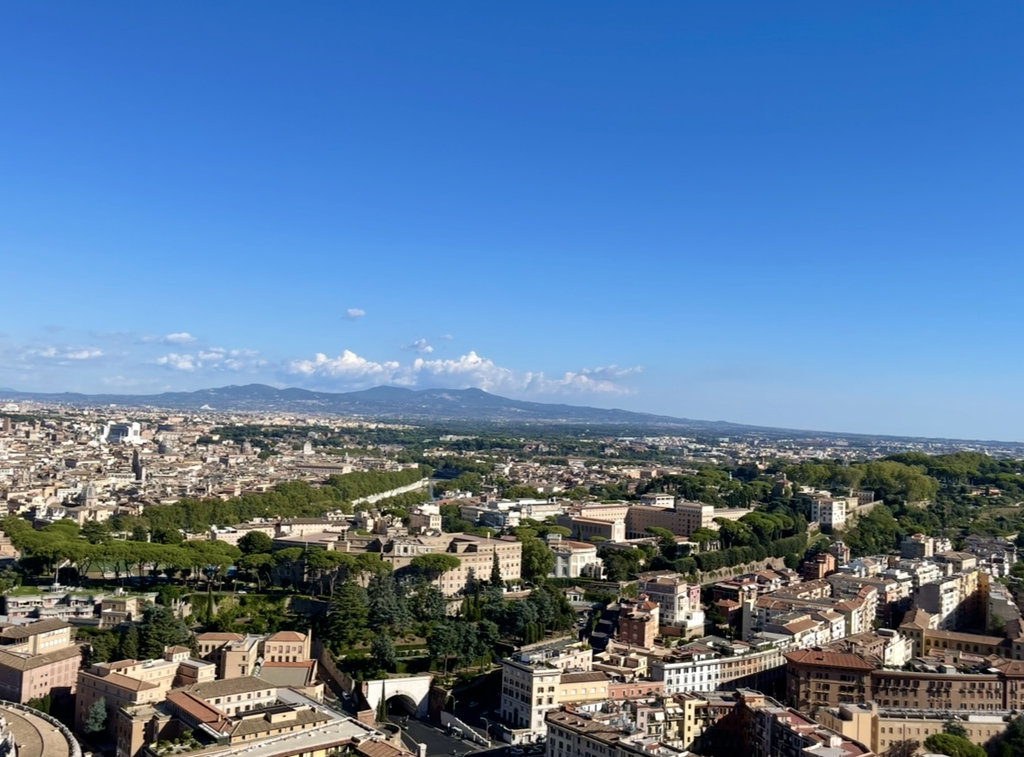
In total, visiting both the basilica and climbing the dome took about 1.5 hours. Even if you are short on time, setting aside this amount of time will let you enjoy the experience without feeling rushed.
Castel Sant’Angelo
After visiting St. Peter’s Basilica, I headed over to Castel Sant’Angelo. Because it is just a short walk from the basilica, it’s a very convenient spot to combine into the same part of your itinerary.
I hadn’t originally planned to go inside the castle, as my goal was simply to admire the exterior and capture photos of it lit up at night. However, since my tour of the basilica wrapped up earlier than expected and I was already exhausted from walking nonstop since morning, I decided to give up on waiting until nightfall.
Since I only viewed the exterior, my visit lasted about 15 minutes, yet the view from the St. Angelo Bridge was still truly impressive. If you plan to tour the interior of the castle as well, it’s best to set aside an extra one to two hours here.
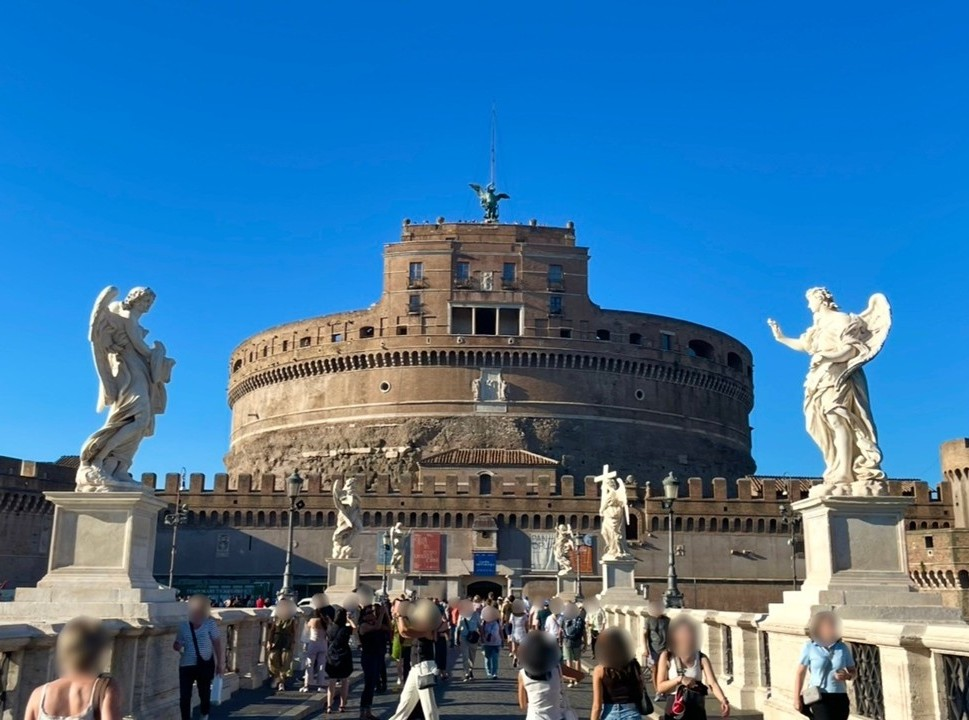
There are also plenty of restaurants and cafes lining the surrounding area. Even if you come specifically to see the evening illumination, you can easily grab a meal or take a break nearby while waiting for dark, making this an easy neighborhood to fit into your late-afternoon or evening plans.
Dinner with Authentic Roman Pasta
Since I was in Italy, a true culinary paradise, indulging in authentic dishes like pasta and pizza was an absolute must. For dinner that evening, I decided to dine at Nonno Melo, a restaurant located right near my hotel.
I ordered their signature dish, the carbonara. True to its authentic Roman roots, the sauce was incredibly rich. However, whether you find that richness delicious or a bit too heavy really comes down to personal preference.
For me, the first few bites were fantastic, though the dish gradually started to feel quite heavy as I kept eating. Even though the portion size itself wasn’t particularly large, I felt overwhelmingly full toward the end and honestly barely managed to finish it.
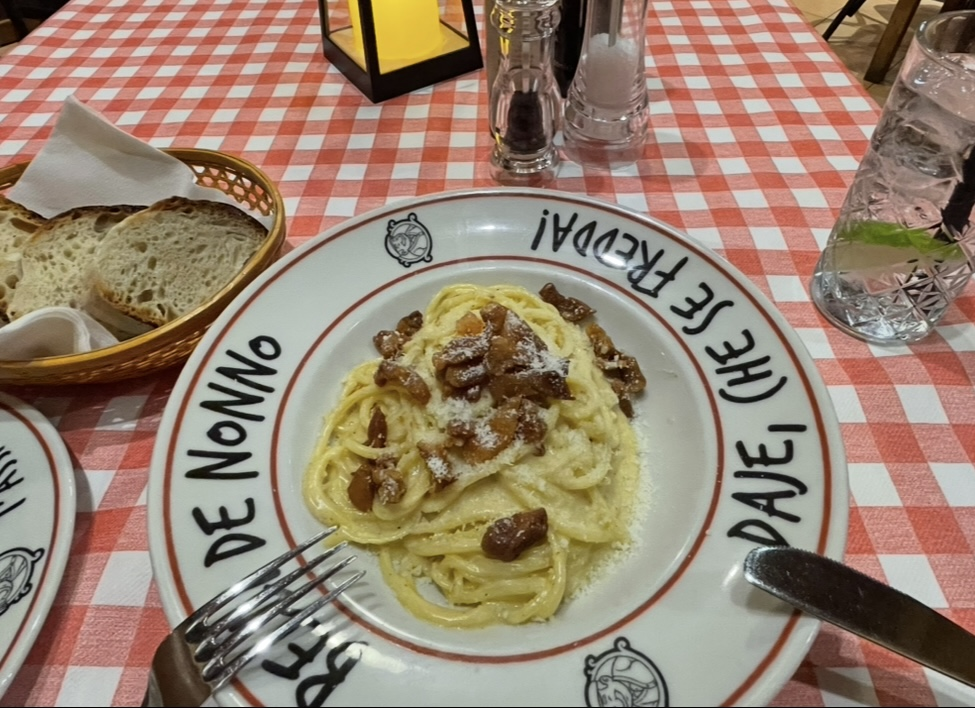
I arrived just after 6:00 PM and spent about 40 minutes there. Because it was still early, I was seated right away without any wait, though more diners were starting to trickle in by the time I finished and left. If you want to avoid the crowds and enjoy a relaxed dinner, aiming for an early seating around 6:00 PM is definitely the way to go.
Day 2 (Half Day) | Strolling Through the Historic City Center Without Reservations
On Day 2 of my Rome trip, I explored the historic city center, focusing on spots that don’t require advance reservations, such as the Pantheon, the Trevi Fountain, and the Spanish Steps. Since I was scheduled to depart from Termini Station for my next destination in the afternoon, I only had the morning available for sightseeing. Because of this, I intentionally left out attractions requiring timed-entry tickets and planned an efficient walking route instead.
Another great thing about this day was being able to wander at my own pace without worrying about strict entry times like I did the day before. Stopping wherever caught my eye and adding spontaneous spots along the way allowed me to truly enjoy the charm of strolling through Rome’s historic streets.
Now, let’s walk through the actual route I took on the morning of Day 2.
Pantheon
On Day 2, after having breakfast at my hotel, my first stop was the Pantheon. While the interior opens to visitors at 9:00 AM, I decided to admire it from the outside only, since I only had the morning available and planned to visit many other churches elsewhere in Italy later on my trip.
Even from the outside, it is more than worth seeing. The front facade lined with massive columns has a commanding presence, and it was hard to believe the structure was built nearly 2,000 years ago.
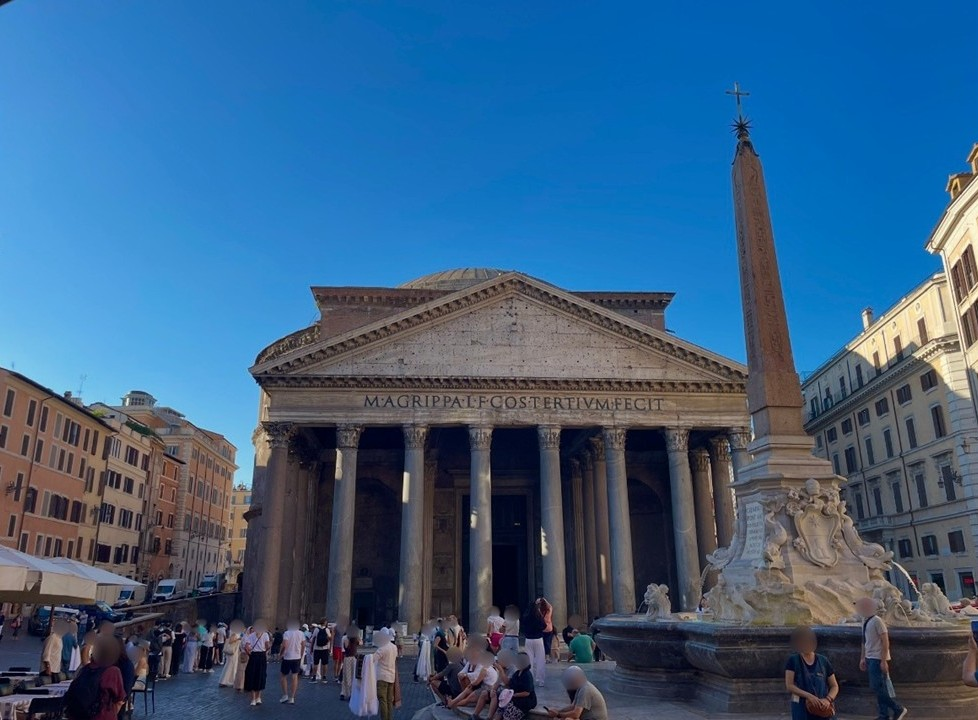
I arrived around 8:30 AM, and the square was already crowded with tourists, with a line forming that appeared to be people waiting for the doors to open. Since I didn’t go inside, I can’t say for sure how long the wait was, though judging by the crowd, booking tickets in advance is definitely the safest bet if you plan to tour the interior.
After taking in the exterior and snapping plenty of photos, I set off on foot toward my next stop.
Capitoline Hill
I didn’t originally plan to visit Capitoline Hill, but when I realized it was within walking distance of the Pantheon and offered a prime vantage point overlooking the Roman Forum, I decided to make a spontaneous stop.
Capitoline Hill is well known for Piazza del Campidoglio, designed by Michelangelo, and the symmetrical buildings framing the square. However, what left the strongest impression on me was undoubtedly the panoramic view looking down over the sprawling ruins of the Roman Forum. Being able to see the very area I had walked through the day before from a completely different angle made me truly appreciate just how massive the site really is.
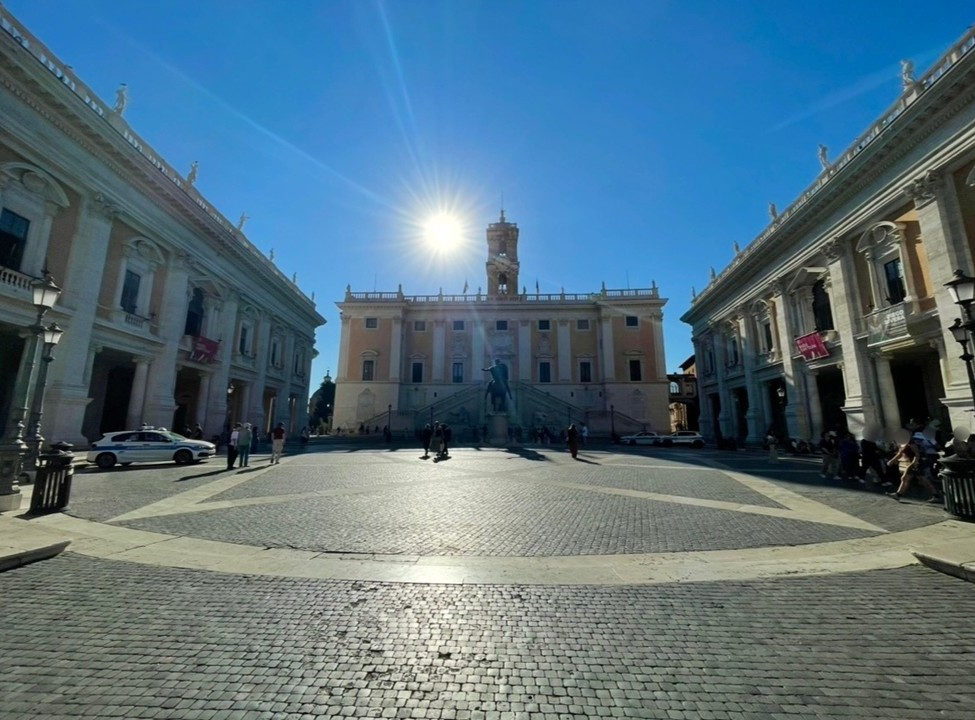
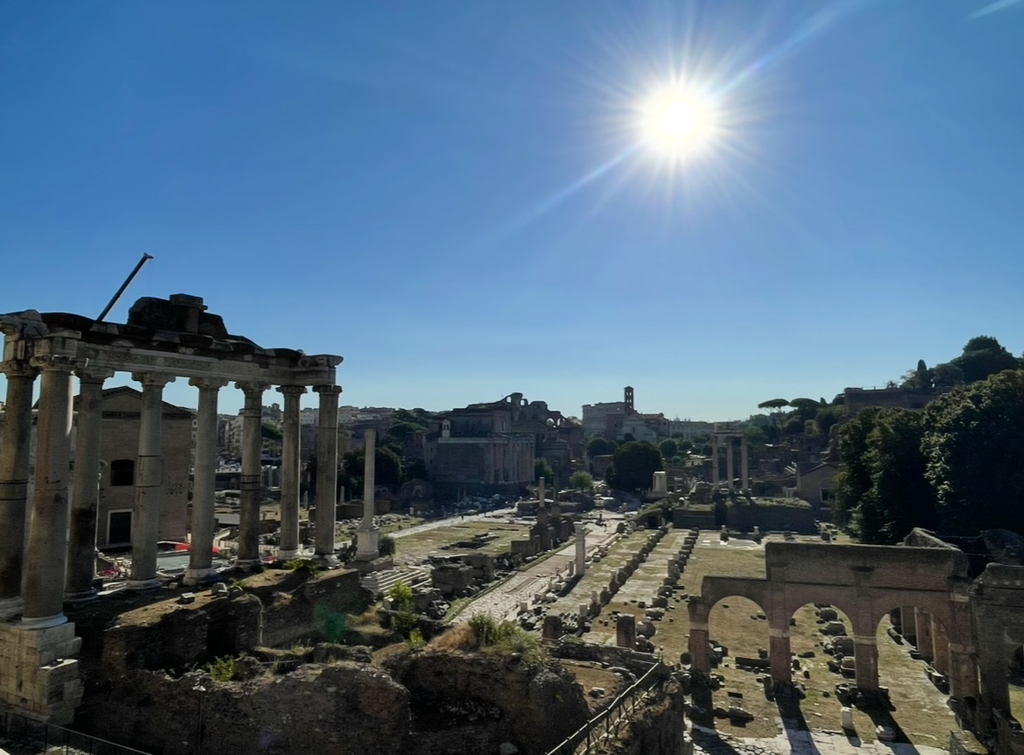
Rather than a must-see mega-attraction you have to go out of your way for, it felt more like a hidden gem worth stopping by if you happen to be walking nearby. Even when I visited, there weren’t too many tourists around, allowing me to take in the stunning view of the Roman Forum at a relaxed pace.
My stay was only about 15 to 20 minutes, yet if you are exploring the historic city center on foot, it is well worth a detour even if it wasn’t on your original itinerary.
Altar of the Fatherland (Vittoriano)
After strolling around Capitoline Hill, I also stopped by the Altar of the Fatherland (Vittoriano) right next door. This wasn’t on my original itinerary either, yet the monument is so massive that it kept catching my eye as I walked through the city, so I decided to check out the exterior.
While it’s hard to capture its true scale in photos, standing right in front of it leaves you overwhelmed by its sheer size and grandeur. The bright white exterior and towering colonnades are striking, giving it a commanding presence that makes you stop in your tracks just to look up.
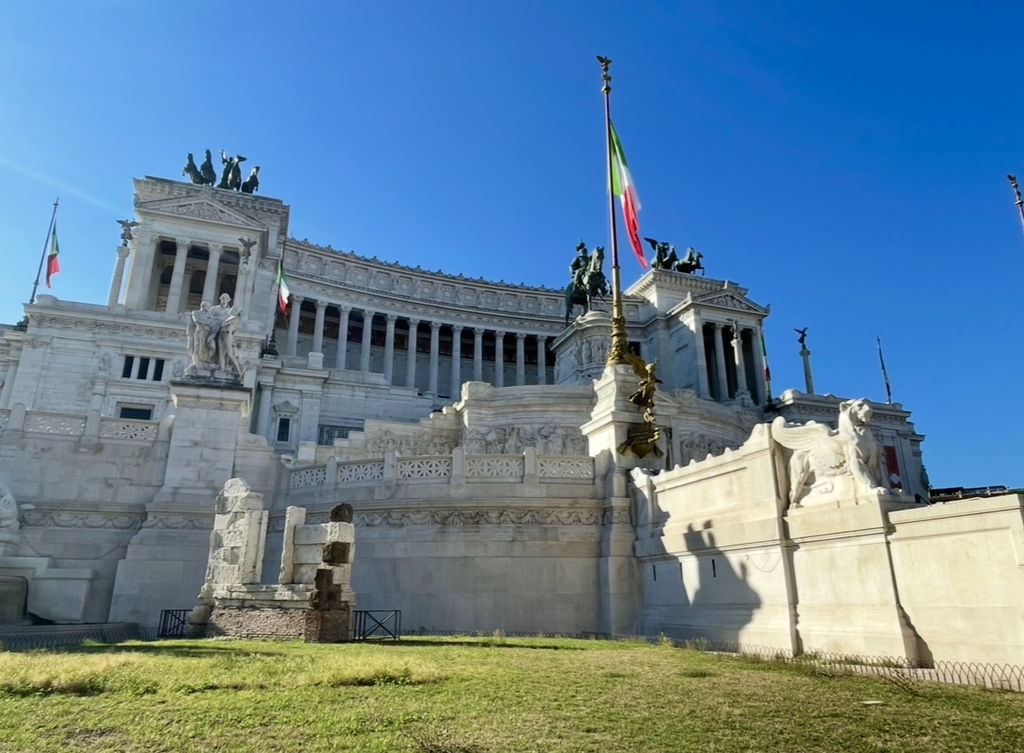
Due to time constraints, I only admired it from the outside on this trip, though the observation terrace inside apparently offers panoramic views over the Roman Forum and the rest of Rome. It wasn’t overly crowded when I visited, allowing me to take photos at a relaxed pace.
While landmarks like the Colosseum and Vatican City tend to get most of the spotlight in Rome, this spot felt much calmer and easier to enjoy. Since it’s right next to Capitoline Hill, it’s definitely worth adding to your walk if you’re exploring the historic city center on foot.
Trevi Fountain
Next, I headed to the Trevi Fountain, one of Rome’s most iconic landmarks. You simply can’t visit Rome and leave without seeing it.
I arrived around 10:30 AM and spent about 30 minutes there. True to its status as a world-famous attraction, it was bustling with tourists, yet not so packed that you couldn’t move—it was completely manageable to walk around and take photos.
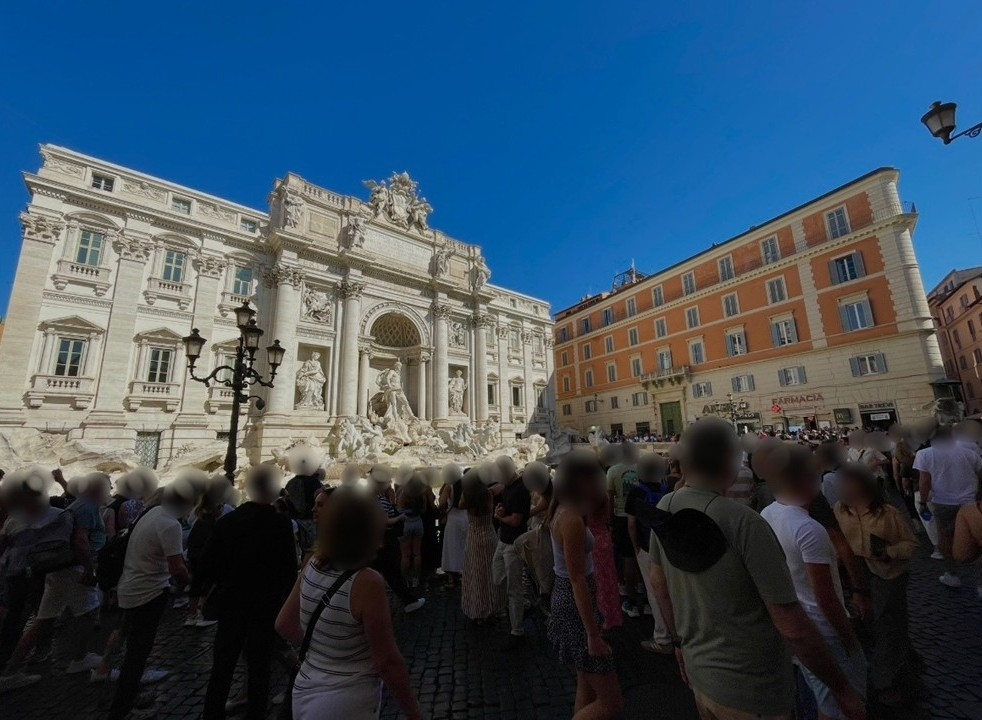
Standing right in front of it, you are immediately struck by its massive scale and the intricate detail of the sculptures. Even though I had seen it countless times in photos and videos, seeing it in person was far more impressive, and I was able to fully enjoy it even during a short visit.
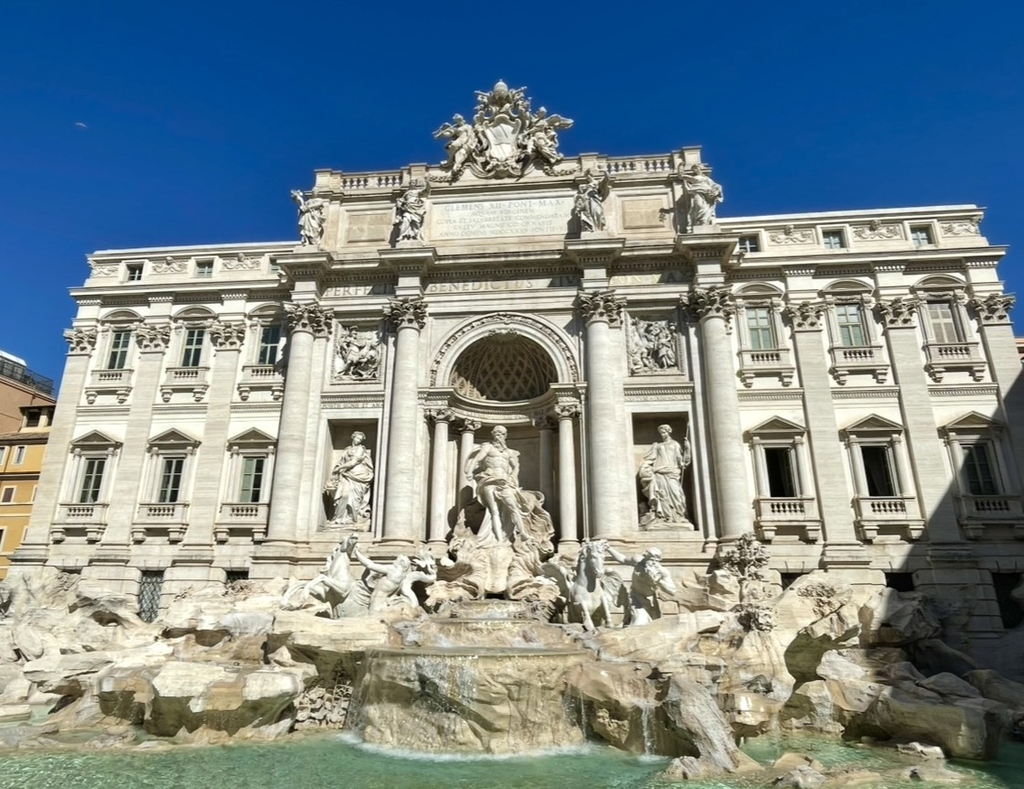
The surrounding area is also notorious for pickpockets. While I didn’t run into any trouble myself, I made sure to stick to basic precautions, such as wearing my bag in front of my body and never keeping my wallet or smartphone in my back pockets.
With so many tourists gathered in one place, pickpockets are undoubtedly blending into the crowd. However, nobody stood out as obviously suspicious, and looking around, it was impossible to tell who might be a thief. Precisely because they look just like ordinary tourists, it’s all the more important not to let your guard down. Standing there in person reminded me that whether at the Trevi Fountain or any other crowded spot, you always need to keep your attention on your belongings.
Spanish Steps
My final stop in Rome was the Spanish Steps. Since it was the last spot on my itinerary, I spent about 30 minutes there, though if you just want to look around the steps and the immediate area, you could easily see it in less time.
Famous as a filming location for movies and TV shows, the Spanish Steps are one of Rome’s most iconic landmarks. Visiting in person, I could really feel the vibrant energy of the city with crowds of people passing through and around the staircase.
In recent years, sitting on the Spanish Steps has been strictly prohibited. When I visited, I did see quite a few tourists sitting down anyway; however, police officers were actively patrolling the area, so it’s best to follow the rules to avoid any trouble.
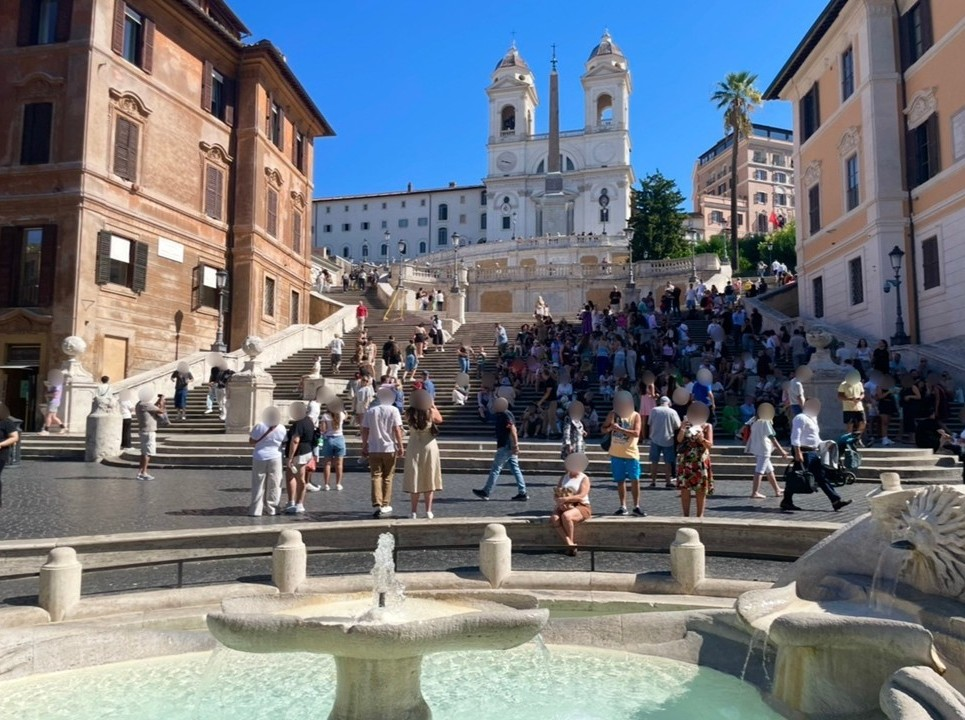
Additionally, picturesque alleys and classic Roman streetscapes stretch out all around the steps. I took a short stroll through the side streets and felt that Rome’s true charm lies not only in its world-famous monuments, but also in these everyday street corners.
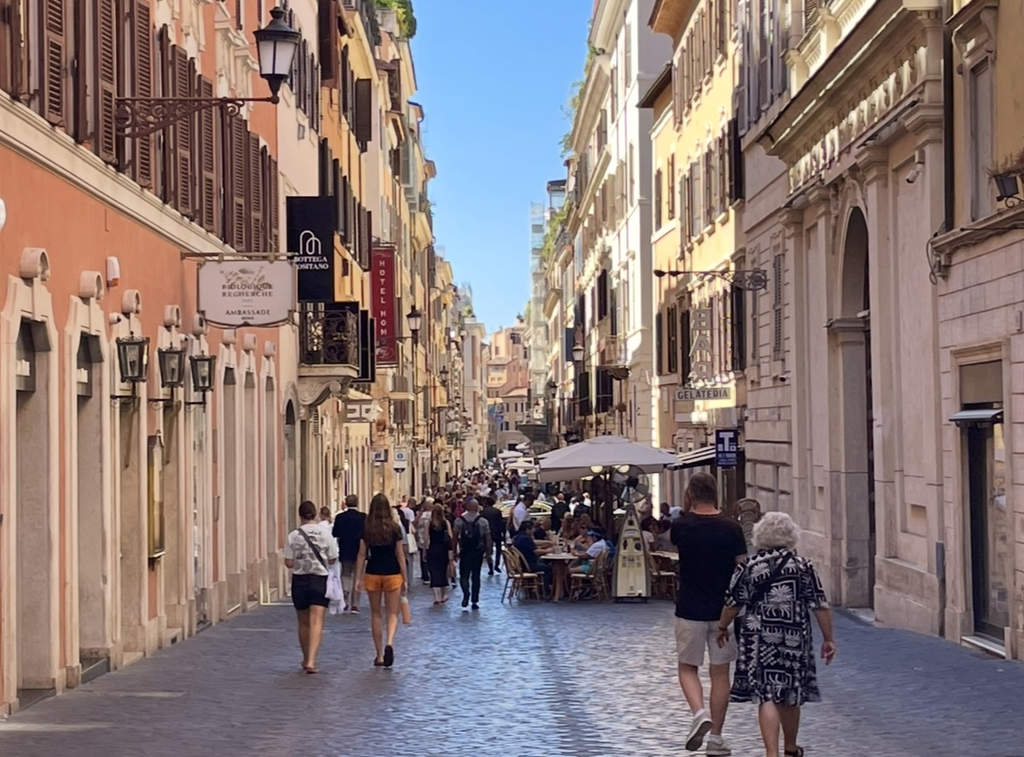
With that, my 1.5-day Rome sightseeing adventure came to an end—I picked up my luggage from the hotel and headed to Termini Station for my next destination.
In this article, I shared the actual Rome sightseeing itinerary I walked in 1.5 days (3 days, 2 nights). Rome has so many attractions that it’s impossible to see everything in just a day and a half. Still, if you set your priorities and plan your reservations and route in advance, you can fully enjoy the city’s major landmarks entirely on foot. Walking nonstop over cobblestone streets does take some stamina, yet the charming alleys and awe-inspiring historic monuments you encounter along the way are rewards you can only experience by exploring on foot.
Whether you only have a single day in Rome or are planning a two-day stay, feel free to use this route as a reference to build your own itinerary. Even with limited time, you’re sure to experience plenty of Rome’s magic.
Thank you so much for reading to the end!