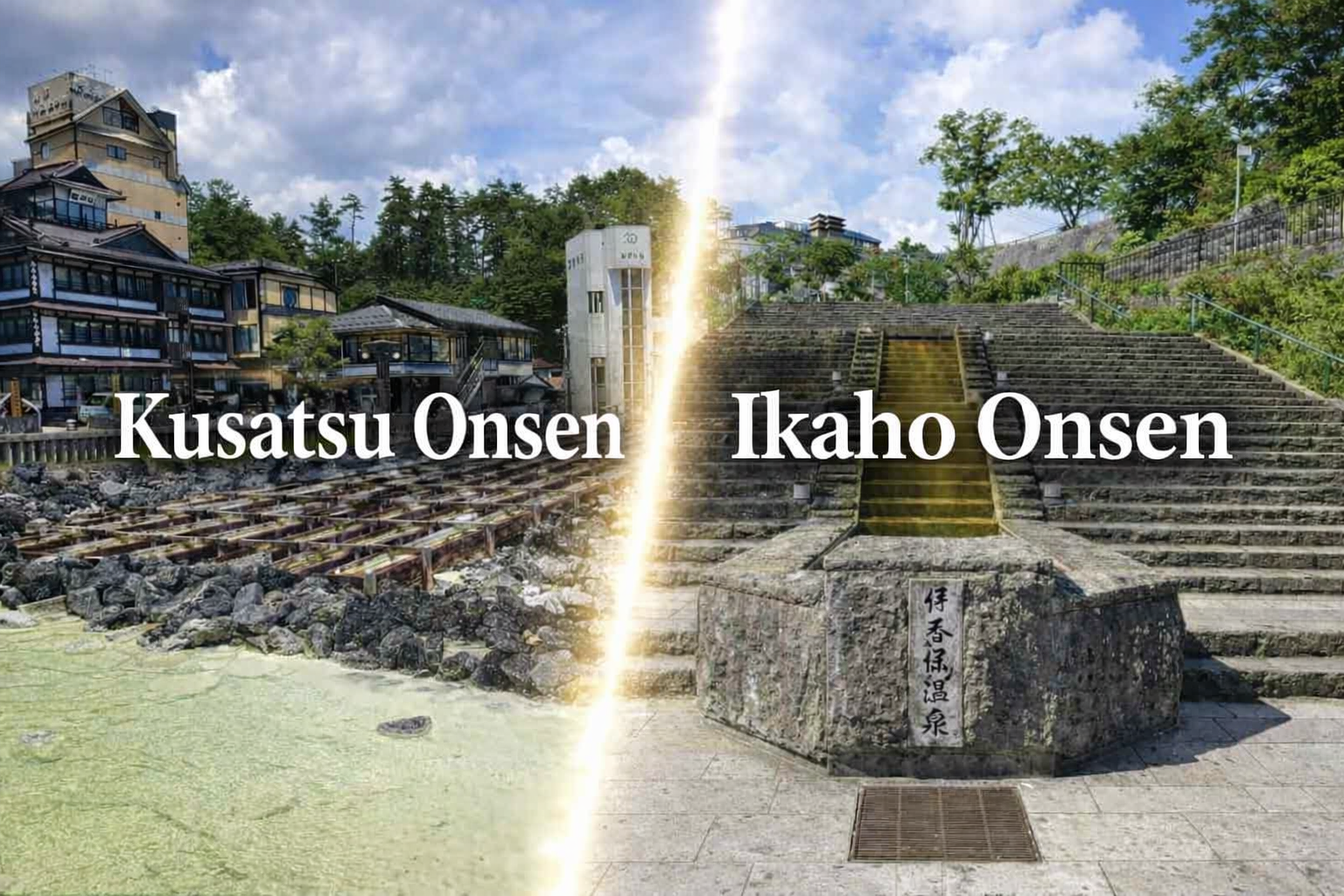


Kusatsu Onsen and Ikaho Onsen— both are iconic hot spring towns in Gunma, yet walking through them reveals just how different their atmosphere and charm can be. It’s no surprise that many travelers find themselves wondering, “Which one should I choose?”
Kusatsu is lively, centered around the famous Yubatake hot spring field, with its strongly acidic waters and plenty of attractions that make the town feel energetic and fun. Ikaho, on the other hand, offers a slower, more peaceful experience. Its stone stairway district, along with the soothing Kogane-no-Yu and Shirogane-no-Yu springs, creates a warm and calming atmosphere where time seems to flow gently.
In this article, I compare the two towns based on my own experiences—covering the differences in their hot springs, the feel of each town when exploring on foot, and their main sightseeing spots. I also explain the best ways to travel from Kusatsu to Ikaho.
Whether you’re visiting for the first time or trying to decide which destination suits you better, this guide will help you choose the hot spring town that matches your travel style.
Basic Information: Kusatsu Onsen and Ikaho Onsen
Kusatsu and Ikaho each have their own distinct hot spring qualities and town atmospheres, and the impression you get can change dramatically once you start walking around. To figure out which destination suits you best, it helps to first understand the basic characteristics of each town.
In this section, I’ll break down the key elements that shape your travel experience—such as the hot spring qualities, townscape, and overall vibe of Kusatsu and Ikaho.
The following sections will dive deeper into the specific differences between the two.
Overview of Kusatsu Onsen
Kusatsu Onsen is known for its uniquely strong acidic waters—something quite rare even in Japan. The moment you step into the bath, you can feel a distinctive, tightening sensation on your skin. The water temperature is also relatively high, giving first‑time visitors a vivid sense of its natural power. Kusatsu consistently ranks among the most popular hot spring destinations in Japan, supported by travelers from all over the country.
At the heart of the town lies the iconic Yubatake, a large hot‑spring field that symbolizes Kusatsu. Rising steam and the faint scent of sulfur create a classic onsen-town atmosphere. Around the Yubatake, inns, cafés, and restaurants line the streets, making the area lively day and night. Simply walking around immerses you in the unmistakable feel of a hot spring town and naturally lifts your travel mood.
Another memorable aspect of Kusatsu is its elevation—about 1,200 meters above sea level. Even in summer, the air feels refreshingly cool. On sunny days, the breeze softens the heat, making it surprisingly comfortable to stroll around. It’s an environment that encourages slow, enjoyable exploration.
The powerful hot spring water, the lively townscape, and the refreshing coolness of the highlands— Kusatsu Onsen offers both the pure appeal of its hot springs and the fun of a vibrant sightseeing destination.
You can check Kusatsu Onsen’s location on the map below.
Overview of Ikaho Onsen
Ikaho Onsen is home to two different types of spring water—Kogane-no-Yu and Shirogane-no-Yu—each offering a distinct bathing experience. Kogane-no-Yu, rich in iron, has a warm, slightly brownish tint around the spouts, and its gentle, mineral-heavy water warms you from deep within. Shirogane-no-Yu, on the other hand, is clear and light, with a smooth feel that settles naturally on the skin.
At the center of the town is Ikaho’s iconic stone stairway district, where inns and souvenir shops line the gentle slope. As you climb higher, the bustle gradually fades, and a quiet, traditional onsen-town atmosphere begins to emerge. In contrast to the lively energy of Kusatsu, Ikaho has a calm, unhurried charm—almost as if time moves a little slower here.
Overall, Ikaho Onsen is a destination known more for its tranquility than for flashiness. The combination of its two unique hot springs and the nostalgic stone stairway creates a soothing environment, perfect for travelers who want to unwind at a slower pace.
You can check the location of Ikaho Onsen on the map below.
Key Differences Between Kusatsu and Ikaho (Summary)
As we’ve seen so far, Kusatsu and Ikaho each have their own unique hot spring qualities and town atmospheres.
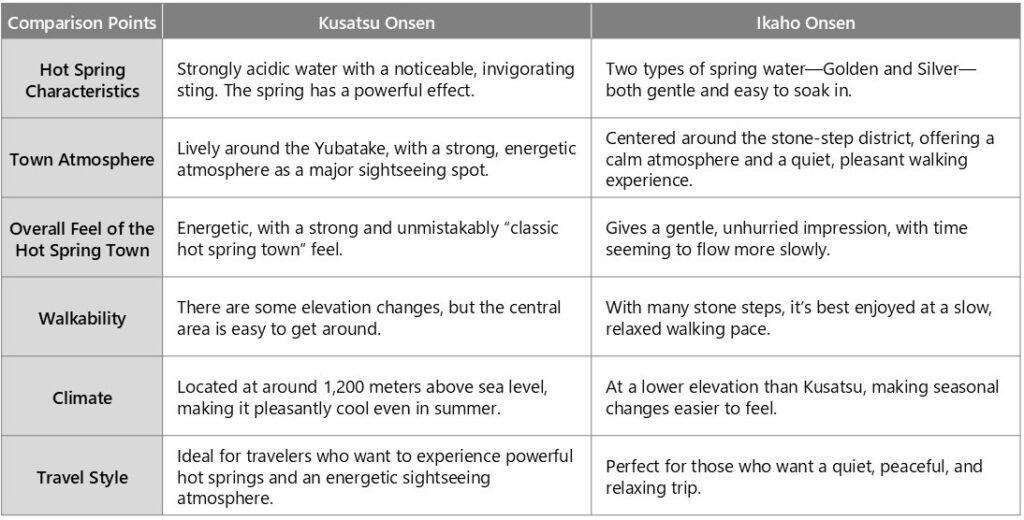
To make the differences easier to grasp at a glance, here’s a quick comparison table summarizing the key points.
Access from Tokyo to Kusatsu Onsen
If you’re traveling to Kusatsu Onsen by train from the Tokyo area, the Limited Express Kusatsu–Shima is the most convenient option. It runs directly from Ueno Station to Naganohara-Kusatsuguchi Station, making it an easy route even for first-time visitors with minimal transfers.
You can board the Kusatsu–Shima using IC cards such as Suica or PASMO. However, a limited express ticket is required separately, so purchasing it in advance will make the trip smoother. The bus from Naganohara-Kusatsuguchi Station also accepts IC cards, making the transfer relatively simple.
After arriving at Naganohara-Kusatsuguchi Station, take the local bus departing from the station front to the Kusatsu Onsen Bus Terminal. Buses run fairly frequently, and the ride to the hot spring town takes about 25 minutes.
In total, the travel time from Ueno to Kusatsu Onsen is approximately 2 hours and 40 minutes to 3 hours. Train and bus connections are generally good, making it a comfortable option even for weekend trips.
With just a train and bus combination, access to Kusatsu Onsen is smooth and straightforward, making it well-suited for travelers using public transportation.
Access from Kusatsu to Ikaho
There are no direct trains or buses from Kusatsu Onsen to Ikaho Onsen. To get there, you’ll first return to Naganohara-Kusatsuguchi Station, take the JR Agatsuma Line to Shibukawa Station, and then transfer to a bus bound for Ikaho Onsen.
The route is as follows: Kusatsu Onsen → (bus) → Naganohara-Kusatsuguchi Station → (JR Agatsuma Line) → Shibukawa Station → (bus) → Ikaho Onsen
Although there are several transfers, the connections are generally smooth, and the total travel time is around 2 hours. Many travelers find it “surprisingly close,” as the actual travel time feels shorter than the distance might suggest.
Since the entire trip can be made using public transportation, it’s easy to visit both Kusatsu and Ikaho in a single journey even without a car.
Highlights of Kusatsu Onsen
Kusatsu Onsen offers a variety of attractions, from the iconic Yubatake area at the heart of the hot spring town to scenic natural spots and unique bathing experiences found only in Kusatsu. Most major sights are located within walking distance, making it easy for first-time visitors to explore the town at their own pace.
Based on my own experiences, here are some of the must‑visit spots you should check out when visiting Kusatsu Onsen.
The Iconic Yubatake of Kusatsu Onsen
Located at the very center of Kusatsu Onsen, the Yubatake is an iconic landmark where abundant hot spring water flows through wooden channels, sending up clouds of steam. The unique colors created as mineral-rich water coats the surrounding rocks, combined with the harmony of the nearby buildings, leave a strong and memorable impression on visitors.
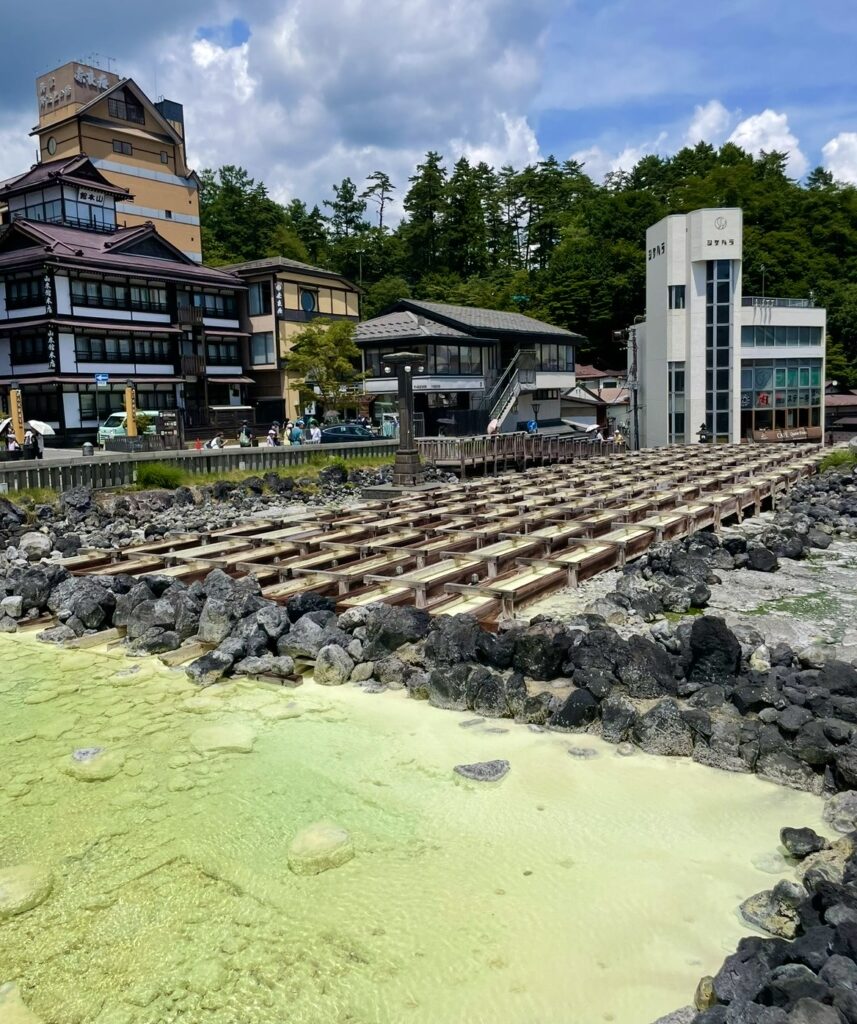
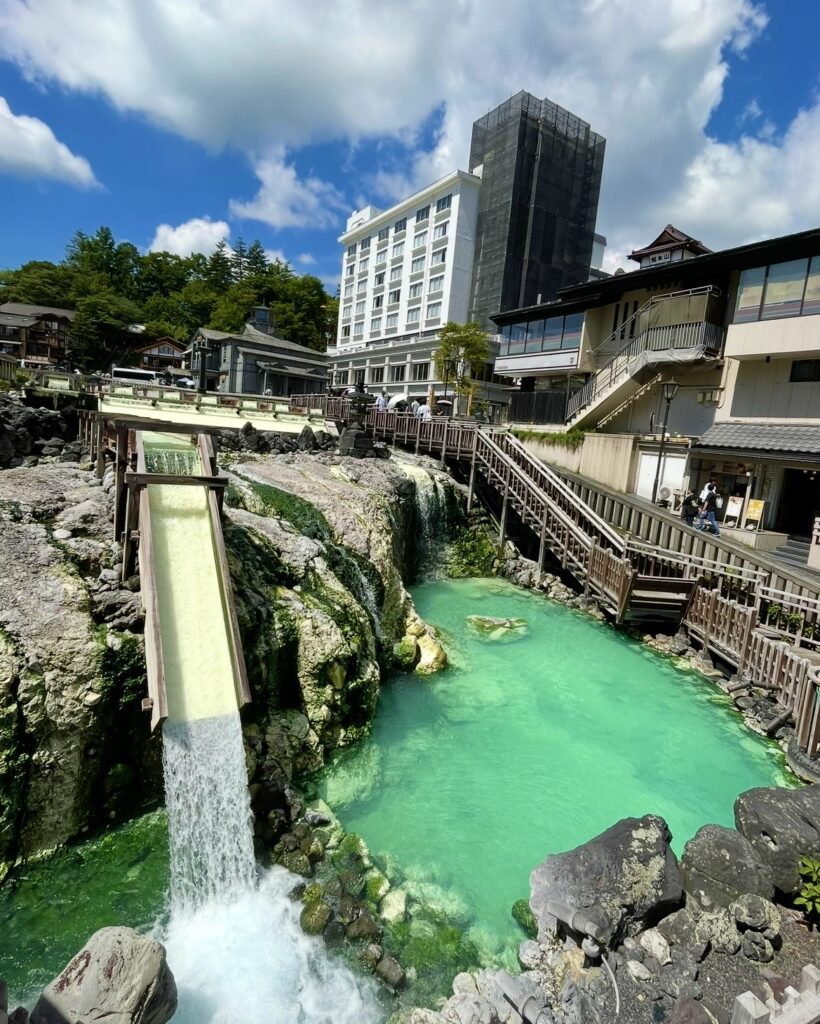
Although the area around the Yubatake is lined with restaurants and souvenir shops and is often bustling with visitors, the open, plaza-like layout allows the breeze to flow through, creating a pleasant and easy-to-walk atmosphere. The town’s appearance also changes with the seasons; in summer, wind chimes hang from the eaves, filling the air with their soft, delicate sounds whenever the wind passes by.
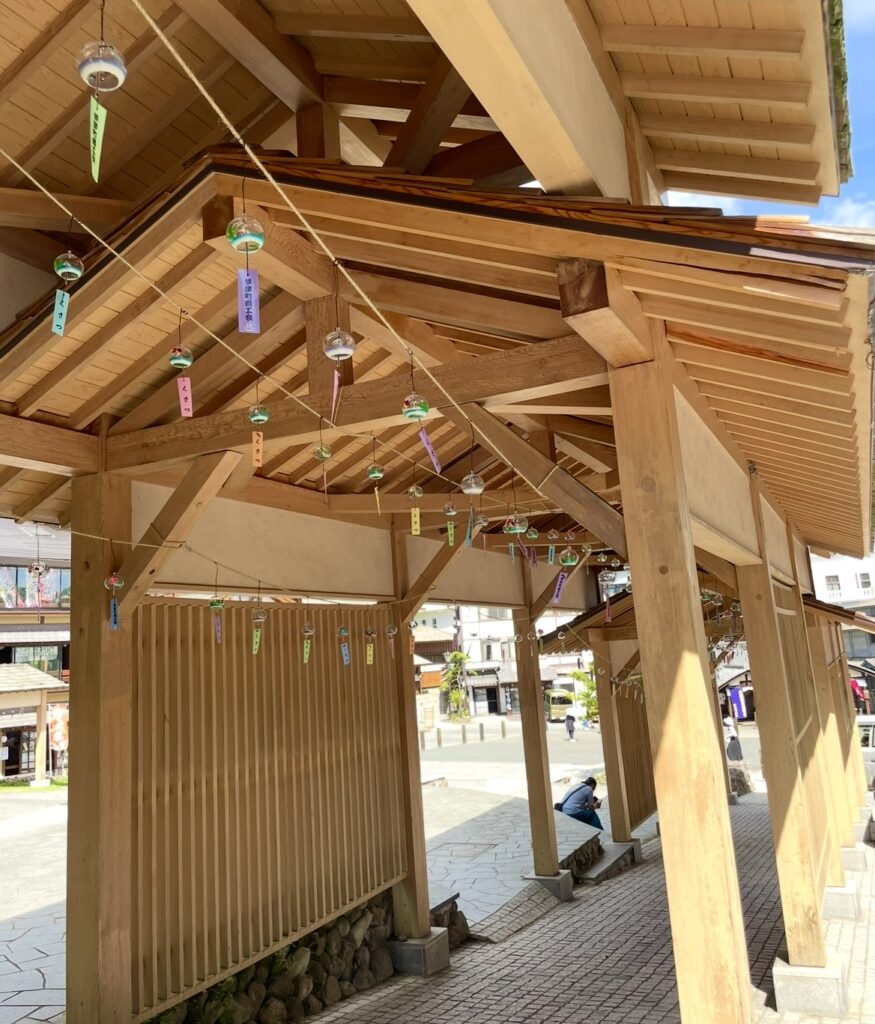
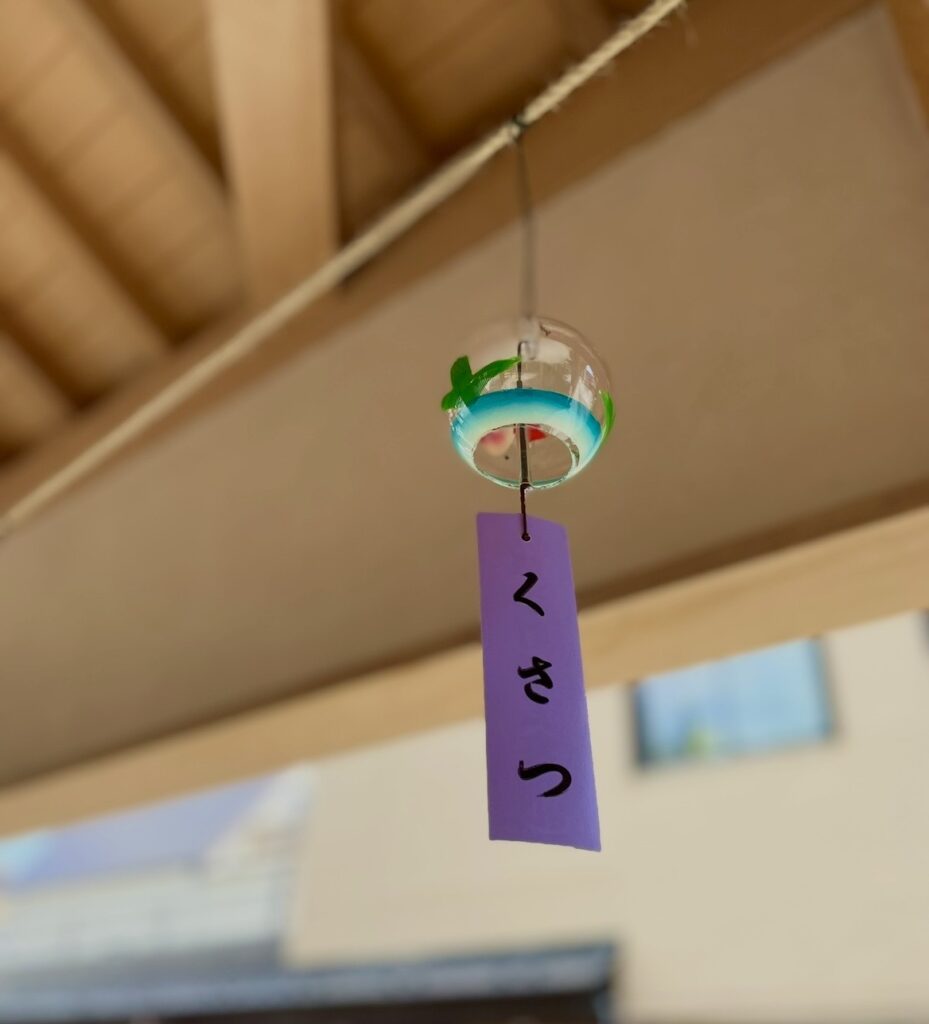
The sound of the wind chimes carries a gentle, nostalgic quality. Blended with the lively atmosphere around the Yubatake, it adds a soft, soothing touch to the town, becoming something you naturally notice as you walk by.
These small seasonal changes, layered onto the powerful scenery of the Yubatake, give the area a fresh impression each time you visit.
Yumomi: A Traditional Hot Spring Performance
Yumomi, known as a traditional practice of Kusatsu Onsen, is a popular performance held at Netsu-no-Yu. In the past, hot spring water was stirred with large wooden paddles to cool it down, and today this method is presented as a live demonstration. Seeing it up close is impressive—the dynamic movements and rising steam create a vivid sense of Kusatsu’s unique hot spring culture.
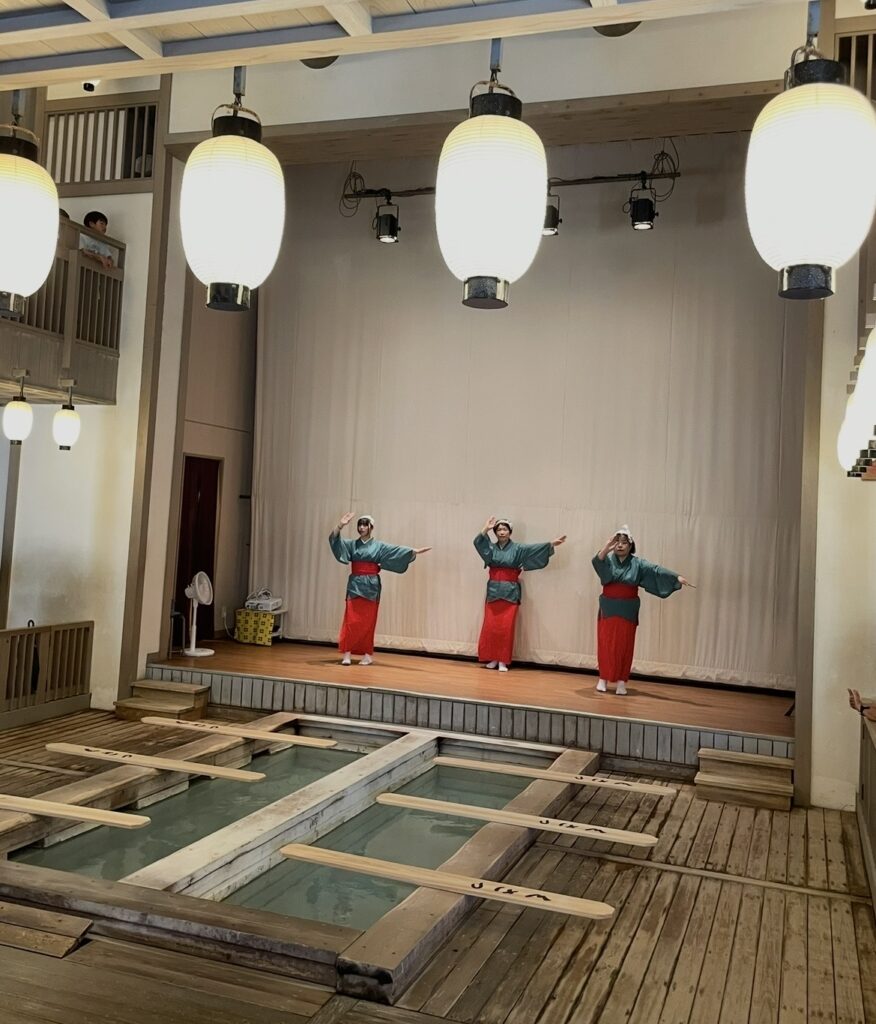
On stage, performers rhythmically stir the hot spring water using large wooden paddles. The splashing of the water and the sharp sound of the paddles striking the surface blend together, filling the entire venue with a unique sense of energy and heat. Even from the audience seats, you can feel the strength and intensity of their movements, making it a performance that naturally draws you in.
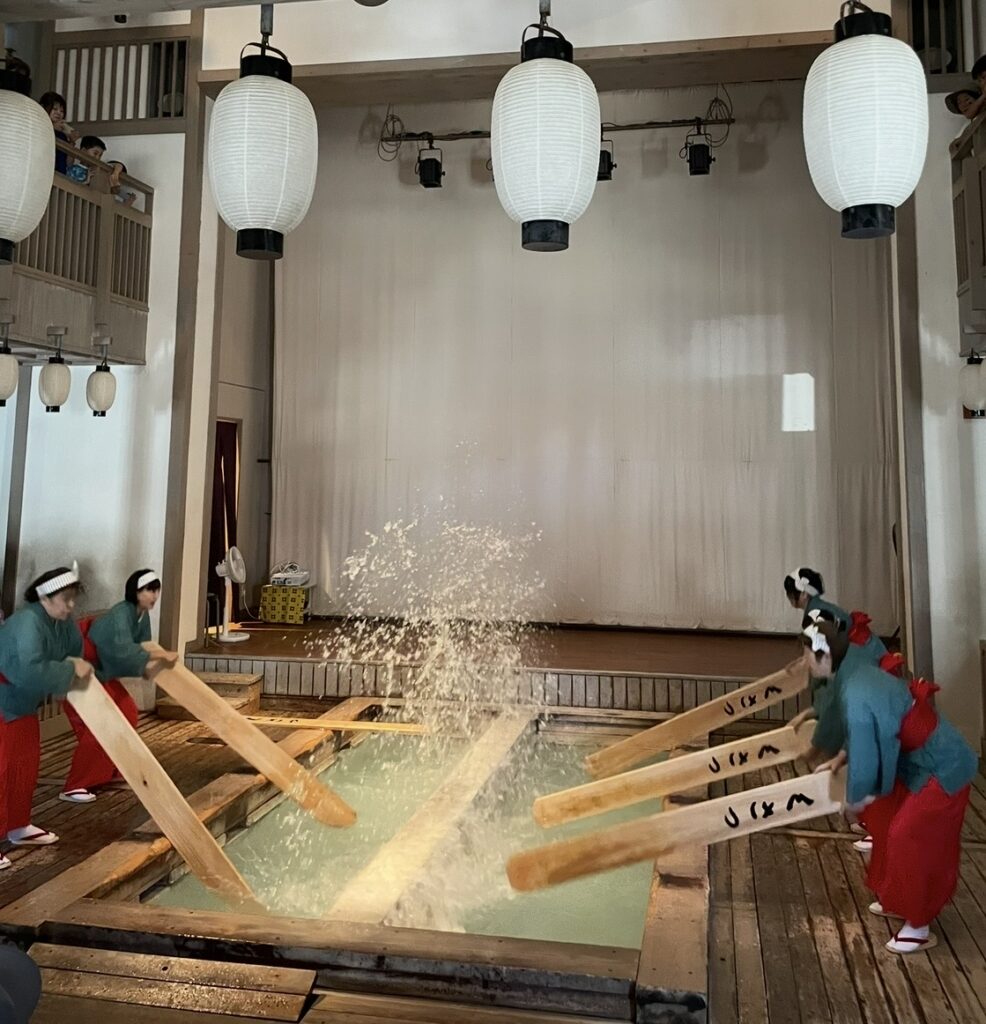
During the performance, traditional Yumomi songs are sometimes sung between demonstrations. Their distinctive melodies enhance the atmosphere of the venue, adding an extra layer of charm. The lyrics have been passed down through generations, and when combined with the rhythmic motions of the paddles, they offer a more vivid sense of Kusatsu’s cultural heritage.
Yumomi provides a rare opportunity to experience the history and traditions of Kusatsu Onsen right before your eyes. It is highly engaging and is truly a must‑see attraction when visiting Kusatsu.
Ohtakinoyu: A Relaxing Way to Enjoy Kusatsu’s Famous Hot Springs
Ohtakinoyu is one of the most popular day‑use hot spring facilities in Kusatsu Onsen. While Kusatsu’s waters are generally known for being quite hot, many of the baths here are kept at a more comfortable temperature, making it an easy place for first‑time visitors to relax and enjoy a long soak. Rental towels are available for a small fee, adding to the convenience and making it a spot you can drop by without much preparation.
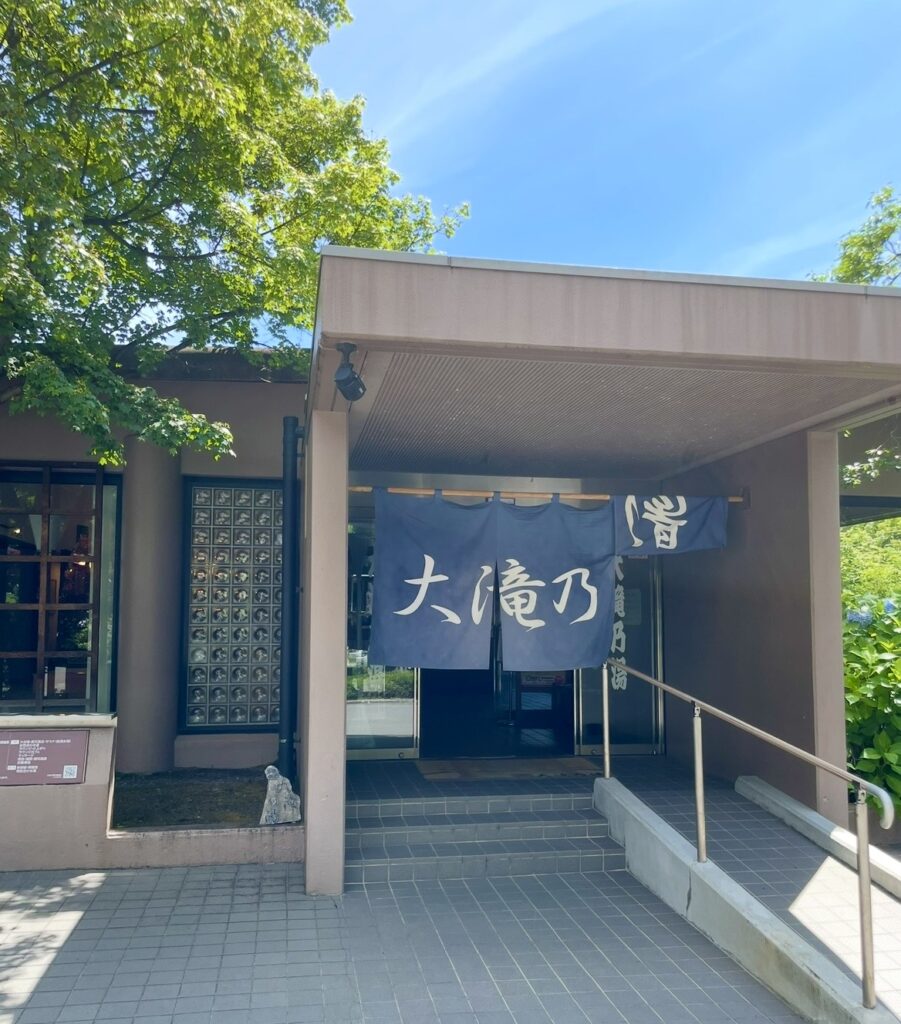
The highlight of Ohtakinoyu is its Awase-yu, a series of baths with different temperatures that you enjoy in sequence. Because Kusatsu’s hot spring water is strongly acidic and can feel intense at first, this method of gradually adjusting your body to the varying temperatures is a uniquely Kusatsu-style bathing experience. When I tried it myself, each bath had a perfectly balanced temperature—not too hot, not too lukewarm—making it comfortable to soak for an extended time.
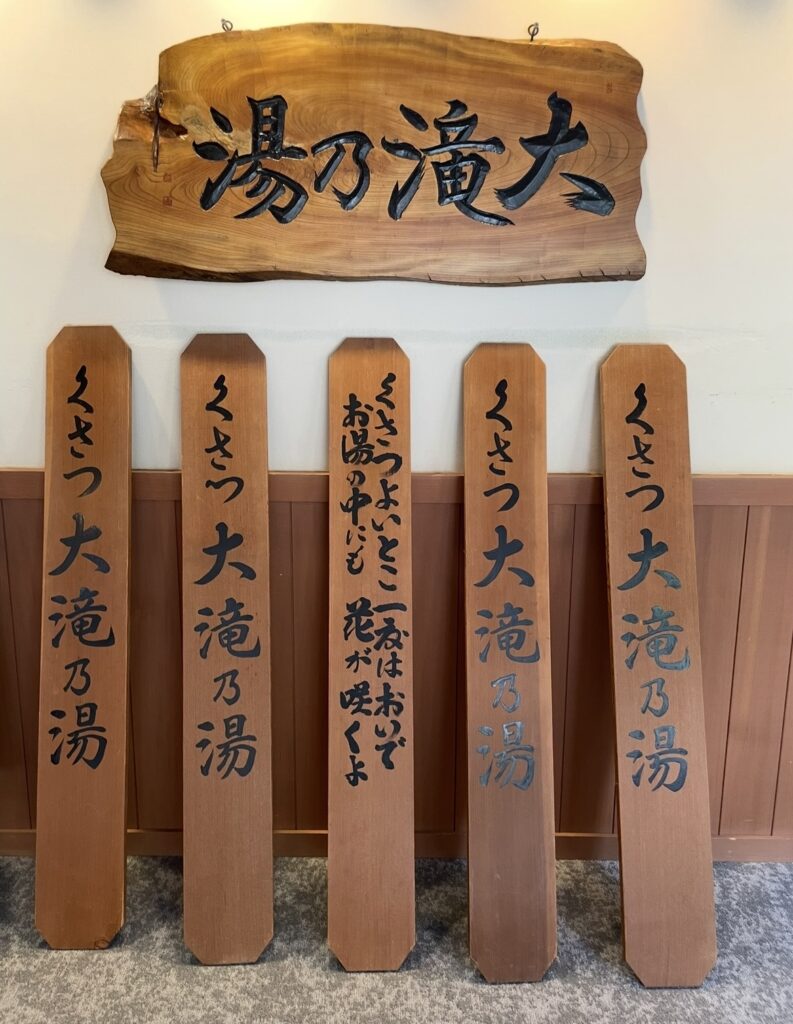
Ohtakinoyu is sometimes introduced as one of the “Kusatsu Three Baths,” although the definition of this term varies depending on the source. In general, it most commonly refers to the following three facilities:
- Sai-no-Kawara Open-Air Bath
- Goza-no-Yu
- Ohtakinoyu
All three are well‑known as representative bathing facilities of Kusatsu Onsen.
With its spacious indoor baths, open‑air baths, and the unique Awase‑yu where you can enjoy different water temperatures in sequence, Ohtakinoyu is a place where you can fully appreciate the charm of Kusatsu’s hot springs. It’s also easy to stop by without much preparation, making it a convenient and highly recommended spot to experience at least once during your visit to Kusatsu.
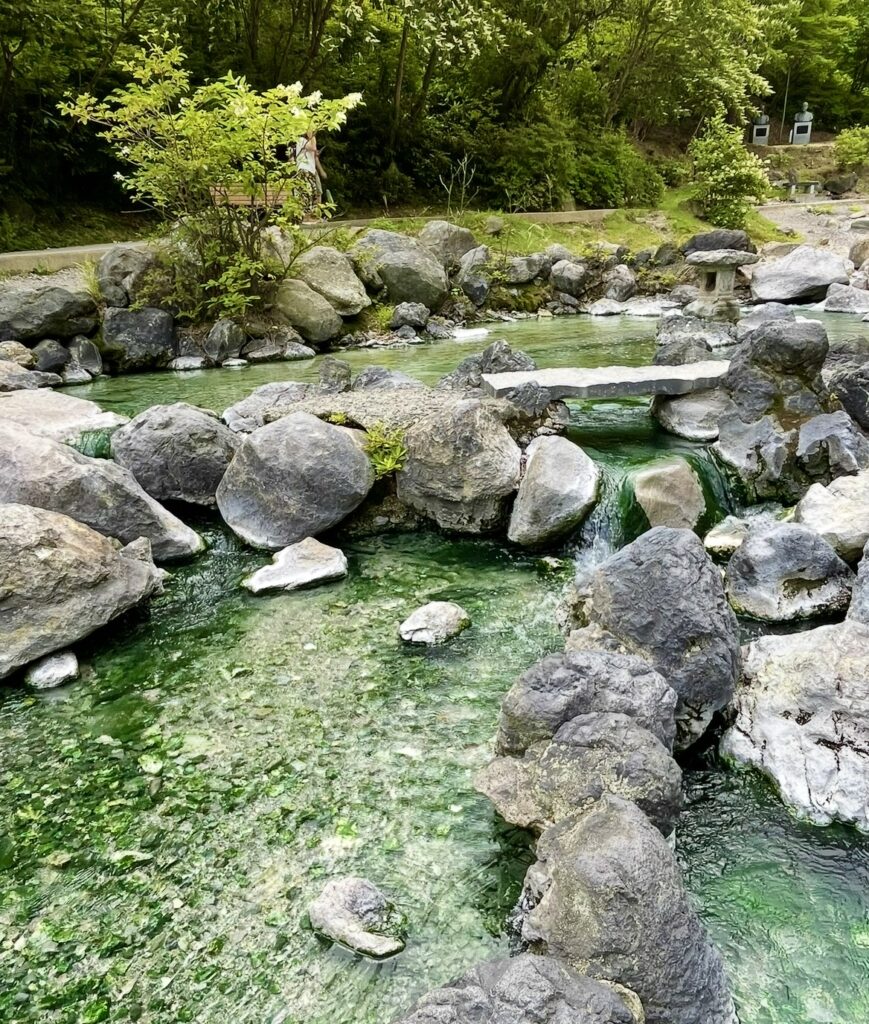
Sai-no-Kawara Park: A Natural Hot Spring Landscape
Sai‑no‑Kawara Park is a nature‑rich walking area located a short distance from the center of Kusatsu Onsen. In some parts of the park, you can catch the distinct sulfur scent characteristic of hot spring regions, and along the river flows water infused with natural hot spring minerals. The atmosphere shifts noticeably from the lively town center to a more open, quiet landscape, offering a refreshing contrast and a peaceful place to stroll.
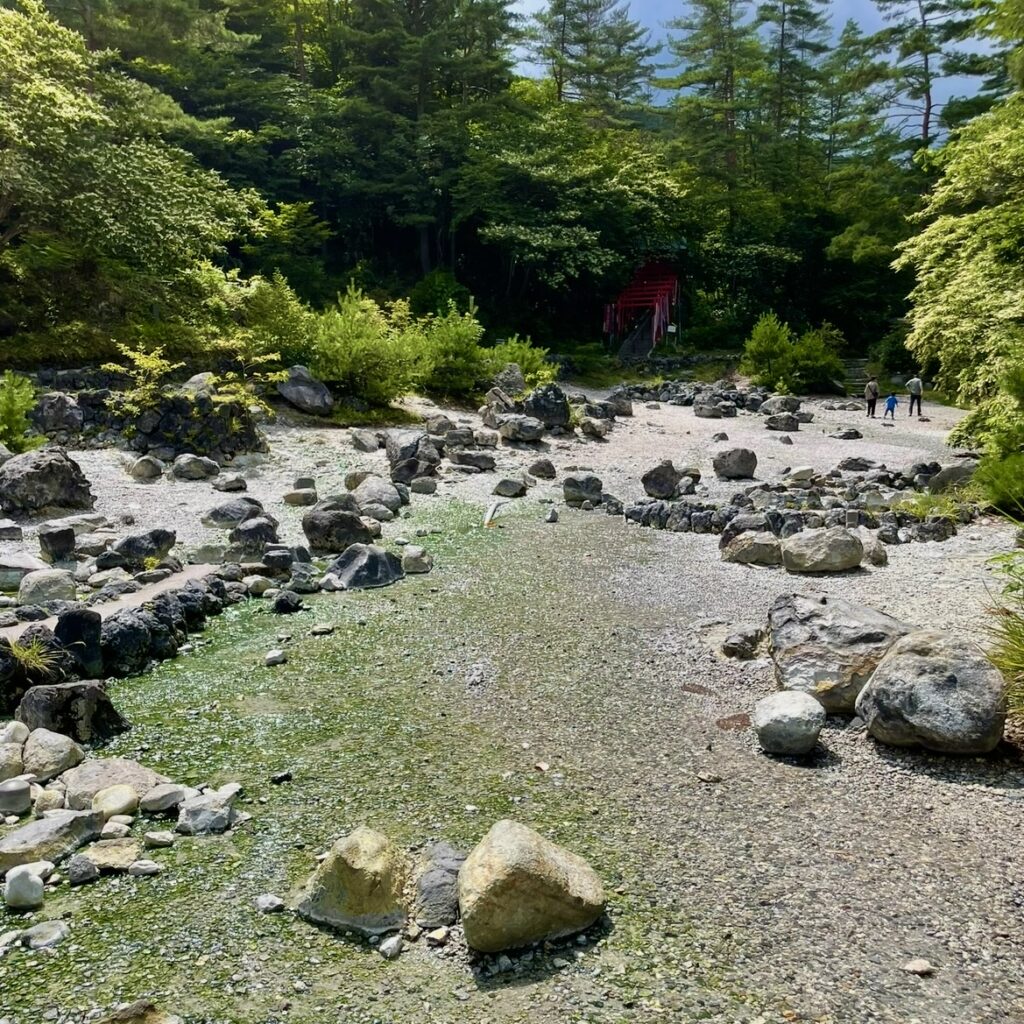
The park has a calm, soothing atmosphere where the sound of the flowing river blends beautifully with the surrounding greenery. The walking paths are well maintained, making it an ideal place for a leisurely stroll between sightseeing spots. On sunny days, the light shines through the trees and reflects off the rocks and water, creating many picturesque spots throughout the park.
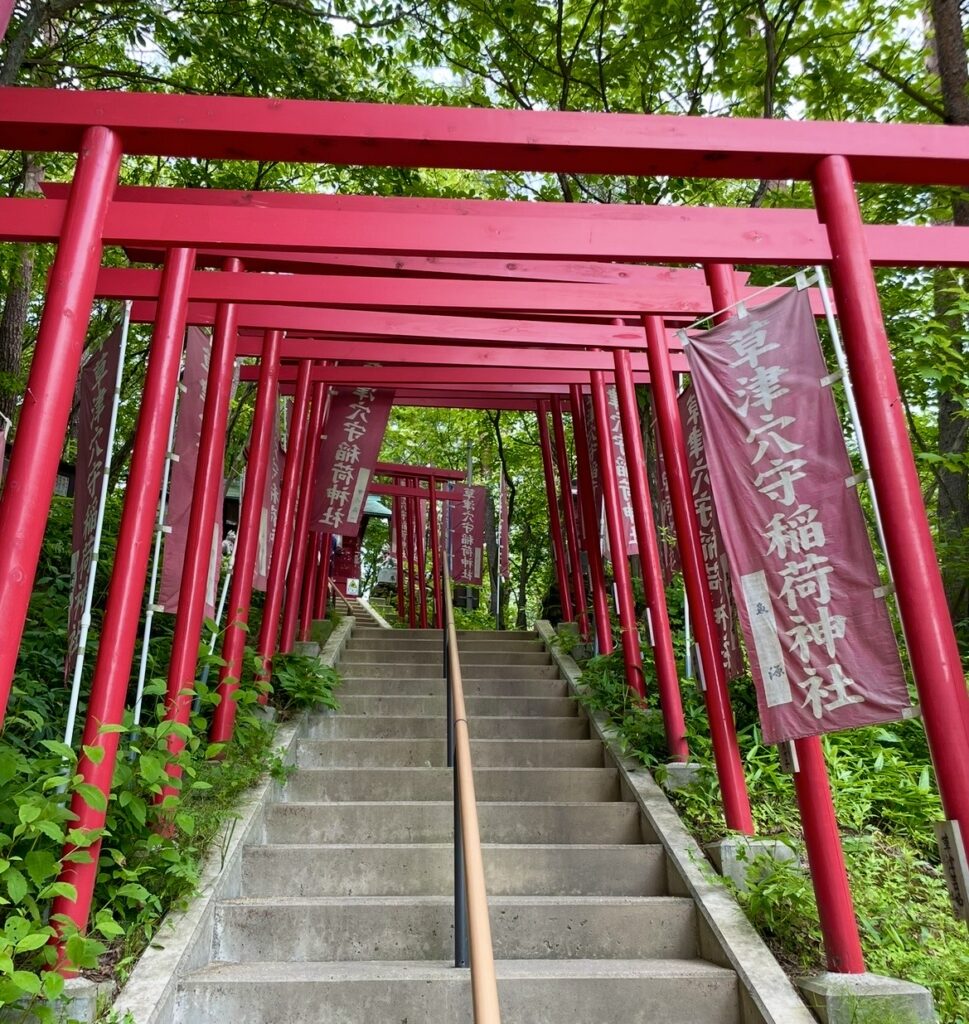
At the back of the park lies Kusatsu Anamori Inari Shrine (also known as Kusatsu Rokumori Inari Shrine). Its pathway lined with bright red torii gates stands out vividly against the surrounding greenery, creating a striking and memorable scene. It’s a small but charming spot that pairs well with a stroll through Sai‑no‑Kawara Park.
Sai‑no‑Kawara Park is a place where you can experience both the “town” and the “nature” of Kusatsu Onsen. It’s the perfect spot for those moments when you want to step away from the lively hot spring district and take a peaceful walk surrounded by nature.
Kusatsu Tamago Farm: A Casual Taste of Local Flavors
Kusatsu Tamago Farm is a popular shop known for its sweets made with locally sourced eggs from Kusatsu Onsen. It’s easy to stop by while exploring the hot spring town, making it a perfect place to satisfy a craving for something sweet. Inside, you’ll find a variety of treats such as Kusatsu pudding, egg biscuits, egg castella cake, and soft‑serve ice cream—all showcasing the quality of their ingredients. There are so many tempting options that it’s hard to choose just one.
This time, I tried their well‑loved Kusatsu Tamago Pudding and the ice‑cream monaka. The pudding, one of their signature items, has a rich flavor from the local eggs and an incredibly smooth texture. Adding the caramel sauce gives it a deeper sweetness, making it a delightful treat that melts away any fatigue from walking around town. The ice‑cream monaka, with its crisp wafer and light, refreshing ice cream, is easy to enjoy even while strolling. Both items clearly reflect the charm of “sweets made with care using local ingredients.”
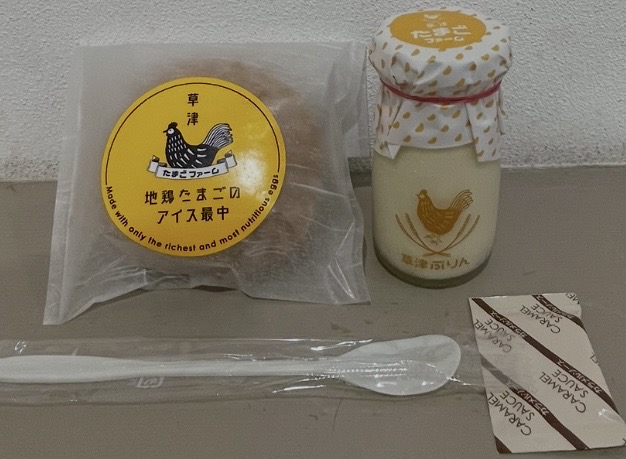
While Kusatsu Onsen is best known for its hot springs and natural scenery, enjoying sweets made with local ingredients is another charming part of the experience. Kusatsu Tamago Farm is an easy place to stop by during your sightseeing, making it a great spot for a quick break and a light treat.
After fully enjoying the hot springs, nature, and local flavors of Kusatsu, the journey continues to our next destination: Ikaho Onsen. From here, I’ll introduce the calm and charming atmosphere of this historic hot spring town, which offers a different kind of appeal from Kusatsu.
Highlights of Ikaho Onsen
Ikaho Onsen is home to a variety of attractions, from its iconic stone‑step street at the center of town to historic landmarks and scenic natural spots. The calm atmosphere makes it an ideal place to take your time and enjoy a relaxing stroll.
Based on my own experience, here are some of the must‑visit spots in Ikaho Onsen that I highly recommend checking out during your trip.
The Stone‑Step Street: A Symbol of Ikaho’s Traditional Charm
The stone‑step street at the heart of Ikaho Onsen is a charming walkway lined with shops and inns along roughly 400 steps. It’s one of the most iconic sights in Ikaho, embodying the history and culture of this traditional hot spring town.
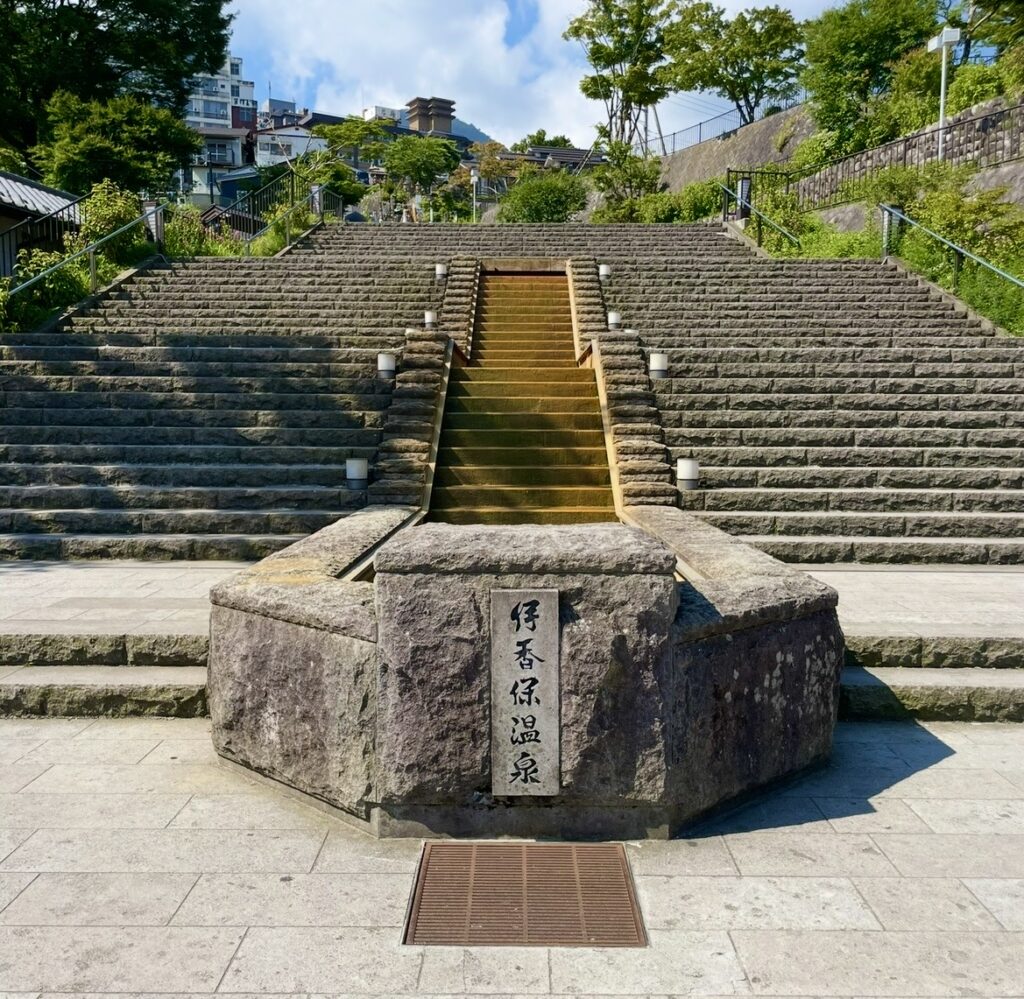
In summer, wind chimes are hung near the entrance of the stone‑step street, and their gentle sound reaches you even before you begin climbing the steps. I also enjoyed the sound of wind chimes in Kusatsu, but in Ikaho, their soft tones echo through the quieter streets, creating a calm and soothing atmosphere from the very first step. It was a memorable moment that captured the unique tranquility of Ikaho.
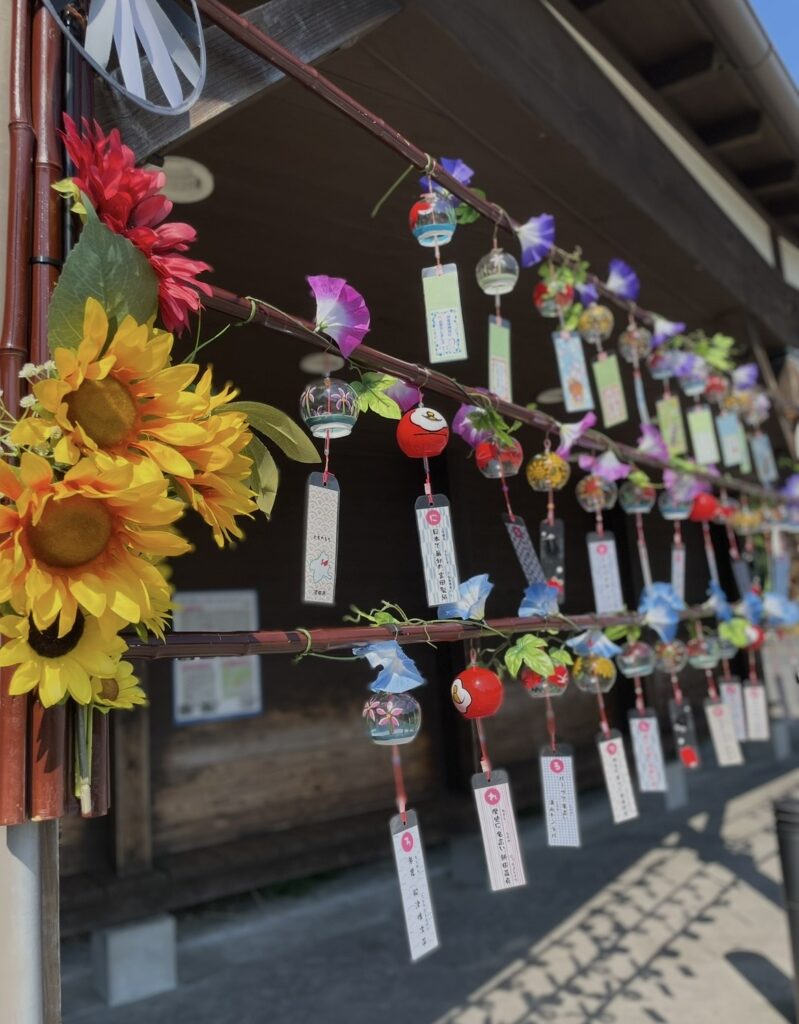
The stone‑step street also serves as the approach to Ikaho Shrine, and taking your time to walk up the steps—pausing for breaks along the way—lets you fully appreciate the town’s atmosphere.
Ikaho Shrine: A Serene Sanctuary in the Hills
Ikaho Shrine, located at the top of the stone‑step street, has long been cherished as the guardian shrine of Ikaho Onsen. Just a single step away from the lively stone‑step district, the atmosphere suddenly becomes still, wrapping you in a calm that feels almost like entering another world.
Although the shrine grounds are modest in size, the space surrounded by trees carries a quiet, dignified air. Reaching it after climbing the long flight of steps brings a sense of accomplishment, along with a refreshing clarity of mind. As a place that has watched over the history of Ikaho Onsen for centuries, it has a gentle yet unmistakable sacredness that naturally makes you stand a little straighter during your visit.
From the shrine grounds, you can look down over the stone‑step street, quietly taking in the view of Ikaho while feeling a sense of accomplishment from having climbed all the way up. It may not be a flashy sightseeing spot, but it offers a simple, calming atmosphere that feels uniquely Ikaho—making it a place well worth stopping by during your visit.
Kajika Bridge: A Famous Spot for Autumn Foliage
Kajika Bridge is one of the most iconic sights of Ikaho Onsen, especially famous for its autumn foliage. The bright vermilion arch of the bridge stands out beautifully against the surrounding greenery, and in fall, the entire area transforms into a vivid landscape of red and gold leaves. During the peak foliage season, the bridge is illuminated at night, attracting many visitors who come to enjoy its magical, dreamlike atmosphere.
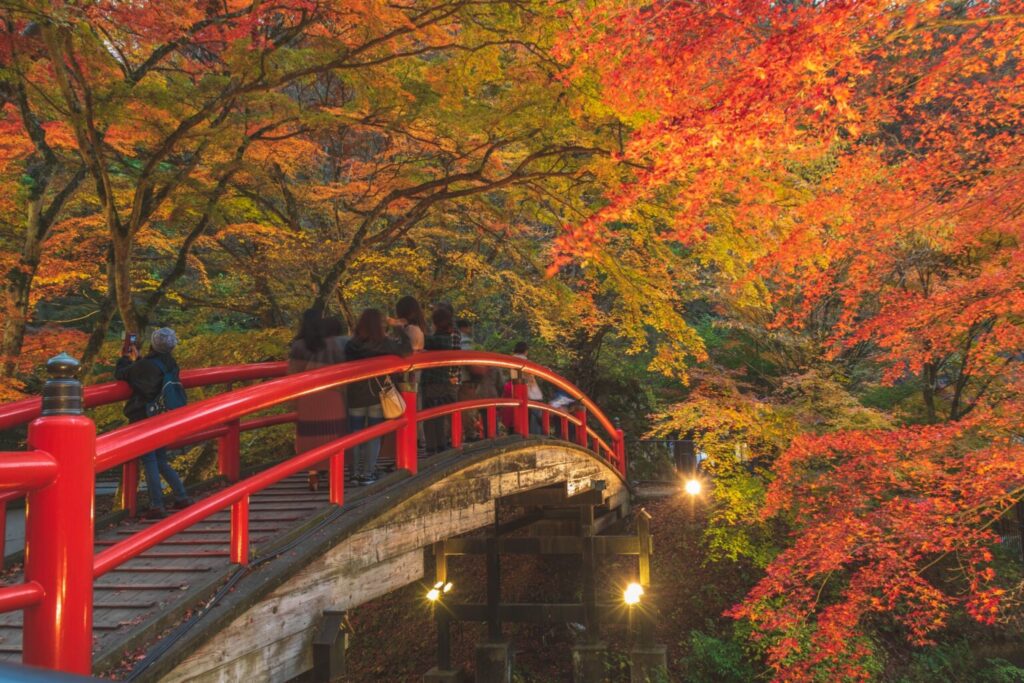
Although I wasn’t able to visit Kajika Bridge this time due to my schedule, it’s easily accessible from both the stone‑step street and Ikaho Shrine, making it a convenient spot to add to your stroll. Even just seeing photos of it, the scenery changes beautifully with each season, and it left me wanting to return and experience it in person next time.
As a place where you can truly feel the natural beauty of Ikaho, it’s especially worth visiting during the autumn foliage season.
Ikaho Green Bokujo: A Family‑Friendly Ranch Experience
Although it’s a short distance from the center of Ikaho Onsen, Ikaho Green Bokujo is easily accessible by bus and makes for a great family-friendly outing. Set within a spacious area surrounded by nature, the ranch is popular for its animal encounters and hands-on activities.
Inside the ranch, you can get up close to sheep, goats, horses, and other animals. Spending time here in the relaxed, pastoral atmosphere offers a different kind of healing compared to the hot spring town.
The ranch also offers a variety of hands-on programs, such as ice cream making and butter making. Each activity takes roughly 30 minutes, making them easy to join even during a busy itinerary. When we tried the ice cream-making experience, the kids loved it—and enjoying something you made yourself adds a special touch that becomes a memorable part of the trip.
For those who want to enjoy not only hot springs but also nature and animal interactions, Ikaho Green Bokujo is a wonderful spot that adds even more depth to your visit to Ikaho.
Summary: Which One Should You Choose? A Guide Based on Your Travel Goals
As we’ve seen, both Kusatsu and Ikaho are wonderful hot spring destinations, each with its own distinct atmosphere and style of enjoyment. Based on what I personally felt while walking through both towns on this trip, I’ve put together some recommendations on which destination might suit you best depending on your travel goals. I hope this helps you choose the hot spring town that matches your own travel style.
■ If You Want to Fully Immerse Yourself in Hot Springs → Kusatsu Onsen
- Kusatsu’s hot springs are among the most acidic in Japan, giving the water a uniquely strong character.
- Most of the main attractions are concentrated around the Yubatake area, making it easy to explore on foot.
- Kusatsu offers many experiences found only here, such as the traditional yumomi performance and numerous public bathhouses.
- The lively atmosphere of the hot spring town is also appealing for those who enjoy a bustling environment.
→ If your main goal is to fully enjoy the hot springs themselves, Kusatsu is the perfect choice.
■ If You Prefer a Calm, Relaxed Atmosphere → Ikaho Onsen
- The town has a calm, peaceful atmosphere centered around its iconic stone‑step street.
- Scenic spots such as historic shrines and natural viewpoints make strolling especially pleasant.
- There are plenty of activities beyond hot springs, including family‑friendly attractions like the ranch.
- Getting around is easier and more compact than in Kusatsu, allowing for a slower, more relaxed pace.
→ Ikaho is ideal for those who want to enjoy quiet moments and the simple charm of a traditional hot spring town.
■ For Family Trips with Children → Ikaho Onsen
- At Green Bokujo, kids can enjoy meeting animals and joining hands‑on programs.
- Both the ice cream‑making and butter‑making activities take about 30 minutes, making them easy to join.
- The ice cream you make yourself feels extra special and becomes a memorable part of the trip.
- While the town does have slopes, it’s more compact than Kusatsu, making it easier to get around with children.
→ Ikaho is a great choice for families who want to enjoy both hot springs and fun hands‑on experiences.
■ If You Want to Make the Most of a 2‑Day, 1‑Night Trip → Kusatsu Onsen
- Most of the main attractions are concentrated around the Yubatake area.
- The town is very walkable, allowing you to see a lot even in a short time.
- It’s an easy choice for first‑time hot spring travelers.
→ Kusatsu is ideal for those who want to make the most of their trip even with limited time.
■ If You Want a Slow‑Paced Stay of Two Nights or More → Ikaho Onsen
- Ikaho’s charm deepens when you take your time exploring its stone‑step street, shrines, natural scenery, and the nearby ranch.
- It’s perfect for a trip where you want to enjoy quiet, unhurried moments.
→ Ikaho is the best choice for travelers who want to relax and enjoy a slow‑paced stay.
This concludes the content introduced in this article. Walking through both Kusatsu and Ikaho allowed me to clearly feel the unique charm each hot spring town offers. Kusatsu, with its distinctive hot spring character, and Ikaho, with its calm and gentle atmosphere—both are places where you can experience the essence of the region through strolls and hands‑on activities.
I hope this article helps inspire and guide those planning their next trip. Take your time, walk at your own pace, and enjoy a hot spring journey that lets you truly soak in the atmosphere of the place.